Connect with us

Opinion

Tinubu: ‘I’ll Be the Last Person to Destroy Democracy’

Published

on

By Onilede Titi Faith

On Nigeria’s Democracy Day, all eyes were on President Bola Ahmed Tinubu as he addressed the National Assembly amidst swirling concerns about the nation’s democratic future.

Speculation about a potential drift toward a one-party system had been mounting, fueled by recent political defections and comments from APC Chairman Abdullahi Ganduje, who controversially remarked that there was “nothing wrong” with a one-party state.

“I will be the last person to destroy our democracy. A one-party system is not good for Nigeria. It’s not who we are,” Tinubu declared.

His words were more than a speech; they were a promise to Nigerians. He addressed both the lawmakers present and millions watching across the country, invoking the spirit of the June 12 struggle.

This historical reference served as a poignant reminder of the sacrifices made to establish and sustain the democracy Nigerians hold dear. For many, this acknowledgment struck a chord, offering a rare moment of unity in an otherwise polarized political climate.

Despite the president’s reassurances, the streets of Lagos told a different story. Protests highlighted the frustration of young Nigerians grappling with rising living costs and economic uncertainty. Their message was clear: “We’re tired. We need change.”

Debo Ologunagba, spokesperson for the opposition PDP, echoed these sentiments, stating, “What we’re seeing isn’t just about politics. It’s about survival. Nigerians deserve better than being silenced.”

For many, democracy is more than a political system, it represents hope, opportunity, and the freedom to be heard. Tinubu’s assurances were welcomed by some, but the challenge lies in turning words into actionable policies. Will this promise of democratic preservation translate into tangible change?

This year’s Democracy Day was not merely a celebration but a stark reminder of what’s at stake. Nigerians are determined to protect the democratic values they fought so hard to achieve, and as history has shown, their resolve is unshakable.

Article

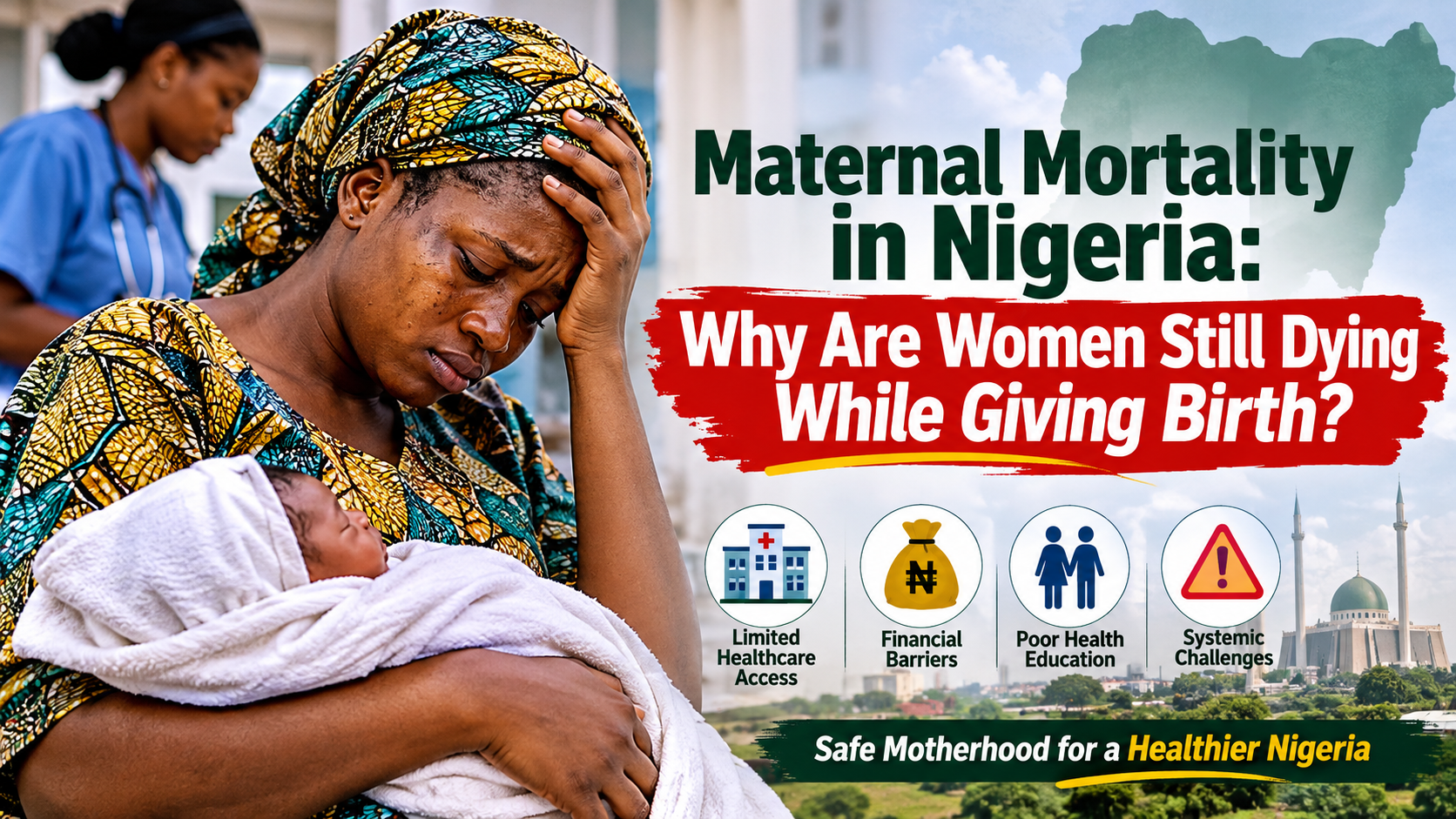
Maternal Mortality in Nigeria: Why Are Women Still Dying While Giving Birth?

Published

on

By Abdulkareem Adeyemi


A woman walks into a healthcare facility with the hope of bringing a child into the world. Her family anticipates the arrival of a new member, preparations are made, and expectations are high. Yet, for thousands of Nigerian women every year, pregnancy and childbirth end not with the joy of welcoming a baby but with a preventable death.

Maternal mortality remains one of Nigeria’s most pressing public health challenges, exposing deep-rooted weaknesses in the country’s healthcare delivery system, economic structure, social environment and public health policies. Despite decades of government interventions, international partnerships and maternal health programmes, Nigeria continues to record an alarmingly high number of deaths associated with pregnancy and childbirth.

The question, therefore, is not simply why women die while giving birth. It is why so many of these deaths continue to occur when the medical knowledge, interventions and resources required to prevent a significant proportion of them already exist.

According to the latest internationally comparable estimates published in April 2025 by the World Health Organization (WHO), UNICEF, the United Nations Population Fund (UNFPA), the World Bank Group and the United Nations Department of Economic and Social Affairs, Nigeria recorded an estimated maternal mortality ratio of 993 deaths per 100,000 live births in 2023.

Data published by UNICEF from the same estimation exercise put Nigeria’s estimated maternal deaths at approximately 74,559 in 2023. This translates to more than 200 maternal deaths every day.

The figures are particularly concerning when compared with the United Nations Sustainable Development Goal (SDG) target of reducing the global maternal mortality ratio to fewer than 70 deaths per 100,000 live births by 2030.

Nigeria’s figures indicate that the country remains considerably far from this target, raising serious questions about the effectiveness, accessibility and sustainability of maternal healthcare interventions.


Understanding the Maternal Mortality Crisis

Maternal mortality refers to the death of a woman during pregnancy, childbirth or within 42 days of the termination of pregnancy, from causes related to or aggravated by the pregnancy or its management, excluding accidental or incidental causes.

Although pregnancy and childbirth are natural biological processes, they can involve serious complications requiring immediate medical attention. Some of these complications develop during pregnancy, while others emerge unexpectedly during labour or shortly after delivery.

The most common direct medical causes of maternal deaths include severe bleeding, particularly postpartum haemorrhage, hypertensive disorders such as pre-eclampsia and eclampsia, pregnancy-related infections, complications arising from unsafe abortions and blood clots or other obstetric emergencies.

These conditions are not necessarily fatal when identified early and managed by competent healthcare professionals with access to appropriate medicines, equipment and emergency services.

The challenge in Nigeria is that many women either do not receive adequate care before complications develop or cannot access the quality emergency treatment required when their lives are threatened.

A 2015 nationwide study involving 42 Nigerian tertiary hospitals, published in the BJOG: An International Journal of Obstetrics and Gynaecology, examined 91,724 live births and identified 998 maternal deaths. Pre-eclampsia and eclampsia accounted for 23.4 per cent of severe maternal outcomes, while postpartum haemorrhage accounted for 14.4 per cent.

The study also found that many women arrived at participating hospitals in critical condition, highlighting the consequences of delayed access to effective emergency obstetric care.

These findings demonstrate that maternal mortality is not merely a question of whether a woman visits a hospital. It is also about whether the healthcare system can recognise, respond to and manage complications quickly enough to save her life.


The Healthcare Access Problem: When Hospitals Are Too Far Away or Too Expensive

One of the major contributors to maternal mortality in Nigeria is the unequal distribution and accessibility of healthcare services.

While women in major urban centres may have access to teaching hospitals, specialist maternity facilities and private healthcare providers, many women in rural communities depend on poorly equipped primary healthcare centres or facilities located several kilometres away.

In some communities, reaching a hospital requires travelling through difficult terrain, relying on motorcycles or waiting for transportation that may not be readily available.

For a woman experiencing severe bleeding, prolonged labour or an eclamptic seizure, such delays can be fatal.

The situation is further complicated by the financial burden of healthcare. Although some government programmes provide free or subsidised maternal health services, access and implementation vary across states and facilities.

Many families still struggle to afford antenatal consultations, diagnostic tests, prescribed medications, transportation, hospital admissions and emergency procedures.

The cost becomes particularly burdensome when a pregnancy develops complications requiring specialised treatment or an emergency Caesarean section.

For households already struggling with poverty, these expenses can force difficult decisions about when and where to seek medical assistance.

This is especially concerning in a country where a substantial proportion of the population experiences financial hardship and where health insurance coverage remains inadequate.

The implication is clear: healthcare cannot be considered accessible simply because a facility exists. It must also be geographically reachable, adequately equipped, affordable and capable of providing the necessary services.


Why Antenatal Care and Skilled Birth Attendance Matter

Antenatal care plays an essential role in identifying potential complications before they become life-threatening.

Regular pregnancy consultations allow healthcare professionals to monitor blood pressure, assess maternal and foetal health, identify infections, detect anaemia and provide appropriate preventive interventions.

For example, early identification of high blood pressure during pregnancy can help prevent complications associated with pre-eclampsia and eclampsia. Similarly, appropriate screening and treatment can reduce the risks associated with infections and other pregnancy-related conditions.

However, the utilisation of maternal healthcare services in Nigeria remains a concern.

Findings from the 2024 Nigeria Demographic and Health Survey (NDHS), disseminated by the Federal Ministry of Health and Social Welfare in October 2025, show that 63 per cent of women aged 15–49 received antenatal care from a skilled provider, while only 52 per cent completed at least four antenatal visits.

More concerning is the proportion of births taking place outside healthcare facilities.

According to the survey, only 43 per cent of live births occurred in health facilities, while 56 per cent took place at home. Deliveries by Caesarean section accounted for approximately six per cent of live births.

These figures highlight a significant gap between the availability of maternal healthcare services and their utilisation.

Although delivering at a health facility does not automatically guarantee a safe outcome, access to skilled birth attendants and emergency obstetric services significantly improves the chances of identifying and managing complications.

It is equally important to understand that antenatal care should not be reduced to the number of visits a pregnant woman makes. The quality of consultations, availability of diagnostic services, appropriate treatment and continuity of care are equally important.

A woman who attends several antenatal appointments but receives inadequate assessment or is unable to access emergency care when complications arise remains vulnerable.


The Three Delays: Understanding Why Women Die

A useful framework for understanding maternal mortality is the three-delays model, which identifies three critical stages at which women may experience delays in receiving lifesaving care.


The first delay: Deciding to seek medical attention.

This occurs when a woman or her family fails to recognise the seriousness of a pregnancy complication or delays seeking professional assistance.

Poor health education, cultural beliefs, fear of medical procedures, financial limitations and dependence on traditional birth attendants can influence this decision.

In some communities, childbirth is considered a natural process that should be managed at home unless complications become severe. Unfortunately, waiting until a situation becomes critical can reduce the chances of survival.


The second delay: Reaching a healthcare facility.

Even when families recognise an emergency, transportation challenges, poor road networks, distance and insecurity can prevent timely access to medical care.

For women living in remote communities, the absence of reliable emergency transportation and functional referral systems can turn treatable complications into fatal emergencies.


The third delay: Receiving adequate treatment after arrival.

This is perhaps one of the most troubling dimensions of the problem because it highlights weaknesses within healthcare facilities themselves.

A woman may successfully reach a hospital but still face delays caused by inadequate staffing, unavailable blood supplies, insufficient medical equipment, poor coordination, delayed surgical intervention or shortages of essential medicines.

The 2015 nationwide study of maternal deaths and near-misses in Nigerian tertiary hospitals identified several important barriers, including delays in Caesarean sections, inadequate availability of magnesium sulphate and insufficient access to safe blood transfusion services.

Magnesium sulphate is an essential medicine for preventing and treating seizures associated with severe pre-eclampsia and eclampsia.

These findings demonstrate that improving maternal health requires more than encouraging women to visit hospitals. Healthcare facilities must also be capable of delivering timely, effective and appropriate treatment.


The Social and Cultural Factors Behind Maternal Deaths

Maternal mortality is also influenced by factors that exist outside the walls of healthcare facilities.

Education, poverty, gender inequality, cultural expectations and household decision-making can determine whether a woman receives adequate care throughout pregnancy and childbirth.

Women with limited educational opportunities may have less access to information about pregnancy complications, the importance of antenatal care and the warning signs that require immediate medical attention.

In some households, women may not have the financial independence or decision-making authority to seek healthcare without the approval or financial support of their husbands or other family members.

This can create dangerous delays, particularly when emergencies require immediate intervention.

Early marriage and adolescent pregnancy also deserve attention. Younger mothers may face additional medical and social vulnerabilities, especially where pregnancy occurs alongside poverty, inadequate nutrition, limited education and poor access to reproductive health information.

Furthermore, the stigma surrounding reproductive health and unintended pregnancies can discourage some women from seeking appropriate medical assistance.

Unsafe abortion is another important contributor to maternal mortality. Where women lack access to comprehensive reproductive health information and appropriate reproductive healthcare, some may resort to dangerous procedures or unqualified providers.

The consequences can include severe bleeding, infections and other life-threatening complications.

Addressing these issues requires a broader public health approach that recognises women’s autonomy, improves health literacy, strengthens reproductive health services and challenges social conditions that prevent women from accessing care.


Regional Inequalities: A National Problem With Different Local Realities

Nigeria’s maternal mortality challenge is not evenly distributed across the country.

The experiences of women in urban communities with relatively better healthcare infrastructure may differ considerably from those of women in underserved rural areas.

Differences in educational attainment, household income, healthcare infrastructure, security, cultural practices and the availability of skilled health professionals contribute to variations in maternal healthcare utilisation and outcomes.

The northern and southern regions also face different combinations of social, economic and health-system challenges.

In some communities, limited access to female healthcare professionals, restrictions on women’s mobility, early marriage and low levels of formal education may influence the use of maternal health services.

In other locations, overcrowded hospitals, high healthcare costs, inadequate infrastructure and shortages of specialised personnel remain significant concerns.

It would, however, be misleading to assume that maternal mortality is exclusively a northern Nigerian problem or that every community within a particular region experiences the same conditions.

The national response must therefore recognise local realities and develop interventions based on reliable state-level and local government-level health data.

A uniform policy may establish national direction, but effective implementation must account for the specific circumstances of the communities it is intended to serve.


Government Interventions: Progress, but Is It Enough?

Nigeria has introduced several policies and programmes aimed at improving maternal and child health.

These include the Basic Health Care Provision Fund (BHCPF), initiatives to strengthen primary healthcare delivery, the National Health Insurance Authority framework, and the Nigeria Health Sector Renewal Investment Initiative.

The Basic Health Care Provision Fund, established under the National Health Act 2014, provides an important financing mechanism for improving access to essential primary healthcare services, including maternal and child health interventions.

Through government programmes supported by development partners, some primary healthcare facilities have received infrastructure improvements, essential medicines and additional health workers.

A World Bank report published in October 2024 highlighted efforts supported by the Global Financing Facility to strengthen approximately 900 primary healthcare facilities, including improvements to maternity services and the provision of essential medicines.

The report also acknowledged that many primary healthcare facilities remain inadequately equipped and that healthcare services continue to be unaffordable for some families.

More recently, the Federal Ministry of Health and Social Welfare has reported improvements in maternal health indicators in selected high-burden local government areas under its targeted interventions.

At the 2025 Nigeria Health Sector-Wide Joint Annual Review, the Coordinating Minister of Health and Social Welfare reported a 17 per cent decline in maternal deaths across the 172 targeted high-burden local government areas.

The government also reported that 435 primary healthcare facilities had been revitalised and that emergency Caesarean sections were being supported in participating National Health Insurance Authority-empanelled facilities.

These developments are encouraging, but they should be interpreted carefully. Improvements reported in targeted local government areas do not automatically establish an equivalent reduction in maternal mortality across the entire country.

The real test of these programmes is whether they translate into sustained, measurable improvements in maternal survival nationwide.

Government interventions must move beyond policy announcements and infrastructure commissioning to consistent service delivery, adequate financing, accountability and transparent measurement of outcomes.

Continue Reading

Abuja Reports

Abuja’s Property Agents: The Growing Business of Exploiting House Hunters

Published

on

By Patrick Idowu

Finding a home in Abuja is becoming an increasingly expensive and frustrating experience. Beyond rising rents, prospective tenants must navigate a property market where unclear agency arrangements, questionable listings, repeated inspection charges and unexpected fees can turn the search for accommodation into a costly ordeal.

For many house hunters, the challenge is no longer simply finding a property they can afford. It is establishing whether the person advertising it is genuinely authorised to do so, whether the apartment is still available and how much they will eventually have to pay before collecting the keys.

Across Lugbe, Kubwa, Gwarinpa, Lokogoma, Nyanya, Apo and other parts of the Federal Capital Territory, complaints about questionable practices by some property agents continue to raise concerns about transparency and accountability in the rental market.

One particularly frustrating practice is the collection of inspection fees before prospective tenants are allowed to view apartments. Some house hunters pay these charges only to discover that the advertised property has already been rented, while others encounter difficulties recovering their money.

The problem is compounded by the involvement of multiple intermediaries. A person advertising an apartment may not be the landlord’s appointed agent but one of several individuals claiming access to the same property. This creates room for duplicated listings, conflicting information, additional charges and potential fraud.

The Association of Estate Agents in Nigeria has itself raised concerns about the practice. In September, the association publicly opposed inspection fees, arguing that property viewing should be part of the professional agency process rather than a separate source of revenue. It also warned that lengthy chains of intermediaries can create unnecessary costs, misinformation and opportunities for fraud. <Cite refs={[“turn100926view2”]}/>

Beyond inspection charges, prospective tenants must contend with agency, agreement, caution and other administrative fees that can add substantially to the advertised rent.

While professional services should attract reasonable fees, the problem arises when charges are excessive, poorly explained, duplicated or introduced only after a prospective tenant has invested time and money in the search.

Some agents reportedly advertise properties at attractive prices only to introduce higher rental demands or additional charges when prospective tenants arrive for inspection. Others continue circulating listings without adequately confirming whether the properties remain available.

For people already struggling with the rising cost of living, these practices impose an additional financial burden on an already difficult process. A house hunter may spend considerable money visiting several properties without securing accommodation, only to face another round of charges when a suitable apartment is eventually found.

It is important, however, not to paint every property agent with the same brush. Many operate professionally, invest time and resources in finding tenants for landlords and deserve fair compensation for legitimate services. But the actions of unscrupulous operators should not be allowed to undermine public confidence in the entire profession.

More importantly, Abuja’s rental market cannot continue to depend largely on informal arrangements when accommodation is an essential need and the financial stakes are often high.

There are already legislative efforts to address some of these concerns. The Federal Capital Territory Rental Payments (Regulation) Bill, 2026, which scaled second reading in the House of Representatives on November 4, proposes a regulatory framework for rental transactions in the FCT.

Among other provisions, the bill seeks to establish an FCT Rent and Housing Regulatory Authority, introduce a registration and licensing system for housing agents, cap agency fees at five per cent of annual rent, prohibit false property listings and provide mechanisms for investigating complaints and addressing misconduct. <Cite refs={[“turn100926view1″,”turn100926view0”]}/>

The proposed legislation is a welcome opportunity to address longstanding concerns, but it is important to note that it has not yet become law. Its eventual passage and implementation will matter more than the announcement of proposed protections.

The FCTA and the National Assembly must ensure that the concerns of tenants are adequately addressed as the legislative process continues. Clear rules should establish what agents can charge, when such payments become due, what services they cover and the circumstances under which refunds should be made.

There must also be an accessible system through which prospective tenants can verify an agent’s identity and authority to market a property, report suspicious transactions and seek redress when they are defrauded.

Landlords cannot be absolved of responsibility either. Property owners who appoint agents should establish clear terms of engagement, verify their conduct and ensure that prospective tenants receive accurate information about their properties and associated charges.

House hunters, on their part, should insist on written details of all fees, request evidence that an agent is authorised to market a property, confirm availability before making payments and obtain receipts for every transaction. The Estate Surveyors and Valuers Registration Board of Nigeria also provides a public register for checking practitioners who claim to be registered estate surveyors and valuers. <Cite refs={[“turn557859search2″,”turn557859search14”]}/>

Ultimately, securing accommodation should not require prospective tenants to navigate a maze of questionable charges, misleading advertisements and unaccountable intermediaries.

Abuja’s housing market needs more than attractive property listings and promises of affordable accommodation. It needs transparency, professionalism and a regulatory system that protects both property owners and those seeking homes.

A roof over one’s head is a basic necessity, not an opportunity for exploitation. The time has come to make house hunting in the nation’s capital a fairer and more transparent process.

Continue Reading

Opinion

Christmas Homecoming or Journey of Fear? Nigerians Count the Cost

Published

on

By Edisemi Andrew

For millions of Nigerians, Christmas is more than a religious celebration. It is a season of homecoming, family reunions, community connections and shared memories. Across the country, people begin planning journeys to their hometowns, hoping to spend the festive period with loved ones.

But as Christmas approaches, an increasingly difficult question confronts prospective travellers: can they afford to go home, and can they make the journey safely?

For some, the concern is the condition of the roads. For others, it is the fear of kidnapping and violent attacks along major travel corridors. Those who consider flying as an alternative are confronted with another challenge: domestic airfares that are becoming increasingly expensive.

The result is a difficult situation in which the simple desire to reunite with family can become a major financial and security decision.


Between Bad Roads and the Fear of Kidnapping

Road transport remains one of the most accessible means of travelling across Nigeria. However, poor road conditions, prolonged construction work, traffic congestion and persistent security concerns have made some journeys increasingly stressful.

The Abuja-Kaduna highway, for instance, has continued to attract security concerns following reports of renewed kidnappings. In May 2026, Premium Times reported the abduction and eventual death of former House of Representatives member Abba Anas, who was kidnapped while travelling along the route.

More recently, reports emerged of the abduction and killing of Ibrahim Kadafa, an Abuja-based worker and farmer, following an incident around Alheri Camp, near the Kaduna-Abuja corridor. His family reportedly paid ₦56 million in ransom before receiving his body.

These incidents underline the anxiety surrounding some of the country’s major travel routes. They do not mean that every highway is unsafe, but they demonstrate why travellers continue to demand stronger security arrangements.

The United Kingdom’s Foreign, Commonwealth and Development Office, in its November 10 travel advisory, also warned of kidnapping and violent attacks in several parts of Nigeria, including risks associated with road travel. Although the advisory is not a declaration that every route is dangerous, it reinforces the need for travellers to consider the security conditions of their intended destinations and routes.

For families travelling with children, elderly relatives and other vulnerable passengers, uncertainty about road safety can be enough to reconsider a journey altogether.


Road Works Deserve Recognition, But More Is Needed

The Federal Government’s ongoing road interventions deserve acknowledgement.

On November 13, Minister of Works David Umahi directed federal controllers and contractors to intensify emergency rehabilitation of major highways under a three-week nationwide intervention ahead of the festive season.

The roads listed for attention include the Abuja-Lokoja, Mararaba-Keffi, Kano-Katsina, Benin-Warri and Benin-Asaba highways, among others.

The directive is an important recognition of the need to improve road conditions before the expected increase in festive-season traffic.

However, the minister also stated that there had been no reported kidnapping on the Abuja-Kaduna road in the preceding two years. That claim should be considered alongside reports of renewed security incidents in the wider corridor, including those documented by the media in May and November 2026. The differing accounts make it particularly important for security agencies to provide clear, current information to road users.

Where improvements have been delivered, the government, engineers and construction workers deserve commendation. Nigerians should recognise genuine progress, especially where previously difficult routes have become more accessible.

However, emergency repairs should not be mistaken for a lasting solution to years of infrastructure challenges.

Patching potholes ahead of the festive rush is useful, but Nigerians also need durable road construction, proper drainage, regular maintenance and transparent monitoring of public projects.

The question is not simply whether some roads are receiving attention. It is whether the country is doing enough to ensure that safe and functional roads are available throughout the year, rather than mainly when public pressure or seasonal travel demands become difficult to ignore.


When Flying Home Becomes a Luxury

For travellers unwilling to undertake long road journeys, air transport may appear to be a more convenient alternative. Yet the cost of flying during the festive season is becoming another source of anxiety.

Reports published by The Guardian and Punch on November 5 highlighted significant increases in domestic airfares on selected routes ahead of Christmas.

A survey of airline booking platforms indicated that one-way economy tickets on some routes connecting Lagos and Abuja to South-East and South-South destinations had risen to between ₦196,000 and ₦337,500 for December 20 and 21 departures.

For instance, a Lagos-Asaba economy ticket on Air Peace was listed at ₦337,500 for December 21, while an Abuja-Enugu ticket was listed at ₦335,500.

At ₦337,500 per ticket, a family of four would spend approximately ₦1.35 million on a one-way journey alone, excluding airport transfers, luggage and other travel expenses.

Of course, seasonal demand, operating expenses and limited seat availability may contribute to higher fares. The reported prices also represent selected flights and dates, not a uniform charge across the entire domestic aviation industry.

Nevertheless, the figures illustrate how difficult it can be for ordinary families to choose air travel, even when road journeys raise serious safety concerns.

For many Nigerians, the choice is becoming increasingly difficult: undertake a potentially stressful and uncertain road journey or pay an amount that could consume a substantial part of the household budget.


Is Citizens’ Welfare Getting the Attention It Deserves?

Governments routinely make promises about infrastructure, security and improved living conditions. But beyond political speeches and project announcements, citizens need to see consistent results.

The government deserves credit where it delivers meaningful improvements. At the same time, citizens have every right to question why basic infrastructure and adequate security remain major concerns on important travel routes.

Is the priority genuinely the safety and welfare of Nigerians, or does public attention become most important when elections and political interests are at stake?

This is not an assertion about the government’s motives. It is a question of accountability.

Road infrastructure should not be treated as a seasonal project, and the protection of travellers should not depend on public pressure.

The Federal Road Safety Corps (FRSC) reported 7,156 road traffic crashes, 3,445 deaths and 22,292 injuries between January and September 2026.

These figures, released by the Corps and reported by the Voice of Nigeria, are a sobering reminder of the human cost of road accidents. They also reinforce the need for stronger road safety enforcement, vehicle inspections, responsible driving and timely highway maintenance.

The responsibility for safer roads cannot rest on government infrastructure projects alone. Transport operators, commercial drivers, private motorists and passengers all have roles to play in reducing avoidable accidents.

However, citizens should not have to compensate for inadequate infrastructure and weak safety arrangements through extraordinary personal sacrifices.


Christmas Should Be About Coming Home

For Nigerians, travelling home should be an opportunity to celebrate, not an exercise in calculating the risks of the journey or struggling to afford a ticket.

As the festive season approaches, the responsibility is shared. Government must sustain road rehabilitation, improve security along highways and strengthen safety enforcement. Transport operators must also prioritise passenger safety, vehicle maintenance and responsible service delivery.

Travellers, on their part, should plan their journeys carefully, use reputable transport providers, avoid unnecessary night travel where security conditions are uncertain and pay attention to official safety information.

Nigerians deserve to enjoy the season without having to choose between their financial security and physical safety.

Government should be commended for every road successfully rehabilitated. But citizens deserve more than temporary interventions and promises. They deserve dependable infrastructure, effective security and transport options they can reasonably afford.

Christmas is a season of reunion, love and belonging. It should not become a period when families are forced to abandon the journey home because the cost is too high or the risks are too frightening.

What is the value of winning an election if the people a government seeks to serve cannot travel safely, affordably and confidently to celebrate with the people they love?

Continue Reading

Trending

extrabetseo ajansıseo ajansıpasha royalgiftcardmall/mygiftjustin tvcasibomGrandpashabetpasharoyalpasha royaljojobettaraftarium24taraftarium24rojadirectajustin tvbetgarantiBetgarantipusulabetpusulabetpusulabetdinamobetdinamobetdinamobetMatbetMatbetGrandpashabetGrandpashabetGrandpashabetjojobetcasibombetciocasibomcratosroyalbetgrandpashabetWbahiswbahisCratosroyalbetcratosroyalbetWbahisWbahisJojobetMatbetMatbetJojobetsahabetsekabetjojobetonwinmatbetimajbetmarsbahisholiganbetcasibomjojobetgrandpashabetmarsbahisholiganbetBetgarantidinamobetJojobetjojobetmarsbahisDinamobetBets10grandpashabetGrandpashabetjojobetjojobetjojobetjojobetjojobetJojobetmrkingcratosroyalbetmatadorbetWbahisdinamobetİzmir Korsan Taksi