Connect with us

Crime

Horror in Plateau as Gunmen Kill 16, Including Women and Children

Published

on

By Patrick Idowu

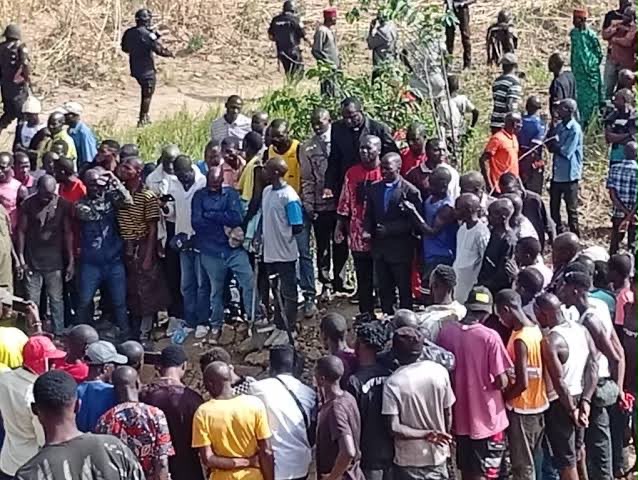
At least 16 people, including women, youths and children, have been killed after gunmen launched a deadly overnight attack on Tafi Gana, a hamlet in Kyie Ihwien community near Jebbu Miango, Bassa Local Government Area of Plateau State.

The attackers, reportedly armed with assault rifles and other dangerous weapons, stormed the community and opened fire indiscriminately on residents.

The attack, which occurred in the early hours of Thursday, November 26, also left four people injured and receiving treatment at undisclosed medical facilities.

The victims included elderly residents and children, with those killed identified as Moses Oko, 70; Maingwa Zere Rangya, 60; Danladi Ishaku, 45; Luka Danladi, 21; Elisha Luka, 18; David Danladi, 10; and 10 others.

The association’s Public Relations Officer, Sam Jugo, disclosed the incident in a statement issued in Jos, adding that the traditional ruler, Nggwe Gado Dama, had confirmed the attack.

The incident has been reported to security agencies, with operatives reportedly arriving at the scene.

The association condemned the killings and appealed to residents to remain calm and avoid reprisals, while calling for urgent measures to prevent further attacks.

Continue Reading
Click to comment

Leave a Reply

Your email address will not be published. Required fields are marked *

Crime

2027 Elections: Nigerians Deserve Ballots, Not Bullets — Security Agencies Must Act Now

Published

on

By Patrick Idowu

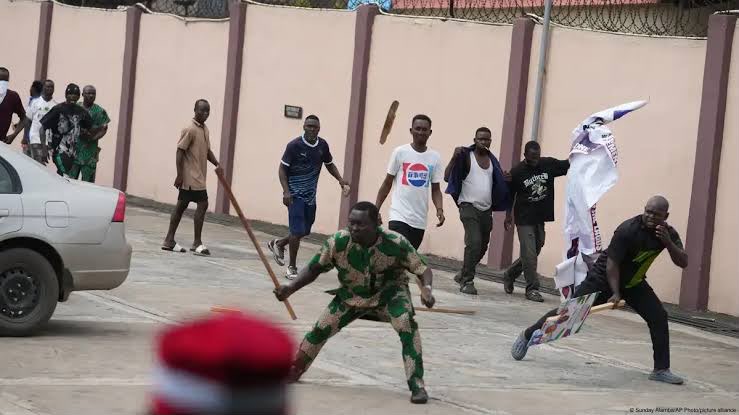
As political activities gather momentum ahead of the 2027 general elections, security agencies must move swiftly to tackle rising political violence, protect citizens and restore public confidence in the electoral process.

Nigeria’s democracy faces another major test as concerns over pre-election violence, political intimidation and attacks on supporters threaten the peaceful conduct of the 2027 general elections.

Elections are meant to provide citizens with the opportunity to freely choose their leaders. However, when political competition degenerates into threats, physical attacks and intimidation, the foundation of democracy is weakened.

The disturbing reality is that electoral violence does not begin on election day. It often starts months earlier through inflammatory statements, attacks on political gatherings, harassment of opponents and the activities of individuals who use violence to advance political interests.

This is why Nigeria’s security agencies must act now rather than wait until the election period before responding to threats.

The Nigeria Police Force, Department of State Services (DSS), Nigeria Security and Civil Defence Corps and other relevant institutions must strengthen intelligence gathering, identify potential flashpoints and prevent political disagreements from escalating into violence.

Security agencies must also demonstrate absolute neutrality. Their responsibility is to protect every Nigerian, irrespective of political affiliation, not to serve the interests of any political party or influential individual.

Equally important is the need to end the culture of impunity surrounding electoral violence. Politicians who sponsor attacks, individuals who recruit thugs and perpetrators who threaten political opponents must be investigated and prosecuted, regardless of their connections.

Arrests without prosecution will achieve little. Nigerians need to see that political violence carries consequences and that nobody is above the law.

Political parties and their leaders must also accept responsibility by discouraging inflammatory rhetoric, warning supporters against violence and promoting issue-based campaigns.

Furthermore, security agencies should establish effective channels for reporting threats and work closely with INEC, civil society organisations, journalists and community leaders to monitor emerging security concerns.

Public confidence in elections cannot be restored through assurances alone. It requires visible professionalism, impartial enforcement of the law and the protection of citizens’ fundamental rights.

Nigeria cannot afford another electoral season in which fear determines who campaigns, who participates and who votes.

The responsibility before security agencies is enormous. They must ensure that candidates can campaign freely, supporters can participate peacefully and voters can approach polling stations without fear of intimidation.

Ultimately, the credibility of an election is not measured only by the announcement of results but also by whether citizens were allowed to participate freely and safely.

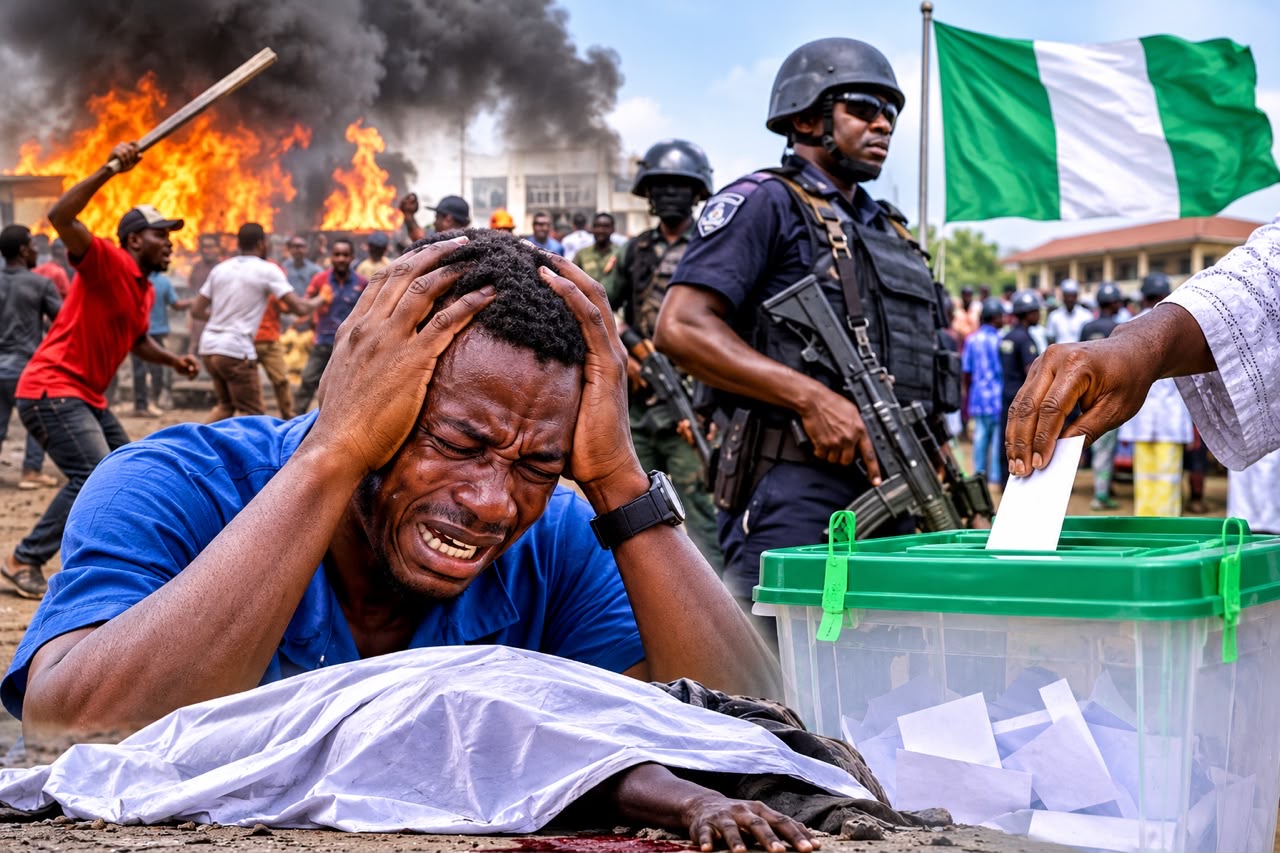
The ballot box must remain more powerful than the bullet. Security agencies must rise to the occasion, stop the emerging wave of political violence and demonstrate that Nigeria’s democracy belongs to all its citizens, not just those who wield political power.

Continue Reading

Crime

Benue Police Nab Man With Pistol at Campaign Rally

Published

on

By Patrick Idowu

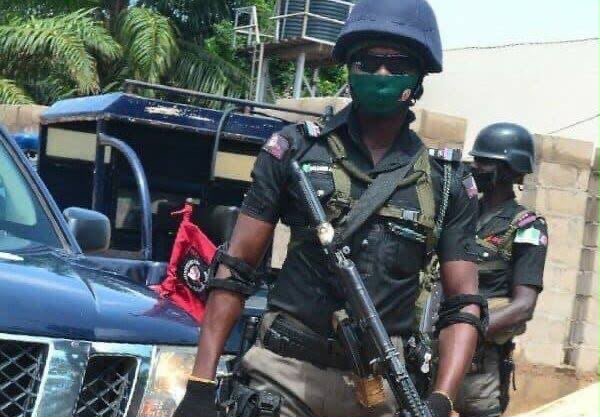
The Benue State Police Command has arrested a man found in possession of a Beretta pistol during a security screening exercise at a political campaign rally in Gboko, raising fresh concerns over security threats surrounding political activities in the state.

The suspect, identified as Saalu Fidelis Teryange, was apprehended on Thursday, November 19, 2026, at the J.S. Tarka Stadium, Gboko, where a political campaign event was taking place.

The arrest was disclosed by the Police Public Relations Officer, DSP Peter Aondongu, in a statement issued on Wednesday.

According to the police, the suspect was intercepted during heightened security checks introduced to prevent criminal elements from exploiting political gatherings to cause violence or threaten public safety.

Aondongu confirmed that the suspect had been taken into custody and was undergoing investigation.

He explained that the Commissioner of Police, CP Cletus Nwadiogbu, alongside the Deputy Commissioner of Police in charge of Operations, was physically present at the campaign venue to supervise security arrangements when the arrest was made.

The command described the arrest as part of its efforts to maintain law and order during the electioneering period, warning that political activities must not become platforms for intimidation, violence or criminal conduct.

The police spokesperson cautioned politicians, party supporters and other political actors against using the campaign season to foment trouble, harass opponents or engage in activities capable of threatening public peace.

He stressed that the command would not tolerate political thuggery, intimidation of political opponents or any attempt to disrupt public order under the guise of political mobilisation.

Aondongu further warned individuals and groups planning to exploit political gatherings to perpetrate violence to immediately desist, insisting that anyone found culpable would be arrested and prosecuted regardless of political affiliation, influence or status.

In a move to strengthen security across the state, the Commissioner of Police has directed Area Commanders, Divisional Police Officers and Tactical Commanders to sustain heightened vigilance and intensify intelligence-led policing.

The directives also include ensuring adequate security coverage at political gatherings, public events and other strategic locations across Benue State.

The command said the measures were necessary to prevent criminal activities, detect potential security threats early and protect residents during the politically sensitive period.

It also appealed to members of the public to remain law-abiding and promptly report suspicious movements, individuals or activities to the nearest police station.

The police reaffirmed their commitment to protecting lives and property before, during and after the electioneering period, urging political stakeholders to conduct their activities peacefully and within the confines of the law.

The arrest comes amid heightened attention to security at political gatherings, with the police warning that the possession of weapons and other acts capable of triggering violence would attract serious consequences.

Continue Reading

Crime

22 Dead, 124 Violent Attacks Rock Nigeria Ahead of January Elections – KDI

Published

on

By Patrick Idowu

At least 22 people have been killed in 124 incidents of electoral violence recorded across 35 states and the Federal Capital Territory (FCT) within four months, raising concerns over the safety of voters, political supporters and other citizens ahead of the January 16 general elections.

The disturbing figures were disclosed by the Kimpact Development Initiative (KDI), which warned that the growing wave of politically motivated violence could undermine the credibility of the electoral process if urgent preventive measures were not taken.

In a statement issued in Abuja yesterday, the youth-focused, nonpartisan and nongovernmental organisation said the incidents were documented between July 1 and November 23, 2026, through its Nigeria Election Violence Education and Reporting (NEVER) Project.

The organisation expressed concern that the pre-election atmosphere was increasingly characterised by physical assaults, intimidation, kidnappings, shootings, destruction of campaign infrastructure and other forms of politically motivated attacks.

According to the report, the frequency of electoral violence has risen sharply in recent months, increasing from just three incidents in July to 48 in October, while another 40 cases were recorded within the first half of November.

The figures indicate a worrying escalation in political tensions as parties and candidates intensify their campaigns ahead of the polls, with KDI warning that the situation could deteriorate further without coordinated intervention by political actors, security agencies and electoral stakeholders.

The organisation attributed the growing trend partly to political intolerance, hostility among rival supporters and inflammatory rhetoric capable of provoking confrontation.

It cautioned that the increasing use of provocative language by political actors, campaign spokespersons and supporters could deepen divisions, heighten tensions and create an atmosphere in which violence becomes more likely.

KDI, however, stressed that electoral violence was not peculiar to any single political party, noting that the problem cut across political affiliations and should not be politicised.

It therefore urged political parties and candidates to prioritise issue-based campaigns, focusing on their policies, programmes and development agendas rather than resorting to statements capable of inciting hostility against political opponents.

A geographical breakdown of the incidents showed that electoral violence had spread across several parts of the country, with Kano, Delta, Rivers, Edo, Ondo and Kebbi among the states identified as having significant cases.

Delta State recorded 10 incidents and five fatalities, while Kano recorded 11 incidents and three deaths. Rivers State followed closely with 10 incidents and one fatality.

The organisation said the spread of reported incidents across 35 states and the FCT demonstrated that electoral violence had become a nationwide concern requiring a coordinated response rather than isolated interventions.

Breaking down the nature of the reported attacks, KDI disclosed that physical assaults accounted for the largest proportion, representing 46.8 per cent of the incidents.

Property destruction followed with 28.8 per cent, while shootings accounted for 10.2 per cent. Intimidation and harassment represented nine per cent, while kidnappings accounted for four per cent.

The figures highlight the different forms of threats confronting the electoral environment, ranging from direct physical attacks on individuals to the destruction of property and acts intended to discourage citizens from participating freely in political activities.

KDI further warned that political supporters, civil servants, journalists and ordinary citizens were increasingly exposed to intimidation and threats for exercising their democratic rights.

It noted that such developments could discourage voter participation, restrict freedom of political expression and weaken public confidence in democratic institutions.

The organisation consequently called on political parties and candidates to make clear public commitments to peaceful campaigns and take responsibility for the conduct of their supporters.

It urged party leadership to discourage violence, caution campaign groups against provocative activities and ensure that political disagreements were addressed through lawful and democratic channels.

On the security front, KDI called on relevant agencies to strengthen preventive deployments, improve intelligence gathering, respond promptly to early warning signals and ensure that electoral laws were enforced impartially.

It stressed that security agencies must act professionally and without political bias to protect lives, property and the rights of citizens throughout the electoral process.

The organisation also urged the Independent National Electoral Commission (INEC) and other electoral stakeholders to intensify voter education, strengthen conflict-prevention mechanisms and work with relevant institutions to address emerging threats before they escalate into violence.

Beyond government institutions, KDI called on civil society organisations, religious leaders, traditional rulers and the media to play active roles in promoting political tolerance, peaceful coexistence and responsible political communication.

It also appealed to citizens to reject violence, avoid spreading inflammatory messages and report threats or suspicious activities through appropriate channels.

The organisation maintained that elections should provide citizens with an opportunity to freely express their political preferences without fear of intimidation, coercion or reprisals.

It warned that the integrity of the electoral process could be compromised if voters and political participants were forced to make decisions under threats or physical attacks.

KDI’s latest findings have brought renewed attention to the security challenges surrounding the country’s electoral process, particularly the need for early intervention before political disagreements escalate into violence.

With 22 reported deaths and more than 100 incidents documented within four months, the organisation’s warning underscores the importance of preventive action, political restraint and institutional accountability in safeguarding the electoral environment.

It said the outcome of elections must ultimately reflect the freely expressed choices of citizens rather than threats, intimidation or the use of force.

Continue Reading

Trending

taraftarium24seo ajansıseo ajansımarsbahistaraftarium24dizipalgiftcardmall/mygiftjustin tvGrandpashabetGrandpashabetcasibomcasibomGrandpashabetmarsbahisultrabettaraftarium24taraftarium24rojadirectajustin tv1winbetgitromabetromabetgameofbetradissonbetgrandpashabetgrandpashabettambetbetbeyesbetcashwinbetpuansekabetsekabetsekabetsekabetgrandpashabetpusulabetcasinowoncasinomilyoncasinoroyalpalacebetteosbetteosbetsonbahistambettambetmersobahisimajbetcasibombettiltimajbetpusulabetpusulabet girişmarsbahismarsbahis girişholiganbetholiganbet girişgrandpashabetholiganbetholiganbetbahiscasinograndpashabetsonbahisbahiscomnesinecasino xwbahis xbetgaranti xgrandpashabet girişbahis sitelerijojobetjojobetjojobetjojobetjojobetamgbahismrkingbetwildmatadorbet