
History, Culture, and Tradition of The Igala people
By Tayelolu Akinbohun
A Few days ago, there was a conversation between the Big Brother Housemates and Sammie, who is an Igala man and one of the Big Brother ShineYaEye housemates was asked to talk about where he is from and he had few things to say. This piece will give you insight into whom the Igala people are.
History

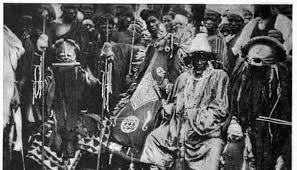
The Igala Kingdom, also known as the Kingdom of Idah, Anẹ-Ìgàlá, is a pre-colonial West African state, in the Middle Belt of Nigeria. The kingdom was founded by the Igala people, with the "Attah" as their king, national father, and spiritual head, and the capital at Idah. Although Igala people migrated to other lands, it is believed that most, if not all Igala people settled or came from Idah, which serves as the spiritual capital of the Igala Kingdom. The Igala Kingdom has been influenced by the Yoruba, Idoma, Igbo, and Jukun, and is likely made up of descendants of these groups who settled and mixed with the native Igala populations.
Igala is the language spoken by the people located within the triangle formed by the confluence of the River Niger and Benue in Kogi State of Nigeria.
The population of the Igala people is estimated at two million in the late 1990s. The people are evenly distributed all over the land but with ldah, Anyigba and Ankpa more densely populated. The Igala are also sparsely found in Edo, Delta, Anambra, and Enugu States. But the huge bulk of the people are in Idah, Ankpa, Dekina, Omala, Olamaboro, Ofu, Igalamela/Odolu, lbaji, Bassa (and even Lokoja and Ajaokuta) Local Government Areas of Kogi State.
The traditional limits of the land included: 'The greater part of ldomaland, Nsukka area, Kogi, Anambra area (North of Onitsba)... The Atta of Igala formerly exercised suzerainty over them. The Igala are unmistakably the major language group in Kogi State of Nigeria today. Igalaland could be said to be a sort of terminus. It is located strategically at the natural crossroads in Nigeria. Owing to this reason, it has been influenced both positively and negatively by trends of events as it is pulled in different directions. By and large, it has enjoyed some degree of encounter with the Yoruba, Edo (Benin), Jukun, Idoma, Nupe, Igbo, Hausa, Igbirra, Bassa-kwomo, and Bassa-nge. To some extent, its central positioning may account for the land being considered a cultural melting pot.
Igala existed as an entity on its own before the other cultures were assimilated into its mainstream.
How To Identify an Igala Person

In Igala tradition, infants from some parts of the kingdom, like Ankpa, receive three deep horizontal cuts on each side of the face, slightly above the corners of their mouths, as a way of identifying each other.

The elaborate hairstyle, shape, facial features, scarification, and facial decorations represent the elements of the ideal of female beauty of the Igala population. The Igala people were masked with three cuts during their festivals. The Masks with those attributes were worn by young men at ceremonies to instruct and educate the young in both behavioral morality and the canons of physical beauty, where these correspond to the ethics of the person.
The OJEGU mask

The Ojegu mask is a major aspect of the Igala people that one cannot overemphasize. The Igalas principal cult “egu”, the spirit of the dead, is connected with ancestors who are remembered during yam harvest.

Egu is represented by masks and headdresses called “ojegu”. The dances that took place to mark the harvest and the dry season for the feast of the Earth Goddess, have as a propose to propitiate a rich and abundant harvest.
Occupation
The population of Igala land is estimated to be about four million, over 70% of whom are subsistence farmers. The Igala ethnic group is densely populated in their settlements around the major towns such Idah, Ankpa, and Anyigba.
Igala Traditional Food

They express themselves in a colorful, unique culture that has ancient roots. Igala traditional food deserves special attention. Ogidigbo is a popular meal of the Igalas.
Igala people often use corn in their meals. Two delicacies especially beloved by Igala are prepared from it. First is Ogidigbo. It's a special variant of Moi-Moi.

Ijobu is also another dish loved by the Igala, and it is also prepared from corn. You will not need any special ingredients. Just remember that it is better to follow the traditional method; we will be looking at how to prepare these meals someday soon.
Are you from Igala? Let me know what else I didn't mention about this amazing tribe in the comment section

.png)



.jpg)

.jpg)


