The Federal Government said it welcomes oil major, ExxonMobil’s plan to invest $10 billion in Nigeria’s deep-water (offshore) oil operations.
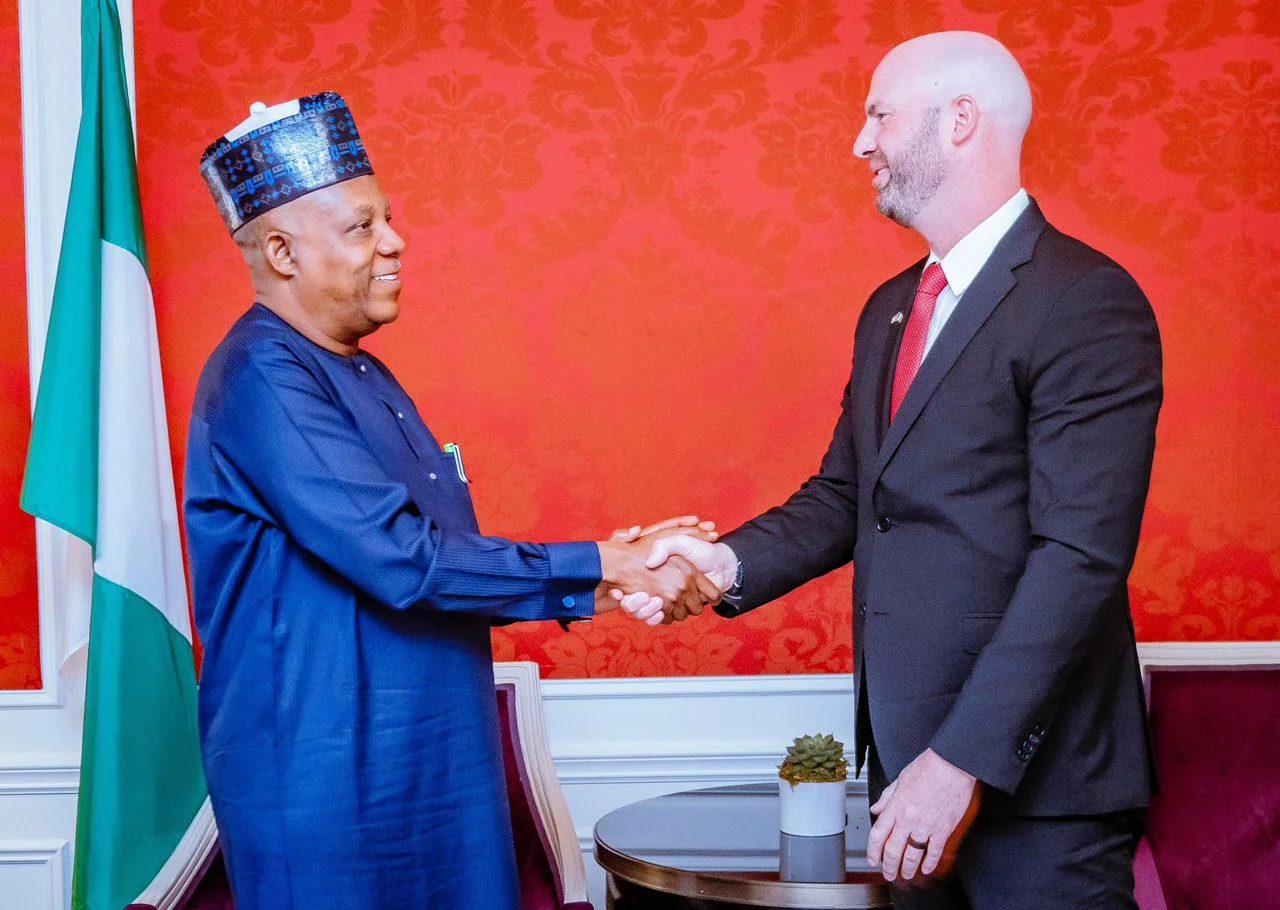
This is contained in a statement by the Vice President of Nigeria, Kashim Shettima, during a meeting with ExxonMobil executives on the sidelines of the ongoing 79th Session of the United Nations General Assembly in York, United States.
ExxonMobil is one of the handful of international oil companies (IOCs) which have exited Nigeria’s onshore environment to explore the deep-water operations in the oil-rich Niger Delta.
Shettima noted the proposed investment is a clear testament to the administration’s economic reforms and investment-friendly policies.
“This potential investment by ExxonMobil aligns perfectly with the President @officialABAT administration’s vision for a more investment-friendly Nigeria. We are committed to creating an enabling environment for such transformative projects,” Shettima stated.
On his part, the Chairman and Managing Director of ExxonMobil Affiliates in Nigeria, Shane Harris, reaffirmed the company’s commitment to investing in Nigeria.
Harris mentioned that the centerpiece of ExxonMobil’s new strategy is the Owo project, a substantial subsea tie-back that could represent a $10 billion investment.
“Our commitment to Nigeria remains unwavering. As we celebrate 70 years of oil production and 8 billion barrels produced, we’re not retreating but refocusing our investments on deep-water opportunities.
We’re working closely with the President’s office and the Special Adviser to the President to secure favourable fiscal arrangements that will make this significant investment possible,” Harris explained.
In addition, ExxonMobil aims to inject $1 billion annually into maintenance operations and an additional $1.5 billion to boost production by 50,000 barrels per day over the next few years.
There is an ongoing plan with the ExxonMobil and Seplat Energy for the divestment of the former’s onshore assets for $1.2 billion
The deal which had been ongoing since 2022 saw a greenlight following President Tinubu’s intervention to resolve the issue as soon as possible.
Meanwhile, ExxonMobil is not the only international oil company (IOC) deciding to move offshore and employing a divestment strategy to offload its stakes in the onshore segment of the oil and gas sector.