Connect with us

Education

JAMB Discovers 3,000 Fake Graduates With Illegal Certificates

Published

on

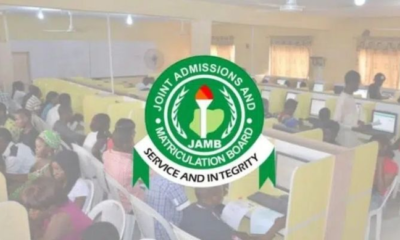
The Joint Admissions and Matriculations Board (JAMB) has raised an alarm, saying it had uncovered 3,000 fake graduates in possession of illegal certificates across Nigeria.

JAMB Registrar, Prof Ishaq Oloyede, who made this known in a report published in the board’s bulletin, said those involved were discovered to have never set foot within the four walls of a classroom.

Oloyede, during a meeting with the delegation of the Committee of Pro-Chancellors of State Universities in Nigeria (COPSUN) in his office, at the JAMB’s national headquarters at Bwari, Abuja, also condemned the act of illegal admissions by some institutions.

According to him, illegal admissions have remained a source of embarrassment to the country.

“Some ‘graduates’ had never entered the four walls of a university owing to the endemic corruption in the system but the board had documented over 3,000 of such cases.

“Illegal admission of candidates into tertiary institutions in the country is an embarrassment and a disservice to the nation,” the bulletin read.

Oloyede charged COPSUN to ensure that they clamp down on underhand admissions, which is not only detrimental to the system but is also disadvantageous to the image of the country.

The development comes on the heels of the House of Representatives’ Committee on Basic Education, in December 2023, ordering the Board to present a list of tertiary institutions that had conducted irregular and illegal admissions.

The examination body had earlier warned candidates to desist from accepting admissions offered by such institutions without full academic participation.

In the statement titled, “Cessation of illegal/irregular admission,” JAMB reiterated that all applications of admissions to first degree, national diploma, national innovation diploma and the Nigeria certificate in education into full-time, distance learning, part-time, outreach, sandwich, etc, must be processed only through JAMB.”

Last year, JAMB gave tips on how to spot illegal admission.

While speaking during the 3rd matriculation ceremony of the Thomas Adewumi University (TAU) Oko, Irepodun Local Government Area of Kwara State, Oloyede said any admission not captured in its Central Admission Processing System (CAPS) is illegal, null and void.

According to him, “For any admission into tertiary institutions, it has to be done through CAPS which is on the JAMB portal.

“Any admission whatsoever that is outside the CAPS irrespective of the institution is illegal. And I think this point is very important,” said Prof Oloyede who was represented by an Assistant Director of JAMB, Mr. Ganiyu Yahaya, told the 171 matriculants at the programme.

This is as the Board also said any candidate who chooses to get an underhand admission would face the consequences.

The Board reiterated that all tertiary institutions’ admissions must be processed through it.

According to Oloyede’s presentation, the top five universities with the highest number of ‘illegal’ admissions offered within the period are the Universities of Jos, Plateau State with 7,600 cases; Benue State University, Makurdi with 6,161 cases; Olabisi Onabanjo University (OOU), Ago Iwoye, Ogun State, with 5,669 cases; Kwara State University, Malete with 4,281 cases and Novena University, Delta State with 3,432 cases.

Among the ND certificate awarding institutions, the Kwara State Polytechnic, Ilorin, topped the chart with a total of 45,471 cases within three years, and it is closely followed

by Auchi Polytechnic, Edo State, with 37,828 cases and Yaba College of Technology, Lagos, with 30,856 cases within the same period.

Others are the Federal Polytechnic, Oko, Anambra State and the Federal Polytechnic, Nasarawa, Nasarawa State with 24,335 each.

Continue Reading
Click to comment

Leave a Reply

Your email address will not be published. Required fields are marked *

Abuja Reports

Atoyebi Adewumi Wins 4th National Essay Competition, Beats 2,000 Contestants

Published

on

By

By Samson Adeyanju

Atoyebi Adewumi has emerged winner of the fourth edition of the National Essay Competition, beating more than 2,000 contestants in an intellectual contest aimed at promoting academic excellence, critical thinking and creative writing among young Nigerians.

The competition, which focused on the relevance of taxation to national development, challenged participants to examine the role of tax revenue in financing public services, stimulating economic growth and strengthening the relationship between government and citizens.

The initiative provided a platform for young Nigerians to demonstrate their writing skills, articulate informed perspectives on national issues and contribute ideas towards building a more responsible and progressive society.

Speaking after being declared winner, an elated Adewumi expressed gratitude to the convener, Foluso Sylvanus Ojo, and the organising team for providing young Nigerians with an opportunity to showcase their intellectual abilities.

“I am so glad, very, very glad, to have this privilege of emerging as the winner. I am grateful to the convener and the entire team, as well as everyone who supported this vision,” Adewumi said.

In his remarks, Ojo expressed concern over the tendency to criticise the attitudes and lifestyles of younger generations without providing adequate opportunities to nurture their talents and channel their energies towards productive pursuits.

He called on the government, corporate organisations and nongovernmental organisations to invest more in educational initiatives that promote intellectual excellence, creativity and responsible citizenship.

According to him, sustained investment in academic competitions and youth development programmes would encourage discipline, innovation and a stronger commitment to national development.

Drawing a comparison with the substantial cash prizes awarded in some reality television competitions in Nigeria, Ojo argued that students and intellectually gifted young Nigerians deserved greater recognition, financial support and encouragement.

“I believe the government should support initiatives like this because individuals need supportive hands, especially from the government. When they receive such support, they become more confident and motivated to continue their good work,” he said.

Ojo maintained that society could not continue to complain about the attitudes and lifestyles of young people without deliberately investing in programmes that encourage positive values and productive engagement.

The fourth edition of the competition also underscored the importance of tax awareness among young Nigerians, highlighting how effective taxation, transparency and accountable governance could contribute to improved infrastructure, education, healthcare and other essential public services.

Beyond celebrating the winner, the competition reinforced the need to identify, encourage and empower emerging intellectual talents capable of contributing meaningfully to Nigeria’s development.

Winner of the 5,000,000 naira

Winner of 3,000,000 naira

Winner of 2,000,000

All the participants 

Continue Reading

Abuja Reports

20 Finalists Begin Final Stage of National Essay Competition

Published

on

By

By Samson Adeyanju

Twenty finalists from across Nigeria have begun the final stage of the fourth edition of the National Essay Competition in Abuja, following an orientation session designed to prepare them for the decisive examination.

The finalists arrived in the Federal Capital Territory for a four-day, all-expenses-paid programme featuring the essay examination, institutional tours and opportunities for learning and networking.

The competition, the brainchild of Mr Foluso Ojo, is sponsored by the Nigeria Revenue Service (NRS).

Ahead of the examination, the finalists participated in an orientation session led by Professor Omotosho Borisade of Ekiti State University, who serves as the competition’s umpire.

The session familiarised participants with the competition’s rules and regulations, examination guidelines and assessment criteria, helping them understand the requirements of the final stage.

The essay examination is scheduled to begin today at 9 a.m., after which the finalists are expected to embark on institutional tours around Abuja.

The programme is designed to extend beyond the contest itself, exposing the finalists to new learning opportunities, professional connections and experiences in the nation’s capital.

The competition brings together young Nigerians to demonstrate their writing ability, knowledge, creativity and critical-thinking skills as they compete for the top honours.

With the finalists prepared for the examination, attention now turns to their performance and the eventual emergence of the competition’s champion.


Continue Reading

Education

Oyelami Named Acting CEO of National Mathematical Centre

Published

on

By

By Omoniyi David

The Federal Government has appointed Professor Oyelami as Acting Chief Executive Officer of the National Mathematical Centre with immediate effect.

The appointment was announced in a statement by the centre’s Controller of Information and Public Relations, Onyekachi Njoku. He said the decision followed the elevation of the former CEO, Promise Mebine, as Vice-Chancellor of the Federal University Otuoke.

Njoku disclosed that the approval was conveyed in a letter signed by Rakiya Ilyasu, Director of University Education at the Federal Ministry of Education.

Professor Oyelami, a mathematician who joined the centre over two decades ago from Abubakar Tafawa Balewa University, previously served as Coordinator of the Mathematics and Theoretical Physics programmes and as Deputy Director/Academic Planning Coordinator.

An alumnus of the University of Jos and Abubakar Tafawa Balewa University, he holds a Second-Class Upper degree, MSc and PhD in Mathematics and has published widely in local and international journals.

The centre said his appointment would strengthen its mandate to promote research, innovation and capacity building in mathematical sciences.

Continue Reading

Trending