Connect with us

Abuja Reports

TUC, LCCI, Others Urge Government to Revoke 0.5% Cybersecurity Levy on Bank Transactions

Published

on

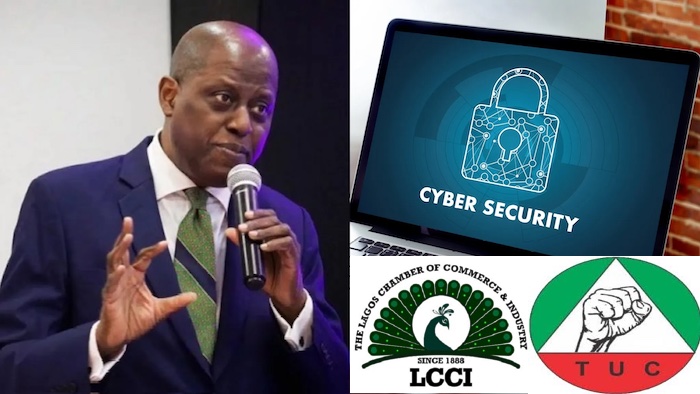
The TUC has urged government to revoke the 0.5% cybersecurity levy on bank transactions, citing economic burden on downtrodden Nigerians.

Trade Union Congress (TUC) and Lagos Chamber of Commerce and Industry (LCCI), on Wednesday, asked the federal government to rescind the decision to impose a cybersecurity levy on citizens’ bank transactions.

In separate statements, the organisations expressed shock over the recent directive by the Central Bank of Nigeria (CBN) to banks, imposing the 0.5 per cent levy on almost all electronic transactions.

Similarly, Labour Party (LP) presidential candidate in the 2023 general election, Peter Obi, on Wednesday, described the new levy as “taxes too many and aimed at milking a dying economy”.

A statement by TUC President, Festus Osifo, said the policy was illogical, as it was coming at a time that Nigerians were grappling with high cost of living brought about by the devaluation of the naira, hike in the cost of petrol, as well as the increment in the cost of electricity.

Osifo said, “We are quite disturbed that since the inception of this administration, its policies have brought pain, anguish and sorrow on Nigerians.

“A bank account holder in Nigeria today is currently charged stamp duty, transfer fee, Value Added Tax (VAT) on transfer fee, and all forms of account maintenance levies by both government and the banks. This burden seems not to be enough, as government is poised to inflict further pain on the already battered Nigerians.

“So many policies of this government are not only imposing hardship on the downtrodden Nigerians, but also on businesses, as some of them are shutting down because of the unfriendly business environment.

“We call on the federal government to give a marching order to the CBN to immediately withdraw the circular and cancel the planned levy forthwith; failure of which we will be left with no option than to mobilise all our members, stakeholders and, indeed, the entire masses to embark on immediate protest that would culminate in the total shutdown of the Nigerian economy as this is one exploitation too many.”

TUC regretted that the National Assembly that ought to be the bastion of democracy and the protector of the citizens had often engaged in collusion with elements within the executive to exploit the people.

It added, “How can such obnoxious law see the light of day in a truly people-oriented legislative house. This is, indeed, a conspiracy of the oppressors against the masses and citizens of this country and it must be resisted by all well-meaning Nigerians.

“What kind of cybercrime are we fighting with this humongous amount of money? This ugly development will further encourage people to hoard cash at home, reduce financial inclusion, increase poverty and exacerbate misery index.”

TUC stated that the cost of living was at an all-time high, and food inflation was biting, all contributing to the miserable index of Nigerians. It described the new charge as a deliberate plot to continue to drain Nigerians of their hard-earned money.

TUC said, “All Nigerians are interested in right now is the urgent conclusion of discussions around the minimum wage, and not a vexatious policy that is further reducing the already depleted disposable income of the masses and indirectly ridiculing the gain, which the minimum wage would have brought to the people, when concluded.”

LCCI equally expressed deep concern that the funds from the charge might not be used to enhance the country’s cybersecurity architecture to guarantee cyber-safety for technology users in Nigeria.

Director General of LCCI, Dr. Chinyere Almona, said in a press release that the justification for the levy was unclear. Almona demanded that it should be withdrawn to allow more consultations with critical stakeholders.

Almona said, “The directive that the remittance of this levy should go to the Office of National Security Adviser suggests that the funds may not be used to enhance our cybersecurity architecture to guarantee cyber-safety for technology users in Nigeria.

“We believe that since the collection of this levy cannot guarantee the protection of payers from cyberattacks, it is difficult to justify its collection at this time.

“In the same vein, the collection approach with some exemptions can create confusion regarding what transactions really qualify for the exemptions.

“Implementing of this directive can gradually encourage some people to return to holding cash to avoid paying the levy. This can negatively impact the achievement already recorded with the cashless policy.”

It warned that in the face of biting inflation that had continued to weaken the purchasing power of consumers and with companies burdened with a rising cost of production, any imposition of additional cost burden will slow down economic activities.

On his part, Obi lamented that instead of nurturing the recovery and growth of the economy, the government, by its multiple taxation, was more interested in heaping more burden on the people who were already suffering severe economic stress.

Senior Advocate of Nigeria (SAN), Kunle Adegoke, also said the 0.5 per cent cybersecurity levy banks will charge on electronic transfers will increase hardship for the poor Nigerians. Adegoke stated this in a television programme monitored in Abuja on Wednesday.

The senior lawyer said poor Nigerians were already complaining about certain charges on their transactions.

He stated, “Why I feel the timing is not appropriate is this, the law being implemented by the CBN is the Cybercrime Act of 2015, which was recently amended in 2024. And the provision requiring that 0.5 per cent be levied was contained in the 2015 Act.

Adegoke said the directive by the CBN that 0.5 per cent to be levied on every electronic transaction emanated from 2024 amendment act.

“With this position, one feels that the spectrum of society that is going to feel it much more will be the people in the lower rungs of the economic ladder, whereas the rich and the elite may not feel it as much considering the amount that may be involved in the transactions to be carried out,” remarked Adegoke.


Abuja Reports

Atoyebi Adewumi Wins 4th National Essay Competition, Beats 2,000 Contestants

Published

on

By

By Samson Adeyanju

Atoyebi Adewumi has emerged winner of the fourth edition of the National Essay Competition, beating more than 2,000 contestants in an intellectual contest aimed at promoting academic excellence, critical thinking and creative writing among young Nigerians.

The competition, which focused on the relevance of taxation to national development, challenged participants to examine the role of tax revenue in financing public services, stimulating economic growth and strengthening the relationship between government and citizens.

The initiative provided a platform for young Nigerians to demonstrate their writing skills, articulate informed perspectives on national issues and contribute ideas towards building a more responsible and progressive society.

Speaking after being declared winner, an elated Adewumi expressed gratitude to the convener, Foluso Sylvanus Ojo, and the organising team for providing young Nigerians with an opportunity to showcase their intellectual abilities.

“I am so glad, very, very glad, to have this privilege of emerging as the winner. I am grateful to the convener and the entire team, as well as everyone who supported this vision,” Adewumi said.

In his remarks, Ojo expressed concern over the tendency to criticise the attitudes and lifestyles of younger generations without providing adequate opportunities to nurture their talents and channel their energies towards productive pursuits.

He called on the government, corporate organisations and nongovernmental organisations to invest more in educational initiatives that promote intellectual excellence, creativity and responsible citizenship.

According to him, sustained investment in academic competitions and youth development programmes would encourage discipline, innovation and a stronger commitment to national development.

Drawing a comparison with the substantial cash prizes awarded in some reality television competitions in Nigeria, Ojo argued that students and intellectually gifted young Nigerians deserved greater recognition, financial support and encouragement.

“I believe the government should support initiatives like this because individuals need supportive hands, especially from the government. When they receive such support, they become more confident and motivated to continue their good work,” he said.

Ojo maintained that society could not continue to complain about the attitudes and lifestyles of young people without deliberately investing in programmes that encourage positive values and productive engagement.

The fourth edition of the competition also underscored the importance of tax awareness among young Nigerians, highlighting how effective taxation, transparency and accountable governance could contribute to improved infrastructure, education, healthcare and other essential public services.

Beyond celebrating the winner, the competition reinforced the need to identify, encourage and empower emerging intellectual talents capable of contributing meaningfully to Nigeria’s development.

Winner of the 5,000,000 naira

Winner of 3,000,000 naira

Winner of 2,000,000

All the participants 

Continue Reading

Abuja Reports

20 Finalists Begin Final Stage of National Essay Competition

Published

on

By

By Samson Adeyanju

Twenty finalists from across Nigeria have begun the final stage of the fourth edition of the National Essay Competition in Abuja, following an orientation session designed to prepare them for the decisive examination.

The finalists arrived in the Federal Capital Territory for a four-day, all-expenses-paid programme featuring the essay examination, institutional tours and opportunities for learning and networking.

The competition, the brainchild of Mr Foluso Ojo, is sponsored by the Nigeria Revenue Service (NRS).

Ahead of the examination, the finalists participated in an orientation session led by Professor Omotosho Borisade of Ekiti State University, who serves as the competition’s umpire.

The session familiarised participants with the competition’s rules and regulations, examination guidelines and assessment criteria, helping them understand the requirements of the final stage.

The essay examination is scheduled to begin today at 9 a.m., after which the finalists are expected to embark on institutional tours around Abuja.

The programme is designed to extend beyond the contest itself, exposing the finalists to new learning opportunities, professional connections and experiences in the nation’s capital.

The competition brings together young Nigerians to demonstrate their writing ability, knowledge, creativity and critical-thinking skills as they compete for the top honours.

With the finalists prepared for the examination, attention now turns to their performance and the eventual emergence of the competition’s champion.


Continue Reading

Abuja Reports

Caritas Nigeria Urges Ecological Conversion, Climate Action

Published

on

By

By Samson Adeyanju

Caritas Nigeria has called on Nigerians to embrace what Pope Francis describes as “ecological conversion,” urging citizens, institutions and governments to move beyond environmental rhetoric and take concrete action against climate change and environmental degradation.

The call was made during the commemoration of World Environment Day 2026 at the Catholic Secretariat of Nigeria (CSN) Training Hall, Abuja, under the theme: “Inspired by Nature. For Climate. For Our Future.”

Delivering an address on behalf of the Catholic Secretariat of Nigeria, the Deputy Secretary, Rev. Fr. Augustine Okochi, described care for the environment as a moral, spiritual and ethical responsibility rooted in Christian faith.

“Our concern for the environment is not a passing trend. It is part of our moral duty, our Christian witness, and our responsibility to future generations,” he said.

Fr. Okochi noted that climate change is already affecting communities through flooding, land degradation, water pollution, rising temperatures and declining livelihoods, with the poor, women, children and displaced persons bearing the greatest burden.

He commended Caritas Nigeria’s efforts in environmental awareness, tree planting, climate-smart agriculture and support for vulnerable communities, while urging families, schools, parishes and institutions to cultivate a culture of environmental stewardship.

Speaking at the event, Caritas Nigeria’s Environmental Focus President, Dr. Pascal Onu, stressed the importance of educating young people on environmental protection through debate and quiz competitions.

“We believe it is important to catch them young. When we imbibe the right environmental culture in our children, it goes a long way in protecting the environment,” he said.

Dr. Onu identified inadequate infrastructure, poor waste management systems and limited funding as major obstacles to environmental sustainability despite increasing public awareness of climate issues.

Also speaking, Director of the Department of Climate Change at the Federal Ministry of Environment, Dr. Iniobong Abiola-Awe, reaffirmed Nigeria’s commitment to climate action through initiatives such as the National Adaptation Plan, Nationally Determined Contributions (NDCs), the Just Transition Action Plan and the National Clean Cooking Policy.

She emphasized the role of young people in advancing climate solutions through programmes such as the Eco-Schools Initiative and the Youth Climate Innovation Hub.

In a goodwill message, the Abuja Environmental Protection Board (AEPB), represented by Chief Environmental Health Officer Omenta Rachael Chinenye, urged Nigerians to draw inspiration from nature in addressing environmental challenges and commended the active participation of students in climate debates.

Students at the event said the programme deepened their understanding of environmental protection, forest conservation and sustainable living, pledging to promote environmental responsibility in their schools and communities.

The event brought together religious leaders, government officials, environmental experts, students and development partners who renewed their commitment to building a cleaner, greener and more climate-resilient Nigeria.

Continue Reading

Trending