High cost of building materials in the country is currently affecting activities in the property sector, posing a huge challenge to the government’s quest for affordable housing.
It has also affected private property developers as many of them have slowed down on construction, while individuals craving to build their houses through direct labour are also complaining.
Also, suppliers of building materials said their capitals have depleted and wares shrank in shops and stores due to uncertain market forces.
Market survey revealed that prices of building materials have increased astronomically by about 100 per cent amidst rising inflation and inadequate energy supply.
The situation has caused disruptions in the construction industry, posing significant challenges to large-scale developers and homeowners.
This is attributed to a combination of factors, including disruptions in the supply chain, escalating labour cost and wholesalers raising prices compared to factory rates.
According to the National Bureau of Statistics, (NBS), Nigeria’s headline inflation rate in September 2024 rose to 32.70 per cent, up from 32.15 per cent in August 2024, marking a 0.55 per cent increase month-on-month.
The NBS added that inflation during the month was propelled by increases in transportation costs and food prices.
Also, the urban inflation rate in September 2024 was 2.67 per cent, reflecting a 0.28 percentage point increase compared to 2.39 per cent in August 2024; while the rural inflation rate stood at 2.39 per cent in September 2024, up by 0.33 percentage points from 2.06 per cent recorded in August 2024.
As a result of this inflationary pressure, there has been a slowdown in construction activities as developers struggle with the financial implications of soaring materials’ costs.
Many projects have been delayed or put on hold indefinitely as developers reassess their budgets and financing options in light of the unprecedented circumstances.
A data from the Shelta Afrique Development Bank indicates that Nigeria’s housing deficit stands at about 27 million, which is about 40 per cent of the entire continent’s deficit.
Prices surge by over 100% in 1 year
Investigations show that the prices of building materials have hit the rooftop, amounting to over 100 per cent hike in the last 1 year.
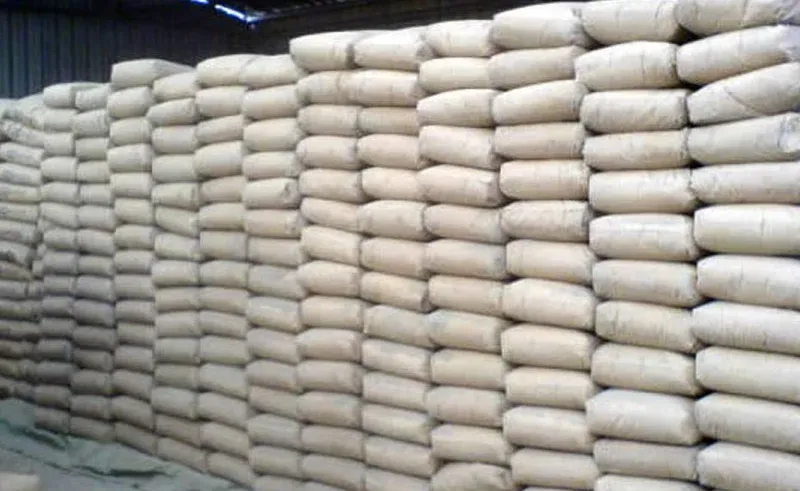
Cement prices surged from N4,000 to N8,800 per bag, representing a 100 per cent increase.
Blocks, which were selling for N250 eauch, last year, are now between N550 and N600 depending on the size.
Iron rods, which range from 10mm to 16mm, which cost N800,000 per ton in 2023, are now N1,600,000 per ton or more, depending on the company.
The cost of paints has also gone up as a big rubber, which hitherto cost between N23,000 and N25,000, is now between N46,000 and N50,000.
Situation dashing our hope – Citizens
Most of the civil servants and other citizens who commented on the situation said the situation is dashing their hope of owning their houses.
A civil servant in Abuja, Joshua Oluwatobi, said: “Just last month in October, I purchased iron rods (16mm per tonne) in the morning, and when I wanted to book again by evening, the wholesalers said they were no longer selling, hence I bought it the next morning for 1.6 million.
“Most of us that are civil servants cannot afford a home after retirement with all these high prices because from iron rod to cement to paint, everything is beyond us now and we want the government to intervene”, Mr. Oluwatobi said.
A builder said: “Every single day when you go to the market, the costs of items are increasing, and I can no longer cope. I started this project since 2018 and up till now I have just managed to construct the roof of the building because asides that, you have to feed, pay school fees and other bills.
“As we speak, I have put the project on hold pending when these items will come down if at all they would”, he said.
A retailer who deals in building materials, Chijoke Ani, said that they are also feeling the brunt.
“My customers are only reaching out mainly to inquire about pricing rather than making immediate purchases. They are also in a state of anticipation, waiting for materials to reduce in cost before proceeding with their building projects.
“We also feel the pain of our customers but we cannot reduce the price because we also have to make profit”, said Mr. Ani.
Another retailer, Moses Dala, said they are not finding it easy especially with the cost of transportation. “We now pay in millions of naira to transport the cement from one location to another”, he said.
A construction engineer, Nasiru Mohammed, said his firm had to stop all the projects it was working on, while renegotiating terms with the clients involved.
Housing for all will remain a mirage – Experts
A real estate developer, Musa Ibrahim, said that with the current rise in the prices of building materials, affordable housing for all will remain a mirage until the government takes a deliberate action to crash prices.
“What the government keeps telling Nigerians is that they want affordable housing for all, but no efforts at all to ensure the success of the programme, rather their policies have made it even more elusive to have affordable housing.
“It is even becoming worrying now that not only housing but rents as landlords wake up to increase rent at will, citing high cost of building materials, the situation is just unfortunate”, he lamented.
He said efforts must be made to address instability in the forex market, and to also find a realistic solution around subsidy removal policy.
Another property developmer in Kano, Khalid Usman, said he has laid off his workers.
“The business is no longer sustainable….The cost of building materials is increasing on daily basis”, he said.
“I am appealing to the government on behalf of my colleagues to intervene. Nigeria is not yet matured to be guided by the vagaries of market forces.
“We know that housing for the people is one of the objectives of President Tinubu administration, but certainly, this will remain a mirage until there is price control,” he said.
‘FG can reverse the trend’
Commenting, on the issue, Vice President, North Central of Real Estate Developers Association of Nigeria (REDAN), Osilama Osilama, said the policy relating to naira devaluation had posed a serious challenge to the property sector.
“Last year, the naira was exchanging for about N460 to $1, but today, it is about N1,700 to $1 and most of these items like iron rod and others are imported. So, how can the prices come down?” he asked.
Osilama added that there is a need to review the policy as well as the subsidy removal policy, adding that this is the only way for the cost to be reduced.
He said the funding to the Nigeria Building and Road Research Institute (NIBRRI) needs to be increased to provide them with the capacity required to produce and locally manufacture these building materials as it will go a long way in conserving forex and reducing the price.
FG’s efforts
There are reports that the Minister of Housing and Urban Development in Nigeria, Ahmed Dangiwa, had severally spoken about the cost of building materials and efforts by the federal government to solve the challenges.
For instance, in February 2024, Dangiwa met with cement and other building materials manufacturers to discuss the rising cost of these materials. He questioned the disproportionate increase in the price of cement, especially since local producers source most of their raw materials locally.
In 2023, the minister announced plans to establish manufacturing hubs in each of Nigeria’s six geopolitical zones. The goal, according to him, was to reduce the cost of building materials and houses by ensuring that they are manufactured locally.