Connect with us

News

Investors Warn FG Against Indulging NIPCO, Turning CNG Sector Into Monopoly

Published

on

Nigerian Investors Warn Govt Against Indulging NIPCO, Turning CNG Sector Into Monopoly

Concerns are rising among marketers about the government’s grant of excessive rights to NIPCO, potentially leading to a monopoly in the Compressed Natural Gas (CNG) market.

This worry stems from a recent gas explosion at NIPCO’s CNG station in Benin City, Edo State.

Marketers like Alhaji Atolagbe Adeyemo, a major CNG conversion centre owner in Ibadan, questioned NIPCO’s competence to handle the massive task of dispensing CNG and converting PMS-powered vehicles to CNG.

Adeyemo notes that the government’s favoritism towards NIPCO may undermine efforts to provide relief to Nigerians amid financial challenges.

He believed the preference aimed to enable NIPCO to dominate the CNG business and stifle competition.

Energy sector experts share similar concerns, warning that unchecked rights granted to NIPCO could result in an “unwarranted monopoly” that hinders the government’s goal of poverty alleviation through the CNG initiative.

NIPCO Gas, a joint venture with Nigerian Gas Company Limited (NGC), owns 67 CNG cascades for industrial supply.

Clement Craig, an energy expert and ex-staff of ExxonMobil, notified with fear that giving preference to NIPCO Plc by government may spell undue dominance of the CNG initiative and culminate into a monopoly, such that is presently affecting the Nigeria oil sector.

The recent explosion at NIPCO refilling station, Benin, has caused a lull in patronage to CNG conversions in no small measure, as morales were dampened, particularly around Benin City, many of who were stone-stunned at the sight of the inferno that erupted, ostensibly as a result of laxities on the part of station management.

While another expert in the sector who spoke on condition of anonymity, said government ought to limit the grant of NIPCO to managing gas station alone, he described the concession right given to the Indian company on conversion as unjustifiable.

NIPCO Plc has been enjoying unfettered relationship with the federal government of Nigeria since March 2007, when it made presentation of its CNG project to the Inter-ministerial team of government.

In the same month, the Nigerian government accorded approval for NIPCO to commence the proposed project at Benin City.

NIPCO Gas was formed as Joint Venture Company between NIPCO and Nigerian Gas Company Limited (NGC) to implement the CNG project.

But the company’s stations have been severally accused recently of undertaking risky conversions and failing to inspect vehicles properly.

Whereas the proper conversion of vehicles to be CNG compliant is prerequisite to efficient delivery of the Presidential Compressed Natural Gas Initiative, PCNGI, there are agitations that the federal government should not further becloud NIPCO responsibilities with vehicle conversion.

Opinion is that adding such into NIPCO’s responsibilities may lead to needless monopoly and perceived favouritism.

The Federal Ministry of Finance was said to have been behind NIPCO to be the sole sourcing entity for its new order for PCNGI against better judgements of professionals.

Several professionals said the conversion industry mentioned NIPCO’s poor quality and anti-competitive practices, as the company insists only vehicles it converts will be refilled at its depots.

NIPCO’s attempt at monopoly in the CNG sector extends to the sole sourcing it drives to secure with the Ministry of Finance where it only deals with favoured suppliers to the exclusion of internationally well-established manufacturers that are better than those NIPCO is pushing

Beyond the scandalous sole sourcing ongoing at the Ministry of Finance, in which the procurement director, one Simon Agenyi, reportedly resigned last week, NIPCO is also attempting to corner the gas game.

Several actors within the industry, including the NNPC Retail, have complained that NIPCO retail pump pricing is monopoly driven.

It is reported that NIPCO is deliberately keeping the price of gas low at N230 to fence off other players and monopolize the market; leveraging the pioneer agreement it has with NNPC Gas Marketing Limited, such which Nigeria Gas Marketing Limited (NGML), does not offer the sister company; the NNPC Retail Limited.

This interplay of prices has limited investments in the CNG sector, and even big players like Greenville and Gas Tech have complained that they cannot invest in the sector due to lack of price parity to drive investments.

NGC, which is subsidiary of NNPC owns 55% of equity while NIPCO owns the balance 40% equity.

Currently, NIPCO has established 15 CNG stations in Benin City and plans to construct 15 more. Over 5,600 vehicles have been converted to CNG in Benin City.

These developments raise questions about the balance between promoting CNG adoption and ensuring fair competition in the market.

Continue Reading
Click to comment

Leave a Reply

Your email address will not be published. Required fields are marked *

Abuja Reports

Atoyebi Adewumi Wins 4th National Essay Competition, Beats 2,000 Contestants

Published

on

By

By Samson Adeyanju

Atoyebi Adewumi has emerged winner of the fourth edition of the National Essay Competition, beating more than 2,000 contestants in an intellectual contest aimed at promoting academic excellence, critical thinking and creative writing among young Nigerians.

The competition, which focused on the relevance of taxation to national development, challenged participants to examine the role of tax revenue in financing public services, stimulating economic growth and strengthening the relationship between government and citizens.

The initiative provided a platform for young Nigerians to demonstrate their writing skills, articulate informed perspectives on national issues and contribute ideas towards building a more responsible and progressive society.

Speaking after being declared winner, an elated Adewumi expressed gratitude to the convener, Foluso Sylvanus Ojo, and the organising team for providing young Nigerians with an opportunity to showcase their intellectual abilities.

“I am so glad, very, very glad, to have this privilege of emerging as the winner. I am grateful to the convener and the entire team, as well as everyone who supported this vision,” Adewumi said.

In his remarks, Ojo expressed concern over the tendency to criticise the attitudes and lifestyles of younger generations without providing adequate opportunities to nurture their talents and channel their energies towards productive pursuits.

He called on the government, corporate organisations and nongovernmental organisations to invest more in educational initiatives that promote intellectual excellence, creativity and responsible citizenship.

According to him, sustained investment in academic competitions and youth development programmes would encourage discipline, innovation and a stronger commitment to national development.

Drawing a comparison with the substantial cash prizes awarded in some reality television competitions in Nigeria, Ojo argued that students and intellectually gifted young Nigerians deserved greater recognition, financial support and encouragement.

“I believe the government should support initiatives like this because individuals need supportive hands, especially from the government. When they receive such support, they become more confident and motivated to continue their good work,” he said.

Ojo maintained that society could not continue to complain about the attitudes and lifestyles of young people without deliberately investing in programmes that encourage positive values and productive engagement.

The fourth edition of the competition also underscored the importance of tax awareness among young Nigerians, highlighting how effective taxation, transparency and accountable governance could contribute to improved infrastructure, education, healthcare and other essential public services.

Beyond celebrating the winner, the competition reinforced the need to identify, encourage and empower emerging intellectual talents capable of contributing meaningfully to Nigeria’s development.

Winner of the 5,000,000 naira

Winner of 3,000,000 naira

Winner of 2,000,000

All the participants 

Continue Reading

Abuja Reports

20 Finalists Begin Final Stage of National Essay Competition

Published

on

By

By Samson Adeyanju

Twenty finalists from across Nigeria have begun the final stage of the fourth edition of the National Essay Competition in Abuja, following an orientation session designed to prepare them for the decisive examination.

The finalists arrived in the Federal Capital Territory for a four-day, all-expenses-paid programme featuring the essay examination, institutional tours and opportunities for learning and networking.

The competition, the brainchild of Mr Foluso Ojo, is sponsored by the Nigeria Revenue Service (NRS).

Ahead of the examination, the finalists participated in an orientation session led by Professor Omotosho Borisade of Ekiti State University, who serves as the competition’s umpire.

The session familiarised participants with the competition’s rules and regulations, examination guidelines and assessment criteria, helping them understand the requirements of the final stage.

The essay examination is scheduled to begin today at 9 a.m., after which the finalists are expected to embark on institutional tours around Abuja.

The programme is designed to extend beyond the contest itself, exposing the finalists to new learning opportunities, professional connections and experiences in the nation’s capital.

The competition brings together young Nigerians to demonstrate their writing ability, knowledge, creativity and critical-thinking skills as they compete for the top honours.

With the finalists prepared for the examination, attention now turns to their performance and the eventual emergence of the competition’s champion.


Continue Reading

News

Pastor Ogundipe Decries Lack of Integrity Among Educated Nigerians

Published

on

By

By Samson Adeyanju

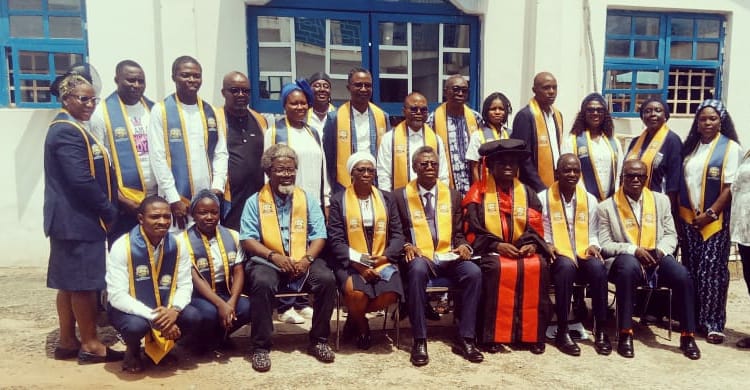
Pastor Alex Ogundipe, Chairman of the Governing Board of Christian Heritage International Bible College, Kubwa, Abuja, has expressed concern over the growing number of educated Nigerians who lack the character and integrity required to make meaningful contributions to society.

Ogundipe raised the concern during the matriculation ceremony of the institution’s 60 pioneer students, stressing that academic qualifications without moral discipline and upright character could undermine national development.

According to him, Nigeria has many knowledgeable and academically accomplished individuals whose inability to demonstrate integrity has negatively affected their contributions to their families, workplaces and communities.

“We have too many people in this country who are knowledgeable and wise in their own ways, but they do not have character and integrity. That affects their ability to impact their communities,” he said.

The cleric emphasised that education must go beyond the acquisition of certificates to the development of individuals who demonstrate honesty, accountability, faithfulness and commitment to serving humanity.

He explained that true integrity required consistency in personal conduct, whether at home, in the church, at work or within the larger society.

Ogundipe said the college was established not merely to impart biblical knowledge but to raise men and women whose lifestyles reflect Christian values and whose contributions would positively influence society.

He urged Christian leaders to demonstrate their faith through practical actions rather than mere religious declarations.

Speaking on Nigeria’s future, the cleric encouraged citizens to remain hopeful, pray for the country and contribute meaningfully to national peace, unity and development.

Earlier, the Rector of the institution, Pastor Samson Olukayode Aliyu, challenged the matriculating students to prioritise spiritual maturity and moral discipline alongside academic excellence.

Aliyu warned against examination malpractice, plagiarism, dishonesty and other forms of misconduct, stressing that academic certificates could demonstrate knowledge but could not substitute for good character.

“The Church does not only need gifted people; it needs godly people. We need leaders who will choose integrity over compromise, humility over pride, faithfulness over convenience and service over self-interest,” he declared.

He explained that the college offers six-month certificate programmes in theology and one-year diploma programmes in theology, leadership and prophetic studies.

One of the matriculating students, Akeem Omobolanle, who enrolled in the Diploma in Leadership programme, commended the institution’s approach to biblical education and expressed optimism that the training would strengthen his understanding of the Scriptures and prepare him for greater service in Christian ministry.

The ceremony marked the formal admission of the college’s pioneer students into its academic community.

Continue Reading

Trending