News
President Tinubu’s Bold Reforms Attract Major Investments from Swedish Firms

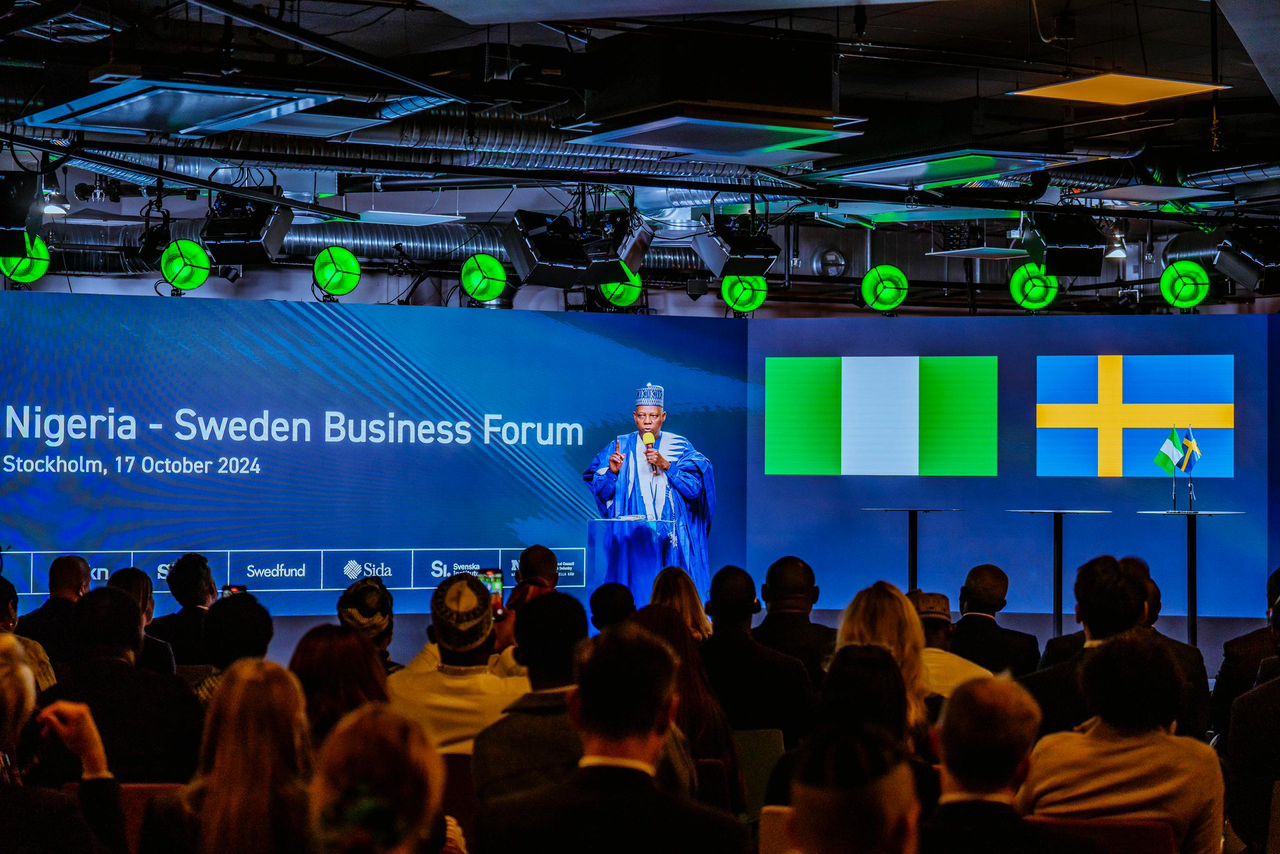
President Bola Ahmed Tinubu’s administration in a significant push for foreign investment, has secured multi-million-dollar commitments from Swedish businesses to Nigeria’s digital economy, agriculture, and renewable energy sectors. The announcement was made during Vice President Kashim Shettima’s two-day working visit to Stockholm, Sweden, aimed at strengthening trade and bilateral ties between both nations.
During the business forum, themed “Trade and Investments with a Focus on the Digital Economy, Agriculture, and Renewable Energy”, VP Shettima emphasized that Tinubu’s administration has introduced bold reforms, including the unification of exchange rates and the removal of fuel subsidies, to restructure the economy for sustainable growth. He noted that these steps were part of the government’s Renewed Hope Agenda, which focuses on creating a competitive business environment for both foreign and domestic investors.
“Under the leadership of His Excellency, President Bola Ahmed Tinubu, we are creating vast investment opportunities. The Renewed Hope Agenda promotes financial inclusion, fosters innovation through a cashless policy, and has enabled transformative financial services,” Shettima told attendees at the Epicenter in Stockholm.
Shettima called on Swedish investors to seize opportunities in sectors such as digital technology, agriculture, and renewable energy, which are critical to Nigeria’s economic transformation.
“Our partnership holds immense potential for mutual benefit. Sweden’s expertise in agriculture, technology, and renewable energy aligns with our national goals. Together, we can address challenges like food security, climate change, and job creation,” he said.
The forum yielded significant commitments, with Gluwa, a digital wallet service, announcing plans to invest $100 million in Nigeria and train over 30,000 citizens in digital skills. Gluwa’s Director, Akinola Jones, revealed that the company is actively working to promote financial inclusion by banking the unbanked and enhancing connectivity through satellite-enabled WiFi networks.
“Our mission extends beyond just issuing loans. We want to create impact by collaborating with the government to train people in digital skills. This partnership will significantly boost Nigeria’s tech ecosystem,” Jones said.
In addition, Ericsson, a global leader in telecommunications, announced a $19 million investment to establish a tech hub in Nigeria. According to Ericsson Nigeria’s Managing Director, Peter Olusoji Ogundele, the initiative aims to nurture local talent and position Nigeria as a global player in the tech industry.
“Nigeria’s youth are the real engine of its economy, and we aim to develop their potential. Our goal is to make Nigeria a hub like India, exporting skilled professionals worldwide,” Ogundele remarked.
Shettima stressed that Nigeria’s economic diversification efforts, especially following the COVID-19 pandemic, have strengthened partnerships and positioned the nation as a pillar in the global economy. He also highlighted the country’s progress in closing the gender gap, particularly in STEM fields, citing the potential $229 billion boost to GDP by 2025 through improved gender parity.
“MSMEs account for 96% of Nigerian businesses and 84% of employment. However, they face challenges accessing capital and markets. Swedish expertise can play a crucial role in unlocking their potential,” Shettima added, inviting Swedish companies to collaborate in areas such as agriculture and digital finance.
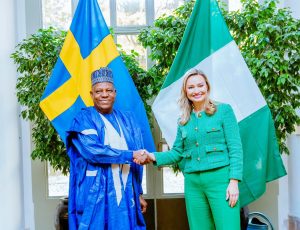
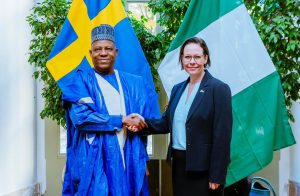
The Vice President also held bilateral talks with Swedish government officials, including Foreign Affairs Minister Maria Malmer Stenergard and Deputy Prime Minister Ebba Busch, focusing on expanding trade and cultural partnerships.
Participants at the business forum expressed optimism about the partnership’s future. Mikaela Edstrom of the Swedish Export Credit Agency praised Nigeria’s economic reforms, pledging support through export credit systems. Representatives from Epicenter, Swedfund, and other Swedish organizations echoed similar sentiments, committing to deepening collaboration.
“The future is digital and sustainable, and we are ready to work with Nigeria to build a prosperous future,” said Edgar Luczak, Chairman of Epicenter.
Nigeria’s delegation included key government officials such as Plateau State Governor Caleb Mutfwang, Minister of Foreign Affairs Yusuf Tuggar, and senior executives from the National Information Technology Development Agency (NITDA) and Nigerian Communication Commission (NCC).
Shettima concluded by reaffirming that Nigeria’s growing business climate, combined with Tinubu’s bold reforms, offers limitless opportunities for serious investors. “Together, we can build a sustainable and prosperous future for both Nigeria and Sweden,” he said.

By Samson Adeyanju
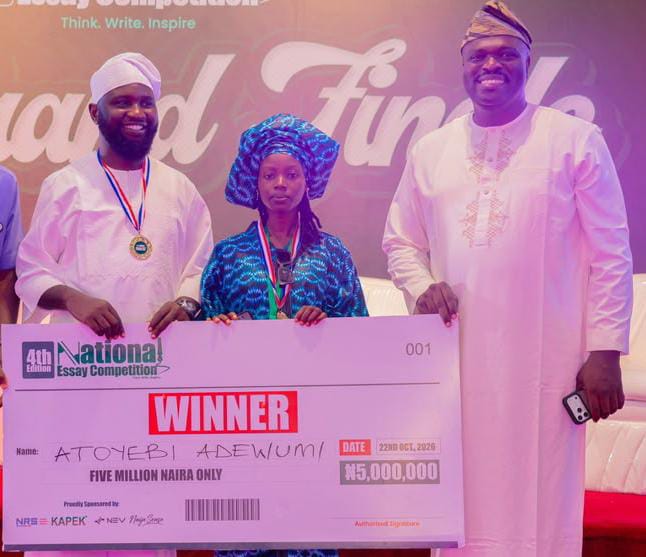
Atoyebi Adewumi has emerged winner of the fourth edition of the National Essay Competition, beating more than 2,000 contestants in an intellectual contest aimed at promoting academic excellence, critical thinking and creative writing among young Nigerians.
The competition, which focused on the relevance of taxation to national development, challenged participants to examine the role of tax revenue in financing public services, stimulating economic growth and strengthening the relationship between government and citizens.
The initiative provided a platform for young Nigerians to demonstrate their writing skills, articulate informed perspectives on national issues and contribute ideas towards building a more responsible and progressive society.
Speaking after being declared winner, an elated Adewumi expressed gratitude to the convener, Foluso Sylvanus Ojo, and the organising team for providing young Nigerians with an opportunity to showcase their intellectual abilities.
“I am so glad, very, very glad, to have this privilege of emerging as the winner. I am grateful to the convener and the entire team, as well as everyone who supported this vision,” Adewumi said.
In his remarks, Ojo expressed concern over the tendency to criticise the attitudes and lifestyles of younger generations without providing adequate opportunities to nurture their talents and channel their energies towards productive pursuits.
He called on the government, corporate organisations and nongovernmental organisations to invest more in educational initiatives that promote intellectual excellence, creativity and responsible citizenship.
According to him, sustained investment in academic competitions and youth development programmes would encourage discipline, innovation and a stronger commitment to national development.
Drawing a comparison with the substantial cash prizes awarded in some reality television competitions in Nigeria, Ojo argued that students and intellectually gifted young Nigerians deserved greater recognition, financial support and encouragement.
“I believe the government should support initiatives like this because individuals need supportive hands, especially from the government. When they receive such support, they become more confident and motivated to continue their good work,” he said.
Ojo maintained that society could not continue to complain about the attitudes and lifestyles of young people without deliberately investing in programmes that encourage positive values and productive engagement.
The fourth edition of the competition also underscored the importance of tax awareness among young Nigerians, highlighting how effective taxation, transparency and accountable governance could contribute to improved infrastructure, education, healthcare and other essential public services.
Beyond celebrating the winner, the competition reinforced the need to identify, encourage and empower emerging intellectual talents capable of contributing meaningfully to Nigeria’s development.

Winner of the 5,000,000 naira 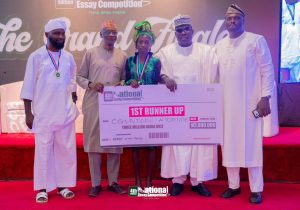
Winner of 3,000,000 naira 
Winner of 2,000,000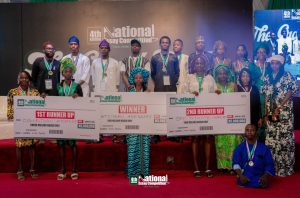
All the participants


By Samson Adeyanju
Twenty finalists from across Nigeria have begun the final stage of the fourth edition of the National Essay Competition in Abuja, following an orientation session designed to prepare them for the decisive examination.
The finalists arrived in the Federal Capital Territory for a four-day, all-expenses-paid programme featuring the essay examination, institutional tours and opportunities for learning and networking.
The competition, the brainchild of Mr Foluso Ojo, is sponsored by the Nigeria Revenue Service (NRS).
Ahead of the examination, the finalists participated in an orientation session led by Professor Omotosho Borisade of Ekiti State University, who serves as the competition’s umpire.
The session familiarised participants with the competition’s rules and regulations, examination guidelines and assessment criteria, helping them understand the requirements of the final stage.
The essay examination is scheduled to begin today at 9 a.m., after which the finalists are expected to embark on institutional tours around Abuja.
The programme is designed to extend beyond the contest itself, exposing the finalists to new learning opportunities, professional connections and experiences in the nation’s capital.
The competition brings together young Nigerians to demonstrate their writing ability, knowledge, creativity and critical-thinking skills as they compete for the top honours.
With the finalists prepared for the examination, attention now turns to their performance and the eventual emergence of the competition’s champion.






Atoyebi Adewumi Wins 4th National Essay Competition, Beats 2,000 Contestants

20 Finalists Begin Final Stage of National Essay Competition

Pastor Ogundipe Decries Lack of Integrity Among Educated Nigerians