Connect with us

Business

New CALM Fund Launched to Provide Affordable Credit for CNG Conversions, Solar Energy Solutions

Published

on

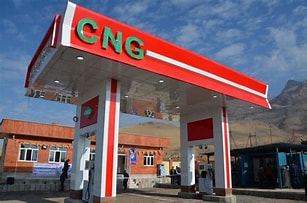
In response to the rising financial pressures on Nigerians due to high energy and transportation costs, the Ministry of Finance Incorporated (MOFI), the Nigerian Consumer Credit Corporation (CREDICORP), and the Presidential Initiative on CNG (PI-CNG) Ltd have collaborated to launch the Credit Access for Light and Mobility (CALM) Fund. This innovative fund aims to provide accessible credit for Nigerians to obtain Compressed Natural Gas (CNG) conversion kits and other energy-saving solutions, alleviating the burden of soaring fuel and electricity prices while promoting sustainability.

The CALM Fund serves as a much-needed lifeline for households and businesses seeking cost-effective ways to manage rising expenses. Through flexible financing options, Nigerians will be able to access immediate credit for converting their vehicles to CNG and adopting solar energy solutions, significantly reducing their dependency on expensive fossil fuels and lowering their electricity bills.

A Solution Designed to Alleviate Financial Burden

As the cost of living continues to increase, particularly with higher petrol prices and mounting energy bills, the CALM Fund offers a pragmatic alternative to struggling Nigerians. The initiative has two primary objectives:

  • Vehicle Conversions to CNG: Encourage Nigerians to switch to CNG, a more affordable and eco-friendly fuel option that can significantly lower transportation costs.
  • Solar Energy Adoption: Support the installation of solar panels for homes and businesses to reduce reliance on costly electricity from the national grid.

By making these options accessible through loans, the CALM Fund eliminates the upfront financial burden of switching to more sustainable energy solutions. Nigerians can apply for loans through Participating Financial Institutions (PFIs) and spread out the repayment in a way that fits their budgets.

Strategic Partnership for National Impact

The collaborative effort behind the CALM Fund involves three key organizations, each playing a critical role in ensuring the success of the initiative:

  • MOFI will aggregate and expand the consortium fund, partnering with private and institutional investors to increase the initial ₦10 billion fund. MOFI’s role will be to attract more funding to ensure the initiative has a lasting impact across Nigeria.
  • CREDICORP, acting as the Fund Manager, will oversee loan disbursements and provide credit guarantees. By injecting ₦2.5 billion into the fund, CREDICORP ensures Nigerians can access affordable financing through a network of PFIs, making the transition to CNG and solar energy more attainable.
  • PI-CNG Ltd will serve as the primary service provider, facilitating vehicle conversions through its authorized centers. Consumers utilizing CALM loans will have access to discounted conversion packages, ensuring they receive high-quality service at an affordable rate.

This partnership demonstrates the shared commitment of these organizations to support Nigerians during these challenging times by offering innovative financing solutions that address critical needs.

Driving Sustainability and Economic Growth

The CALM Fund not only aims to ease the financial strain on Nigerians but also promotes environmental sustainability. The switch to CNG is expected to cut down on carbon emissions, making it a greener alternative to traditional petrol. Meanwhile, the adoption of solar energy solutions will reduce pressure on the national electricity grid, empowering households and businesses to generate their own power in a cost-effective and environmentally friendly manner.

The initiative aligns with Nigeria’s broader economic goals, supporting national energy security, reducing carbon footprints, and creating jobs in sectors like energy installation and vehicle conversion.

How to Apply

Nigerians interested in benefiting from the CALM Fund can apply for loans through participating financial institutions, ensuring quick access to the funds needed for CNG conversion and solar energy installations. Application details can be found at www.credicorp.ng/apply. Additionally, authorized PCNGI conversion centers will actively promote this loan option to their customers, making it easier for consumers to take advantage of the program.

Abuja Reports

Milestone Global Bank Gets CBN Nod, Targets Abuja Launch

Published

on

By Ifunanya Stephanie


Milestone Global Bank Limited has received final approval from the Central Bank of Nigeria (CBN) to operate as a regional non-interest bank, with plans to establish its first physical branches in Abuja, Kano and Kaduna.

The approval clears a major regulatory hurdle for the institution as it prepares to enter Nigeria’s banking sector, although it has yet to announce a commencement date or provide addresses for its proposed branches.

The bank disclosed the development in a statement, saying it had satisfied the CBN’s requirements on capital, corporate governance and compliance with non-interest banking regulations.

Its Managing Director and Chief Executive Officer, AbdulFattah Olanrewaju Amoo, described the approval as a significant milestone, saying the institution was now working to complete the remaining operational requirements ahead of its launch.

He said the bank intended to serve individual customers, businesses, corporate organisations and government agencies through a combination of digital banking services and physical branches.

According to the bank, its initial expansion plan covers Abuja, Kano and Kaduna, with the intention of extending its presence to other parts of the country.

Amoo said the institution would deploy technology, data and automation to improve service delivery, efficiency and accessibility.

The CBN’s recapitalisation framework requires regional non-interest banks to maintain a minimum paid-up capital of ₦10 billion, compared with ₦20 billion for national non-interest banks.

Non-interest banking operates without conventional interest-based lending and instead uses structures such as asset-backed financing, leasing, trade-based transactions and profit-sharing arrangements.

Milestone Global Bank’s entry is expected to add another operator to Nigeria’s non-interest banking segment, which already includes Jaiz Bank, TAJBank and Lotus Bank.

However, the bank has not released details of its proposed products, account-opening procedures, eligibility requirements or pricing.

Its planned Abuja presence could expand the financing options available to businesses and individuals in the capital, but the impact will depend on the products introduced and the terms under which they are offered.

The bank is expected to announce further details as it concludes preparations to commence operations.

Continue Reading

Business

Nigerian Banks Expand Lending as Loan Demand Surges

Published

on

By Ifunanya Stephanie

Nigerian banks increased credit supply to households and businesses in the third quarter of 2026, following stronger demand for secured, unsecured and corporate loans, according to the Central Bank of Nigeria (CBN).

The development was accompanied by improved loan approval rates and declining default rates across major lending categories, although borrowing costs remained relatively high in some segments.

The findings are contained in the CBN’s Q3 2026 Credit Conditions Survey, which assessed lending trends, loan demand, approval rates and repayment performance across the banking sector.

In the secured lending segment, the loan demand index stood at 25.6, with consumer lending to households recording the strongest demand at 42.9, followed by credit for house purchases at 28.0. Mortgage and remortgage lending recorded 12.0, while lending to small businesses by households declined to -19.7.

Demand for unsecured credit also strengthened, with an overall index of 7.2. Overdrafts and personal loans to households recorded 24.7, while credit card lending contracted to -20.0.

Corporate lending recorded a demand index of 18.9, reflecting increased borrowing interest among small businesses, medium-sized private non-financial corporations and large companies, which posted indices of 22.6, 18.3 and 20.7, respectively. However, demand from other financial corporations weakened, recording -16.2.

According to the survey, banks attributed the increased demand for corporate credit largely to inventory financing, balance sheet restructuring and capital investments, which recorded indices of 18.6, 2.5 and 0.7, respectively.

The CBN also identified changing economic outlook, liquidity positions and market share objectives as major factors influencing banks’ decisions to expand secured lending. For unsecured credit, market share objectives, economic outlook and the cost and availability of funds were among the key considerations.

Meanwhile, the proportion of loan applications approved increased across secured, unsecured and corporate lending categories compared with the preceding quarter.

Despite the improved access to credit, borrowing costs remained a concern, as the spread between lending rates and the Monetary Policy Rate widened across several lending categories.

The spread for secured lending widened to -14.5 index points, while corporate lending spreads stood at -13.6 index points for medium-sized private non-financial corporations, -12.2 for other financial corporations, -11.0 for small businesses and -10.3 for large private non-financial corporations.


The latest findings suggest an improvement in credit availability across Nigeria’s banking sector, although the widening interest rate spreads indicate that stronger loan supply and approval rates have yet to translate into proportionately cheaper borrowing for businesses and households.

Continue Reading

Business

CBN Restores BDC Access to FX Market, Caps Weekly Purchases at $150,000

Published

on

By Huldah Shado

The Central Bank of Nigeria (CBN), has approved the participation of licensed Bureau De Change (BDC), operators in the Nigerian Foreign Exchange Market (NFEM), allowing each BDC to purchase up to $150,000 weekly.

The approval was contained in a circular dated February 10, 2026, signed by the Director of the Trade and Exchange Department, Dr. Musa Nakorji, and addressed to authorised dealer banks and the general public.

The CBN said the move is aimed at improving foreign exchange liquidity in the retail segment of the market and meeting the legitimate needs of end users, amid a widening gap between the official and parallel market exchange rates.

Under the new arrangement, licensed BDCs can access foreign exchange from the NFEM through any authorised dealer bank of their choice at the prevailing exchange rate.

The apex bank directed banks to carry out full Know-Your-Customer (KYC), and due diligence checks on BDC clients before selling foreign exchange to them.

It also imposed reporting and transparency requirements, mandating BDCs to submit returns electronically to the CBN.

In addition, the bank prohibited third-party transactions and limited cash settlement to a maximum of 25 per cent of each transaction.

Continue Reading

Trending

taraftarium24seo ajansıseo ajansıiptvtrlisans pinterestgiftcardmall/mygiftdinamobetgrandpashabet girişgrandpashabetdinamobetGrandpashabettaraftarium24dizipalgiftcardmall/mygiftjustin tvGrandpashabetGrandpashabetGrandpashabetDeneme BonusuCasibomiptvkavbettaraftarium24taraftarium24rojadirectajustin tvbetsalvador xteosbetbahiscasino x1win xbetgitjojobetjojobet xjojobet xsonbahis xgrandpashabetgrandpashabetgrandpashabet güncel girişgrandpashabet girişmarsbahis girişholiganbet girişholiganbet güncel girişcasibom girişgrandpashabetgrandpashabetholiganbetholiganbetholiganbetholiganbetjojobetjojobetgrandpashabetsonbahis xsonbahis xgrandpashabetbetbey xesbet xcashwin xmatbetpusulabetsahabetmatbet girişpusulabet girişsahabet girişmatbetholiganbetmarsbahismarsbahis girişibizabet xjojobetjojobet xgrandpashabetbetpuan xnesinecasino xwbahis xbetgaranti xgrandpashabetjojobetjojobet