Connect with us

Education

Out-of-School Children: Govs Commit to 15% Annual Budget Allocation for Education

Published

on

In a crucial step towards tackling Nigeria’s challenges with schooling, the 36 state governors who comprise the Nigerian Governors’ Forum (NGF) have promised to devote at least 15% of their annual budgets to education. This commitment was made at the conclusion of the inaugural International Conference on Girl Child Education, which took place in Abuja from October 10 to 11, 2024.

Chairman of the NGF and Kwara State Governor, AbdulRahman AbdulRazaq, highlighted the importance of the decision, emphasizing that the increased budgetary allocation is aimed at tackling the growing number of out-of-school children across the country. Governor AbdulRazaq, represented by NGF Director General Abdulateef Shittu, reiterated the urgency of addressing the barriers hindering access to quality education, particularly for girls.

“The unveiling of the Girl Child Education Volunteers’ Advocates is pivotal in our collective drive to address access to education and combat learning poverty among our children,” AbdulRazaq said. He further announced that the NGF, in collaboration with the Federal Ministry of Youth and the National Youth Service Corps (NYSC), will recruit over 774,000 volunteers from local governments to advocate for girl child education under the Girl Child Education Volunteers’ Advocates (GICEVA) initiative.

The GICEVA initiative aims to mobilize volunteers across the country to promote enrolment and retention of girls in schools, particularly in rural areas. The volunteers, working alongside Gender Desk Officers of the NYSC, will engage communities to raise awareness about the importance of girl child education, while also providing support for foundational literacy and numeracy skills, teacher training, and school infrastructure improvements.

AbdulRazaq explained, “We are in partnership with the Federal Ministry of Youths, through the National Youths Service Corps, to establish a Girl Child Education Community Service Group (CDS-Group). This will form an integral part of our Education Community of Practice, focusing on reducing the number of out-of-school children, driving primary school enrolment, and enhancing the quality of education nationwide.”

The NGF Chair also presented the “Education Expenditure and Institutional Review” report covering the years 2021-2023. This report outlines the progress and challenges states face in education financing and reaffirms the governors’ commitment to addressing the gaps through increased investments.

The scale of Nigeria’s education crisis was underscored by Vice President Kashim Shettima during the conference’s opening remarks. The Vice President warned that Nigeria faces severe consequences if urgent action is not taken to address the millions of children currently out of school.

Shettima remarked, “The dignity of the girl child defines every civilization, and today, we are bound by a duty higher than merely observing the challenges before us. The statistics of out-of-school children in Nigeria are a stark reminder of the urgency of this mission. The latest survey shows that 25.6% of children of primary school age are out of school, and this rate rises to 29.6% for secondary school age children. Each child left on the streets becomes a liability the nation will one day pay for.”

The Vice President urged state governments to prioritize education and emphasized that the well-being of the nation’s future hinges on securing quality education for all children, particularly girls, who face additional barriers such as poverty, early marriage, and cultural constraints.

In a further bid to tackle the out-of-school crisis, Minister of Women Affairs, Uju Kennedy-Ohanenye, announced that the federal government would launch a nationwide initiative starting October 15, 2024, aimed at rescuing children from the streets and integrating them into the education system.

“The Federal Government is set to start picking out-of-school children from the streets, beginning on October 15, 2024,” she said, stressing the need for coordinated efforts between federal and state authorities to ensure the success of the initiative.

Kennedy-Ohanenye expressed optimism that the collaboration between the government, civil society, and local communities would help reduce the number of out-of-school children significantly and provide them with the foundational skills needed for their future.

Governor AbdulRazaq reaffirmed the NGF’s dedication to meeting international standards for education funding. “Our commitment to education financing, particularly for girl child education, is unwavering across all states,” he stated. “We are ready to meet the international benchmark of allocating at least 15% of our annual budgets to the education sector. This will be crucial for scaling up access to quality education, providing infrastructural and instructional materials, and ensuring that our children, especially girls, are in school and learning.”

The NGF Chair also called for the development of an “Education Community of Practice” framework, aimed at enhancing enrolment advocacy, providing funding support, and improving educational outcomes across the states. This framework, he noted, will focus on innovative approaches such as experiential and digital literacy programs to equip students with the skills they need to thrive in a rapidly changing world.

As Nigeria grapples with one of the highest numbers of out-of-school children globally, the commitment by state governors to increase education funding and mobilize community support represents a hopeful step forward. However, the success of these initiatives will depend on sustained political will, effective implementation, and the active involvement of all stakeholders in the education sector.

Abuja Reports

Atoyebi Adewumi Wins 4th National Essay Competition, Beats 2,000 Contestants

Published

on

By

By Samson Adeyanju

Atoyebi Adewumi has emerged winner of the fourth edition of the National Essay Competition, beating more than 2,000 contestants in an intellectual contest aimed at promoting academic excellence, critical thinking and creative writing among young Nigerians.

The competition, which focused on the relevance of taxation to national development, challenged participants to examine the role of tax revenue in financing public services, stimulating economic growth and strengthening the relationship between government and citizens.

The initiative provided a platform for young Nigerians to demonstrate their writing skills, articulate informed perspectives on national issues and contribute ideas towards building a more responsible and progressive society.

Speaking after being declared winner, an elated Adewumi expressed gratitude to the convener, Foluso Sylvanus Ojo, and the organising team for providing young Nigerians with an opportunity to showcase their intellectual abilities.

“I am so glad, very, very glad, to have this privilege of emerging as the winner. I am grateful to the convener and the entire team, as well as everyone who supported this vision,” Adewumi said.

In his remarks, Ojo expressed concern over the tendency to criticise the attitudes and lifestyles of younger generations without providing adequate opportunities to nurture their talents and channel their energies towards productive pursuits.

He called on the government, corporate organisations and nongovernmental organisations to invest more in educational initiatives that promote intellectual excellence, creativity and responsible citizenship.

According to him, sustained investment in academic competitions and youth development programmes would encourage discipline, innovation and a stronger commitment to national development.

Drawing a comparison with the substantial cash prizes awarded in some reality television competitions in Nigeria, Ojo argued that students and intellectually gifted young Nigerians deserved greater recognition, financial support and encouragement.

“I believe the government should support initiatives like this because individuals need supportive hands, especially from the government. When they receive such support, they become more confident and motivated to continue their good work,” he said.

Ojo maintained that society could not continue to complain about the attitudes and lifestyles of young people without deliberately investing in programmes that encourage positive values and productive engagement.

The fourth edition of the competition also underscored the importance of tax awareness among young Nigerians, highlighting how effective taxation, transparency and accountable governance could contribute to improved infrastructure, education, healthcare and other essential public services.

Beyond celebrating the winner, the competition reinforced the need to identify, encourage and empower emerging intellectual talents capable of contributing meaningfully to Nigeria’s development.

Winner of the 5,000,000 naira

Winner of 3,000,000 naira

Winner of 2,000,000
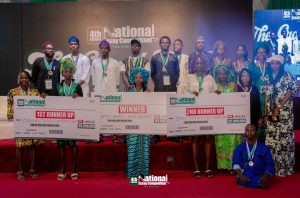
All the participants 

Continue Reading

Abuja Reports

20 Finalists Begin Final Stage of National Essay Competition

Published

on

By

By Samson Adeyanju

Twenty finalists from across Nigeria have begun the final stage of the fourth edition of the National Essay Competition in Abuja, following an orientation session designed to prepare them for the decisive examination.

The finalists arrived in the Federal Capital Territory for a four-day, all-expenses-paid programme featuring the essay examination, institutional tours and opportunities for learning and networking.

The competition, the brainchild of Mr Foluso Ojo, is sponsored by the Nigeria Revenue Service (NRS).

Ahead of the examination, the finalists participated in an orientation session led by Professor Omotosho Borisade of Ekiti State University, who serves as the competition’s umpire.

The session familiarised participants with the competition’s rules and regulations, examination guidelines and assessment criteria, helping them understand the requirements of the final stage.

The essay examination is scheduled to begin today at 9 a.m., after which the finalists are expected to embark on institutional tours around Abuja.

The programme is designed to extend beyond the contest itself, exposing the finalists to new learning opportunities, professional connections and experiences in the nation’s capital.

The competition brings together young Nigerians to demonstrate their writing ability, knowledge, creativity and critical-thinking skills as they compete for the top honours.

With the finalists prepared for the examination, attention now turns to their performance and the eventual emergence of the competition’s champion.


Continue Reading

Education

Oyelami Named Acting CEO of National Mathematical Centre

Published

on

By

By Omoniyi David

The Federal Government has appointed Professor Oyelami as Acting Chief Executive Officer of the National Mathematical Centre with immediate effect.

The appointment was announced in a statement by the centre’s Controller of Information and Public Relations, Onyekachi Njoku. He said the decision followed the elevation of the former CEO, Promise Mebine, as Vice-Chancellor of the Federal University Otuoke.

Njoku disclosed that the approval was conveyed in a letter signed by Rakiya Ilyasu, Director of University Education at the Federal Ministry of Education.

Professor Oyelami, a mathematician who joined the centre over two decades ago from Abubakar Tafawa Balewa University, previously served as Coordinator of the Mathematics and Theoretical Physics programmes and as Deputy Director/Academic Planning Coordinator.

An alumnus of the University of Jos and Abubakar Tafawa Balewa University, he holds a Second-Class Upper degree, MSc and PhD in Mathematics and has published widely in local and international journals.

The centre said his appointment would strengthen its mandate to promote research, innovation and capacity building in mathematical sciences.

Continue Reading

Trending