News
FG Expands Subsidised Rice Programme to Tackle Food Insecurity
Published
2 years agoon
By
editor
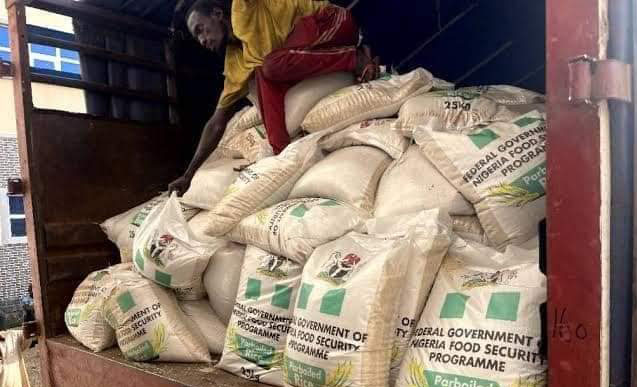
The Federal Government is ramping up its subsidised rice programme in an effort to alleviate the growing food insecurity crisis in the country. The initiative, aimed at providing affordable rice to Nigerians amid soaring food prices, is set to launch in Lagos, Kano, and Borno states, according to a senior official at the Federal Ministry of Agriculture and Food Security.
The programme was first announced in early September by the Minister of Agriculture and Food Security, Abubakar Kyari, who unveiled the sale of subsidised rice at N40,000 per 50kg bag in Abuja. The initiative is part of a broader strategy to ensure that no Nigerian goes to bed hungry, Kyari said, noting that the government is committed to providing relief to citizens as food prices continue to surge.
The subsidised price of N40,000 represents a significant reduction from the current market rate, which stands at approximately N90,000 for a 50kg bag of rice, with prices reaching nearly N100,000 in some regions.
To support this initiative, the Federal Government has allocated 30,000 metric tonnes of rice for the subsidised sales programme, which translates to around 1,000 trucks—each carrying approximately 600 bags of rice. This large-scale distribution is expected to help mitigate the burden on Nigerians struggling to cope with the rising cost of staple foods.
The programme will soon expand to other regions. “We are going to activate Lagos and Kano states for the sales any moment from now. Borno State is also going to be addressed,” said a ministry official, who preferred to remain anonymous. The official also dismissed rumors that the subsidised rice sales in the Federal Capital Territory (FCT) had been halted. “We have not even gone anywhere; how can we stop? The sales are ongoing, and we are actively engaging with other states,” the official clarified.
Another ministry official noted that civil servants in Abuja, particularly those working in and around federal ministries, have been among the beneficiaries of the subsidised rice programme. This effort to provide civil servants with affordable rice has helped cushion the impact of rising food prices, especially for lower-income earners in the nation’s capital.
The subsidised rice programme forms a critical part of the Federal Government’s broader plan to tackle food insecurity in Nigeria, a problem that has been exacerbated by inflation, supply chain disruptions, and the weakening of the naira. With the price of basic food items, including rice, having skyrocketed over the past year, many households are struggling to afford daily meals.
Minister Kyari previously highlighted that the government’s efforts extend beyond just rice subsidies. He outlined several other agricultural initiatives aimed at increasing food production and enhancing the country’s food security. These include strengthening local rice production through investment in irrigation, mechanization, and access to improved seed varieties for farmers. Additionally, the government is working to resolve bottlenecks in food distribution and reduce post-harvest losses, which have significantly impacted food availability.
The rice programme is also designed to support local rice farmers by stimulating demand and ensuring that the supply of locally grown rice reaches the market at competitive prices. By reducing the price of rice and providing direct access to affordable food, the government aims to ease the financial strain on millions of Nigerians.
Despite the positive impact of the subsidised rice initiative, the programme faces challenges, including distribution bottlenecks and concerns over equitable access. Some citizens have raised complaints about the limited availability of the subsidised rice in certain states, as well as the potential for hoarding and diversion of the rice by unscrupulous middlemen. The government has responded by pledging to closely monitor the distribution process to ensure that the rice reaches those most in need.
Critics have also pointed out that while the programme offers temporary relief, it does not address the underlying structural issues that contribute to food insecurity in Nigeria. These include inadequate infrastructure, poor rural development, and inconsistent agricultural policies. Addressing these challenges will require long-term investments and reforms to strengthen the country’s food systems and ensure sustainability.
You may like
-
Democracy Day: Foundation to engage youths through 21km marathon
-
Catholic Church Warns Against Fake Identities, Urges Responsible Journalism
-
Alia Gets APC Nod for Second Term in Benue
-
CSN Calls for Inclusive, Just Energy Transition in Nigeria
-
Alia, Akume, Suswam Meet as Benue APC Moves to Rebuild Unity
-
Ekiti Attack, an Assault on Church, Human Dignity -CAN
2027 General Elections
Catholic Church Warns Against Fake Identities, Urges Responsible Journalism
Published
3 weeks agoon
May 17, 2026By
Editor
By Samson Adeyanju
The Catholic Church in Nigeria has warned against the growing spread of fake identities, misinformation and digital disconnection in the media space, calling on journalists and social media users to embrace truth, responsibility and respect for human dignity in communication.
The warning was issued by the Chairman of the Department of Communications of the Catholic Bishops’ Conference of Nigeria and Bishop of the Catholic Diocese of Katsina, Most Rev. Gerald Mamman Musa, during his homily and press conference at the 2026 World Communications Day celebration held at the Catholic Secretariat of Nigeria, Abuja.
Bishop Musa, who reflected on the theme “Preserving Human Voices and Faces,” said modern society is increasingly “digitally connected but personally and spiritually disconnected,” despite advances in communication technology.
He stressed that communication remains central to human existence, noting that “to live is to communicate,” whether through speech, writing, or digital platforms.
According to him, the Church sets aside World Communications Day annually to reflect on the responsibility that comes with communication, especially in an era dominated by social media and digital interactions.
Prayer and spiritual grounding in communication
Drawing from the liturgical readings, Bishop Musa emphasised the importance of prayer, describing it as the “master key” to perseverance, strength and spiritual revival.
He recalled the apostles who, after the ascension of Jesus Christ, gathered in the upper room in fear but turned their anxiety into prayer while awaiting the Holy Spirit.
“The upper room is a place of communion with God, revival and spiritual renewal,” he said, urging Christians to remain rooted in prayer amid modern-day pressures.
He added that prayer does not remove suffering but gives believers the strength to endure challenges with hope and joy.
Warning against fake identities and online abuse
Bishop Musa warned that social media platforms have become spaces where individuals hide behind fake names, anonymous accounts and false identities to spread hatred, lies, blackmail and cybercrime.
“When we come with unreal names and masks on social media, we are acknowledging that we are doing something wrong,” he said.
He compared such behaviour to criminals who conceal their identities while committing evil acts, adding that truth thrives in openness while wrongdoing hides in anonymity.
He also cautioned against treating people as statistics or objects, drawing from the philosophy of Martin Buber, which emphasises human dignity and mutual respect.
The bishop further highlighted how Jesus Christ consistently gave voice to the marginalised, including the Samaritan woman, the woman caught in adultery and the blind Bartimaeus, stressing that society must not silence vulnerable voices.
According to him, preserving human voices means allowing people to speak from their lived experiences rather than speaking over them.
Bishop Musa urged media practitioners and social media users to use communication tools responsibly in promoting truth, evangelisation and human dignity.
“Speaking the truth in love is not only about projecting our voices, but doing so with charity and responsibility,” he said.
CSN Scribe urges responsible journalism ahead of elections
The Secretary-General of the Catholic Secretariat of Nigeria, Fr. Michael Banjo, also called on journalists to uphold responsible journalism and defend truth as Nigeria approaches another election cycle.
Fr. Banjo warned that communication must not become “a weapon of injury” in a country already facing insecurity, economic hardship and political tension.
He stressed that preserving human voices and faces requires verifying information before publication to prevent misinformation from damaging reputations or destabilising communities.
According to him, journalists must avoid hate speech, sensationalism and divisive narratives that reduce citizens to ethnic, religious or political labels.
“The answer to misinformation is responsible journalism; the answer to propaganda is truth,” he said.
Fr. Banjo also called for transparency in the electoral process, especially in the electronic transmission of results, insisting that every vote must count and reflect the true will of the people.
He urged journalists not only to highlight challenges but also to report positive developments that strengthen national unity and hope.
The CSN scribe thanked the media for their continued partnership with the Church in promoting justice, peace and accountability.
He concluded by urging Nigerians to “speak truth without hatred, listen without prejudice, and use every platform in service of the common good.”
Fr Umoh celebrates birthday, reflects on six-year tenure
The National Director of Social Communications of the Catholic Secretariat of Nigeria, Rev. Fr. Michael Nsikak Umoh, also used the occasion to reflect on his six-year tenure as he addressed journalists at the same event, which marked the 2026 World Communications Day and the closing of the 5th Nigeria Catholic Communications Week (ComWEEK).
Fr. Umoh described the event as a “double celebration,” noting both the global communications observance and the conclusion of a nationwide media literacy programme carried out across Catholic parishes and chaplaincies.
He expressed gratitude to the media for their collaboration with the Church, describing journalists as key partners in amplifying the Church’s voice and strengthening public discourse.
According to him, the media and the Church share a “sacred duty to be the conscience of the nation,” especially in challenging socio-economic times.
He also paid tribute to the immediate past Chairman of the CSN Communications Department, Most Rev. David Ajang of the Catholic Diocese of Lafia, commending his leadership in establishing key reforms, including the Nigeria Catholic Network (NCN) and the institutionalisation of ComWEEK.
Fr. Umoh introduced the new Chairman of the CSN Department of Social Communications, Most Rev. Gerald Mamman Musa, describing him as a “communications scholar and seasoned shepherd,” and expressed confidence in his leadership.
Reflecting on his tenure since 2020, he said his administration worked to strengthen the Church’s digital presence and unify communication structures, while acknowledging that further work remains.
He thanked the Catholic Bishops’ Conference of Nigeria (CBCN), his Archbishop Most Rev. Alfred Adewale Martins, and the media for their support throughout his service.
In a personal note, Fr. Umoh revealed that the celebration coincided with his 58th birthday, calling it a “providential coincidence” and a meaningful milestone in his ministry.
The event ended with prayers for the media, the Church and Nigeria, and the formal closure of ComWEEK 2026.
By Samson Adeyanju
The Governor of Benue State, Hyacinth Alia, has successfully passed the screening exercise of the All Progressives Congress (APC), ahead of the 2027 governorship election and has been officially certified to contest the party’s primaries.
This was contained in the statement issued by his Chief Press Secretary, Sir Tersoo Kula.
The screening exercise was conducted on Sunday at the Plateau State Governor’s Lodge, venue designated for the screening of incumbent governors seeking the party’s ticket for the forthcoming elections.
The screening committee was chaired by the National Chairman of the All Progressives Congress, Nentawe Goshwe, who led the process to assess aspirants seeking to fly the party’s flag in the 2027 gubernatorial elections.
Governor Alia’s Expression of Interest and Nomination forms were procured by the Benue State chapter of the Nigeria Union of Pensioners and the Benue State Motorcycle Association.
Leaders of the two groups attributed their support for the governor to what they described as the remarkable transformation witnessed in the state under his administration, as well as his people-oriented style of governance. They said the governor deserved another term to consolidate ongoing developmental efforts across the state.
Political observers and stakeholders have described the certification as a major boost to Governor Alia’s political standing within the APC, particularly amid ongoing consultations and strategic alignments ahead of the 2027 general elections.
Governor Alia, who was elected in 2023 on the platform of the APC, has consistently highlighted infrastructural development, security improvement, civil service reforms and social welfare programmes as key priorities of his administration.
His successful clearance by the screening committee is also expected to trigger increased political activities within the APC as preparations intensify for the next electoral cycle.
News
CSN Calls for Inclusive, Just Energy Transition in Nigeria
Published
1 month agoon
May 10, 2026By
Editor
By Tony Abah
The Secretary General of the Catholic Secretariat of Nigeria, Rev. Fr. Michael ‘Leke Banjo, has called for a people-centred and morally guided energy transition in Nigeria, warning that development must not continue to benefit a privileged few while leaving vulnerable communities behind.
Speaking at the GreenFaith Nigeria Multifaith and Multisectoral Forum on Nigeria’s Just Energy Transition Plan held on May 7, Fr. Banjo said energy should not be seen merely as an economic issue but as a matter tied to “life, health, education, work, food security, industrial growth, national stability and human dignity.”
Addressing participants at the forum themed, “Faith, Justice, and Power: Advancing an Inclusive Just Energy Transition in Nigeria,” the Catholic priest welcomed members of GreenFaith Africa and other stakeholders, describing the gathering as a shared effort to defend creation and promote justice.
“We gather today not merely as advocates, policy actors or religious leaders, but as stewards,” he said. “We gather to ask a deeper question: what kind of future do we want to leave behind, and who will be allowed to share in it?”
Fr. Banjo stressed that true development should not be measured only by “megawatts, investment figures or economic indicators,” but also by how society treats “those on the margins of energy poverty” and communities already suffering the effects of climate change.
Drawing from Scripture and the 2015 encyclical Laudato Si’, he described creation as “God’s gift entrusted to our responsible care,” insisting that environmental stewardship must go hand in hand with development and innovation.
The cleric lamented the environmental degradation affecting different parts of Nigeria, citing oil pollution and gas flaring in the Niger Delta, desertification in the North, gully erosion in the South-East, and flooding in parts of Kogi State and Benue State.
“In our cities, plastic waste and poor sanitation have turned public spaces into sources of disease and avoidable hardship,” he said. “When we fail to keep the earth, the earth becomes wounded; and when the earth is wounded, human dignity is also wounded.”
Fr. Banjo called on governments at all levels to develop “clear, consistent and just policies” that would protect affected communities, expand access to affordable clean energy, support small businesses and create decent jobs.
He also urged investors and development partners to ensure that renewable energy investments are guided by conscience and accountability.
“The new energy economy must not reproduce old injustices in cleaner language,” he warned, adding that policies should encourage local capacity, community ownership, skill development and transparency.
Beyond government and institutions, Fr. Banjo challenged ordinary citizens to embrace environmentally responsible habits, including proper waste disposal, water conservation, tree planting and keeping public spaces clean.
“We must stop throwing refuse into gutters, streams and open spaces,” he said. “In these simple daily choices, we show whether we truly understand that creation is God’s gift and our common home.”
He commended GreenFaith Nigeria, GreenFaith Africa and The Kukah Centre for promoting climate justice and interfaith collaboration, assuring them of the continued support of the Catholic Secretariat of Nigeria.
“The Catholic Secretariat of Nigeria stands ready to walk with you in this effort to protect creation, uplift the poor, and advance a truly just energy transition for our nation,” he said.
Democracy Day: Foundation to engage youths through 21km marathon
Catholic Church Warns Against Fake Identities, Urges Responsible Journalism