Connect with us

Health

Prostitutes, Prospectors Fuel Mpox Spread In DR Congo

Published

on

Come midnight, gold-diggers, hawkers, and prostitutes alike flood the bars of Kamituga, eastern DR Congo, with some blaming the mining town’s nightlife for the spreading mpox outbreak.

“Life in Kamituga drives people to sin,” said Bitama Sebuhuni, a prospector who was hospitalized after getting the potentially fatal viral disease after unprotected sex.

Kamituga, known for its goldmines, was the epicenter of the mpox outbreak that has plagued the Democratic Republic of Congo since September, according to the country’s health authorities.

Abandoned by Belgian enterprises in the 1990s, its rich mineral veins have subsequently drew a diverse range of DIY diggers and enthusiastic prospectors from various backgrounds.

Kamituga’s colonial-era buildings, which are officially home to 300,000 people, have been eclipsed by a line of gold-buying bureaus, mining equipment businesses, and nightclubs. Local sources estimate the population to be double that.

With the virus transmitted from person to person via close personal contact, these facilities provide an ideal setting for mpox to spread.

After a long day of working in the mines, gold-rush Kamituga’s pitmen emerge to spend their money in quest of close companionship and what Sebuhuni referred to as “atmosphere”.

“When we talk about atmosphere, in our country we talk about women, prostitutes and alcohol,” Sebuhuni said. “I used to sleep with prostitutes like this, without control or protection”.

– Nightclubs and prostitutes _

The prospector was being treated in the Kamituga hospital’s verdant mpox isolation facility, a rare respite from the chaos of the town hub.

Around “20 percent of our patients were contaminated by sexual transmission,” said doctor Dally Muamba Kambaji of the ALIMA international medical NGO, emphasizing that “the condom does not protect” from mpox.

The hospital’s doctors were the first to be confronted with mpox’s reappearance in September 2023.

“We noticed unusual skin lesions on the manager of a nightclub,” stated doctor James Wakilonga Zanguilwa.

“When we noticed that certain loose women in the same nightclub had started to develop similar lesions we sounded the alarm,” according to the doctor.

The “Mambengeti” nightclub may have closed, but its name lingers on as the local term for mpox, which spread in Kamituga primarily through prostitutes.

They have their own district and association as they roam the town’s alleys and dives.

Its members, who came from as far away as the DRC’s neighbors, convened in a tavern located at the end of a network of passageways.

The establishment, known as “The Sage’s Corner,” welcomed both gold miners and traders, with a Congolese intelligence officer keeping an eye on things.

– Pimps and prostitutes –

About a dozen members of the group sat on worn sofas around a table in the first-floor bar, which was stocked with lukewarm drinks.

Nicole Mubukwa, heavily made-up with a blonde wig tucked under a scarf, fake eyelashes, and huge gold earrings, spoke on camera without reluctance despite the region’s persisting stigma against her occupation.

A little attention wouldn’t hurt, she reasoned, especially since mpox was terrible for business.

“Since the outbreak of this disease, customers have been few and far between,” Mubukwa said with sorrow.

According to the women, many afflicted women keep their sickness hidden in order to avoid losing valuable earnings.

“I was infected without knowing it and that was tough for me because I couldn’t sleep with a man,” said Alice, another member of the “association”.

“It’s just like with AIDS, everyone hides it.”

Alice said she earns between 3,000 and 10,000 Congolese francs (around one to 3.5 dollars) for each engagement.

She said that she came from the provincial capital Bukavu, where salaries are less generous.

That decision was taken on her own volition, she claimed, albeit under the watchful and unwieldy gaze of the madam seated nearby.

Back at the hospital, another prostitute, who preferred to remain unidentified, told AFP that pimp gangs mislead young women into selling their bodies.

The pimps initially offer Kamituga a free ticket with the promise of a job as a waitress in town, before insisting that they repay them for the expense of transportation, she added.

Despite the poor quality of the roads connecting Kamituga to the rest of the DRC, the virus has spread throughout the province of South Kivu.

And now the province is the hub of the pandemic in the country—itself the worst struck by mpox in Africa.


Continue Reading
Click to comment

Leave a Reply

Your email address will not be published. Required fields are marked *

Abuja Reports

FCT Health Workers Threaten Strike Over Unpaid Allowances

Published

on

By Patrick Idowu


Healthcare services across the Federal Capital Territory could face disruption as the Joint Health Sector Union (JOHESU), FCT chapter, has threatened industrial action over unpaid professional allowances and alleged unequal treatment by the Federal Capital Territory Administration (FCTA).

The union has given the administration until midnight on November 23, 2026, to address its demands, warning that it may embark on a full-scale strike if the outstanding issues remain unresolved.

JOHESU is demanding the implementation of the approved Professional Allowance Table (PAT) for eligible healthcare workers under the Consolidated Health Salary Structure (CONHESS), as well as the payment of accumulated arrears.

The union comprises the Medical and Health Workers Union of Nigeria (MHWUN) and the Nigerian Union of Allied Health Professionals (NUAHP).

In a statement jointly signed by its FCT Chairman, Comrade Ene Nwachinerem, and Secretary, Comrade Henry Oshowo, the union accused the FCTA of selectively implementing the allowance policy.

It alleged that healthcare workers under the Consolidated Medical Salary Structure (CONMESS) had benefited from the allowance implementation, while their counterparts under CONHESS had been excluded.

JOHESU said it formally communicated its grievances to the administration on August 7, 2026, through the Office of the Head of Service, but claimed that repeated engagements had yet to produce a satisfactory resolution.

Describing the disparity as discriminatory, the union argued that eligible healthcare workers performing essential duties should receive equal treatment in the implementation of approved professional entitlements.

It appealed to the FCT Minister, Nyesom Wike, to intervene by directing the immediate implementation of the allowance table for eligible CONHESS personnel and the settlement of outstanding arrears.

While expressing its willingness to resolve the dispute through dialogue, JOHESU warned that it could no longer guarantee industrial harmony beyond the expiration of its notice if the administration failed to address its demands.

The union also disclosed that members were being prepared for further action in line with directives from its leadership.

The threatened strike could affect healthcare delivery across FCT health facilities if the dispute is not resolved before the deadline.

Continue Reading

Crime

NAFDAC Intercepts Skin-Lightening Injections in Kano Airport Shipment

Published

on

By Queensly Felix


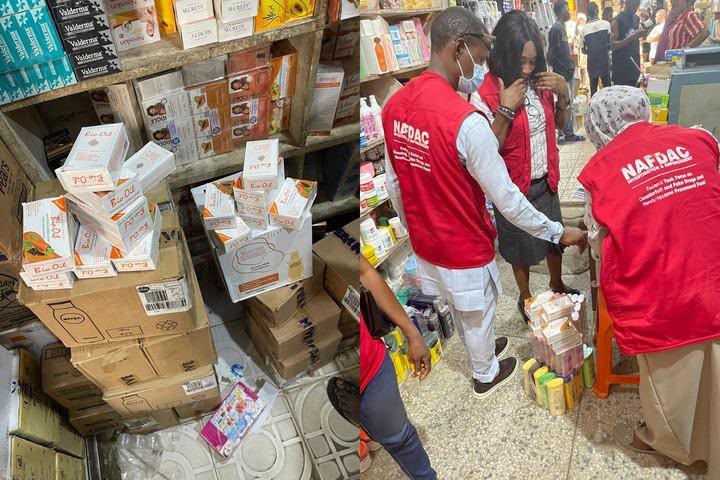
The National Agency for Food and Drug Administration and Control (NAFDAC) has intercepted 17 cartons of suspected unregistered beverages, skin-lightening injections and anti-ageing injections at the Mallam Aminu Kano International Airport in Kano State.

The products were concealed in a 33-carton consignment declared as “personal effects” and transported aboard an Ethiopian Airlines flight that arrived at the airport on Wednesday, November 18.

NAFDAC disclosed the interception on Thursday, November 19, following a joint inspection by its Port Inspection Directorate and other officials at the Skyway Aviation Handling Company (SAHCO) cargo shed.

According to the agency, a physical examination revealed that the products had no NAFDAC registration numbers, while the consignment lacked the required import documentation.

The entire shipment was subsequently placed on hold in the custody of the Nigeria Customs Service, while the importer was invited for questioning and a statement obtained as part of an ongoing investigation.

NAFDAC said the products would remain on hold pending further regulatory directives. It also cautioned that their quality and authenticity had not yet been established.


Why the Discovery Raises Concern

The interception has drawn attention to the risks associated with purchasing and using regulated products whose registration and quality have not been verified.

Skin-lightening and anti-ageing injections are particularly important to scrutinise because they are introduced directly into the body. Their safety cannot be determined from packaging, marketing claims or promises of quick results.

However, NAFDAC has not confirmed that the products intercepted in Kano were counterfeit, substandard or harmful. Their status remains subject to regulatory investigation.

The discovery also highlights the need for consumers to exercise caution when purchasing beauty products, particularly injectable treatments advertised online or sold through informal channels.


How Nigerians Can Check Products

NAFDAC provides online platforms through which consumers can check the registration status of regulated products.


Before purchasing a product, consumers should:

– Check for the NAFDAC registration number and confirm that it corresponds with the product.

– Examine the manufacturer’s name and address, batch number, manufacturing date and expiry date.

– Check that the packaging and seals are intact and show no signs of tampering.

– Avoid products with missing labels, unclear ingredients or unsupported claims.

– Seek advice from qualified healthcare professionals before undergoing injectable cosmetic procedures.


Consumers can use NAFDAC’s “product verification portal” (https://registration.nafdac.gov.ng/) and its “Greenbook registered-product database” (https://greenbook.nafdac.gov.ng/) to check available registration information.

A registration number printed on a package should not automatically be taken as proof of authenticity; the details should match the actual product.


NAFDAC says it is strengthening surveillance and enforcement at Nigeria’s entry points to prevent the unlawful importation and circulation of unregistered, substandard and falsified regulated products.

The Kano interception demonstrates the importance of these checks, particularly where regulated products are concealed in consignments declared under different descriptions.

For consumers, the lesson is straightforward: beauty and anti-ageing claims should not take priority over safety and proper regulatory checks.

As the investigation continues, Nigerians will be watching to see what further action NAFDAC takes and whether the agency establishes the identity, origin and quality of the intercepted products.

Continue Reading

Abuja Reports

Residents Query PCN Over Pharmacy at Abuja NNPC Station

Published

on

By Patrick Idowu

Residents of Life Camp, Abuja, are raising safety alarms over the Pharmacy Council of Nigeria’s (PCN), approval of an H-Medix outlet situated within an NNPC Limited filling station.

Locals argue that selling medication in close proximity to fuel pumps exposes pharmaceutical products to toxic fumes and fire hazards.

Resident Cyril Chizoba warned of “serious health risks,” including chemical contamination, while medical expert Dr. Gaius Mikinta noted that volatile environments can compromise the efficacy of temperature-sensitive drugs.

In response, PCN Legal Head Abana Lawan confirmed the outlet is duly licensed.

He stated that approval was granted after a “demarcation” within the premises met regulatory standards, adding that the move helps prevent monopolies and expands service access.

However, PCN Registrar Pharm. Ibrahim Babashehu Ahmed declined to comment further during a recent press visit.

Despite official assurances, the community is calling for an independent inspection. “I was surprised regulators approved this,” said Solomon Dauda, a local driver, noting the daily dispensing of petrol and gas at the site.

Residents continue to demand greater transparency to ensure pharmaceutical standards aren’t being traded for convenience.

Continue Reading

Trending

extrabetseo ajansıseo ajansısweet bonanzatrlisans pinterestgiftcardmall/mygiftgrandpashabet girişgrandpashabet güncel girişgrandpashabetgrandpashabet girişgrandpashabettaraftarium24dizipalgiftcardmall/mygiftjustin tvGrandpashabetGrandpashabetGrandpashabetGrandpashabetRadissonbetsweet bonanzasweet bonanzapadişahbettaraftarium24taraftarium24rojadirectajustin tvcasinolevantgrandpashabetgrandpashabetgrandpashabetgrandpashabetgrandpashabetgrandpashabetgrandpashabetholiganbetholiganbetholiganbetmarsbahismarsbahisjojobetjojobetjojobetcasibomcasibomcasibomholiganbetholiganbetjojobetjojobet girişjojobet güncel girişjojobet güncel girişjojobetholiganbetholiganbetjojobetcasinolevantimajbetsekabetjojobetjojobet girişgrandpashabetgrandpashabetTürkiyenin Casino Sitelerivdcasinograndpashabetgrandpashabet girişGrandpashabetsahabetcasinolevantgrandpashabetjojobetmatbetnesinecasino xwbahis xbetgaranti xgrandpashabet girişDeneme Bonusujojobetjojobetjojobet