Connect with us

News

Tinubu’s Ministers’ Rating: 22 Should Go in Looming Cabinet Reshuffle

Published

on

Sixteen months into the administration of President Bola Ahmed Tinubu, Nigerians have been inundated with myriad of problems, ostensibly occasioned by the abrupt seizure of subsidy being paid on premium Motor Spirit (PMS), over the years by the Federal Government.


The removal which came with the swearing in of President Tinubu, resulted in a surge from N195 per litre to N540 per litre in June 2023 and an unprecedented N620 per litre by July of same year.


Today, price of fuel per litre in Nigeria stands between N960 and N1,200, as the case may be, significantly impacting transportation and constituting deep holes in the pockets of Nigerians.


In the wake of the spiraling effect of the horrible situation, the Federal Government have devised several ways to lead Nigerians out of the doldrums, relying heavily on the executive arm of government to wake up to lingering challenges by ensuring each ministry performs at maximum capacity to cushion the effect of the fuel subsidy that had obviously overstayed its welcome and must go.


President Tinubu had minced no words while swearing in the Ministers that he would not spear any rod should any of the appointed minister is found wanting in performing at full capacity.


Sequel to this, Tinubu set up a Result and Delivery Unit to measure the performance of Ministers and other top government officials serving in his administration.


At the opening of the 2023 cabinet retreat for Ministers, Presidential Aides, Permanent Secretaries and top government functionaries, the President said his renewed hope agenda would ensure that any minister or presidential aide that underperforms in the discharge of his assigned duties and responsibilities will be sacked.

He there and then empowered his Special Adviser on Policy, to supervise a result and delivery unit that will keep ministers on their toes and monitor their key performance index


Meanwhile, as the nation awaits the 64th Independent Day come Tuesday, October 1, 2024, feelers emerged that the President, after an in-depth scrutiny of each ministry’s score card, may have to show some ministers the way out of his cabinet in an imminent reshuffle


The Abuja City Journal has been quick to foresee the development and conducted a prior ministry performance review to identify 22 under-performing ministers that may go with the impending presidential whirlwind.


The rating, based on the ability of ministers to set goals, achieve them, and promote their achievements as well as offer a troubling picture of numerous important ministries also looked at failure in delivering on their mandates.


With Nigeria facing significant economic, social, and security challenges, the performance of these ministers are viewed to have not met the expectations of government even after thirteen months in their various offices.


However, this recent rating highlights inefficiencies and underachievement in critical areas such as agriculture, education, and energy.

With a mandate anchored on the promise of prosperity and progress, Tinubu’s administration has set ambitious targets aimed at addressing the multifaceted challenges facing Nigeria. ACJ’s rating therefore was done after thorough analysis, using proprietary score card while engaging with each Ministry at the elemental level to scrutinize performance on the critical measures of ministerial responsibility.


From Poor to Great Performers


Among the lowest-rated ministers are: Minister of Art, Culture and the Creative Economy, Hannatu Musawa and Aliyu Sabi Abdullahi, Minister of State for Agriculture and Food Security. These duo under-performed and received a score of just 1.00 out of 3.00. The low ratings signal severe deficiencies in driving national programs within their sectors.


Some supposedly “ghost” ministers like those in Innovation, Science and Technology, Police Affairs Minister and Minister of State, Marine and Blue Economy Minister, Niger Delta Minister, Minister of State for Steel, the surprisingly uninspiring Minister of Youths, and the rumored to be sick Tourism Minister.


The Water Resources & Environment Ministers and their Ministers of States, also wobbled and fumbled in the face of the worst floods confronting the nation in decades.


The 22 of the 49 ministers rated below 1.5 average and risk the chance of being removed or reassigned.


Others, like the Minister of Sports, Minister of State Oil, Minister of Transport and Minister of Industries & Trade, despite a little above 1.0 average rating, can be said to have emerged undeserving as a result of their critical ministries that forced them to speak to the media every now and then but with no discernible achievements.


John Enoh (Minister of Sports Development), performed abysmally, with scores reflecting his lack of grit and progress in the chaquered Ministry of Sports that always disappoint millions of Nigerians.


Nigeria’s disappointing performance at the 2024 Paris Olympics, which saw the country return home with no single medal, analysts say, reflects the poor management of the sports sector under Sports Minister Enoh, having spent N12 billion on the event with no discernible outcomes but excuses.


However, in the face of the poor performance of some, our ratings revealed some upstanding ministers who made identifiable marks idespite the odds.


Chief among this category of ministers is His Excellency Dr. Nyesom Wike, the Minister of the Federal Capital Territory, who received an unbeatable perfect average score of 3.0 for his massive, obvious and well publicized work of transforming at the Federal Capital.


Barrister Festus Keyamo (SAN), the aviation Minister,also scored a high mark for himself in the unfamiliar aviation sector. His achievements on the resolution of the UAE and UK flight disputes favorably for Nigeria and securing leading rights for Nigeria airlines, received high praise.


In addition to Wike and Keyamo, is the Interior Minister, Olubunmi Ojo. His hardnosed reform in the prison sector, immigration and civil defense earned him a top performer perfect rank by our assessors. This can also be said of Dr. Muhannad Ali Pate, of the health Ministry whose exploits in attracting investments for the health sector and securing massive turnarounds is a story still being written.


Other ministers were middling except for the Honourable Minister of State for Labour, Nkiruka Onyejeocha, who in our reckoning deserves a promotion for securing some very difficult concessions from Labour and delivering alongside the President, a new minimum wage from which workers are now benefitting.


The Minister of Justice also deserves commendation especially for his landmark but quiet work, using transformative judicial interventions to reshape the future of Nigeria. A case in point is the landmark supreme Court ruling on the autonomy of Local Government, which he argued successfully to the dismay of Nigeria’s largely underperforming Governors.


Calls for Replacement

The report by Abuja City Journal is gauged by people’s opinion, signaling that some ministers, having fallen short of their promises and should be replaced with more capable individuals. Some ministers need additional hands, like in the Ministry of Finance, where ministerial flaws may constitute shortfalls to the administration’s goals.


The assessment further notes that appointees like the Minister of Power, Adebayo Adelabu, may need to up his game despite earning a satisfactory performance of late. The Minister of Education Tahir Mamman and the Minister of State Gas falls should also do more in their sensitive ministries as well.


Security Victories Secure Defense Ministers

In recent times, Nigeria has been securing major victories against bandits and terrorists, eliminating major leaders upon orders by Mr. President for the service chiefs to relocate to the Northwest region of Nigeria. Thus the Ministry of Defence, led by Mohammed Badaru Abubakar, and deputized by Former Zamfara Governor Bello Matawalle, showed relatively better performance, despite the disaster from their police counterparts who have not been able to deliver on the promise of Mr. President.


Inability to resolve the issues of state police and community policing reforms, one year into their tenure is encouraging. The leg dragging on these important issues has led to massive spike in kidnapping, with the military being stretched further to do police work ,even as two Ministers virtually became invincible as the nation faced the worst crisis in decades.


The Call for Rethink of Cabinet Criteria

As Nigeria continues to navigate through a challenging period of economic and political transformation, it is imperative that ministries are led by individuals who can bring about prompt and meaningful change. To this end, the era of ghost ministers must come to an end.

Indeed, Special Adviser to President Tinubu on Information and Strategy, Bayo Onanuga, has said, “President Tinubu has ordered his ministers to ensure they engage the public by publicising what the government is doing in their various ministries. I don’t have any timeline. The President has expressed his desire to reshuffle his cabinet and will do it. I don’t know whether he wants to do it before October 1, but he will surely do it.”

We wait, just as other Nigerians wait with bated eyes for a purposeful reshuffle that will lead to effective transformation that the nation deserves


This ministerial rating by Abuja City Journal is therefore a call for President Tinubu to overhaul his cabinet and appoint ministers with the vision and drive necessary to move Nigeria forward. The cabinet can also be nimbler in tough times. Nigeria doesn’t need more than 36 persons in the cabinet. The ghost ministers have to go.


The future of the nation depends on the leadership’s ability to address its most pressing challenges. This assessment offers a roadmap for action. Whether President Tinubu heeds these calls for replacement remains to be seen.


But the public sentiment is clear: Nigeria cannot afford ineffective governance at this critical time.

News

34 Young Leaders Join PELF 2026 Cohort in Plateau

Published

on

By

By Samson Adeyanju

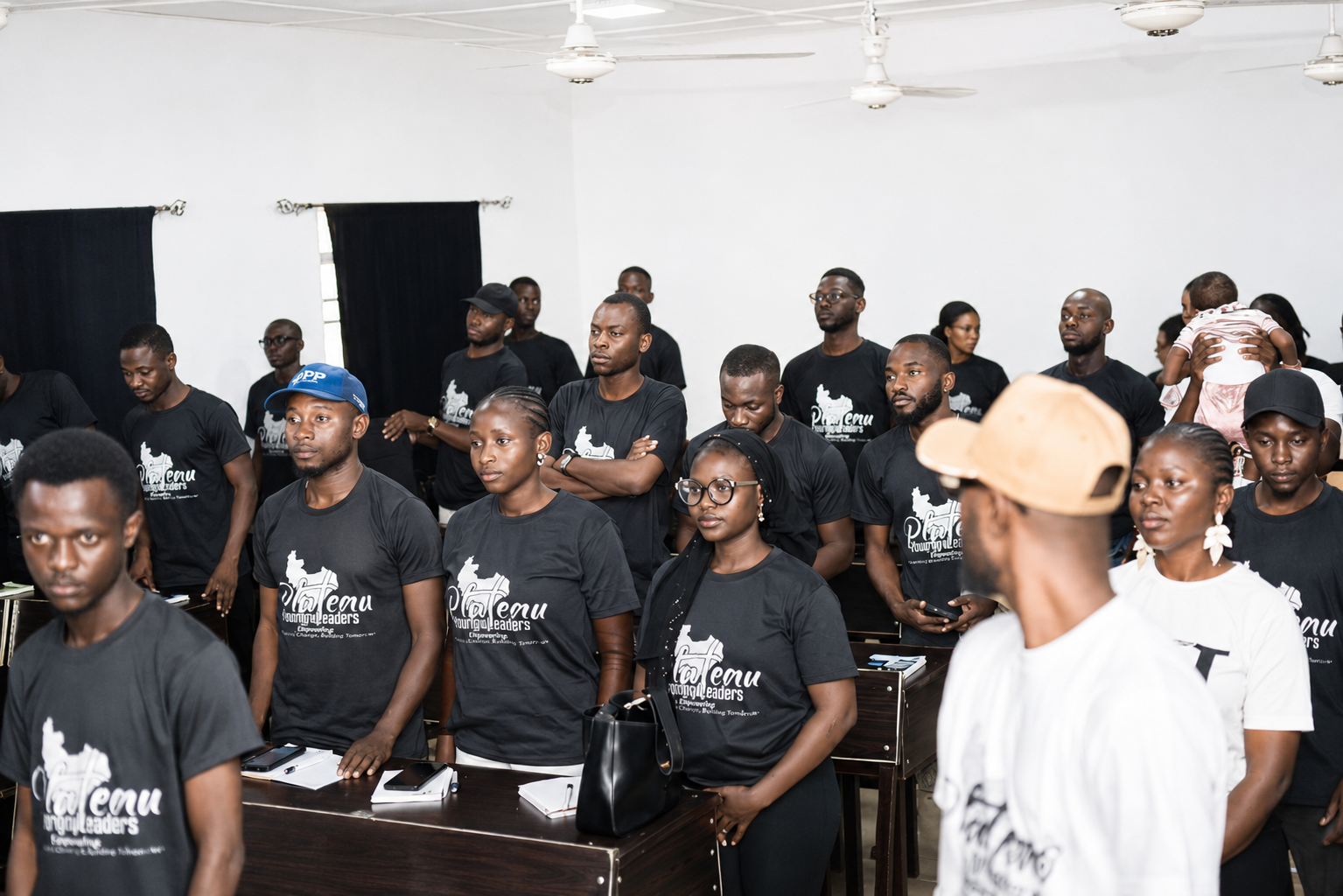
Thirty-four outstanding young leaders from across Plateau State have been inducted into the 2026 cohort of the Plateau Emerging Leaders Fellowship (PELF), following a highly competitive selection process that attracted more than 350 applications from the state’s 17 local government areas.

The onboarding ceremony, held at the EYN Technology Centre in Jos on Saturday, marked the official commencement of the fellowship’s second cohort and reinforced growing efforts to nurture a new generation of ethical, visionary, and solution-driven leaders capable of addressing the state’s development challenges.

Organised by the African Jewels Development Initiative (AJDI), the fellowship is designed to equip emerging leaders with practical skills in leadership, governance, public policy, advocacy, communication, and community development. The six-month programme combines physical and virtual learning sessions, mentorship, institutional visits, policy dialogues, and community-based projects.

Speaking during the event, Founder of the Plateau Emerging Leaders Fellowship and Executive Lead of AJDI, Ruth Ki Sunday, said the initiative was born out of her personal experience as a beneficiary of leadership development programmes.

She explained that participation in platforms such as the Legislative Mentorship Initiative and the Emerging Political Leaders Fellowship exposed her to the transformative value of mentorship and structured leadership training, inspiring her to create a similar opportunity for young people in Plateau State.

According to her, the fellowship was established to bridge the gap between young people already making meaningful contributions in their communities and the mentorship, exposure, and networks needed to amplify their impact.

“We have young people who are doing amazing things within their communities, but they need opportunities to learn from experienced leaders and strengthen their capacity to drive sustainable change,” she said.

Ruth disclosed that more than 350 applications were received for the 2026 cohort, with only 34 applicants making it through a rigorous selection process.

She urged the newly admitted fellows to see their selection as both an opportunity and a responsibility.

“For the fact that you are here, it means that you are worth being here. We saw the work you are already doing and believe this fellowship will amplify your voice and help you become a better leader,” she said.

She further noted that every fellow would be required to design and execute a community impact project before graduation, stressing that the programme’s objective extends beyond leadership training to producing practical problem-solvers.

“Our goal is not just to train people. We want young leaders who can identify challenges in their communities and implement practical solutions,” she added.

Delivering the keynote address titled “Leading Beyond Titles: The Responsibility of the New Generation,” physician, business developer, and leadership advocate, Mr. Majority Hassan Haruna, challenged participants to redefine leadership beyond positions and official designations.

According to him, true leadership begins with the willingness to accept responsibility and create solutions.

“Leadership begins the moment you decide to take responsibility. You do not have to wait for an appointment, election, or title before you start leading,” he said.

Haruna encouraged the fellows to cultivate competence, character, compassion, and courage, which he described as the four pillars of effective leadership.

He also called on government institutions and development partners to support and institutionalise leadership development initiatives, noting that programmes such as PELF provide a critical pipeline for nurturing future leaders and changemakers.

“Leadership development should not happen by accident. It should be intentional,” he said.

Earlier, Fellowship Coordinator Mr. Burnan Zitta reminded participants that their selection marked only the beginning of a demanding journey.

He stressed that successful completion of the fellowship would depend on discipline, commitment, punctuality, active participation, and successful implementation of community projects.

“This stage is not a guarantee that after your training you will graduate as fellows. It depends on your commitment and willingness to learn,” he said.

Zitta challenged the participants to move from passive citizenship to active leadership and influence.

“We need young people who will sit at decision-making tables, influence policies, and contribute to solving the leadership challenges facing Plateau State,” he said.

Representing the pioneer cohort, President of the PELF Class of 2025 and Acting President of the Fellowship Alumni Network, Paul Cletus Bello, described the fellowship as one of the most impactful youth leadership platforms currently available in Plateau State.

Reflecting on the experiences of the inaugural cohort, Bello said the fellowship had exposed participants to renowned leadership coaches, policy experts, development practitioners, and changemakers whose contributions had significantly shaped their growth.

“It has been an amazing journey of learning, leadership, and service. We have gained the skills, perspectives, and confidence required to contribute meaningfully to our communities,” he said.

He called on government agencies, donor organisations, development partners, private sector actors, and international institutions to support the growth of the initiative.

According to him, the fellowship has already begun yielding measurable results, with several alumni securing employment opportunities, leadership appointments, and development engagements following their participation in the programme.

Beyond the speeches, newly inducted fellows expressed optimism about the opportunities ahead.

For Azurfa Adi Ali, a learning facilitator, the fellowship offers a platform to acquire policy and leadership skills necessary for creating sustainable impact.

“I believe this fellowship will equip me with the knowledge and skills needed to create meaningful change, not only in Plateau State but across Nigeria,” she said.

Pamela Bentu Zungkat described the experience as inspiring and transformational, while Dorcas Ritmun Denshime emphasized that leadership is fundamentally about responsible citizenship and taking initiative wherever opportunities arise.

For Seljul Shallom Kamven, the fellowship provides a bridge between passion and action.

“I have always wanted to solve problems in my community, but I lacked the platform to implement solutions. I believe this fellowship is the opportunity I have been waiting for,” he said.

Similarly, Fittoka Pangshak Benue described his selection into the fellowship as a dream come true.

“It is more than a leadership programme. It is an opportunity to grow, learn, and become the kind of leader capable of making a difference,” he said.

As the second cohort embarks on its six-month leadership journey, fellows will engage with governance experts, policy advocates, communication professionals, and development practitioners while implementing projects aimed at addressing real challenges within their communities.

At a time when Plateau State continues to grapple with issues of youth unemployment, insecurity, governance deficits, and social cohesion, stakeholders believe the fellowship offers a strategic investment in the future by preparing young people to become effective leaders, problem-solvers, and agents of change.

The message that resonated throughout the onboarding ceremony is that leadership is not a title to be acquired but a responsibility to be embraced.

Continue Reading

Abuja Reports

Caritas Nigeria Urges Ecological Conversion, Climate Action

Published

on

By

By Samson Adeyanju

Caritas Nigeria has called on Nigerians to embrace what Pope Francis describes as “ecological conversion,” urging citizens, institutions and governments to move beyond environmental rhetoric and take concrete action against climate change and environmental degradation.

The call was made during the commemoration of World Environment Day 2026 at the Catholic Secretariat of Nigeria (CSN) Training Hall, Abuja, under the theme: “Inspired by Nature. For Climate. For Our Future.”

Delivering an address on behalf of the Catholic Secretariat of Nigeria, the Deputy Secretary, Rev. Fr. Augustine Okochi, described care for the environment as a moral, spiritual and ethical responsibility rooted in Christian faith.

“Our concern for the environment is not a passing trend. It is part of our moral duty, our Christian witness, and our responsibility to future generations,” he said.

Fr. Okochi noted that climate change is already affecting communities through flooding, land degradation, water pollution, rising temperatures and declining livelihoods, with the poor, women, children and displaced persons bearing the greatest burden.

He commended Caritas Nigeria’s efforts in environmental awareness, tree planting, climate-smart agriculture and support for vulnerable communities, while urging families, schools, parishes and institutions to cultivate a culture of environmental stewardship.

Speaking at the event, Caritas Nigeria’s Environmental Focus President, Dr. Pascal Onu, stressed the importance of educating young people on environmental protection through debate and quiz competitions.

“We believe it is important to catch them young. When we imbibe the right environmental culture in our children, it goes a long way in protecting the environment,” he said.

Dr. Onu identified inadequate infrastructure, poor waste management systems and limited funding as major obstacles to environmental sustainability despite increasing public awareness of climate issues.

Also speaking, Director of the Department of Climate Change at the Federal Ministry of Environment, Dr. Iniobong Abiola-Awe, reaffirmed Nigeria’s commitment to climate action through initiatives such as the National Adaptation Plan, Nationally Determined Contributions (NDCs), the Just Transition Action Plan and the National Clean Cooking Policy.

She emphasized the role of young people in advancing climate solutions through programmes such as the Eco-Schools Initiative and the Youth Climate Innovation Hub.

In a goodwill message, the Abuja Environmental Protection Board (AEPB), represented by Chief Environmental Health Officer Omenta Rachael Chinenye, urged Nigerians to draw inspiration from nature in addressing environmental challenges and commended the active participation of students in climate debates.

Students at the event said the programme deepened their understanding of environmental protection, forest conservation and sustainable living, pledging to promote environmental responsibility in their schools and communities.

The event brought together religious leaders, government officials, environmental experts, students and development partners who renewed their commitment to building a cleaner, greener and more climate-resilient Nigeria.

Continue Reading

2027 General Elections

Catholic Church Warns Against Fake Identities, Urges Responsible Journalism

Published

on

By

By Samson Adeyanju

The Catholic Church in Nigeria has warned against the growing spread of fake identities, misinformation and digital disconnection in the media space, calling on journalists and social media users to embrace truth, responsibility and respect for human dignity in communication.

The warning was issued by the Chairman of the Department of Communications of the Catholic Bishops’ Conference of Nigeria and Bishop of the Catholic Diocese of Katsina, Most Rev. Gerald Mamman Musa, during his homily and press conference at the 2026 World Communications Day celebration held at the Catholic Secretariat of Nigeria, Abuja.

Bishop Musa, who reflected on the theme “Preserving Human Voices and Faces,” said modern society is increasingly “digitally connected but personally and spiritually disconnected,” despite advances in communication technology.

He stressed that communication remains central to human existence, noting that “to live is to communicate,” whether through speech, writing, or digital platforms.

According to him, the Church sets aside World Communications Day annually to reflect on the responsibility that comes with communication, especially in an era dominated by social media and digital interactions.

Prayer and spiritual grounding in communication

Drawing from the liturgical readings, Bishop Musa emphasised the importance of prayer, describing it as the “master key” to perseverance, strength and spiritual revival.

He recalled the apostles who, after the ascension of Jesus Christ, gathered in the upper room in fear but turned their anxiety into prayer while awaiting the Holy Spirit.

“The upper room is a place of communion with God, revival and spiritual renewal,” he said, urging Christians to remain rooted in prayer amid modern-day pressures.

He added that prayer does not remove suffering but gives believers the strength to endure challenges with hope and joy.

Warning against fake identities and online abuse

Bishop Musa warned that social media platforms have become spaces where individuals hide behind fake names, anonymous accounts and false identities to spread hatred, lies, blackmail and cybercrime.

“When we come with unreal names and masks on social media, we are acknowledging that we are doing something wrong,” he said.

He compared such behaviour to criminals who conceal their identities while committing evil acts, adding that truth thrives in openness while wrongdoing hides in anonymity.

He also cautioned against treating people as statistics or objects, drawing from the philosophy of Martin Buber, which emphasises human dignity and mutual respect.

The bishop further highlighted how Jesus Christ consistently gave voice to the marginalised, including the Samaritan woman, the woman caught in adultery and the blind Bartimaeus, stressing that society must not silence vulnerable voices.

According to him, preserving human voices means allowing people to speak from their lived experiences rather than speaking over them.

Bishop Musa urged media practitioners and social media users to use communication tools responsibly in promoting truth, evangelisation and human dignity.

“Speaking the truth in love is not only about projecting our voices, but doing so with charity and responsibility,” he said.

CSN Scribe urges responsible journalism ahead of elections

The Secretary-General of the Catholic Secretariat of Nigeria, Fr. Michael Banjo, also called on journalists to uphold responsible journalism and defend truth as Nigeria approaches another election cycle.

Fr. Banjo warned that communication must not become “a weapon of injury” in a country already facing insecurity, economic hardship and political tension.

He stressed that preserving human voices and faces requires verifying information before publication to prevent misinformation from damaging reputations or destabilising communities.

According to him, journalists must avoid hate speech, sensationalism and divisive narratives that reduce citizens to ethnic, religious or political labels.

“The answer to misinformation is responsible journalism; the answer to propaganda is truth,” he said.

Fr. Banjo also called for transparency in the electoral process, especially in the electronic transmission of results, insisting that every vote must count and reflect the true will of the people.

He urged journalists not only to highlight challenges but also to report positive developments that strengthen national unity and hope.

The CSN scribe thanked the media for their continued partnership with the Church in promoting justice, peace and accountability.

He concluded by urging Nigerians to “speak truth without hatred, listen without prejudice, and use every platform in service of the common good.”

Fr Umoh celebrates birthday, reflects on six-year tenure

The National Director of Social Communications of the Catholic Secretariat of Nigeria, Rev. Fr. Michael Nsikak Umoh, also used the occasion to reflect on his six-year tenure as he addressed journalists at the same event, which marked the 2026 World Communications Day and the closing of the 5th Nigeria Catholic Communications Week (ComWEEK).

Fr. Umoh described the event as a “double celebration,” noting both the global communications observance and the conclusion of a nationwide media literacy programme carried out across Catholic parishes and chaplaincies.

He expressed gratitude to the media for their collaboration with the Church, describing journalists as key partners in amplifying the Church’s voice and strengthening public discourse.

According to him, the media and the Church share a “sacred duty to be the conscience of the nation,” especially in challenging socio-economic times.

He also paid tribute to the immediate past Chairman of the CSN Communications Department, Most Rev. David Ajang of the Catholic Diocese of Lafia, commending his leadership in establishing key reforms, including the Nigeria Catholic Network (NCN) and the institutionalisation of ComWEEK.

Fr. Umoh introduced the new Chairman of the CSN Department of Social Communications, Most Rev. Gerald Mamman Musa, describing him as a “communications scholar and seasoned shepherd,” and expressed confidence in his leadership.

Reflecting on his tenure since 2020, he said his administration worked to strengthen the Church’s digital presence and unify communication structures, while acknowledging that further work remains.

He thanked the Catholic Bishops’ Conference of Nigeria (CBCN), his Archbishop Most Rev. Alfred Adewale Martins, and the media for their support throughout his service.

In a personal note, Fr. Umoh revealed that the celebration coincided with his 58th birthday, calling it a “providential coincidence” and a meaningful milestone in his ministry.

The event ended with prayers for the media, the Church and Nigeria, and the formal closure of ComWEEK 2026.

Continue Reading

Trending

Deneme Bonusu Veren Sitelergrandpashabetgrandpashabet girişgrandpashabetJojobetgrandpashabetgrandpashabetgrandpashabetgrandpashabetgrandpashabetpusulabet girişCasibomdeneme bonusu veren sitelergrandpashabetmarsbahisgrandpashabetdeneme bonusudeneme bonusudeneme bonusu veren sitelertaraftarium24justin tvjojobetmatadorbetmatadorbetsapanca bungalovmarsbahisgoldenbahisroketbetligobettipobetcasino sitelerideneme bonusudeneme bonusucasibomjojobetgrandpashabetteosbetgameofbetbetewinbettilthititbetjojobetmarsbahispusulabetcasibomjojobetcasibomjojobet girişPusulabetPusulabetGrandpashabetJojobetroyalbetgrandpashabetjojobetjojobet güncel girişholiganbetdeneme bonusudeneme bonusupasacasinovolacasinobelugabahisgrandpashabetbetasusjojobetjojobetgrandpashabetgrandpashabet girişjojobetgrandpashabetteosbetcratosroyalbetsekabetpusulabetjojobetmatbetvdcasinoimajbetmarsbahisgrandpashabetjojobetteosbetbahiscasinoromabetbahiscasinoteosbetgameofbetbahiscasinoradissonbetmeritkingholiganbetjojobetcasinowonmercurecasinomercurecasinograndpashabetcashwinmarsbahiscasinowongameofbetradissonbetgrandpashabetbetgitcratosroyalbetmeritkingholiganbetjojobetsekabetmeritbet girişmeritbetcasibomesbetbetbeytambetcasibom güncelgalabet girişimajbetBetpas