Connect with us

Business

Ecobarter Launches Nigeria’s First Reverse Vending Machine for Plastic Waste Recycling

Published

on

Ecobarter, a social enterprise specialising in garbage collecting and recycling, introduced Nigeria’s first Reverse Vending Machine (RVM) on Saturday, September 7, 2024, in Abuja. The revolutionary gadget, which was entirely designed in Nigeria, promises to address the country’s rising plastic waste crisis by giving consumers a simple option to recycle their used plastic bottles and beverage cans in exchange for rewards.

Speaking at the unveiling event, Ecobarter’s founder and CEO, Rita Idehai, expressed her pride and excitement for the achievement. “I think that is the biggest thing for me,” Idehai said. “The RVM, as I always say, is not a new invention; it is everywhere in Europe, but there are challenges on why it has not come here. So, for a small girl, building this and then putting it on the continent is huge, and that is the most significant thing for today.”

Plastic pollution has been a longstanding issue in Nigeria, with streets, waterways, and drainage systems often clogged by plastic waste. The RVM provides a sustainable solution by incentivizing individuals to properly dispose of their plastic waste. By using the machine, consumers can drop off their plastic bottles or cans, which are then counted by the device. In return, users receive rewards such as money deposited directly into their wallets, which can be withdrawn or used to make purchases.

“Plastic waste is something that everybody is already aware of. We see it every day as our drainages and gutters clog,” Idehai noted. “One of the challenges we have had as people who are leading recycling collections in Nigeria is access. People do not have access to recyclers and recycling facilities. So, this machine being here today and with the possibility of it being deployed across Nigeria and African cities is an opportunity for more people to bring and recycle their waste.”

The introduction of the RVM marks a significant step forward in Nigeria’s recycling efforts. Idehai emphasized that the technology allows people to see tangible value in their waste. “People having the facility to easily cash out on their waste is good and will mob up a lot of plastics from the environment,” she explained.

During the launch, passersby in Abuja expressed curiosity and excitement about the new technology, with many lamenting that they had not brought their plastic waste to try it out. “You should have told us; we would have come with our plastics,” one onlooker remarked, underscoring the enthusiasm for the initiative.

Idehai also touched on the environmental impact this device could have, noting that widespread use of the RVM could significantly reduce the amount of plastic waste littering the country’s streets and waterways. “People are excited about it, and it will take up plastics from our society,” she said.

The journey to the development of Nigeria’s first RVM began modestly. According to Idehai, the idea for the machine started “literally in front of my house,” with the first prototype built in a small, local setting. Now, however, Ecobarter has its sights set on expanding the production and distribution of the RVM nationwide.

“We are looking at building a proper standard manufacturing facility so that we can do more volumes,” Idehai shared. “To do a facility, you need funding. Then, we are also looking for policies that more or less mandate people to recycle.”

Idehai also called on government bodies like the National Orientation Agency (NOA) and development partners to support efforts in educating Nigerians about the benefits of recycling and the use of the RVM. She stressed the importance of policy support, stating, “We will need partnerships with government bodies like the NOA to educate people about this machine and the waste problem.”

Idehai’s vision goes beyond simply placing vending machines in public spaces. She hopes that the introduction of the RVM will foster a cultural shift in how Nigerians view waste, particularly plastic waste. By making recycling convenient and rewarding, Ecobarter is encouraging people to take responsibility for their environmental impact.

“This is the first of its type here, and it is a thing of pride for us, and we hope it is a thing of pride for them as well. But, beyond that, we want it to bring out some action in them, to see the value in their waste,” Idehai said passionately. “There is no reason again for anyone to trash their plastic bottles or beverage cans.”

Looking ahead, Ecobarter aims to ensure that RVMs are accessible to all Nigerians, no matter where they are located. “There is a stylish way for them to recycle and get money, and this is it,” Idehai declared. “By the grace of God, this is going to be everywhere so that you don’t have to walk or travel long distances to be able to access one.”

Ecobarter’s efforts represent a pioneering approach to recycling in Nigeria, blending technology, environmental stewardship, and economic incentives. As the first RVM made entirely in Nigeria, it stands as a symbol of local ingenuity and determination to address one of the country’s most pressing environmental challenges.

The launch of this Reverse Vending Machine is not just a milestone for Ecobarter, but for Nigeria as a whole. It signifies a shift towards a cleaner, more sustainable future—one plastic bottle at a time.

Continue Reading
Click to comment

Leave a Reply

Your email address will not be published. Required fields are marked *

Business

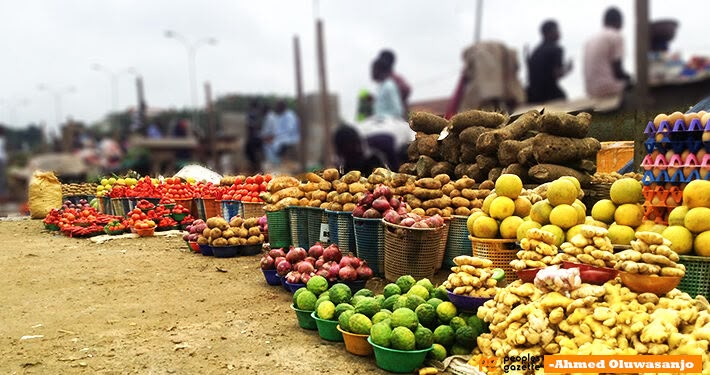
Food Inflation Tops 20% in 19 States Despite National Slowdown

Published

on

By Ifunanya Stephanie

Food inflation exceeded 20 per cent in 19 Nigerian states in October 2026, despite a decline in the national annual rate, highlighting persistent price pressures across more than half of the country.

The affected states represent 52.8 per cent of Nigeria’s 36 states, according to an analysis of the latest Consumer Price Index data by The PUNCH.

The National Bureau of Statistics reported that national food inflation eased to 19.13 per cent in October from 19.59 per cent in September. However, the state-level figures showed that food price increases remained above 20 per cent in 19 states.

Ondo recorded the highest annual food inflation at 31.74 per cent, rising slightly from 31.49 per cent in September. Lagos followed at 31.43 per cent, although this represented a decline from 34.40 per cent, while Imo recorded 29.75 per cent, down from 33.79 per cent.

Oyo recorded 28.81 per cent, compared with 24.50 per cent in September, while Ebonyi’s rate rose from approximately 22 per cent to 27.96 per cent. Rivers recorded 25.33 per cent, compared with about 28 per cent previously.

Other states with annual food inflation above 20 per cent were Abia at 24.22 per cent, Delta at 23.91 per cent, Enugu at 23.48 per cent, Zamfara at 22.88 per cent, Ogun at 22.47 per cent, Yobe at 22.26 per cent, Anambra at 22.23 per cent and Kebbi at 22.21 per cent.

Akwa Ibom recorded 21.56 per cent, Edo 21.52 per cent, Sokoto 21.40 per cent, Ekiti 20.61 per cent and Kaduna 20.32 per cent.

The NBS confirmed that Ondo, Lagos and Imo recorded the highest year-on-year food inflation rates in October.

However, the monthly figures presented a different picture, showing that food prices declined nationally for the second consecutive month, although the pace of reduction slowed.

National food inflation stood at -0.75 per cent month-on-month in October, compared with -1.55 per cent in September. This represented an increase of 0.80 percentage points in the monthly inflation rate, indicating that average food prices were still falling but at a slower pace.

The NBS attributed the movement to changes in the prices of commodities including vegetable oil, sardines, green peas, frozen fish, locally produced rice, fresh catfish, beef tripe, palm oil and millet flour.

At the state level, Yobe recorded the highest monthly food inflation at 18.41 per cent in October, reversing a decline of 7.0 per cent in September. Kebbi followed with 16.45 per cent, compared with -4.9 per cent previously, while Sokoto recorded 13.0 per cent against -1.7 per cent.

Zamfara’s monthly rate rose to 8.7 per cent from 6.0 per cent, while Anambra recorded 4.3 per cent, compared with -0.3 per cent in September.

Enugu’s rate stood at 4.9 per cent, down from 14.5 per cent, while Abia rose to 2.6 per cent from 0.4 per cent. Ebonyi recorded 2.4 per cent against -2.1 per cent, Ogun 1.5 per cent against -0.4 per cent, and Edo 0.9 per cent compared with -2.8 per cent.

Imo and Ondo each recorded monthly food inflation of 0.6 per cent, although their rates moderated from 5.2 per cent and 2.6 per cent respectively. Kaduna, by contrast, recorded a monthly decline of 4.7 per cent, reversing the 3.2 per cent increase recorded in September.

Lagos recorded a 5.93 per cent monthly decline, compared with a 0.4 per cent increase in September. Rivers recorded -4.3 per cent against -2.0 per cent, while Delta posted -3.8 per cent compared with a 2.2 per cent increase.

Oyo recorded -2.6 per cent against 3.8 per cent, Akwa Ibom -1.5 per cent against -0.4 per cent, and Ekiti -0.4 per cent compared with -1.5 per cent previously.

Overall, 12 of the 19 states recorded positive monthly food inflation in October, while seven experienced declines, underscoring the uneven movement of food prices across the country.

The NBS cautioned against making direct comparisons between states without considering differences in consumption patterns and the weights assigned to individual food items in calculating their respective inflation rates.

Continue Reading

Abuja Reports

FG Breaks Ground on $70m Passport Factory in Abuja

Published

on

By Ifunanya Stephanie


The Federal Government has commenced construction of a $70 million passport manufacturing facility in Abuja, with plans to produce six million passport booklets annually by May 2027 and eventually expand capacity to 10 million.

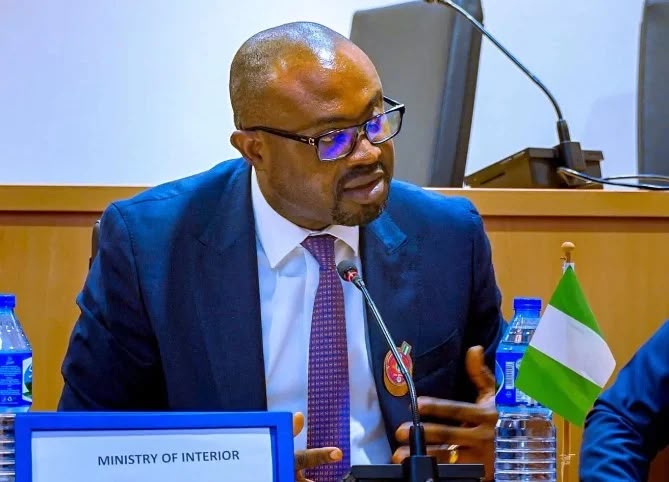
The Minister of Interior, Dr Olubunmi Tunji-Ojo, disclosed this on Friday during the groundbreaking ceremony for the National Passport Booklet Production Centre at the Nigeria Immigration Service headquarters in Abuja.

He said Nigeria currently requires between 1.8 million and two million passport booklets annually, adding that the proposed facility would not only meet domestic demand but also position the country to supply other African nations.

According to him, the project is being developed in partnership with Iris Smart Technologies and designed to produce electronic passports that meet the travel document standards of the Economic Community of West African States.

Tunji-Ojo said the facility would occupy 1.1 hectares, operate off-grid using solar power and be commissioned by President Bola Tinubu in May 2027.

“This project is about $70m without a dime from government,” the minister said, describing the investment as part of efforts to domesticate Nigeria’s passport production value chain and reduce dependence on foreign suppliers.

He said the initiative followed reforms introduced since 2023, including the automation of passport applications and approvals, the establishment of a data centre and the completion of a centralised passport personalisation centre at the NIS headquarters in September 2025.

Tunji-Ojo added that the government had made local manufacturing a condition for the continuation of its existing arrangement with the technology partner, describing the move as a backward-integration strategy.

He said the excess production capacity could enable Nigeria to serve the ECOWAS market and other African countries that currently source their passport booklets from Europe and the Americas.

Senator representing Edo North, Adams Oshiomhole, who performed the groundbreaking, described the project as a shift from importing passport booklets to domestic production.

The former Edo State governor said the development reflected a change in the country’s approach to industrialisation, arguing that Nigeria should manufacture products it had the capacity to produce rather than depend on foreign suppliers.

He also commended Tunji-Ojo for reforms in passport administration, citing improvements in the renewal process and recounting how members of his family had obtained Nigerian passports without the difficulties previously experienced.

The Comptroller-General of the Nigeria Immigration Service, Kemi Nandap, said the project represented an important step towards strengthening Nigeria’s control over the supply chain for its travel documents.

She recalled that passport booklet shortages had affected students, parents and other Nigerians, sometimes disrupting travel and admission plans.

Nandap said domestic manufacturing would strengthen document security, improve supply chain resilience, develop local expertise and enhance service delivery.

“History will not judge us by the promises we make at this groundbreaking ceremony, but by the institutions we build, the standards we uphold and the results we deliver,” she said.

Also speaking, Acting Assistant Comptroller-General of Customs, Doris Okonkwo, who represented the Comptroller-General of Customs, Bashir Adeniyi, said the project aligned with the government’s institutional modernisation agenda.

She said local production could help conserve foreign exchange, strengthen document security and reduce dependence on external suppliers.

The Director-General of the Infrastructure Concession Regulatory Commission, Dr Jobson Ewanife, said the commission would monitor compliance with contractual obligations to ensure the project was delivered according to agreed specifications.

He described the facility as part of the administration’s broader infrastructure development and reform efforts.

Continue Reading

Business

Wale Tinubu Urges SMEs to Build Systems for Sustainable Growth

Published

on

By Ifunanya Stephanie

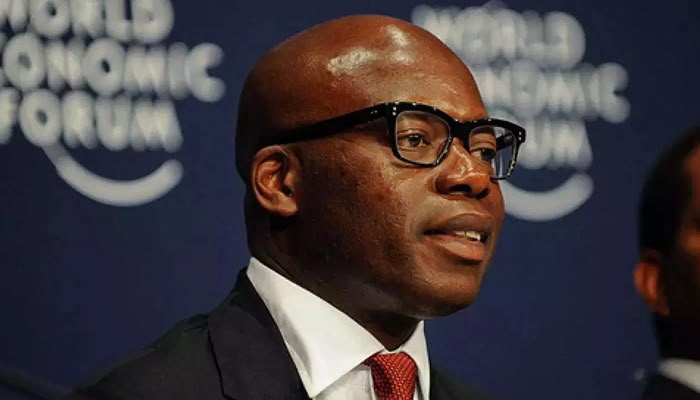
Oando Plc Group Chief Executive, Wale Tinubu, has urged Nigerian entrepreneurs to prioritise strong business systems, financial discipline and sound governance, saying these are essential to building sustainable enterprises capable of competing globally.

Tinubu said ambition alone was insufficient to sustain business growth, stressing the need for structured operations, proper financial records, long-term planning and disciplined execution.

He made the call while delivering the keynote address at GROW Nigerian 2026, the National MSME Conference organised by the Small and Medium Enterprises Development Agency of Nigeria (SMEDAN), held from November 8 to 10 at the Ecobank Pan African Centre, Victoria Island, Lagos.

The conference was attended by Lagos State Governor Babajide Sanwo-Olu, SMEDAN Director-General Charles Odii, German Deputy Consul-General Katharina Ziegler and other business leaders, policymakers and development partners.

Highlighting the contribution of small and medium-sized enterprises to the economy, Tinubu cited figures indicating that they account for 96.9 per cent of businesses, 88 per cent of employment and 46 per cent of Nigeria’s Gross Domestic Product.

He said the priority should be to strengthen their capacity to grow beyond small-scale operations into medium-sized enterprises, large corporations and globally competitive businesses.

“Nigerian giants are not built overnight. They are built through a series of bold decisions, executed with long-term commitment and persistence,” he said.

Drawing on Oando’s three-decade history, Tinubu recounted how the company started with modest family contributions in a converted garage before venturing into diesel trading and expanding into petroleum marketing, gas distribution and upstream oil and gas operations.

He attributed the company’s growth to calculated risk-taking, reinvestment, reliability and quality, noting that business opportunities must be supported by deliberate decisions and consistent execution.

Tinubu identified proper financial records, documented processes and audited accounts as important foundations for businesses seeking investment and preparing to scale.

“One of the most important steps for an SME is to begin documenting its operations and processes, and to maintain audited financial statements. These are essential foundations for building a structured business and preparing it for growth,” he said.

He also stressed the importance of working capital management, urging entrepreneurs to monitor cash positions, receivables, liabilities and inventory.

On access to finance, he advised business owners to explore different funding options, including commercial banks, development finance institutions, fintech companies, suppliers and joint venture partnerships.

“There is no single source of capital that is more important than another. Every source of financing, wherever it comes from, has a role to play in supporting business growth,” he said.

The Oando chief executive also identified ambition, capability, competitiveness and endurance as important attributes for building lasting businesses.

He urged entrepreneurs to invest in their employees, transfer institutional knowledge and establish processes that can be replicated as their organisations expand.

“The principles required to build a successful SME remain the same as those required to run a large enterprise. As you scale, the critical difference is your ability to replicate your systems, processes, and organisational DNA,” he added.

Addressing the challenges facing businesses, Tinubu acknowledged government efforts to improve infrastructure but said entrepreneurs must also develop the capacity to navigate policy changes, delayed approvals and other operational constraints.

He called for improvements in electricity supply, logistics, port operations and the ease of doing business, describing them as important conditions for helping small enterprises transition into larger organisations.

“These are areas that require commitment rather than significant financial resources. SMEs depend on improvements in logistics, port operations, and the ease of doing business to scale from small to medium-sized and ultimately large enterprises,” he said.

Reflecting on Oando’s evolution from a small trading operation into an integrated energy group, Tinubu said the company continued to rely on the entrepreneurial principles that shaped its beginnings.

“Even though we are a large conglomerate today, we still think like an SME. The principles that shaped our beginnings continue to inform how we build and grow the business,” he said.

Continue Reading

Trending

extrabetseo ajansıseo ajansıcasino siteleritrlisans pinterestgiftcardmall/mygiftgrandpashabet girişgrandpashabet güncel girişgrandpashabetgrandpashabet girişgrandpashabettaraftarium24dizipalgiftcardmall/mygiftjustin tvGrandpashabetGrandpashabetGrandpashabetcasino siteleriRadissonbetsweet bonanzacasino siteleripadişahbettaraftarium24taraftarium24rojadirectajustin tvcasinolevantjojobetjojobetjojobetcasibomholiganbet xcasinolevantcasinolevantjojobetjojobetholiganbetholiganbetholiganbetholiganbetjojobetgrandpashabetmatadorbetonwinsahabetgrandpashabetmarsbahis xmarsbahiscasinolevantcasinolevantcasinolevantgrandpashabetjojobetjojobetgrandpashabetsekabetmatbetimajbetcasibompusulabetvdcasinosuperbetincratosroyalbetcasibomholiganbetholiganbet girişholiganbetmarsbahiscasinolevantjojobetcasinolevantgrandpashabetgrandpashabetnesinecasino xwbahis xbetgaranti xgrandpashabet girişGrandpashabetjojobet