Connect with us

Politics

Damagum, PDP Governors Draw Battle Lines over Wike

Published

on

The internal rift within the Peoples Democratic Party (PDP) has taken a dramatic turn, as acting National Chairman, Iliya Umar Damagum, has officially handed over control of the party’s structure in Rivers State to the Minister of the Federal Capital Territory (FCT), Nyesom Wike. This move has drawn sharp battle lines between Damagum and several PDP governors, further escalating tensions within the party.

The conflict revolves around the control of the party’s structure in Rivers State, a key political battleground. Traditionally, state governors serve as the de facto leaders of their parties within their respective states, and Rivers State Governor, Siminalayi Fubara, had been expected to take control of the PDP structure there. However, in a direct challenge to this tradition, Damagum’s National Working Committee (NWC) instead backed party congresses led by Wike’s loyalists, leaving Fubara sidelined.

PDP governors, who had met in Enugu and Taraba states, had resolved to engage the Damagum-led NWC and revisit the party’s internal processes in Rivers to ensure Governor Fubara was recognized as the leader of the party in the state. Their efforts appear to have been dismissed by the party leadership, deepening the divide between the NWC and the governors.

The decision to empower Wike is seen as a clear defiance of party norms, signaling a growing influence of Wike within the PDP’s national structure. Wike, who recently transitioned from his role as Rivers State governor to become the FCT Minister, has long been a polarizing figure within the party, known for his influence and strategic political maneuvers.

Damagum’s actions reflect an ongoing shift in the power dynamics within the PDP, with loyalty to Wike seemingly outweighing the traditional role of governors as state party leaders. This move has drawn criticism from party members and leaders, with many seeing it as a violation of internal party order. Chief among the critics is Governor Fubara, who has reportedly been left out of key party decisions and is now fighting to regain control of the party structure in his own state.

The PDP’s internal strife has been further compounded by recent accusations of corruption and mismanagement within the party. The 2023 Kogi State governorship candidate, Senator Dino Melaye, recently claimed that the PDP had been “commercialized and privatized,” sparking widespread controversy. Melaye’s outspoken criticism of the party’s leadership led to his suspension by his ward in Ayetoro/Iluagba on September 12, 2024, with rumors circulating that further punitive actions against him are being planned by the state and national leadership.

In response to the mounting pressure and to avoid an internal reversal of its decision on Rivers State, the NWC postponed the National Executive Committee (NEC) meeting originally scheduled for September 26, pushing it back to October 24. This delay is seen as a tactical move by the NWC to consolidate its decisions and prevent opposition from reversing its stance.

The escalating internal dispute has reignited concerns over the PDP’s ability to maintain cohesion as a political force. Long-standing party members have expressed concern that the recent power struggles, coupled with accusations of internal corruption, are weakening the party. Elder statesman and Ijaw leader, Chief Edwin Clark, expressed these concerns in an open letter to Damagum on April 24, 2024, where he accused the acting chairman of doing Wike’s bidding and called for his resignation to prevent the party from collapsing.

These concerns are not isolated. The party’s internal troubles have also drawn sharp criticism from external observers. During an interview earlier this year, Rabiu Kwankwaso, the 2023 presidential candidate of the New Nigeria Peoples Party (NNPP), described the PDP as “dead,” pointing to its internal disarray and loss of direction.

Continue Reading
Click to comment

Leave a Reply

Your email address will not be published. Required fields are marked *

News

Atiku, Obi, Makinde Lead Opposition Push for Unity Pact Ahead of 2027

Published

on

By Edisemi Andrew

Opposition political leaders are preparing to take another step towards a possible common political front against President Bola Tinubu and the ruling All Progressives Congress (APC), with a coalition summit scheduled for Monday, November 30, in Abuja.

The meeting, organised under the Coalition for Democracy, is expected to bring together prominent opposition figures, including former Vice-President Atiku Abubakar, former Anambra State Governor Peter Obi and Oyo State Governor Seyi Makinde, alongside other party leaders and presidential candidates.

The coalition, which brings together six political parties and political factions, is seeking to move ongoing consultations beyond political discussions towards a formal agreement on cooperation ahead of the 2027 general elections.

Its participating groups include the African Democratic Congress (ADC), Allied Peoples Movement (APM), Nigeria Democratic Congress (NDC), a faction of the Peoples Democratic Party (PDP), Peoples Redemption Party (PRP) and Social Democratic Party (SDP).

According to Salihu Mohammed Lukman, one of the coalition’s conveners, the summit will consider three foundational documents: the National Covenant for Democratic Renewal, the Framework for Opposition Unity and the National Reform Programme.

The documents are intended to establish common principles for political cooperation, democratic reforms, electoral integrity and a shared approach to national governance.

The coalition’s leadership has also indicated that member parties agreed to suspend campaign activities on the day of the summit to facilitate the participation of their presidential candidates and national party leaders.

However, the proposed alliance faces a significant challenge: reconciling the individual presidential ambitions of its leading members.

Atiku, Obi and Makinde are associated with different political platforms and have their respective electoral interests to protect. Other candidates, including Donald Duke and Adewole Adebayo, are also part of the wider opposition discussions.

Although reports have suggested negotiations over possible political arrangements and power-sharing, no publicly confirmed agreement on a joint presidential candidate has emerged.

The situation has also attracted criticism from within party structures. An APM chieftain in Oyo State, Adebisi Olopoeyan, recently questioned Makinde’s authority to negotiate on behalf of the party’s state structure, citing an unresolved internal leadership dispute.

The ruling APC, meanwhile, has indicated that it is not threatened by the opposition discussions, maintaining that the emergence of a coalition does not automatically translate into electoral strength.

Beyond the question of who leads a possible joint ticket, the opposition will also have to address the practical issues of party structures, campaign financing, candidate selection, internal disputes and coordination of polling-unit agents.

The November 30 summit could therefore become an important test of whether Nigeria’s opposition parties can translate their shared desire to challenge the ruling party into a workable political arrangement.

For Nigerians, the significance of the proposed coalition will ultimately depend on more than the number of political leaders attending the meeting. Its ability to present a credible alternative, articulate clear policy priorities and maintain internal unity will determine whether it can become a serious force in the 2027 elections.

Continue Reading

News

Tinubu Dismisses Opposition, Declares APC Best Choice Ahead of 2027 Elections

Published

on

By Patrick Idowu

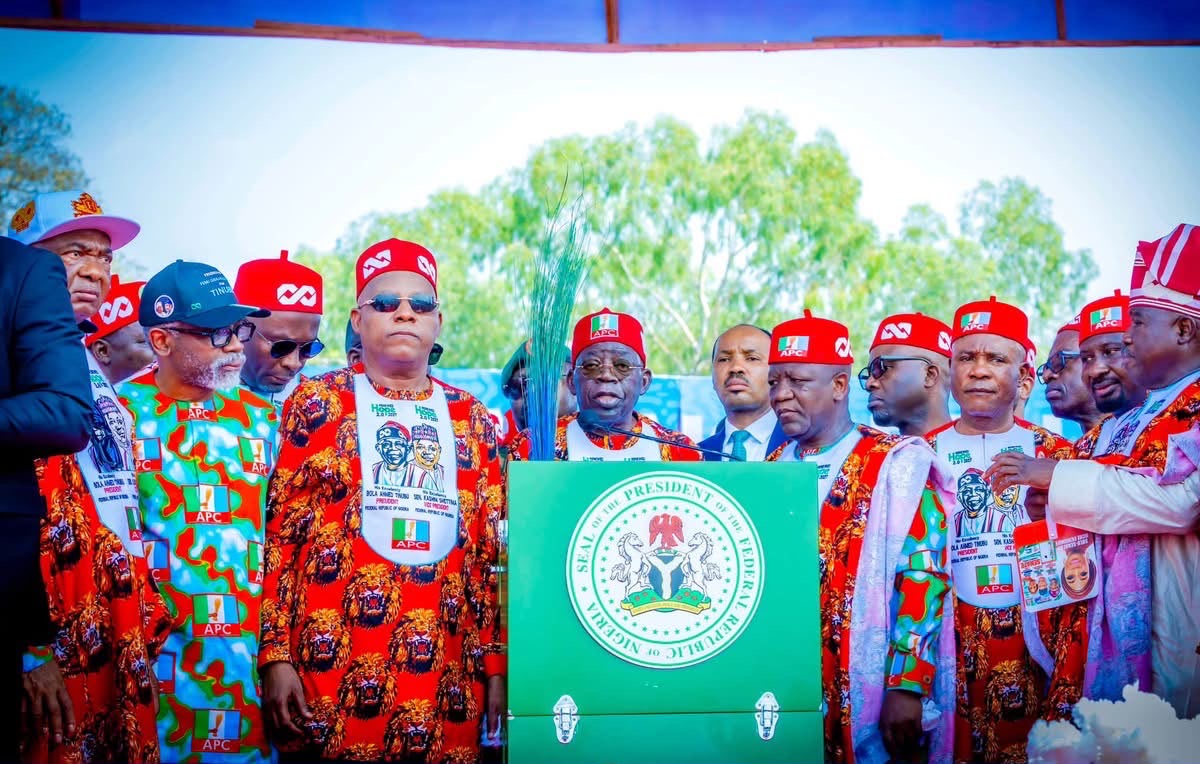
President Bola Tinubu has declared that opposition parties no longer pose a credible challenge to the All Progressives Congress (APC), urging voters in Enugu State and across the South-East to throw their weight behind the ruling party in the 2027 general elections.

The President made the declaration on Saturday during the flag-off of the APC campaign rally in Enugu, where he called on residents to obtain their Permanent Voter Cards (PVCs) and mobilise their families, friends and communities to vote for all APC candidates.

Addressing the crowd, Tinubu dismissed opposition parties as lacking the vision and capacity to lead the country, insisting that the APC remained the best platform for national unity, peace and development.

“Don’t let anybody deceive you. The other parties, they don’t exist, they don’t have plans, they don’t know the road,” he declared.

The President also expressed confidence in the growing political support for the APC in the South-East, citing the presence of prominent political figures, including former Abia State Governor Orji Kalu, former Senate President Pius Anyim, Deputy Speaker of the House of Representatives Benjamin Kalu and businessman Arthur Eze.

He urged the electorate to extend their support to the APC beyond the presidential election by voting for its candidates in National Assembly and other electoral contests.

In a major announcement at the rally, Tinubu disclosed that his administration had approved the Eastern Rail Line project and a 400-kilometre gas pipeline for the South-East, describing the projects as concrete commitments to the region’s development.

According to him, the Eastern Rail Line would improve connectivity between the South-East, South-South and Northern parts of the country, while addressing longstanding concerns about the region’s inclusion in national infrastructure development.

He also pledged interest-free loans, financial assistance and improved infrastructure for farmers to boost agricultural production and reduce the cost of farming.

Vice-President Kashim Shettima, who also addressed the gathering, urged the South-East to consolidate its political relationship with the APC, arguing that the region stood to benefit from its alliance with Tinubu.

Shettima described the President as an alliance builder and maintained that the South-East could not afford to remain outside the ruling party’s political arrangement.

He also took a swipe at opposition figures, including former Vice-President Atiku Abubakar and former Anambra State Governor Peter Obi, suggesting that their political ambitions would end in defeat.

In a humorous remark, the Vice-President said Atiku would be returned to Adamawa after the election, while joking that Tinubu could appoint Obi as chairman of the South-East Development Commission after the 2027 polls.

Deputy Speaker Benjamin Kalu also called on the people of the South-East to support Tinubu’s second-term ambition, arguing that the President had demonstrated commitment to the region through infrastructure projects and the establishment of the South-East Development Commission.

Meanwhile, Imo State Governor Hope Uzodinma, speaking on behalf of the South-East governors, declared that the region was prepared to deliver massive votes for Tinubu and all APC candidates in 2027.

Uzodinma, who chairs the Progressive Governors Forum, said the decision followed an assessment of the President’s performance and federal government interventions in the region between 2023 and 2026.

He described the administration’s record as more significant than the contributions of previous federal governments to the South-East since the end of the Nigerian Civil War.

All five South-East governors received Tinubu at the Akanu Ibiam International Airport in Enugu, alongside the Governor of Delta State.

However, Abia State Governor Alex Otti left after the airport reception, while Anambra State Governor Chukwuma Soludo joined the presidential campaign procession to Okpara Square and remained at the rally until its conclusion.

The Enugu rally forms part of the APC’s efforts to strengthen its political foothold in the South-East ahead of the 2027 general elections.

Continue Reading

News

Former Lagos Deputy Governor passes away at 56

Published

on

By Patrick Idowu

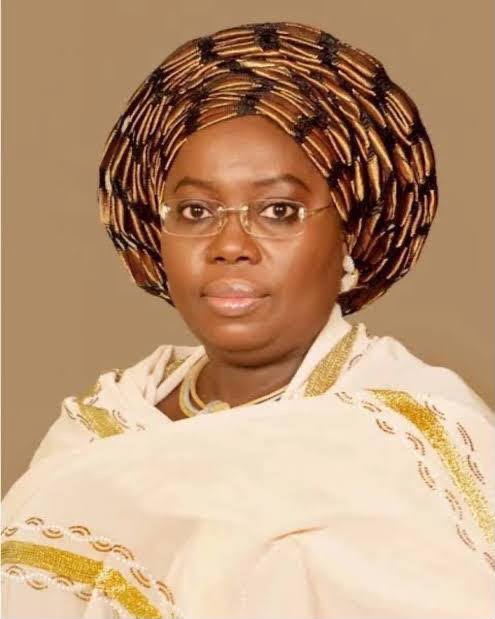
Senator Idiat Oluranti Adebule, the lawmaker representing Lagos West Senatorial District and former Deputy Governor of Lagos State, has died at the age of 56.

Adebule was pronounced dead by medical personnel on Saturday afternoon, November 28, 2026, at a private hospital in the Government Reserved Area (GRA), Ikeja, where she had been admitted after falling ill.

Her passing occurred just 24 hours after she celebrated her 56th birthday on Friday, November 27, during which she shared messages expressing gratitude for life and renewed strength for public service.

The news comes as supporters and party members across Lagos West Nigeria’s largest senatorial district by population were finalizing preparations for her senatorial campaign scheduled to kick off on Monday, November 30.

Adebule was actively seeking re-election for a second term in the Senate under the All Progressives Congress (APC) ahead of the 2027 general elections.

As of the time of filing this report, the exact cause of death has not been disclosed.

Continue Reading

Trending

extrabetseo ajansıseo ajansıpasha royalgiftcardmall/mygiftjustin tvcasibomGrandpashabetpasharoyalpasha royaljojobettaraftarium24taraftarium24rojadirectajustin tvbetgarantiBetgarantipusulabetpusulabetpusulabetdinamobetdinamobetdinamobetMatbetMatbetGrandpashabetGrandpashabetGrandpashabetjojobetcasibombetciocasibomcratosroyalbetgrandpashabetWbahiswbahisCratosroyalbetcratosroyalbetWbahisWbahisJojobetMatbetMatbetJojobetsahabetsekabetjojobetonwinmatbetimajbetmarsbahisholiganbetcasibomjojobetgrandpashabetmarsbahisholiganbetBetgarantidinamobetJojobetjojobetmarsbahisDinamobetBets10grandpashabetGrandpashabetjojobetjojobetjojobetjojobetjojobetJojobetmrkingcratosroyalbetmatadorbetWbahisdinamobetİzmir Korsan Taksi