Connect with us

News

Floods Extend Across 29 States

Published

on

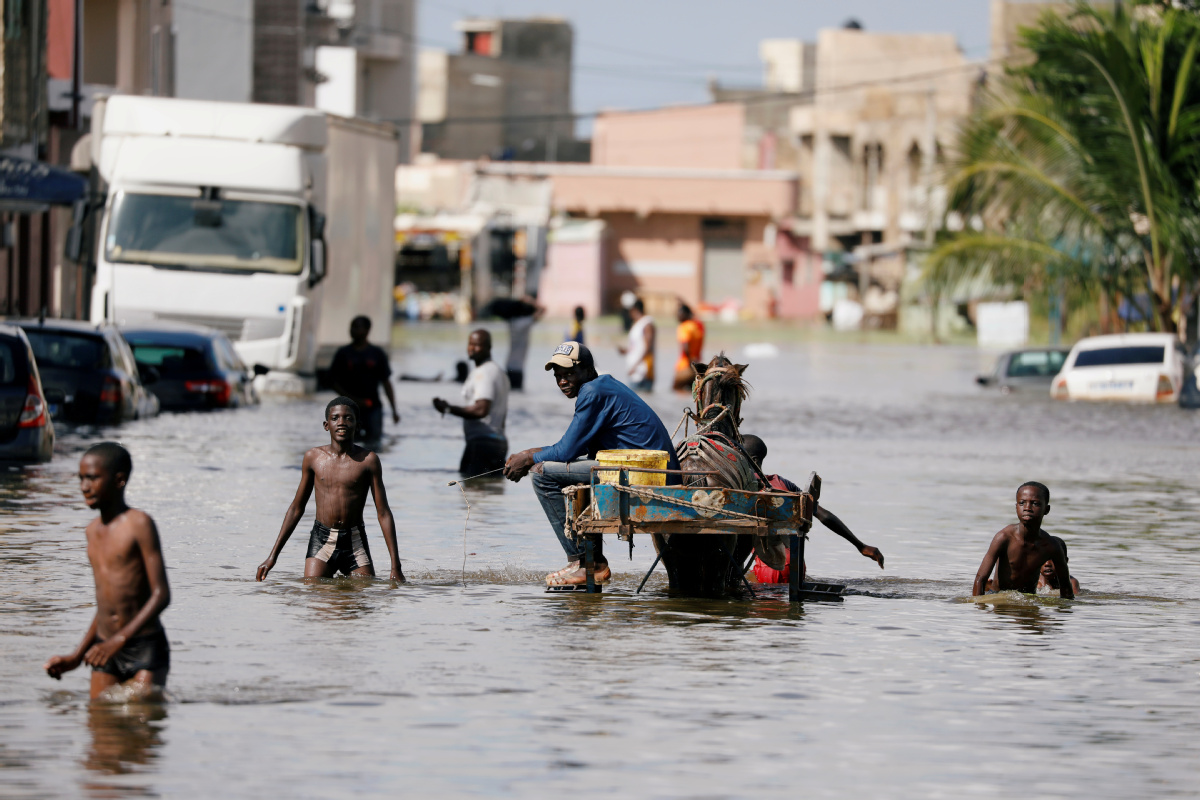
The National Emergency Management Agency, has said the death toll from catastrophic flooding in Nigeria has risen to 192 across 29 states.

Flooding is caused by excessive rainfall and swelling Niger and Benue rivers.

So far, 29 states have been affected by flooding: Adamawa, Akwa Ibom, Bauchi, Bayelsa, Benue, Borno, Ebonyi, Ekiti, Enugu, the Federal Capital Territory, Gombe, Imo, Jigawa, Kaduna, Kano, Katsina, Kebbi, Kogi, and Kwara.

Others include Lagos, Nasarawa, Niger, Ondo, Oyo, Sokoto, Taraba, Yobe, Zamfara, and Plateau.

Speaking with The PUNCH on Sunday, NEMA’s spokesperson, Ezekiel Manzo, said, “I got information from our Emergency Operation Centre that the death toll has increased to 192. The latest figure is as a result of flooding that happened in Plateau State.

“Plateau State has just been added to the number of the states affected because it is the last state in northern Nigeria that recorded flooding between Friday and yesterday (Saturday) morning. So, Plateau has joined the number of the states that have recorded flooding this year, previously, it was 28 states, but it’s now 29 states.”

When asked if those at risk were following the warning to relocate, Manzo acknowledged some people underestimated the warning, and the water could exceed expectations.

“Some people underrated the information that was given to them, because we carried out a lot of sensitisation. So, if information has been given over and over, and this thing is still happening, it means some people underrated the information.

“Secondly, there’s also the possibility that the flooding exceeded what was envisaged. Thirdly, sometime ago, we had flooding in locations that were not previously known to be prone to flooding. There is a high amount of rainfall that we have recorded so far, with high impact that has been recorded,” he stated.

He stated that the agency has been doing sensitization programs to educate the public.

Continue Reading
Click to comment

Leave a Reply

Your email address will not be published. Required fields are marked *

News

Patience Jonathan Breaks Silence on Chibok Controversy, Says Mockery Still Hurts

Published

on

By Patrick Idowu

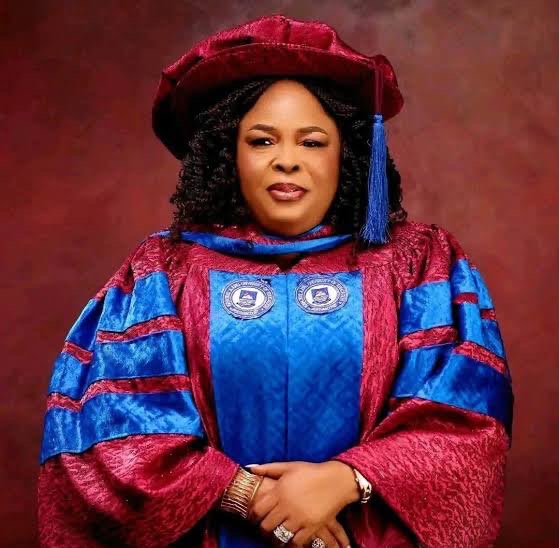
Former First Lady, Dame Patience Jonathan, has spoken afresh about the public backlash she suffered following her emotional reaction to the 2014 abduction of schoolgirls in Chibok, Borno State, insisting that the pain of the incident has never left her.

Jonathan said she was deeply wounded by the ridicule she faced from Nigerians after breaking down in tears over the disappearance of the schoolgirls, whom she considered her own children.

Speaking in an interview with the Nigerian Television Authority (NTA) on Saturday, the former First Lady said her emotional response was genuine and reflected the anguish she felt over the fate of the abducted girls.

Recalling the incident, she said the public reaction made an already painful experience even more difficult, adding that those who mocked her at the time are only beginning to appreciate the depth of her emotions.

“I remember 2014. I broke down. I am still feeling it as I talk to you. They are my children. But people started laughing and mocking me. I felt bad. People laughing at me have no empathy. It is today they are realising what happened to me at that time. It still pains me,” she said.

Her comments have reopened discussions about one of the most controversial episodes of her tenure as First Lady, when her emotional intervention during a meeting over the abduction attracted widespread criticism and public mockery.

The incident followed the abduction of 276 schoolgirls from Government Girls Secondary School, Chibok, by Boko Haram insurgents on April 14, 2014.

The mass kidnapping sparked global outrage and triggered the #BringBackOurGirls campaign, which attracted international attention and intensified calls for urgent action to rescue the girls.

More than a decade later, Jonathan says the experience remains an emotional burden, maintaining that her tears were an expression of genuine concern for the safety and future of the missing schoolgirls..

Continue Reading

Abuja Reports

Abuja Police Move to Prosecute Woman Over Alleged Suicide Attempt in Hotel

Published

on

By Patrick Idowu

The Federal Capital Territory (FCT) Police Command is considering legal action against a woman identified as Ms Jumoke following an alleged suicide attempt at a hotel in Jikwoyi, Abuja.

The woman was reportedly rescued by police operatives after she allegedly ingested a poisonous insecticide suspected to be Sniper inside her hotel room.

The incident occurred on November 26, 2026, after she checked into the hotel at about 12:30 p.m. She was later discovered gasping for breath by a visitor who had come to see her.

According to a statement issued by the command’s spokesperson, CSP Josephine Adeh, the Jikwoyi Police Division received information about the incident at approximately 2 p.m. and immediately deployed officers to the scene.

Preliminary investigations reportedly indicated that the woman had consumed the suspected poisonous substance, while an empty bottle of Sniper insecticide was recovered from the room.

She was subsequently rushed to a nearby hospital, where medical personnel confirmed the ingestion and commenced treatment.

The police said further investigations were ongoing, with the possibility of prosecution being considered in connection with the incident.

Continue Reading

News

Tinubu Seeks ₦3.1trn Budget Cut as ₦31.4trn Deficit Remains

Published

on

By Edisemi Andrew

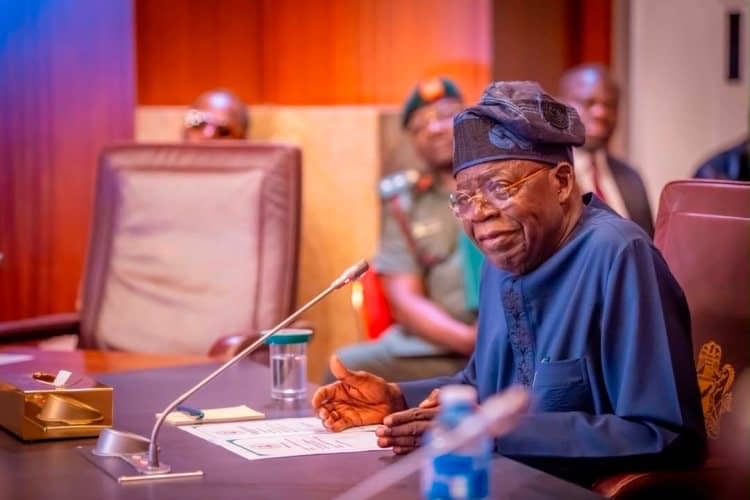
President Bola Tinubu has asked the National Assembly to approve a ₦3.147 trillion reduction in the 2026 Federal Government budget, proposing a downward revision of total expenditure from ₦68.323 trillion to ₦65.176 trillion.

The request, contained in a letter transmitted to the Senate and the House of Representatives, seeks legislative approval for a revised 2026 Appropriation Bill and an updated fiscal framework aimed at aligning government spending with available resources and existing financial obligations.

Under the revised proposal, projected government revenue, including receipts from government-owned enterprises, stands at ₦33.720 trillion, while capital expenditure is estimated at ₦26.232 trillion.

However, despite the proposed reduction in overall spending, the Federal Government’s projected fiscal deficit remains unchanged at ₦31.457 trillion, representing 5.64 per cent of the country’s Gross Domestic Product.

The proposed borrowing target has also been retained at ₦29.218 trillion, comprising ₦18.428 trillion in domestic borrowing and ₦10.790 trillion in external borrowing.

Explaining the rationale behind the adjustment, Tinubu said the revision was intended to prioritise existing government commitments, improve budget credibility, strengthen capital budget implementation and maintain fiscal discipline.

The President also explained that the proposed $7.7 billion external loan, estimated at approximately ₦10.368 trillion, would finance an existing foreign borrowing provision rather than increase the overall borrowing limit already captured in the fiscal framework.

The revised proposal reportedly makes provisions for outstanding obligations, debt-service requirements, capital warrants and commitments involving ministries, departments and agencies.

Some additional capital provisions have also been included for priority interventions, particularly critical road projects, agricultural production, improved market access and water security.

The proposal has been referred to the appropriate Senate committee for legislative consideration, with the National Assembly expected to scrutinise the revised estimates before reaching a decision.

The proposed adjustment raises important questions about the country’s fiscal position, particularly the decision to reduce total expenditure without a corresponding reduction in the projected deficit or borrowing requirement.

With projected revenue significantly below proposed expenditure, the government will continue to depend heavily on borrowing to finance its obligations and development programmes.

The retention of the deficit also raises questions about the extent to which the proposed spending reduction will ease pressure on public finances, especially considering the country’s existing debt-servicing commitments and competing development needs.

For Nigerians, the implications extend beyond the figures presented to lawmakers. Changes to capital expenditure could affect the pace of infrastructure delivery, federal projects and other public investments, making transparency around affected projects particularly important.

The National Assembly’s consideration of the revised framework will therefore be an important opportunity to examine the assumptions behind the government’s revenue projections, borrowing plans and expenditure priorities.

Ultimately, the effectiveness of the proposed review will depend on whether it improves budget implementation, reduces waste and ensures that public borrowing translates into measurable economic and social benefits.

The revised proposal now awaits legislative approval, as attention increasingly turns towards the Federal Government’s preparation and presentation of the 2027 national budget.

Continue Reading

Trending

extrabetseo ajansıseo ajansıpasha royalgiftcardmall/mygiftjustin tvcasibomGrandpashabetpasharoyalpasha royaljojobettaraftarium24taraftarium24rojadirectajustin tvbetgarantiBetgarantipusulabetpusulabetpusulabetdinamobetdinamobetdinamobetMatbetMatbetGrandpashabetGrandpashabetGrandpashabetjojobetcasibombetciocasibomcratosroyalbetgrandpashabetWbahiswbahisCratosroyalbetcratosroyalbetWbahisWbahisJojobetMatbetMatbetJojobetsahabetsekabetjojobetonwinmatbetimajbetmarsbahisholiganbetcasibomjojobetgrandpashabetmarsbahisholiganbetcasinolevantdinamobetJojobetjojobetmarsbahisDinamobetBets10grandpashabetGrandpashabetjojobetjojobetjojobetjojobetjojobetJojobetmrkingcratosroyalbetmatadorbetWbahisdinamobetİzmir Korsan Taksi