Connect with us

News

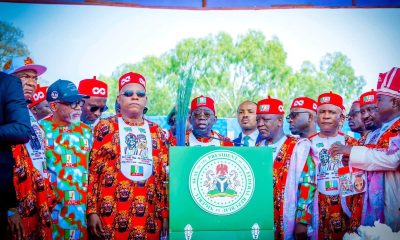
Nigerian House of Representatives Proposes 25-Year Imprisonment, ₦10 Million Fine for Separatist Agitation

Published

on

The Nigerian House of Representatives has introduced the Counter Subversion Bill 2024, which proposes severe penalties for those involved in separatist agitations or actions that incite inter-group or sectional conflicts. According to the bill, individuals convicted of such offenses could face a prison sentence of up to 25 years, a fine of ₦10 million, or both.


The bill’s explanatory memoranda state that it aims to criminalize subversive activities carried out by a broad range of groups, including associations, organizations, militias, cults, bandits, and other proscribed entities. The bill, sponsored by Speaker Tajudeen Abbas, is set for its second reading, during which its general principles will be debated.


According to the bill, anyone found guilty of destroying national symbols, refusing to recite the national anthem and pledge, defacing a place of worship with intent to incite violence, or undermining the Federal Government, would face a fine of ₦5 million, a 10-year prison sentence, or both. The bill also outlines penalties for setting up illegal roadblocks, performing unauthorized traffic duties, imposing illegal curfews, or organizing unlawful processions, with offenders subject to a fine of ₦2 million, five years in prison, or both.


The bill further stipulates a fine of ₦4 million or a two-year prison sentence for anyone convicted of insulting, defaming, embarrassing, or bringing into disrepute the leadership of a community, religion, lawful group, local government, state, or federal government.


Sections 2, 5, 6, and 10 of the proposed legislation address activities that foster mutual suspicion, mistrust, or intolerance, leading to conflict and violence that threaten Nigeria’s peace and security. Offenders in this category could face a fine of ₦5 million, a 10-year prison term, or both. The bill also includes penalties for forcibly taking over places of worship, town halls, schools, or other public or private venues, with a fine of ₦5 million or 10 years imprisonment, or both.


Furthermore, the bill states that individuals who profess loyalty to or pledge allegiance to organizations that disregard Nigeria’s sovereignty, or who receive financial or political support from foreign entities that are not aligned with Nigeria’s interests, could face penalties of ₦3 million or a four-year prison term, or both. Those found guilty of receiving incompatible support from foreign organizations or countries may be subject to a fine of ₦15 million or a 20-year prison sentence, or both.


Additional sections of the bill impose penalties for actions that undermine national security, disrupt community harmony, or impede law and order. Offenders could face fines of up to ₦3 million, imprisonment for up to five years, or both. Repeated violations could result in longer sentences and higher fines.


In specific terms, the bill targets those who establish or fund paramilitary groups or other unauthorized entities, with offenders liable to a fine of ₦10 million or 15 years imprisonment, or both. It also penalizes the unauthorized occupation of public spaces and the possession or use of military, police, or intelligence agency uniforms and emblems, with fines and prison terms stipulated for such offenses.


The Counter Subversion Bill 2024 represents a significant legislative effort to address and penalize actions perceived as threats to Nigeria’s unity and security.

Continue Reading
Click to comment

Leave a Reply

Your email address will not be published. Required fields are marked *

News

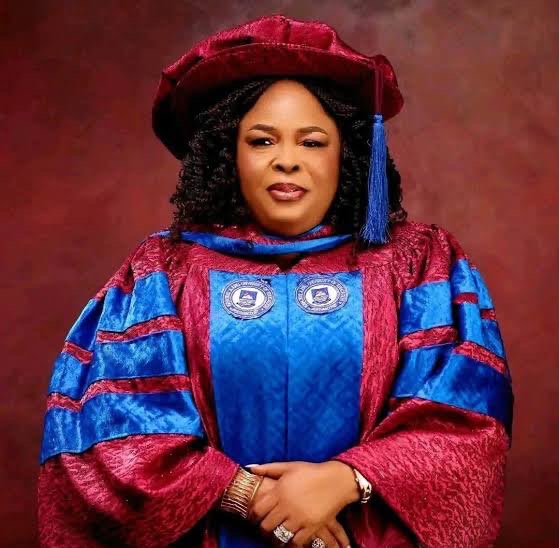
Patience Jonathan Breaks Silence on Chibok Controversy, Says Mockery Still Hurts

Published

on

By Patrick Idowu

Former First Lady, Dame Patience Jonathan, has spoken afresh about the public backlash she suffered following her emotional reaction to the 2014 abduction of schoolgirls in Chibok, Borno State, insisting that the pain of the incident has never left her.

Jonathan said she was deeply wounded by the ridicule she faced from Nigerians after breaking down in tears over the disappearance of the schoolgirls, whom she considered her own children.

Speaking in an interview with the Nigerian Television Authority (NTA) on Saturday, the former First Lady said her emotional response was genuine and reflected the anguish she felt over the fate of the abducted girls.

Recalling the incident, she said the public reaction made an already painful experience even more difficult, adding that those who mocked her at the time are only beginning to appreciate the depth of her emotions.

“I remember 2014. I broke down. I am still feeling it as I talk to you. They are my children. But people started laughing and mocking me. I felt bad. People laughing at me have no empathy. It is today they are realising what happened to me at that time. It still pains me,” she said.

Her comments have reopened discussions about one of the most controversial episodes of her tenure as First Lady, when her emotional intervention during a meeting over the abduction attracted widespread criticism and public mockery.

The incident followed the abduction of 276 schoolgirls from Government Girls Secondary School, Chibok, by Boko Haram insurgents on April 14, 2014.

The mass kidnapping sparked global outrage and triggered the #BringBackOurGirls campaign, which attracted international attention and intensified calls for urgent action to rescue the girls.

More than a decade later, Jonathan says the experience remains an emotional burden, maintaining that her tears were an expression of genuine concern for the safety and future of the missing schoolgirls..

Continue Reading

Abuja Reports

Abuja Police Move to Prosecute Woman Over Alleged Suicide Attempt in Hotel

Published

on

By Patrick Idowu

The Federal Capital Territory (FCT) Police Command is considering legal action against a woman identified as Ms Jumoke following an alleged suicide attempt at a hotel in Jikwoyi, Abuja.

The woman was reportedly rescued by police operatives after she allegedly ingested a poisonous insecticide suspected to be Sniper inside her hotel room.

The incident occurred on November 26, 2026, after she checked into the hotel at about 12:30 p.m. She was later discovered gasping for breath by a visitor who had come to see her.

According to a statement issued by the command’s spokesperson, CSP Josephine Adeh, the Jikwoyi Police Division received information about the incident at approximately 2 p.m. and immediately deployed officers to the scene.

Preliminary investigations reportedly indicated that the woman had consumed the suspected poisonous substance, while an empty bottle of Sniper insecticide was recovered from the room.

She was subsequently rushed to a nearby hospital, where medical personnel confirmed the ingestion and commenced treatment.

The police said further investigations were ongoing, with the possibility of prosecution being considered in connection with the incident.

Continue Reading

News

Tinubu Seeks ₦3.1trn Budget Cut as ₦31.4trn Deficit Remains

Published

on

By Edisemi Andrew

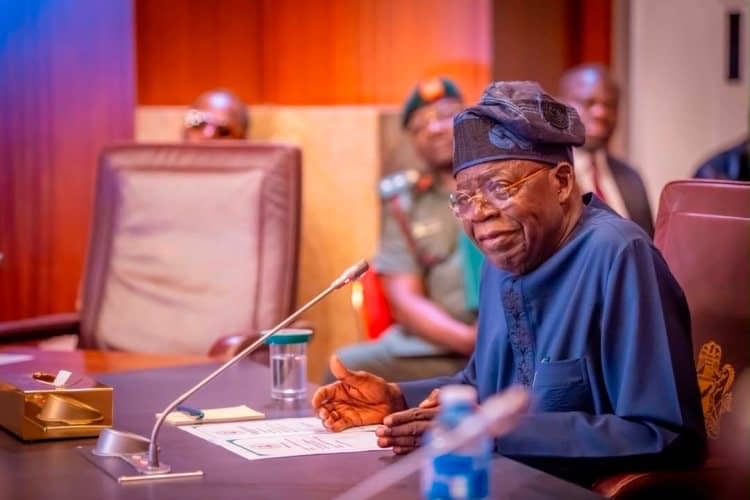
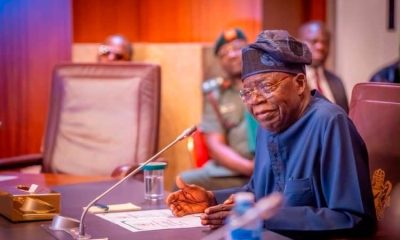
President Bola Tinubu has asked the National Assembly to approve a ₦3.147 trillion reduction in the 2026 Federal Government budget, proposing a downward revision of total expenditure from ₦68.323 trillion to ₦65.176 trillion.

The request, contained in a letter transmitted to the Senate and the House of Representatives, seeks legislative approval for a revised 2026 Appropriation Bill and an updated fiscal framework aimed at aligning government spending with available resources and existing financial obligations.

Under the revised proposal, projected government revenue, including receipts from government-owned enterprises, stands at ₦33.720 trillion, while capital expenditure is estimated at ₦26.232 trillion.

However, despite the proposed reduction in overall spending, the Federal Government’s projected fiscal deficit remains unchanged at ₦31.457 trillion, representing 5.64 per cent of the country’s Gross Domestic Product.

The proposed borrowing target has also been retained at ₦29.218 trillion, comprising ₦18.428 trillion in domestic borrowing and ₦10.790 trillion in external borrowing.

Explaining the rationale behind the adjustment, Tinubu said the revision was intended to prioritise existing government commitments, improve budget credibility, strengthen capital budget implementation and maintain fiscal discipline.

The President also explained that the proposed $7.7 billion external loan, estimated at approximately ₦10.368 trillion, would finance an existing foreign borrowing provision rather than increase the overall borrowing limit already captured in the fiscal framework.

The revised proposal reportedly makes provisions for outstanding obligations, debt-service requirements, capital warrants and commitments involving ministries, departments and agencies.

Some additional capital provisions have also been included for priority interventions, particularly critical road projects, agricultural production, improved market access and water security.

The proposal has been referred to the appropriate Senate committee for legislative consideration, with the National Assembly expected to scrutinise the revised estimates before reaching a decision.

The proposed adjustment raises important questions about the country’s fiscal position, particularly the decision to reduce total expenditure without a corresponding reduction in the projected deficit or borrowing requirement.

With projected revenue significantly below proposed expenditure, the government will continue to depend heavily on borrowing to finance its obligations and development programmes.

The retention of the deficit also raises questions about the extent to which the proposed spending reduction will ease pressure on public finances, especially considering the country’s existing debt-servicing commitments and competing development needs.

For Nigerians, the implications extend beyond the figures presented to lawmakers. Changes to capital expenditure could affect the pace of infrastructure delivery, federal projects and other public investments, making transparency around affected projects particularly important.

The National Assembly’s consideration of the revised framework will therefore be an important opportunity to examine the assumptions behind the government’s revenue projections, borrowing plans and expenditure priorities.

Ultimately, the effectiveness of the proposed review will depend on whether it improves budget implementation, reduces waste and ensures that public borrowing translates into measurable economic and social benefits.

The revised proposal now awaits legislative approval, as attention increasingly turns towards the Federal Government’s preparation and presentation of the 2027 national budget.

Continue Reading

Trending

extrabetseo ajansıseo ajansıpasha royalgiftcardmall/mygiftjustin tvGrandpashabetpasharoyalpasha royaljojobettaraftarium24taraftarium24rojadirectajustin tvbetgarantiBetgarantipusulabetpusulabetpusulabetdinamobetimajbetimajbetmarsbahismarsbahisholiganbetholiganbetvdcasinojojobetcasibombetciocasibomcratosroyalbetgrandpashabetpusulabetpusulabetonwinonwinpusulabetpusulabetvdcasinomarsbahismarsbahismatbetcasibomcasibomgrandpashabetonwinmatbetimajbetmarsbahisholiganbetcasibomjojobetgrandpashabetmarsbahisholiganbetjojobetjojobetimajbetvdcasinograndpashabetmarsbahisDinamobetBets10grandpashabetGrandpashabetmatbetmrkingradissonbetmatadorbetpusulabetimajbetİzmir Korsan Taksi