The underground South Korean residential parking lot engulfed in flames within seconds. The culprit: a Mercedes-Benz EQE electric vehicle that hadn’t been charging.
The blaze incinerated dozens of cars nearby, scorched another 100 vehicles and forced hundreds of residents to emergency shelters as the buildings above the parking lot lost power and electricity. Nobody died, but the fire took eight hours to extinguish.
The blaze dominated national news in South Korea. Some organizations are pushing for EVs to be parked outdoors, residents are protesting and lawmakers are proposing new safety measures.
In recent years, General Motors (GM) recalled tens of thousands of its Chevrolet Bolts in the U.S. over risk of battery fires. Hyundai pulled roughly 80,000 electric SUVs after roughly a dozen caught fire. Last September, a Nissan Leaf ignited while charging in Tennessee, and the fire required more than 45 times the water needed for a gas-powered car to be extinguished.
The blaze dominated national news in South Korea. Some organizations are pushing for EVs to be parked outdoors, residents are protesting and lawmakers are proposing new safety measures.
In recent years, GM recalled tens of thousands of its Chevrolet Bolts in the U.S. over risk of battery fires. Hyundai pulled roughly 80,000 electric SUVs after roughly a dozen caught fire. Last September, a Nissan Leaf ignited while charging in Tennessee, and the fire required more than 45 times the water needed for a gas-powered car to be extinguished.
Automakers have grown more cautious about EV launches amid modest demand. Sales of fully electric models in the U.S. rose 6.8% through the first half of the year, according to Motor Intelligence data, a sharp deceleration from near 50% growth in 2023.
The perceived risk of EVs is particularly acute in tightly packed South Korea, a country roughly the size of Indiana with roughly 52 million people. Seoul, the capital city, has a significantly higher population density than New York or Tokyo. Roughly half of South Koreans live in the greater Seoul metropolitan area.
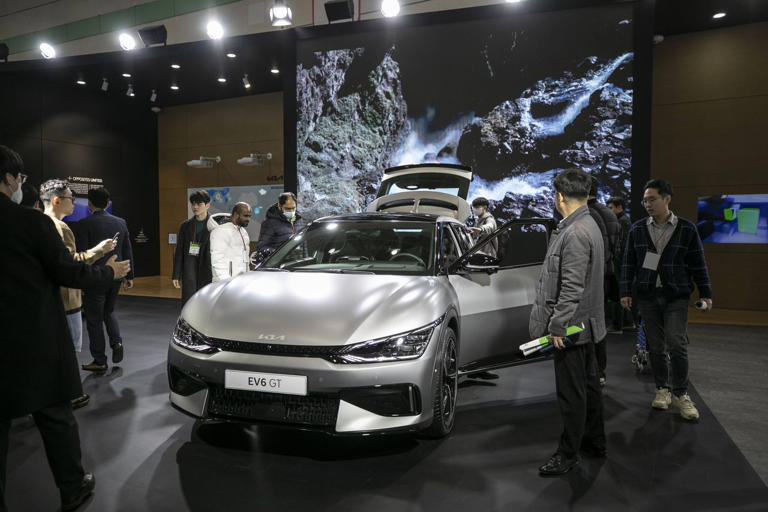
The country had already been on edge about battery-related fires, following a blaze at a lithium-battery factory in late June that killed nearly two dozen people. The Mercedes EV blaze, in the port city of Incheon, occurred last week. Then, on Tuesday, a Kia EV6 caught fire in an apartment in a central South Korean town.
Mercedes-Benz said it would cooperate with local authorities to determine the cause of the fire, a local spokesman said. A Kia spokeswoman called the incident isolated and added the firm would work with authorities to determine what went wrong.
A South Korean lawmaker on Wednesday proposed requiring specialized fire extinguishers and equipment to be installed in areas at risk of EV battery fires. Some apartment complexes are proposing measures such as demanding EV owners sign a pledge to shoulder responsibility for any accidents.
After seeing an EV catch fire on the side of the highway earlier this year, Ha Won-jun, a 54-year-old film director in the South Korean city of Namyangju, proposed to his apartment’s residents group that the complex’s EV charging stations be relocated above ground. The suggestion has gotten minimal uptake so far. But that may now change due to the high-profile EV fire.
“Now I anticipate this to be pushed forward quickly,” Ha said.
The relative ease in finding EV-designated parking spots in South Korea had been one reason why Choi Kyung-seok bought a Kia EV6 two months ago. He also likes the fuel-cost savings. “I don’t think the risk of fire will make us forgo EVs,” said Choi, who keeps a fire blanket in his trunk.