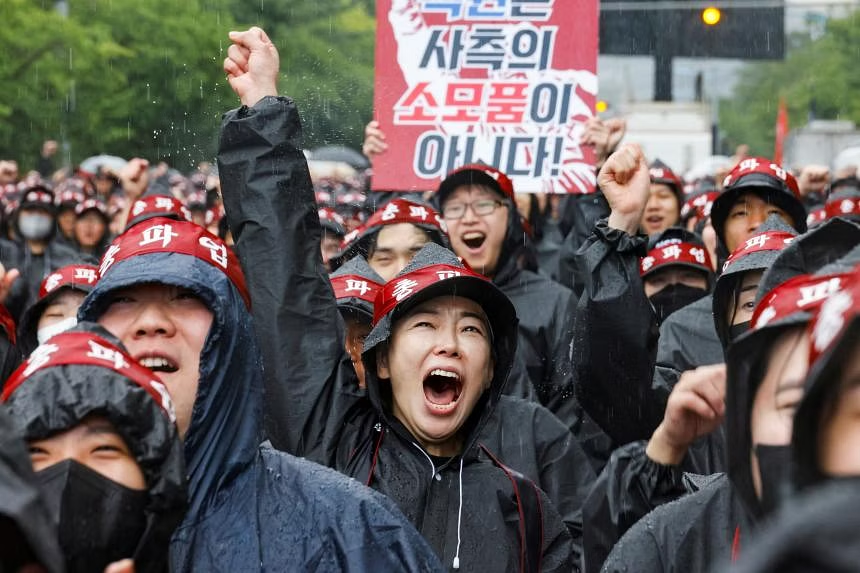
Samsung Electronics workers commenced a three-day strike on Monday, demanding better pay and working conditions. The National Samsung Electronics Union (NSEU), representing nearly 30,000 members—about a quarter of the company’s South Korean workforce—is pressing for an additional day of annual leave for unionized workers and modifications to the employee bonus system.
Despite the strike, analysts predict minimal impact on production at the world’s largest memory chipmaker due to low participation and automated manufacturing processes. Nevertheless, the strike highlights diminishing staff morale during a critical phase for the chip industry as technology firms increasingly adopt artificial intelligence.
Last month, the union initiated its first industrial action by coordinating annual leave for a mass walkout, which Samsung reported had no effect on business activities. The company reiterated on Monday that production remains unaffected. However, the union claims that 6,540 workers will be striking this week, primarily at manufacturing and product development sites. These workers, who oversee automated production lines and equipment, could potentially disrupt operations.
Approximately 3,000 strikers braved the rain to attend a rally near Samsung’s headquarters in Hwaseong, south of Seoul. Union President Son Woo-mok refuted media reports of low participation, attributing it to the union’s relative youth and lack of member education on labor issues. “Education about labor unions has not been sufficient. But I don’t think this participation is low because our union is still young compared to others,” Son told Reuters.
Union Vice President Lee Hyun-kuk warned of potential further strikes if Samsung does not meet the union’s demands. He stated that Samsung’s current proposals, which include flexibility in pay and annual leave conditions, fall short of the union’s expectations for increased pay and leave.
A major point of contention is the perceived inequality in the bonus system. Union officials argue that bonuses for rank-and-file workers are calculated by deducting the cost of capital from operating profit, whereas executive bonuses are based on personal performance goals. “I was telling people that I was proud to work at Samsung, but the truth is I am not,” said Park Jun-ha, a 20-year-old engineer at Samsung’s chip packaging lines who joined the firm in January, citing dissatisfaction with the “opaque” bonus scheme.
The union’s influence has grown since Samsung’s 2020 pledge to stop discouraging organized labor. This emerging union voice demands attention as Samsung faces challenges in the competitive chip market, particularly in developing high bandwidth memory (HBM) chips for AI applications.
Samsung’s stock performance has lagged behind that of rival SK Hynix, with union officials attributing this to slow progress in AI-related chip development. Despite these challenges, Samsung recently reported an estimated more than 15-fold increase in second-quarter operating profit, driven by rebounding chip prices due to the AI boom and a low comparison base from the previous year.