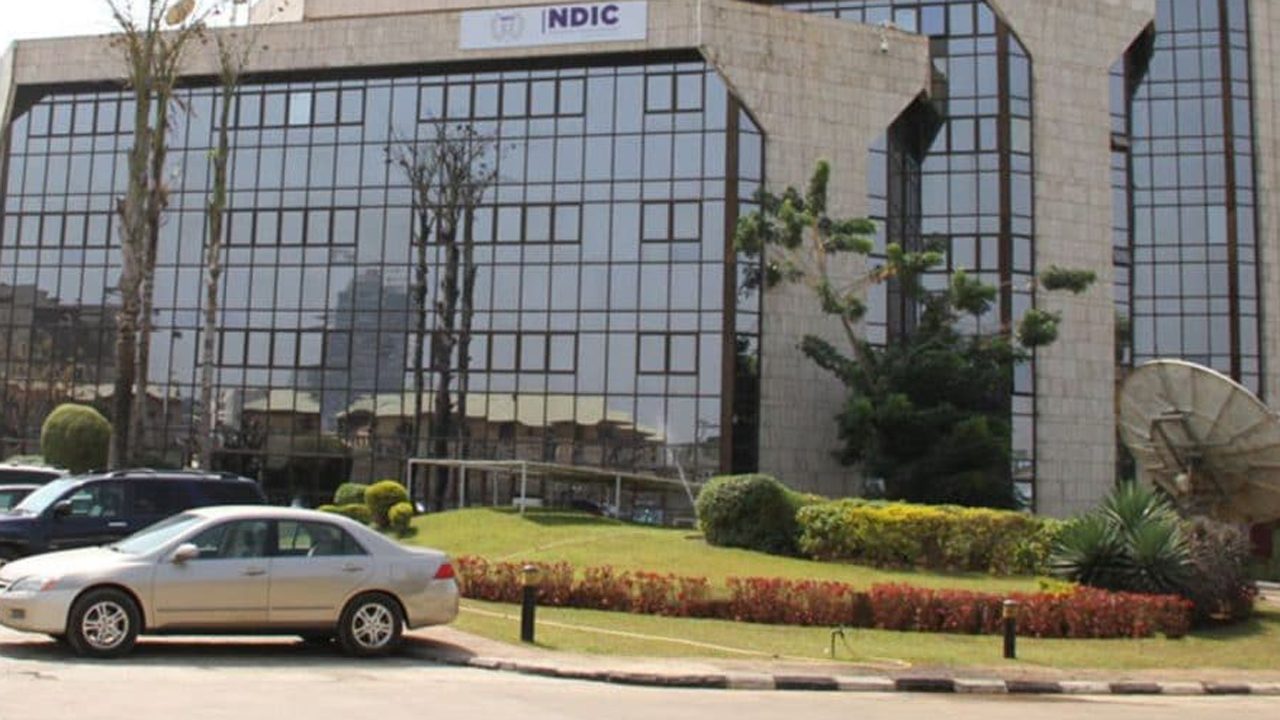
In 2023, nine publicly listed commercial banks in Nigeria collectively paid N166.4 billion as a deposit insurance premium to the Nigeria Deposit Insurance Corporation (NDIC), marking a 29.3% increase from the N128.7 billion paid in the previous year.
Total bank deposits also rose by 69.9% year-on-year from N49.59 trillion in 2022 to N84.29 trillion in the review year.
The amount paid as deposit insurance premium by the nine banks under consideration in 2023, represented about 0.197% of total deposits in contrast to 0.26% in 2022.
This is according to data extracted from the audited financial statements of the banks as published on the Nigerian Exchange (NGX).
Owing to the importance of the financial services sector, involving public funds, there is a need for buffers to protect public funds in case of bank failure or liquidation, hence, the need for deposit insurance.
Deposit insurance is one of many layers put in place to protect public funds and ensure the stability of the banking sector. Some others include the bank resolution fund and the AMCON Sinking Fund.
Deposit Insurance Premium is a statutory payment by deposit-taking banks that ensures that NDIC as an insurer guarantees the payment of deposits up to the maximum limit (Now N5 million) in accordance with its statute in the event of failure of an insured financial institution.
Typically, banks with the largest deposits pay the most premium to NDIC in terms of absolute numbers. However, some banks pay higher relative to their deposits based on a pricing mechanism.
Deposit Insurance Premium Pricing
Banks are charged based on the Differential Premium Assessment System (DPAS), which differentiates premiums payable by the financial institutions based on their respective risk profile.
According to the NDIC, the risk-adjusted deposit insurance pricing is anchored on the premise that the cost of deposit insurance premium and the coverage level should neither over-burden the banking system nor be largely subsidised by public funding.
The DPAS pricing template uses two primary stages of deposit insurance pricing, the first being the determination of a Base Premium Rate for banks in the best risk category and the determination of add-ons based on the individual bank’s risk profile using both quantitative and qualitative factors.
The add-ons, which is a function of the Composite Risk Rating Computation, take into consideration six parameters with varying weights. That is; Capital Adequacy (20%), Asset Quality (15%), Earnings and Profitability (20%), Liquidity and Fund Management (15%), Sensitivity to Market Risk (5%), and Management and Corporate Governance (25%).
The higher the ratio the more risk a bank is perceived to carry. It is worth noting that the deposit risk ratio of all the banks reduced in 2023 compared to the previous year
This means that the bank’s deposit risk dropped from 0.31% in 2022 to 0.26% in the review year.
NDIC increases maximum coverage
Recall that the NDIC in May 2024 announced the upward review of maximum deposit insurance for various categories of deposit-taking financial institutions. Notably, the Corporation increased the maximum deposit insurance coverage for commercial banks from N500,000 to N5 million, bringing the new coverage to 98.98% of total depositors and 25.37% of total deposits.
This means that in the case of any bank failure, depositors with less than or equal to N5 million in their accounts as of the time of the liquidation will be immediately funded by the NDIC.
For example, in the case of Heritage Bank, whose license was recently revoked by the CBN, the NDIC announced that it would be paying 99.9% of the bank customers who had balances below N5 million, although 4,000 depositors representing 0.1% had balances in excess of N5 million.