By Edisemi Andrew
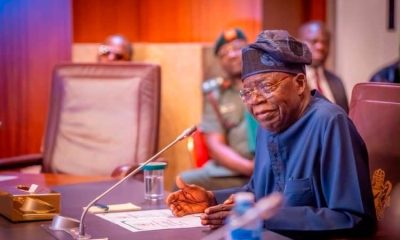
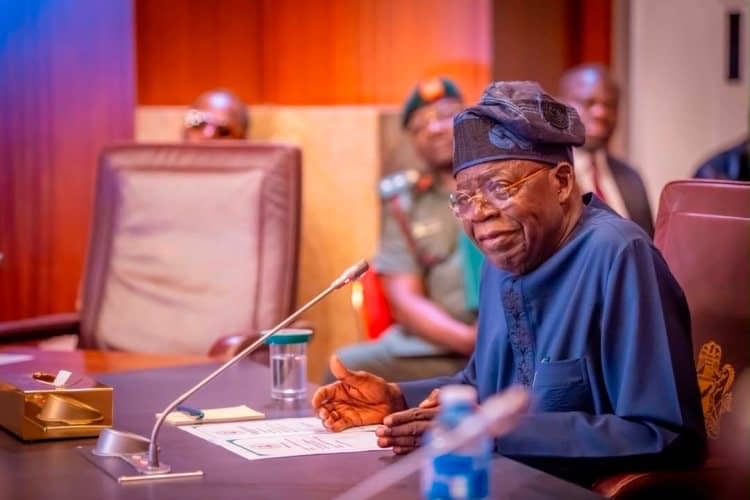
President Bola Tinubu has asked the National Assembly to approve a ₦3.147 trillion reduction in the 2026 Federal Government budget, proposing a downward revision of total expenditure from ₦68.323 trillion to ₦65.176 trillion.
The request, contained in a letter transmitted to the Senate and the House of Representatives, seeks legislative approval for a revised 2026 Appropriation Bill and an updated fiscal framework aimed at aligning government spending with available resources and existing financial obligations.
Under the revised proposal, projected government revenue, including receipts from government-owned enterprises, stands at ₦33.720 trillion, while capital expenditure is estimated at ₦26.232 trillion.
However, despite the proposed reduction in overall spending, the Federal Government’s projected fiscal deficit remains unchanged at ₦31.457 trillion, representing 5.64 per cent of the country’s Gross Domestic Product.
The proposed borrowing target has also been retained at ₦29.218 trillion, comprising ₦18.428 trillion in domestic borrowing and ₦10.790 trillion in external borrowing.
Explaining the rationale behind the adjustment, Tinubu said the revision was intended to prioritise existing government commitments, improve budget credibility, strengthen capital budget implementation and maintain fiscal discipline.
The President also explained that the proposed $7.7 billion external loan, estimated at approximately ₦10.368 trillion, would finance an existing foreign borrowing provision rather than increase the overall borrowing limit already captured in the fiscal framework.
The revised proposal reportedly makes provisions for outstanding obligations, debt-service requirements, capital warrants and commitments involving ministries, departments and agencies.
Some additional capital provisions have also been included for priority interventions, particularly critical road projects, agricultural production, improved market access and water security.
The proposal has been referred to the appropriate Senate committee for legislative consideration, with the National Assembly expected to scrutinise the revised estimates before reaching a decision.
The proposed adjustment raises important questions about the country’s fiscal position, particularly the decision to reduce total expenditure without a corresponding reduction in the projected deficit or borrowing requirement.
With projected revenue significantly below proposed expenditure, the government will continue to depend heavily on borrowing to finance its obligations and development programmes.
The retention of the deficit also raises questions about the extent to which the proposed spending reduction will ease pressure on public finances, especially considering the country’s existing debt-servicing commitments and competing development needs.
For Nigerians, the implications extend beyond the figures presented to lawmakers. Changes to capital expenditure could affect the pace of infrastructure delivery, federal projects and other public investments, making transparency around affected projects particularly important.
The National Assembly’s consideration of the revised framework will therefore be an important opportunity to examine the assumptions behind the government’s revenue projections, borrowing plans and expenditure priorities.
Ultimately, the effectiveness of the proposed review will depend on whether it improves budget implementation, reduces waste and ensures that public borrowing translates into measurable economic and social benefits.
The revised proposal now awaits legislative approval, as attention increasingly turns towards the Federal Government’s preparation and presentation of the 2027 national budget.











 News14 hours ago
 News14 hours ago