Connect with us

Education

Parents Should Speak Indigenous Languages To Children – Prof. Chinwe Anunobi

Published

on

Prof. Chinwe Anunobi, CEO of the National Library of Nigeria, has advised Nigerian parents to continuously speak indigenous languages to their children.

Anunobi made the comment at a media event hosted by the National Library of Nigeria, Lagos, in partnership with Zaccheus Onumba Dibiaezue Memorial Libraries and Book Aid International to commemorate this year’s International Literacy Day.

She noted that literacy development, particularly in indigenous languages, starts with the family.

Anunobi suggested that parents encourage this by giving their children books.

“The promotion and development of literacy, especially in indigenous languages, starts within the family. Parents should speak their native languages to their children from a young age. And when it comes to special occasions like birthdays, instead of just buying a child cake or sweets, why not gift them books? A few simple books can have a lifelong impact.”

Anunobi stated that while the National Library is primarily a research library for higher education institutions, it also has a unique responsibility to promote reading, which is critical to improving literacy.

“Literacy is not just about speaking—it involves coding and decoding symbols. Increasing literacy rates requires more than words; it requires tangible actions.

“For example, Ireland increased its literacy rate to 95 per cent through a dedicated effort to promote reading. I don’t see the same level of commitment here in Nigeria. The best way to encourage reading is to provide children with the materials they need in their classrooms. It’s not enough to just tell them to read or assign homework; we must give them opportunities, like library hours where children can read and discuss what they’ve learned.”

She added that the library planned to develop programs in which youngsters would be given books to read and then return regularly to discuss them.

“This ensures they are actively engaging with the material, and the books provided are tailored to their reading level. We can’t improve literacy by just talking about it—it has to be taught and nurtured through structured programs,” she said.

Co-founder and Chairperson of the Board of Trustees, Zaccheus Onumba Dibiaezue Memorial Libraries, Mrs Ifeoma Esiri,  said in line with the theme, ‘Multilingual Education,’ emphasised that Nigerian children must be able to read and write in local languages.

“If you’re Igbo, your child should be able to read a book and write in Igbo; the same goes for Yoruba, Hausa, and other languages. Literacy isn’t just about mastering English; it’s about understanding and preserving our written languages.

“The earliest books in our local languages were religious texts. For example, in my village, many people still read the Bible in Igbo. We need government programs to expand this to other kinds of books in our native languages so that people, not just children, can access literature and knowledge in their tongue. This is how we foster true literacy by allowing communities to read and learn in their languages.”

While speaking on how to address issues of children who initially learned in their local language struggle when they transition to English in higher education, Esiri explained, “That’s an excellent point, and it highlights the complexity of our educational system. In the North, much schooling is conducted in local languages, and it has worked effectively. For instance, the late Sir Tafawa Balewa wrote a book in Hausa, which was a bestseller because everyone in his community could read it. I’ve read a translated version, and it was a beautiful story.”

She also argued that Nigerian writers should generate literature in Nigerian languages.

Esiri added, “We need more Nigerian writers to produce literature in our local languages. While there are a few, most are based in the North. It’s a tragedy when a child who has been educated in a local language struggles when forced to transition to English for higher education. It’s a systemic failure that we need to address.”


Continue Reading
Click to comment

Leave a Reply

Your email address will not be published. Required fields are marked *

Abuja Reports

Atoyebi Adewumi Wins 4th National Essay Competition, Beats 2,000 Contestants

Published

on

By

By Samson Adeyanju

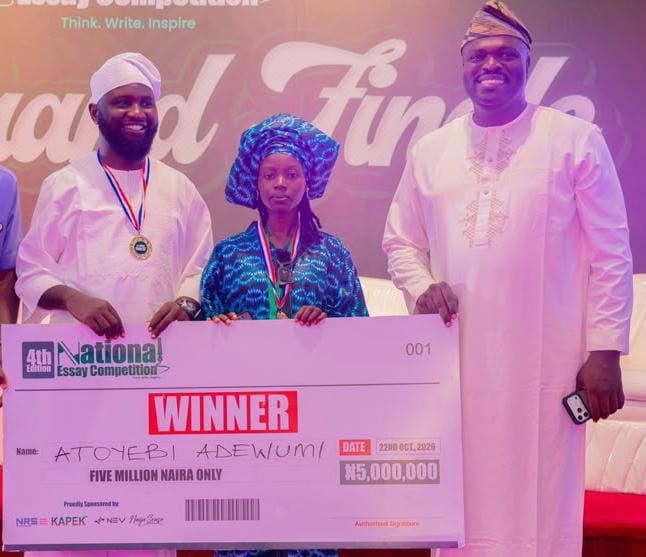
Atoyebi Adewumi has emerged winner of the fourth edition of the National Essay Competition, beating more than 2,000 contestants in an intellectual contest aimed at promoting academic excellence, critical thinking and creative writing among young Nigerians.

The competition, which focused on the relevance of taxation to national development, challenged participants to examine the role of tax revenue in financing public services, stimulating economic growth and strengthening the relationship between government and citizens.

The initiative provided a platform for young Nigerians to demonstrate their writing skills, articulate informed perspectives on national issues and contribute ideas towards building a more responsible and progressive society.

Speaking after being declared winner, an elated Adewumi expressed gratitude to the convener, Foluso Sylvanus Ojo, and the organising team for providing young Nigerians with an opportunity to showcase their intellectual abilities.

“I am so glad, very, very glad, to have this privilege of emerging as the winner. I am grateful to the convener and the entire team, as well as everyone who supported this vision,” Adewumi said.

In his remarks, Ojo expressed concern over the tendency to criticise the attitudes and lifestyles of younger generations without providing adequate opportunities to nurture their talents and channel their energies towards productive pursuits.

He called on the government, corporate organisations and nongovernmental organisations to invest more in educational initiatives that promote intellectual excellence, creativity and responsible citizenship.

According to him, sustained investment in academic competitions and youth development programmes would encourage discipline, innovation and a stronger commitment to national development.

Drawing a comparison with the substantial cash prizes awarded in some reality television competitions in Nigeria, Ojo argued that students and intellectually gifted young Nigerians deserved greater recognition, financial support and encouragement.

“I believe the government should support initiatives like this because individuals need supportive hands, especially from the government. When they receive such support, they become more confident and motivated to continue their good work,” he said.

Ojo maintained that society could not continue to complain about the attitudes and lifestyles of young people without deliberately investing in programmes that encourage positive values and productive engagement.

The fourth edition of the competition also underscored the importance of tax awareness among young Nigerians, highlighting how effective taxation, transparency and accountable governance could contribute to improved infrastructure, education, healthcare and other essential public services.

Beyond celebrating the winner, the competition reinforced the need to identify, encourage and empower emerging intellectual talents capable of contributing meaningfully to Nigeria’s development.

Winner of the 5,000,000 naira
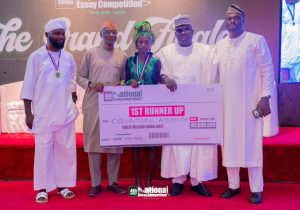
Winner of 3,000,000 naira

Winner of 2,000,000
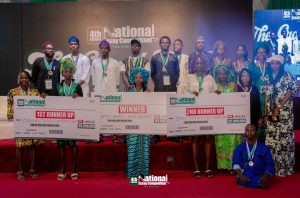
All the participants 

Continue Reading

Abuja Reports

20 Finalists Begin Final Stage of National Essay Competition

Published

on

By

By Samson Adeyanju

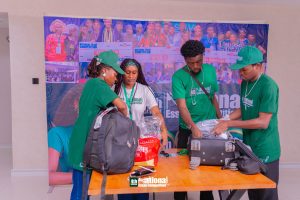
Twenty finalists from across Nigeria have begun the final stage of the fourth edition of the National Essay Competition in Abuja, following an orientation session designed to prepare them for the decisive examination.

The finalists arrived in the Federal Capital Territory for a four-day, all-expenses-paid programme featuring the essay examination, institutional tours and opportunities for learning and networking.

The competition, the brainchild of Mr Foluso Ojo, is sponsored by the Nigeria Revenue Service (NRS).

Ahead of the examination, the finalists participated in an orientation session led by Professor Omotosho Borisade of Ekiti State University, who serves as the competition’s umpire.

The session familiarised participants with the competition’s rules and regulations, examination guidelines and assessment criteria, helping them understand the requirements of the final stage.

The essay examination is scheduled to begin today at 9 a.m., after which the finalists are expected to embark on institutional tours around Abuja.

The programme is designed to extend beyond the contest itself, exposing the finalists to new learning opportunities, professional connections and experiences in the nation’s capital.

The competition brings together young Nigerians to demonstrate their writing ability, knowledge, creativity and critical-thinking skills as they compete for the top honours.

With the finalists prepared for the examination, attention now turns to their performance and the eventual emergence of the competition’s champion.


Continue Reading

Education

Oyelami Named Acting CEO of National Mathematical Centre

Published

on

By

By Omoniyi David

The Federal Government has appointed Professor Oyelami as Acting Chief Executive Officer of the National Mathematical Centre with immediate effect.

The appointment was announced in a statement by the centre’s Controller of Information and Public Relations, Onyekachi Njoku. He said the decision followed the elevation of the former CEO, Promise Mebine, as Vice-Chancellor of the Federal University Otuoke.

Njoku disclosed that the approval was conveyed in a letter signed by Rakiya Ilyasu, Director of University Education at the Federal Ministry of Education.

Professor Oyelami, a mathematician who joined the centre over two decades ago from Abubakar Tafawa Balewa University, previously served as Coordinator of the Mathematics and Theoretical Physics programmes and as Deputy Director/Academic Planning Coordinator.

An alumnus of the University of Jos and Abubakar Tafawa Balewa University, he holds a Second-Class Upper degree, MSc and PhD in Mathematics and has published widely in local and international journals.

The centre said his appointment would strengthen its mandate to promote research, innovation and capacity building in mathematical sciences.

Continue Reading

Trending