Connect with us

News

FG Flagged Off 1.25m Metric Tonnes Dry Season Wheat Farming In Order To Off Rising Food Pricesset

Published

on

The flag-off of the 1.25 million metric tonnes 2023 dry-season wheat production has raised expectations and hope that the federal government will increase food output to offset rising food prices.

Wheat remains one of the key staple crops that feed millions of Nigerians including being the major ingredient in the production of wide range of foods such as bread, pasta, noodles, biscuits, cakes, and pastries.

According to data by the Observatory of Economic Complexity (OEC), in 2021 alone, Nigeria imported $3.32B in wheat, making the country the 2nd largest importer of wheat in the world, primarily from Lithuania ($582M), Latvia ($508M), United States ($508M), Russia ($493M), and Ukraine ($490M).

Even, the Russia – Ukraine war has exacerbated the high price of the product as the country is projected to import about 5.4 million tonnes of wheat in 2023-2024.
The situation is one of the reasons the federal government is pushing to increase domestic wheat production to ensure self-sufficiency and to drive the state of emergency on food security declared by President Bola Tinubu in July, 2023.

The Federal Ministry of Agriculture and Food Security has commenced the pilot cultivation of the targeted 250,000 hectares of wheat production for the 2023 dry-season farming in Kadume, Hadejia local government area of Jigawa State.

The project which is under the National Agricultural Growth Scheme and Agro-pocket Project (NAGS&AP) was made possible by a $134m loan facility advanced to Nigeria by the African Development Bank(AfDB) and aimed to increase yield of major staple crops such as rice, cassava, maize, wheat among others by at least 20 percent.

At the flag-off, minister of agriculture and food security, Abubakar Kyari described the project as ambitious, saying that the ministry aim to support between 150,000 to 250,000 farmers with 50 percent input subsidy to cultivate between 200,000 to 250,000 hectares of wheat with an expected yield of 1,250,000 metric tonnes.

In Jigawa State alone, the programme is expected to expand the capacity of over 42,000 smallholder farmers who have been assisted with inputs such as fertilizer, certified wheat seeds and herbicides.
The minister said that the move was to significantly reduce food inflation, Nigeria’s dependence on foreign import, increase domestic consumption and ultimately promote agricultural self-sufficiency and stimulate economic growth.

According to him, the project encapsulates President Bola Tinubu administration’s resolve to expand the capacity of farmers to engage in the cultivation of key staples across the country.
Kyari added that the programme will be technology enabled, thus guaranteeing transparency and accountability in the provision of the subsidy and other support services like extension, insurance and additional finance. He noted that the government remains committed to ensure that the support does get to the farmer accordingly.

By force of its very essence, he said, that the dry season farming offers us a unique opportunity to harness the untapped potential of land and diversify Nigeria’s food production capabilities. The minister stressed that the importance of the farming by this time cannot be overstated, as it allows the federal government to overcome seasonal limitations and meet the demands of the country’s growing population while bolstering national economy.

“Our farmers remain our most prized assets as a nation, given that they produce the bulk of the food consumed in-country. As such, His excellency Mr. President has charged us to ensure that they are adequately supported to increase their productivity.

Equally, our farmers are guaranteed access to improved seeds in this particular instance, I would like to point out that we are deploying heat tolerant wheat varieties like Borlaug 100; Attila etc and we will progressively invest in irrigation infrastructure projects to optimise water usage and mitigate the challenges posed by the dry season”, the minister said.

We are poised to take them on. We have been innovative in utilising Information and Communication Technology (ICT) to target already proven irrigated farm clusters; deploy verified farmer data; and map the farmers to agro dealer redemption centers.
We will invest more in farm infrastructure, all with a view to enabling our farmers maximize their agricultural output and overcome the limitations imposed by the elements.

I implore all stakeholders, from farmers to researchers, private sector entities to civil society organizations, to come together and seize the opportunity presented by this 2023 dry season farming initiative. Let us work hand in hand, united in purpose, to usher in a new era of agricultural prosperity”, he added.

The Jigawa State governor, Mallam Umar Namadi who applauded the programme noted that the 2023 dry-season wheat production in the state was a crucial initiative for food security, economic diversification, and citizen empowerment.
Namadi said thay the programme remains in alliance with President Bola Ahmed Tinubu’s Renewed Hope Agenda and the State’s 12-Point Agenda for Greater Jigawa.

The governor reiterated that the state government will provide free high-quality extension services to wheat farmers, with arrangements for the engagement and training of additional 1,440 extension agents for farmers to adhere to the guidance provided by extension agents for the success of the programme.

Continue Reading
Click to comment

Leave a Reply

Your email address will not be published. Required fields are marked *

Abuja Reports

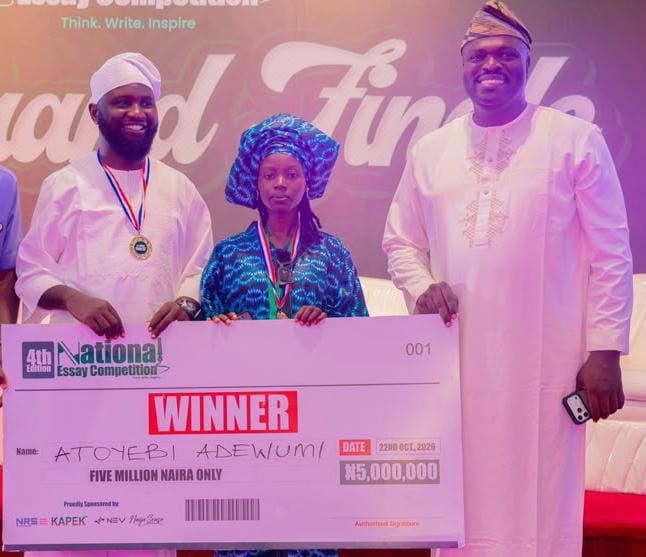
Atoyebi Adewumi Wins 4th National Essay Competition, Beats 2,000 Contestants

Published

on

By

By Samson Adeyanju

Atoyebi Adewumi has emerged winner of the fourth edition of the National Essay Competition, beating more than 2,000 contestants in an intellectual contest aimed at promoting academic excellence, critical thinking and creative writing among young Nigerians.

The competition, which focused on the relevance of taxation to national development, challenged participants to examine the role of tax revenue in financing public services, stimulating economic growth and strengthening the relationship between government and citizens.

The initiative provided a platform for young Nigerians to demonstrate their writing skills, articulate informed perspectives on national issues and contribute ideas towards building a more responsible and progressive society.

Speaking after being declared winner, an elated Adewumi expressed gratitude to the convener, Foluso Sylvanus Ojo, and the organising team for providing young Nigerians with an opportunity to showcase their intellectual abilities.

“I am so glad, very, very glad, to have this privilege of emerging as the winner. I am grateful to the convener and the entire team, as well as everyone who supported this vision,” Adewumi said.

In his remarks, Ojo expressed concern over the tendency to criticise the attitudes and lifestyles of younger generations without providing adequate opportunities to nurture their talents and channel their energies towards productive pursuits.

He called on the government, corporate organisations and nongovernmental organisations to invest more in educational initiatives that promote intellectual excellence, creativity and responsible citizenship.

According to him, sustained investment in academic competitions and youth development programmes would encourage discipline, innovation and a stronger commitment to national development.

Drawing a comparison with the substantial cash prizes awarded in some reality television competitions in Nigeria, Ojo argued that students and intellectually gifted young Nigerians deserved greater recognition, financial support and encouragement.

“I believe the government should support initiatives like this because individuals need supportive hands, especially from the government. When they receive such support, they become more confident and motivated to continue their good work,” he said.

Ojo maintained that society could not continue to complain about the attitudes and lifestyles of young people without deliberately investing in programmes that encourage positive values and productive engagement.

The fourth edition of the competition also underscored the importance of tax awareness among young Nigerians, highlighting how effective taxation, transparency and accountable governance could contribute to improved infrastructure, education, healthcare and other essential public services.

Beyond celebrating the winner, the competition reinforced the need to identify, encourage and empower emerging intellectual talents capable of contributing meaningfully to Nigeria’s development.

Winner of the 5,000,000 naira
Winner of 3,000,000 naira

Winner of 2,000,000
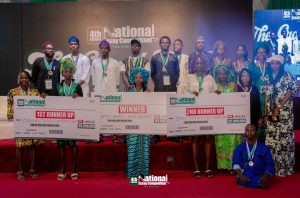
All the participants 

Continue Reading

Abuja Reports

20 Finalists Begin Final Stage of National Essay Competition

Published

on

By

By Samson Adeyanju

Twenty finalists from across Nigeria have begun the final stage of the fourth edition of the National Essay Competition in Abuja, following an orientation session designed to prepare them for the decisive examination.

The finalists arrived in the Federal Capital Territory for a four-day, all-expenses-paid programme featuring the essay examination, institutional tours and opportunities for learning and networking.

The competition, the brainchild of Mr Foluso Ojo, is sponsored by the Nigeria Revenue Service (NRS).

Ahead of the examination, the finalists participated in an orientation session led by Professor Omotosho Borisade of Ekiti State University, who serves as the competition’s umpire.

The session familiarised participants with the competition’s rules and regulations, examination guidelines and assessment criteria, helping them understand the requirements of the final stage.

The essay examination is scheduled to begin today at 9 a.m., after which the finalists are expected to embark on institutional tours around Abuja.

The programme is designed to extend beyond the contest itself, exposing the finalists to new learning opportunities, professional connections and experiences in the nation’s capital.

The competition brings together young Nigerians to demonstrate their writing ability, knowledge, creativity and critical-thinking skills as they compete for the top honours.

With the finalists prepared for the examination, attention now turns to their performance and the eventual emergence of the competition’s champion.


Continue Reading

News

Pastor Ogundipe Decries Lack of Integrity Among Educated Nigerians

Published

on

By

By Samson Adeyanju

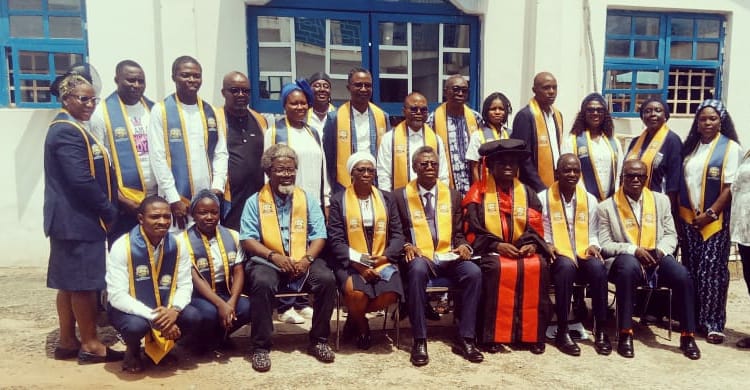
Pastor Alex Ogundipe, Chairman of the Governing Board of Christian Heritage International Bible College, Kubwa, Abuja, has expressed concern over the growing number of educated Nigerians who lack the character and integrity required to make meaningful contributions to society.

Ogundipe raised the concern during the matriculation ceremony of the institution’s 60 pioneer students, stressing that academic qualifications without moral discipline and upright character could undermine national development.

According to him, Nigeria has many knowledgeable and academically accomplished individuals whose inability to demonstrate integrity has negatively affected their contributions to their families, workplaces and communities.

“We have too many people in this country who are knowledgeable and wise in their own ways, but they do not have character and integrity. That affects their ability to impact their communities,” he said.

The cleric emphasised that education must go beyond the acquisition of certificates to the development of individuals who demonstrate honesty, accountability, faithfulness and commitment to serving humanity.

He explained that true integrity required consistency in personal conduct, whether at home, in the church, at work or within the larger society.

Ogundipe said the college was established not merely to impart biblical knowledge but to raise men and women whose lifestyles reflect Christian values and whose contributions would positively influence society.

He urged Christian leaders to demonstrate their faith through practical actions rather than mere religious declarations.

Speaking on Nigeria’s future, the cleric encouraged citizens to remain hopeful, pray for the country and contribute meaningfully to national peace, unity and development.

Earlier, the Rector of the institution, Pastor Samson Olukayode Aliyu, challenged the matriculating students to prioritise spiritual maturity and moral discipline alongside academic excellence.

Aliyu warned against examination malpractice, plagiarism, dishonesty and other forms of misconduct, stressing that academic certificates could demonstrate knowledge but could not substitute for good character.

“The Church does not only need gifted people; it needs godly people. We need leaders who will choose integrity over compromise, humility over pride, faithfulness over convenience and service over self-interest,” he declared.

He explained that the college offers six-month certificate programmes in theology and one-year diploma programmes in theology, leadership and prophetic studies.

One of the matriculating students, Akeem Omobolanle, who enrolled in the Diploma in Leadership programme, commended the institution’s approach to biblical education and expressed optimism that the training would strengthen his understanding of the Scriptures and prepare him for greater service in Christian ministry.

The ceremony marked the formal admission of the college’s pioneer students into its academic community.

Continue Reading

Trending