Connect with us

Abuja Reports

Aso Rock Solar Project Signals No Confidence in National Grid -Fr Umoh

Published

on

By Samson Adeyanju 

The National Communications Director, Catholic Secretariat of Nigeria and public affairs commentator, Rev. Fr Michael Nsikak Umoh, has described the Federal Government’s plan to power the Aso Rock Presidential Villa with a N17 billion solar mini-grid as a “vote of no confidence” in Nigeria’s national electricity grid.

In a write-up titled “A Vote of No Confidence: The Villa’s Exit as Nigeria’s Power Sector’s Ultimate Indictment,” Fr Umoh argued that the decision of the seat of power to disconnect from the national grid by March 2026 carries deeper political meaning beyond the official explanation of cost savings and energy transition.

He likened the development to a landlord abandoning a crumbling estate to retreat into a privately fortified penthouse, while tenants remain under a leaking roof, insisting that the move symbolises a government retreat from reform in a sector it regulates and supervises.

Fr Umoh recalled President Bola Ahmed Tinubu’s campaign promise of December 22, 2022, in which he pledged to deliver constant electricity within four years and urged Nigerians not to vote for him again if he failed to do so.

According to him, the plan to “exit” the national grid three years into a four-year mandate weakens public confidence in the administration’s ability to deliver the promised expansion of electricity generation capacity to 15,000 megawatts.

He noted that Nigeria’s grid supply still fluctuates between 3,000 and 5,000 megawatts, describing it as a familiar range that has long represented the country’s energy stagnation.

Fr Umoh said the financial implications of the project also raise questions, especially as citizens continue to face increased tariffs under the Band A regime approved by the Nigerian Electricity Regulatory Commission.

He argued that it would be difficult to persuade Nigerians to accept market-reflective pricing in the name of reform, while the Presidency prepares to withdraw from the same system it expects citizens to fund and endure.

The commentator further linked the development to the electricity sector’s liquidity crisis, recalling that in February 2024, Abuja Electricity Distribution Company issued a disconnection notice over unpaid obligations attributed to the Presidential Villa.

He said the shift to independent solar power appears less like environmental leadership and more like “structural secession,” warning that it risks reinforcing the long-standing “generator mentality” where elites self-provide electricity while the wider public remains trapped in unreliable supply.

While acknowledging that decentralised renewable energy systems are vital to Nigeria’s future, Umoh maintained that such models gain legitimacy when scaled inclusively, not when reserved for the political elite.

He cited the embedded generation model in Aba, driven by Geometric Power, as an example of how localised initiatives can improve electricity stability when backed by targeted reforms and proper management.

Fr Umoh also referenced estimates that Nigeria loses about $28 billion annually due to unreliable power supply, arguing that the scale of the problem requires systemic reform rather than insulation by government leaders.

“As 2027 approaches, memory will matter,” he warned, adding that disconnecting Aso Rock from the national grid before the administration’s electricity promise matures could become a lasting symbol of failure.

He said the solarisation of the Presidential Villa could still be reframed as a pilot for nationwide decentralisation if accompanied by transparent and accelerated reforms that improve supply for ordinary Nigerians, manufacturers and businesses.

However, he stressed that without such reforms, the project may be remembered as a moment the state appeared to “vote against its own promise.”

Abuja Reports

Atoyebi Adewumi Wins 4th National Essay Competition, Beats 2,000 Contestants

Published

on

By

By Samson Adeyanju

Atoyebi Adewumi has emerged winner of the fourth edition of the National Essay Competition, beating more than 2,000 contestants in an intellectual contest aimed at promoting academic excellence, critical thinking and creative writing among young Nigerians.

The competition, which focused on the relevance of taxation to national development, challenged participants to examine the role of tax revenue in financing public services, stimulating economic growth and strengthening the relationship between government and citizens.

The initiative provided a platform for young Nigerians to demonstrate their writing skills, articulate informed perspectives on national issues and contribute ideas towards building a more responsible and progressive society.

Speaking after being declared winner, an elated Adewumi expressed gratitude to the convener, Foluso Sylvanus Ojo, and the organising team for providing young Nigerians with an opportunity to showcase their intellectual abilities.

“I am so glad, very, very glad, to have this privilege of emerging as the winner. I am grateful to the convener and the entire team, as well as everyone who supported this vision,” Adewumi said.

In his remarks, Ojo expressed concern over the tendency to criticise the attitudes and lifestyles of younger generations without providing adequate opportunities to nurture their talents and channel their energies towards productive pursuits.

He called on the government, corporate organisations and nongovernmental organisations to invest more in educational initiatives that promote intellectual excellence, creativity and responsible citizenship.

According to him, sustained investment in academic competitions and youth development programmes would encourage discipline, innovation and a stronger commitment to national development.

Drawing a comparison with the substantial cash prizes awarded in some reality television competitions in Nigeria, Ojo argued that students and intellectually gifted young Nigerians deserved greater recognition, financial support and encouragement.

“I believe the government should support initiatives like this because individuals need supportive hands, especially from the government. When they receive such support, they become more confident and motivated to continue their good work,” he said.

Ojo maintained that society could not continue to complain about the attitudes and lifestyles of young people without deliberately investing in programmes that encourage positive values and productive engagement.

The fourth edition of the competition also underscored the importance of tax awareness among young Nigerians, highlighting how effective taxation, transparency and accountable governance could contribute to improved infrastructure, education, healthcare and other essential public services.

Beyond celebrating the winner, the competition reinforced the need to identify, encourage and empower emerging intellectual talents capable of contributing meaningfully to Nigeria’s development.

Winner of the 5,000,000 naira

Winner of 3,000,000 naira

Winner of 2,000,000
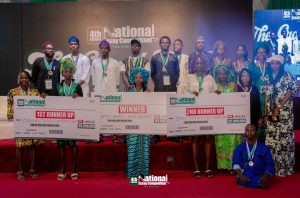
All the participants 

Continue Reading

Abuja Reports

20 Finalists Begin Final Stage of National Essay Competition

Published

on

By

By Samson Adeyanju

Twenty finalists from across Nigeria have begun the final stage of the fourth edition of the National Essay Competition in Abuja, following an orientation session designed to prepare them for the decisive examination.

The finalists arrived in the Federal Capital Territory for a four-day, all-expenses-paid programme featuring the essay examination, institutional tours and opportunities for learning and networking.

The competition, the brainchild of Mr Foluso Ojo, is sponsored by the Nigeria Revenue Service (NRS).

Ahead of the examination, the finalists participated in an orientation session led by Professor Omotosho Borisade of Ekiti State University, who serves as the competition’s umpire.

The session familiarised participants with the competition’s rules and regulations, examination guidelines and assessment criteria, helping them understand the requirements of the final stage.

The essay examination is scheduled to begin today at 9 a.m., after which the finalists are expected to embark on institutional tours around Abuja.

The programme is designed to extend beyond the contest itself, exposing the finalists to new learning opportunities, professional connections and experiences in the nation’s capital.

The competition brings together young Nigerians to demonstrate their writing ability, knowledge, creativity and critical-thinking skills as they compete for the top honours.

With the finalists prepared for the examination, attention now turns to their performance and the eventual emergence of the competition’s champion.


Continue Reading

Abuja Reports

Caritas Nigeria Urges Ecological Conversion, Climate Action

Published

on

By

By Samson Adeyanju

Caritas Nigeria has called on Nigerians to embrace what Pope Francis describes as “ecological conversion,” urging citizens, institutions and governments to move beyond environmental rhetoric and take concrete action against climate change and environmental degradation.

The call was made during the commemoration of World Environment Day 2026 at the Catholic Secretariat of Nigeria (CSN) Training Hall, Abuja, under the theme: “Inspired by Nature. For Climate. For Our Future.”

Delivering an address on behalf of the Catholic Secretariat of Nigeria, the Deputy Secretary, Rev. Fr. Augustine Okochi, described care for the environment as a moral, spiritual and ethical responsibility rooted in Christian faith.

“Our concern for the environment is not a passing trend. It is part of our moral duty, our Christian witness, and our responsibility to future generations,” he said.

Fr. Okochi noted that climate change is already affecting communities through flooding, land degradation, water pollution, rising temperatures and declining livelihoods, with the poor, women, children and displaced persons bearing the greatest burden.

He commended Caritas Nigeria’s efforts in environmental awareness, tree planting, climate-smart agriculture and support for vulnerable communities, while urging families, schools, parishes and institutions to cultivate a culture of environmental stewardship.

Speaking at the event, Caritas Nigeria’s Environmental Focus President, Dr. Pascal Onu, stressed the importance of educating young people on environmental protection through debate and quiz competitions.

“We believe it is important to catch them young. When we imbibe the right environmental culture in our children, it goes a long way in protecting the environment,” he said.

Dr. Onu identified inadequate infrastructure, poor waste management systems and limited funding as major obstacles to environmental sustainability despite increasing public awareness of climate issues.

Also speaking, Director of the Department of Climate Change at the Federal Ministry of Environment, Dr. Iniobong Abiola-Awe, reaffirmed Nigeria’s commitment to climate action through initiatives such as the National Adaptation Plan, Nationally Determined Contributions (NDCs), the Just Transition Action Plan and the National Clean Cooking Policy.

She emphasized the role of young people in advancing climate solutions through programmes such as the Eco-Schools Initiative and the Youth Climate Innovation Hub.

In a goodwill message, the Abuja Environmental Protection Board (AEPB), represented by Chief Environmental Health Officer Omenta Rachael Chinenye, urged Nigerians to draw inspiration from nature in addressing environmental challenges and commended the active participation of students in climate debates.

Students at the event said the programme deepened their understanding of environmental protection, forest conservation and sustainable living, pledging to promote environmental responsibility in their schools and communities.

The event brought together religious leaders, government officials, environmental experts, students and development partners who renewed their commitment to building a cleaner, greener and more climate-resilient Nigeria.

Continue Reading

Trending