Connect with us

Article

The Search for Lasting Peace in Benue Through Innovative Community-Based Peace Structures

Published

on

By Bridget Tikyaa

Thursday, October 30, 2025, will remain a landmark date in the history of Benue State, as both the Federal and State Governments, alongside key stakeholders, took decisive steps toward establishing a peace process aimed at fostering unity and social cohesion across all communities in the state.

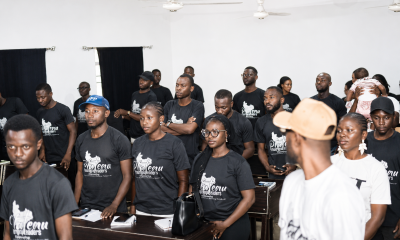
On that day, the Benue State Government, under the leadership of Governor Hyacinth Iormem Alia, in collaboration with the Office of the Senior Special Assistant to the President on Community Engagement, Dr. Abiodun Essiet, and the International Communities Organisation, hosted a workshop on establishing Community-Based Peace Structures across the 23 local government areas of the state.

The event brought together community and religious leaders, traditional rulers, security officials, and representatives of civil society organisations.

Benue State has, over the years, suffered from violent conflicts, including herder-farmer clashes, banditry, kidnapping, and communal crises resulting in loss of lives, displacement, and severe economic disruption. These conflicts, often rooted in land disputes and competition for resources, have led to humanitarian challenges and strained local capacities.

Given these realities, peacebuilding initiatives are essential to promote dialogue, reconciliation, trust, and understanding between communities, government, and security agencies, while addressing the root causes of conflict. Restoring peace will also pave the way for victim rehabilitation, reintegration, and sustainable development.

Governor Alia, represented by his Deputy, Dr. Sam Ode, described the peacebuilding initiative as a commendable effort by President Bola Ahmed Tinubu, fully supported by the state government and deserving of continuity.

He emphasized that traditional institutions are key drivers of peaceful coexistence and urged local government chairmen to maintain constant communication with community leaders to foster social harmony.

Over the past two and a half years, Governor Alia has sustained momentum in peacebuilding by working closely with security agencies, deploying drones for intelligence gathering, and establishing a 10,000-man state security outfit equipped with motorcycles and Hilux vans to complement federal efforts.

His administration also convened a four-day security summit in partnership with the Nigerian Bar Association (NBA), supported displaced persons, and donated ₦5 million to each family of security operatives who lost their lives in the fight against banditry.

The government continues to engage local stakeholders and collaborate with the Centre for Humanitarian Dialogue to promote reconciliation and inclusive dialogue among diverse ethnic and religious groups.

Citizens are also encouraged to remain vigilant and cooperate with security forces for peace and stability.

These initiatives, highlighted at the peace enhancement workshop, earned commendation from the Office of the SSA to the President and Mrs. Josephine Habba, Director-General of the Benue State Peace and Reconciliation Commission.

Dr. Abiodun Essiet, the SSA to the President, stressed that unity is essential for Nigeria’s peace and prosperity, describing the workshop as a vital step toward strengthening community collaboration and peace through inclusive participation.

The initiative aims to support security agencies and strengthen the Benue State Commission for Peace and Reconciliation by expanding community peace committees – structures designed to enhance intelligence gathering, early warning systems, and dialogue.

The Secretary to the State Government, Deaconess Selumun Deborah Aber, represented by James Azande, SSA to the Governor on Media, expressed support for the programme, noting that peacebuilding requires collective effort. She also commended President Tinubu’s initiative to address insecurity in the North-Central region.

Commitments were made by local council leaders, traditional rulers, and stakeholders, including the Miyetti Allah Cattle Breeders Association of Nigeria (MACBAN).

Comrade Vitalis Neji, Chairman of Kwande Local Government Council and State ALGON Chairman, reaffirmed the councils’ commitment to peace and integrity. Similarly, His Royal Highness, Chief Orkaa Kave, the Ter Ukum, expressed concern over ongoing insecurity but urged continued dedication to peace efforts.

Representatives of the National Council for Women Societies, the All Farmers Association of Nigeria, and MACBAN – Mrs. Theresa Dewua, Pastor Ernest Atogi, and Ibrahim Galma also pledged support for the initiative and called for unity and collaboration to restore peace across the state.

The workshop, no doubt, underscores both the Federal and State Governments’ commitment to building a peaceful society through inclusive, community-driven engagement backed by civil society groups, local communities, and traditional institutions.

Bridget Tikyaa is the Principal Special Assistant to the Governor on Media, Publicity, and Communications Strategy

Article

Nigeria Through Foreign Lens: Why We Must Stop Being Our Own Worst Critics

Published

on

By

By Foluso Ojo

A recent video circulating online shows foreign financial analysts discussing Nigeria’s emergence as the world’s best performing stock market. They attributed the country’s remarkable performance to bold economic reforms, improved investor confidence, and policy decisions that are gradually reshaping the economy.

Ironically, while international observers are beginning to acknowledge Nigeria’s economic progress, many Nigerians remain unwilling to admit that anything positive is happening. Every positive development is either dismissed as propaganda or met with suspicion, while every setback is amplified as proof that the country is beyond redemption.

Constructive criticism is essential in any democracy. Governments should be questioned, policies should be scrutinized, and leaders should be held accountable. However, there is a significant difference between constructive criticism and a persistent determination to portray one’s country as a complete failure.

It has become common to hear some opposition figures and self styled economists argue that nothing is working, regardless of the available evidence. More concerning is the attitude of many Nigerians in the diaspora, who often become the loudest voices projecting only the country’s failures to the rest of the world. While every nation has challenges, not every nation is so eager to convince the world that it is hopeless.

No one is suggesting that Nigeria has solved all its economic problems. Inflation remains high, many families are struggling with the rising cost of living, unemployment remains a concern, and millions are still waiting to feel the full impact of recent reforms. These realities should never be ignored.
Yet, acknowledging these challenges should not prevent us from recognizing genuine progress where it exists.

Economic reforms are rarely painless. Across the world, countries that have successfully transformed their economies often endured difficult transition periods before the benefits became widely felt. If respected international investors and financial analysts are beginning to identify positive indicators in Nigeria, we should at least be willing to examine those indicators objectively instead of rejecting them simply because they do not fit our preferred narrative.

Patriotism does not require blind support for any government, nor does it demand silence in the face of poor policies. True patriotism means celebrating national achievements while demanding improvements where necessary. It means correcting what is wrong without denying what is right.

Nigeria is not perfect, but it is not standing still either. Progress may be slower than many would like, but progress is still progress. A nation cannot build confidence if its own citizens refuse to believe in its potential.

The question before us is simple: If foreigners can identify reasons to invest in Nigeria and speak positively about its future, why are Nigerians often the last to acknowledge their own country’s achievements?

It is time to change the narrative. Let us continue to hold our leaders accountable, but let us also learn to celebrate genuine successes. We can criticize without condemning. We can demand better while recognizing progress.

Nigeria is a work in progress. Instead of becoming ambassadors of hopelessness, let us become ambassadors of honest optimism, people who acknowledge our challenges, celebrate our victories, and believe that our country can become even greater than it is today.

Continue Reading

Article

The Flesh and The Spirit

Published

on

By

By Omobolanle Akeem Covenant 

The struggle between the flesh and the Spirit is one of the most profound realities of the Christian life. In Galatians 5:16–18, the Apostle Paul gives a clear instruction and a powerful revelation: “Walk in the Spirit, and you shall not fulfill the lust of the flesh. For the flesh lusts against the Spirit, and the Spirit against the flesh…” This passage highlights an ongoing inner conflict and provides the key to victorious living.

Understanding The Flesh

The “flesh” does not merely refer to the physical body, but to the sinful nature within man. The part that is inclined toward disobedience, selfish desires, and rebellion against God. The works of the flesh manifest in actions and attitudes that are contrary to God’s will, such as sexual, impurity,lewdness, idolatry, sorcery, hatred, jealousy, anger, pride, strife, selfishness, dispensing, heresies, envy, murders, drunkenness, carousing, etc.

The flesh seeks immediate gratification without regard for spiritual consequences. It pulls a believer away from God’s purpose and weakens spiritual sensitivity. Left unchecked, it dominates a person’s life and leads to spiritual defeat and eternal separation from God.

Understanding The Spirit

The Spirit refers to the Holy Spirit. The divine presence of God dwelling in believers. The Spirit leads, guides, teaches, and empowers believers to live righteously. Walking in the Spirit means living in obedience to God, being sensitive to His leading, and allowing His Word to shape our thoughts and actions.

When one is led by the Spirit, there is transformation from within. The desires begin to align with God’s will, producing fruits such as love, joy, peace, patience, gentleness, goodness, faith, meekness, and self-control.

The Conflict Between Flesh and Spirit

Apostle Paul makes it clear that there is a constant opposition: “the flesh lusts against the Spirit, and the Spirit against the flesh.” This means both cannot dominate at the same time. The believer stands at a crossroads daily, either to yield to the flesh or to submit to the Spirit.

This conflict explains why even committed believers sometimes struggle with sin. It is not a sign of failure, but a reminder of the need for daily dependence on the Spirit.

The Key to Victory: Walking in The Spirit

Walking in the Spirit is the believer’s pathway to victory over the flesh. It is a daily, intentional lifestyle of yielding to the Holy Spirit. The solution Apostle Paul gives is simple yet powerful: “Walk in the Spirit.” Walking implies a continuous, intentional lifestyle, not a one-time action. It involves:

1. Daily Fellowship with God (Prayer & Word):

Consistent communion with God strengthens your spirit and aligns your life with His will. 1 Thessalonians 5:17 “Pray without ceasing.” emphasise the importance of prayer while Mathew 4:4 explains that man can not survive by bread alone but by the Word of God, “But he answered and said, It is written, Man shall not live by bread alone, but by every word that proceedeth out of the mouth of God.”

Prayer and God’s word will keep your spirit nourished and sharp, making it easier to overcome fleshly desires.

The life of Daniel is a is a good example, He maintained a disciplined prayer life (Daniel 6:10), even under pressure.

2. Obedience to Divine Instructions:

Walking in the Spirit requires prompt and total obedience to God’s Word and leading. Isaiah 1:19 “If ye be willing and obedient, ye shall eat the good of the land.”

Obedience aligns you with God’s purpose and releases spiritual authority. Just as Abraham Obeyed God’s call without hesitation (Genesis 12:1–4).

3. Sensitivity to the Holy Spirit: 

A Spirit-led believer learns to discern and follow the inner voice of the Holy Spirit.

Romans 8:14 “For as many as are led by the Spirit of God, they are the sons of God.”

Being led by the Holy Spirit prevents wrong decisions and guides you into truth and righteousness.

Philip the Evangelist Obeyed the Spirit’s direction to meet the Ethiopian eunuch (Acts 8:29).

4. Self-Discipline to Reject Sinful Desires:

Walking in the Spirit involves consciously resisting the flesh. Galatians 5:24 And they that are Christ’s have crucified the flesh with the affections and lusts.

Self-discipline helps you to build spiritual strength and keeps you from falling into temptation.

Joseph fled from sin when tempted by Potiphar’s wife in Genesis 39:9–12 he was able to do so because he has the fear of God, and he lived a disciplined life.

5. Daily Consecration: 

Consecration means setting yourself apart continually for God’s use. Romans 12:1 I beseech you therefore, brethren, by the mercies of God, that ye present your bodies a living sacrifice, holy, acceptable unto God, which is your reasonable service.

Consecration keeps your heart pure and focused on God’s will daily. The life of

Samuel is a good experience. He lived a dedicated to God from childhood and served faithfully (1 Samuel 3:19).

6. Holy and Righteous Living: 

A Spirit-filled life produces visible fruits of righteousness. according to Galatians 5:22–23 It reflects Christ in you and draws others to God.

Stephen Lived a life full of faith and the Holy Spirit (Acts 6:5, 7:55).

When a believer consistently walks in the Spirit, the power of the flesh is weakened. Victory over sin becomes a natural outcome, not a forced struggle.

Freedom Through The Spirit

Verse 18 concludes with a powerful assurance: “But if you are led by the Spirit, you are not under the law.” This means that the Spirit brings freedom not lawlessness, but freedom from the bondage of sin and the condemnation of the law.

Living by the Spirit elevates a believer beyond mere keeping rules into a relationship-driven life with God, where righteousness flows from within.

Conclusion

Jesus Christ, our perfect example lived a Spirit-led life (Luke 4:1) Walking in the Spirit is not automatic, it requires intentional daily practice. As you pray, obey, stay sensitive, exercise discipline, consecrate yourself, and live righteously, you will experience victory over the flesh and manifest the life of Christ.The message of Galatians 5:16–18 is a call to intentional spiritual living. The battle between flesh and Spirit is real, but victory is assured for those who choose to walk in the Spirit. The Christian life is not about struggling endlessly with sin, but about yielding daily to the Spirit who empowers us to live above it.

To walk in the Spirit is to live a life of total dependence on the Holy Spirit and faith in God’s Word, a life of purpose, power, and divine alignment where the flesh no longer rules, and God’s Spirit takes full control.

Continue Reading

Article

The Pastor, Ministry And Home Front

Published

on

By

By Omobolanle Akeem Covenant

Introduction

Obeying God’s clarion call demands balancing the call of God with the call of family. Ministry is a divine calling, but it does not exempt the pastor from his first God-given assignment, which is his family.

Many pastors have successfully led revivals, planted churches, and built empires of faith, yet struggled to maintain peace or a godly legacy at home. This imbalance, though common, is not God’s design.

Paul, writing to Timothy, sets a clear standard: “He must manage his own family well and see that his children obey him, and he must do so in a manner worthy of full respect. (If anyone does not know how to manage his own family, how can he take care of God’s church?)” (1 Timothy 3:4–5).

This scripture shows that leadership at home is not optional; it is foundational to ministry.

Abraham was both a spiritual leader and a faithful father. God said of him, “For I have known him, in order that he may command his children and his household after him, that they keep the way of the Lord…” (Genesis 18:19).

This underscores the fact that “success in public ministry must be rooted in private victories at home.”

CURRENT TRENDS

In Nigeria and across the globe, we have seen both the triumphs and tragedies of pastors who either balanced or neglected the home front, respectively.

While there are many wonderful pastors who excelled in ministry but failed at the home front, there are also several worthy examples of God’s generals who not only excelled in ministry and Kingdom service but remained present and available for their families in spite of the busy times of ministry. Their children are not only serving the Lord but also thriving in their own callings. Indeed, “No success in ministry is worth a failure at home.”

In contrast, some ministers have unintentionally raised children who resent the church because they felt abandoned by their pastor parents in their pursuit of ministry.

These children grow up in the shadows of the pulpit but far from the warmth of fatherhood. This gap has produced bitterness, rebellion, and, in some cases, public disgrace that damaged the father’s legacy and the church’s testimony.

COMMON CHALLENGES PASTORS FACE

Some of the challenges pastors face in ministry include the following:

Time Mismanagement

Many pastors spend hours counseling, preaching, or traveling but rarely create quality moments for themselves or with their families. This disposition is in contrast to God’s will and purpose for personal care, marriage, and ministry.

Performance Pressure

The constant demand to “deliver” spiritually often causes emotional depletion at home if not well managed.

Neglecting Spousal Needs

The pastor’s spouse can become lonely, overburdened, or feel like a ministry tool instead of a life partner. This often leads to divorce or adultery, or situations where spouses discuss personal or family matters with third parties, with consequential negative effects on the health of the family.

Unrealistic Expectations

Some pastors expect their children to be perfect because of their positions, rather than allowing them to grow naturally in faith.

BALANCING MINISTRY AND THE HOME FRONT FOR A PASTOR

Striking a balance to ensure efficiency and effectiveness as a pastor, leader, or father/mother requires the following:

4.1) Prioritize the Home as a Ministry

It is important to see the home as your first congregation. Like Joshua declared, “As for me and my house, we will serve the Lord” (Joshua 24:15). It is important to lead family devotions, attend school events, take vacations, and affirm your spouse and children regularly.

Set Boundaries

Jesus often withdrew from crowds to rest and pray (for example, Mark 1:35). Likewise, pastors must learn to say “no” sometimes. Protect your family time like sacred ground.

Involve Your Family in Ministry

Let your spouse and children share in ministry joy, not just its weight. Encourage them to discover their spiritual gifts and serve willingly, not under pressure.

Be Transparent and Approachable

Let your children see your humanity, not just your anointing. Apologize when you fail them. Be vulnerable and open to feedback.

Mentor Biological and Ministerial Children

Jesus Christ, through His mentorship, raised the apostles and many spiritual sons and daughters across the world. His legacy still lingers in strength because of His exemplary life of discipline and deep biblical teachings.

In His lifetime, He placed high premium on quality, holy living, adequate rest, and a balanced prayer life. Pastors must intentionally mentor both their members, household, and pastoral team in this pattern.

Pray for and with Your Family

Daily prayer binds the family spiritually. Cover them in prayer like Job (Job 1:5) and model intimacy with God at home.

Rest and Medical Care

It is a great investment in yourself to have a family doctor to handle your medical issues and offer medical advice as and when necessary. Prioritize adequate rest, eating a balanced diet, and sleeping when your body calls for it. Resting is not an act of laziness; it is a time for refreshing and energizing the body system for enhanced productivity.

Final Thoughts

The measure of a pastor’s true success is not only in church growth but in how well his family reflects Christ. Ministry should not be a wedge between home and heaven, but a bridge connecting both. A pastor who wins in ministry and fails at home leaves behind a broken legacy.

God is still raising men who will lead like Abraham, love like Christ, and leave behind generational giants for His Kingdom. Pastors should key into this template for sustainability in ministry and for passing the legacy to the coming generation.

Continue Reading

Trending

Deneme Bonusu Veren Sitelergrandpashabet girişgrandpashabetJojobetCasibomdeneme bonusu veren sitelerligobettipobettipobetholiganbetjojobet girişvdcasinograndpashabet linkdeneme bonusupiabellacasinojojobetmatadorbetpashagamingdoedacasibomcasinowongameofbetgrandpashabetmatbetradissonbetbahiscasinoromabetgrandpashabetteosbetteosbetgrandpashabetmarsbahisimajbetbetgitamgbahiscashwinbetgitjojobetbetgitmercurecasinopusulabetjojobetvdcasinourfa konteynerşanlıurfa konteynervdcasinobetciopusulabetsuperbetinPusulabet güncel girişPusulabet girişbetvolejojobetCasibomCasibomgrandpashabetjojobetbets10 girişpusulabet girişcasibomgrandpashabet girişmatbet girişVDCasinoonwinbetcio girişsekabet girişbetgitromabetromabetgameofbetradissonbetcratosroyalbetjojobetholiganbetjojobetjojobetDeneme Bonusu Veren Sitelergrandpashabetgrandpashabetcasibomjojobet girişgrandpashabetbahiscasinocasibomjojobetgrandpashabetholiganbetpusulabetvdcasinobetciosekabetjojobetmarsbahissekabetmatbetimajbetholiganbetgrandpashabetdeneme bonusu veren sitelercasibomGrandpashabetgrandpashabetpusulabet giriş