By Samson Adeyanju
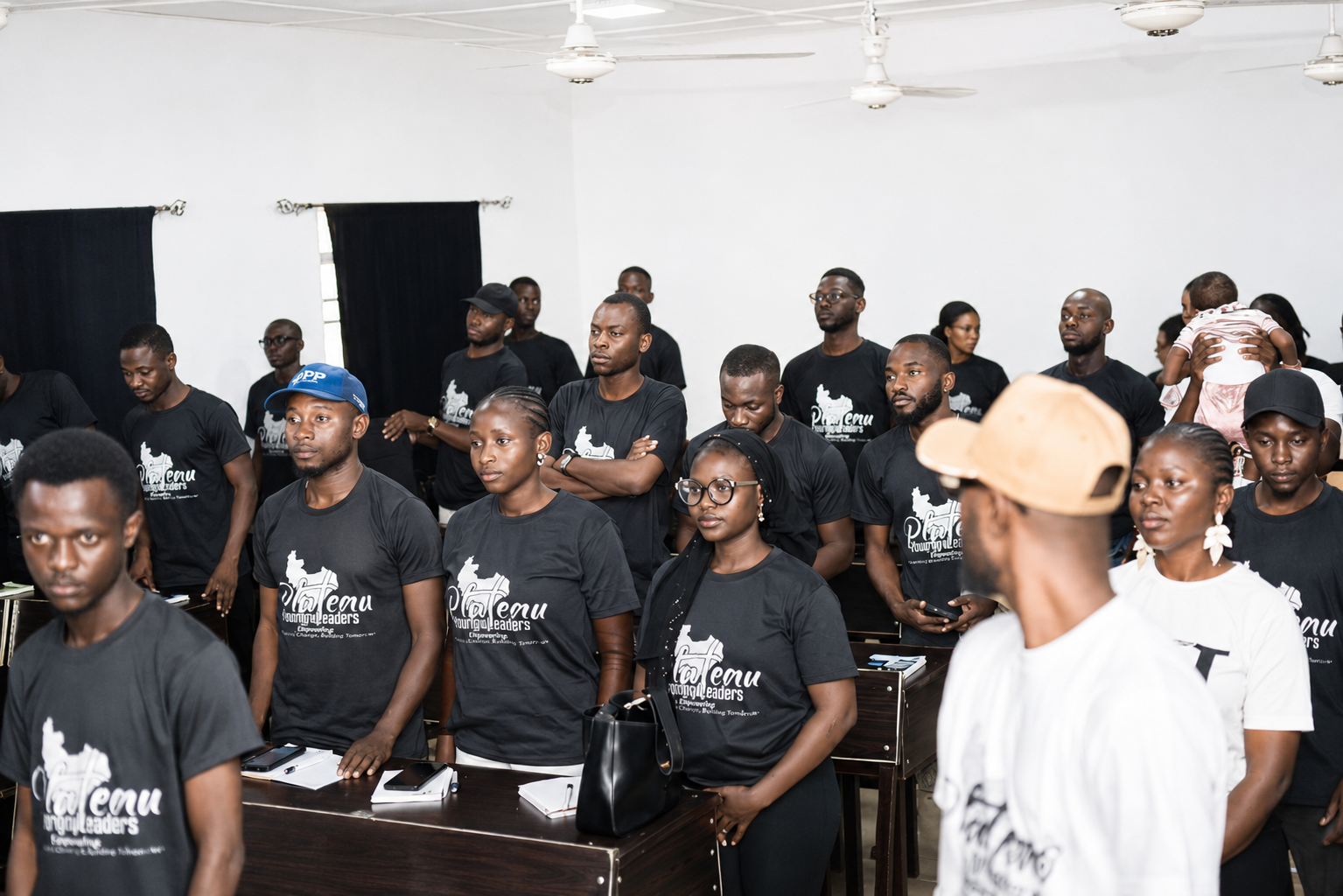
Thirty-four outstanding young leaders from across Plateau State have been inducted into the 2026 cohort of the Plateau Emerging Leaders Fellowship (PELF), following a highly competitive selection process that attracted more than 350 applications from the state’s 17 local government areas.
The onboarding ceremony, held at the EYN Technology Centre in Jos on Saturday, marked the official commencement of the fellowship’s second cohort and reinforced growing efforts to nurture a new generation of ethical, visionary, and solution-driven leaders capable of addressing the state’s development challenges.
Organised by the African Jewels Development Initiative (AJDI), the fellowship is designed to equip emerging leaders with practical skills in leadership, governance, public policy, advocacy, communication, and community development. The six-month programme combines physical and virtual learning sessions, mentorship, institutional visits, policy dialogues, and community-based projects.
Speaking during the event, Founder of the Plateau Emerging Leaders Fellowship and Executive Lead of AJDI, Ruth Ki Sunday, said the initiative was born out of her personal experience as a beneficiary of leadership development programmes.
She explained that participation in platforms such as the Legislative Mentorship Initiative and the Emerging Political Leaders Fellowship exposed her to the transformative value of mentorship and structured leadership training, inspiring her to create a similar opportunity for young people in Plateau State.
According to her, the fellowship was established to bridge the gap between young people already making meaningful contributions in their communities and the mentorship, exposure, and networks needed to amplify their impact.
“We have young people who are doing amazing things within their communities, but they need opportunities to learn from experienced leaders and strengthen their capacity to drive sustainable change,” she said.
Ruth disclosed that more than 350 applications were received for the 2026 cohort, with only 34 applicants making it through a rigorous selection process.
She urged the newly admitted fellows to see their selection as both an opportunity and a responsibility.
“For the fact that you are here, it means that you are worth being here. We saw the work you are already doing and believe this fellowship will amplify your voice and help you become a better leader,” she said.
She further noted that every fellow would be required to design and execute a community impact project before graduation, stressing that the programme’s objective extends beyond leadership training to producing practical problem-solvers.
“Our goal is not just to train people. We want young leaders who can identify challenges in their communities and implement practical solutions,” she added.
Delivering the keynote address titled “Leading Beyond Titles: The Responsibility of the New Generation,” physician, business developer, and leadership advocate, Mr. Majority Hassan Haruna, challenged participants to redefine leadership beyond positions and official designations.
According to him, true leadership begins with the willingness to accept responsibility and create solutions.
“Leadership begins the moment you decide to take responsibility. You do not have to wait for an appointment, election, or title before you start leading,” he said.
Haruna encouraged the fellows to cultivate competence, character, compassion, and courage, which he described as the four pillars of effective leadership.
He also called on government institutions and development partners to support and institutionalise leadership development initiatives, noting that programmes such as PELF provide a critical pipeline for nurturing future leaders and changemakers.
“Leadership development should not happen by accident. It should be intentional,” he said.
Earlier, Fellowship Coordinator Mr. Burnan Zitta reminded participants that their selection marked only the beginning of a demanding journey.
He stressed that successful completion of the fellowship would depend on discipline, commitment, punctuality, active participation, and successful implementation of community projects.
“This stage is not a guarantee that after your training you will graduate as fellows. It depends on your commitment and willingness to learn,” he said.
Zitta challenged the participants to move from passive citizenship to active leadership and influence.
“We need young people who will sit at decision-making tables, influence policies, and contribute to solving the leadership challenges facing Plateau State,” he said.
Representing the pioneer cohort, President of the PELF Class of 2025 and Acting President of the Fellowship Alumni Network, Paul Cletus Bello, described the fellowship as one of the most impactful youth leadership platforms currently available in Plateau State.
Reflecting on the experiences of the inaugural cohort, Bello said the fellowship had exposed participants to renowned leadership coaches, policy experts, development practitioners, and changemakers whose contributions had significantly shaped their growth.
“It has been an amazing journey of learning, leadership, and service. We have gained the skills, perspectives, and confidence required to contribute meaningfully to our communities,” he said.
He called on government agencies, donor organisations, development partners, private sector actors, and international institutions to support the growth of the initiative.
According to him, the fellowship has already begun yielding measurable results, with several alumni securing employment opportunities, leadership appointments, and development engagements following their participation in the programme.
Beyond the speeches, newly inducted fellows expressed optimism about the opportunities ahead.
For Azurfa Adi Ali, a learning facilitator, the fellowship offers a platform to acquire policy and leadership skills necessary for creating sustainable impact.
“I believe this fellowship will equip me with the knowledge and skills needed to create meaningful change, not only in Plateau State but across Nigeria,” she said.
Pamela Bentu Zungkat described the experience as inspiring and transformational, while Dorcas Ritmun Denshime emphasized that leadership is fundamentally about responsible citizenship and taking initiative wherever opportunities arise.
For Seljul Shallom Kamven, the fellowship provides a bridge between passion and action.
“I have always wanted to solve problems in my community, but I lacked the platform to implement solutions. I believe this fellowship is the opportunity I have been waiting for,” he said.
Similarly, Fittoka Pangshak Benue described his selection into the fellowship as a dream come true.
“It is more than a leadership programme. It is an opportunity to grow, learn, and become the kind of leader capable of making a difference,” he said.
As the second cohort embarks on its six-month leadership journey, fellows will engage with governance experts, policy advocates, communication professionals, and development practitioners while implementing projects aimed at addressing real challenges within their communities.
At a time when Plateau State continues to grapple with issues of youth unemployment, insecurity, governance deficits, and social cohesion, stakeholders believe the fellowship offers a strategic investment in the future by preparing young people to become effective leaders, problem-solvers, and agents of change.
The message that resonated throughout the onboarding ceremony is that leadership is not a title to be acquired but a responsibility to be embraced.