Connect with us

Politics

Obi, Labour Party Leadership Trade Blame Over 2027, Alleged Blackmail

Published

on

By Anifowoshe Oladipupo

Tensions have deepened between the Labour Party (LP), and its 2023 presidential candidate, Mr. Peter Obi, as fresh accusations and counterclaims emerge ahead of the 2027 general election.

In a statement on Tuesday, the party’s National Secretary, Umar Farouk, accused Obi of launching a sustained media campaign to blackmail the National Chairman, Julius Abure, and other senior officials of the party.

The latest rift followed Obi’s appearance on Arise Television, during which he alleged that the ruling All Progressives Congress (APC), had infiltrated the Labour Party in a bid to destabilize its leadership.

Reacting, the party leadership dismissed Obi’s claims as baseless and challenged him to provide concrete evidence. It accused him of failing to take responsibility for the internal crisis rocking the party.

“Our attention was drawn to an interview granted by Mr. Obi in which he alleged that the APC-led Federal Government has infiltrated the Labour Party. But when asked to present evidence, he offered nothing substantial,” Farouk stated.

“Unfortunately, Mr. Obi continues to mislead Nigerians about the root causes of the party’s internal crisis, even though such challenges are not uncommon in political parties,” he added.

Farouk went further to attribute the party’s troubles to Obi and Governor Alex Otti of Abia State, who he claimed remains suspended for anti-party activities.

“When good leaders fall short, they should accept responsibility. Mr. Obi failed to provide effective leadership for the party and should stop shifting blame,” he said.

Despite Obi’s criticisms during the interview, Farouk pointed out that his reference to Abure as the party’s national chairman signaled an implicit acceptance of the current leadership.

“As far as the party is concerned, the matter is settled and Julius Abure remains the National Chairman of the Labour Party. That fact is not in dispute,” Farouk maintained.

He called on Obi and other aggrieved members to accept the reality of the current leadership and work towards the unity and stability of the party.

“We urge Mr. Peter Obi and others to move beyond personal grievances and join hands to rebuild and strengthen the Labour Party ahead of future elections,” Farouk concluded.

Continue Reading
Click to comment

Leave a Reply

Your email address will not be published. Required fields are marked *

Abuja Reports

2027: Aduda, Kingibe, Amanda Among 20 FCT Senate Candidates

Published

on


By Patrick Idowu

Former Senator Philip Tanimu Aduda, incumbent Senator Ireti Heebah Kingibe and Nigeria Democratic Congress (NDC) candidate Austenpeters-Pam Iyabode Amanda are among 20 candidates listed by the Independent National Electoral Commission (INEC) for the Federal Capital Territory senatorial election scheduled for January 16, 2027.

The contest brings together politicians with different political backgrounds and ambitions, including a former senator seeking a return to the National Assembly, an incumbent defending her seat and candidates hoping to challenge the established political figures in the territory.

INEC’s final list identifies Aduda as the All Progressives Congress (APC) candidate, Kingibe as the African Democratic Congress (ADC) candidate and Amanda as the NDC candidate. The Peoples Democratic Party (PDP) is represented by Angulu Bako, while 16 other candidates are also listed for the FCT’s sole senatorial seat.

For Aduda, the election presents an opportunity to return to the Senate after losing his seat in 2023. He represented the FCT in the upper chamber from 2011 to 2023, having previously served in the House of Representatives between 2003 and 2011.

During his time in the Senate, Aduda occupied leadership positions, including Senate Minority Whip and Minority Leader, making him one of the familiar political figures in the territory.

His defeat in the 2023 election marked a significant change in the FCT’s senatorial representation. Running on the platform of the Peoples Democratic Party at the time, he polled 100,544 votes against Kingibe’s 202,175 votes, according to the declared results.

Aduda is now contesting under the APC, a party whose control of the federal government and political structure in the FCT could feature prominently in the campaign.

His legislative experience, political networks and familiarity with the six area councils are likely to form important parts of his campaign pitch. However, he will have to convince voters that his previous experience offers a stronger proposition than the incumbent’s record and the alternatives presented by other candidates.

For Kingibe, the 2027 election will be an opportunity to secure another term after her breakthrough victory in 2023, when she defeated Aduda to become the first woman elected to represent the FCT in the Senate.

Her re-election bid will be assessed partly against her legislative record and her ability to sustain the support that brought her to the National Assembly.

However, her relationship with FCT Minister Nyesom Wike has remained a major feature of political discussions surrounding her representation. Their disagreements over governance and development in the territory have attracted public attention, with Wike openly questioning her chances of returning to the Senate.

In March 2026, the minister declared that Kingibe would not win re-election, arguing that she had no projects to show for her time in office. Kingibe, however, has maintained her position in the political disagreements surrounding the FCT administration.

Her decision to contest under the ADC, rather than the Labour Party platform on which she won in 2023, also introduces a new dimension to her re-election campaign.

Amanda’s candidacy on the NDC platform adds another prominent contender to the political conversation. Her participation means the election will not simply be a repeat of the 2023 contest between Aduda and Kingibe.

However, the NDC candidate will face the challenge of building sufficient grassroots support across the territory to compete with politicians who have previously held elected office and established political networks.

Her campaign will need to communicate clear legislative priorities and demonstrate how her proposed representation would address the concerns of residents across the FCT.

The presence of other candidates, particularly the PDP’s Angulu Bako, also means that votes will be distributed across a wider field than the three politicians attracting much of the public attention.

Another factor likely to shape the contest is the political influence of Wike and the APC-led administration in the territory. Aduda’s candidacy places him within the ruling party’s political structure, while Kingibe’s position in the ADC puts her on a different political platform from the minister.

Nevertheless, political alliances and endorsements do not automatically translate into electoral support. The extent to which party structures, political relationships and campaign mobilisation influence the outcome will become clearer as electioneering progresses.

The election will be decided by voters across the FCT’s six area councils: Abuja Municipal Area Council (AMAC), Bwari, Gwagwalada, Kuje, Abaji and Kwali.

Issues such as security, infrastructure, transportation, access to basic amenities, political inclusion and the development needs of communities outside Abuja’s central districts are expected to feature in campaign discussions.

For Aduda, the task is to persuade voters to give him another opportunity after his 2023 defeat. Kingibe must defend her record and demonstrate why she deserves a second term, while Amanda and the other candidates will be seeking to convince voters that they offer credible alternatives.

Although Aduda, Kingibe and Amanda are among the prominent names in the contest, the official list of 20 candidates makes clear that the race is broader than a three-person battle.

Ultimately, the outcome will depend on the candidates’ campaigns, their ability to mobilise support across the six area councils and the choices made by FCT voters on election day.

Continue Reading

News

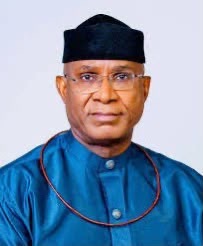
Court Sack Omo-Agege as NDC Senatorial candidate

Published

on


By Patrick Idowu

The Federal High Court sitting in Warri, Delta State, on Tuesday nullified the nomination of former Deputy President of the Senate, Senator Ovie Omo-Agege, as the Nigeria Democratic Congress (NDC) candidate for Delta Central Senatorial District in the 2027 general elections, citing non-compliance with the provisions of the Electoral Act.

The court, presided over by Justice Hyeladzira Ajiya Nganjiwa, ordered the Independent National Electoral Commission (INEC) to remove Omo-Agege’s name from its list of candidates for the election and restrained the former Deputy Senate President from parading himself as the NDC senatorial candidate

In a further setback for the NDC, the court held that the statutory window for conducting fresh primaries to nominate another candidate had elapsed, noting that the Electoral Act prescribed a timeline of 180 days before the general elections

The judgment followed a suit instituted by Prof. Alexander Osondu Akpodiete, marked FHC/WR/CS/120/2026, challenging the validity of Omo-Agege’s nomination on grounds bordering on his resignation from the All Progressives Congress (APC), membership of the NDC and eligibility to participate in the party’s senatorial primary.

Delivering judgment, Justice Nganjiwa dismissed all five preliminary objections raised by Omo-Agege, the NDC and INEC challenging the competence of the suit, before proceeding to determine the substantive issues raised by the plaintiff.

The court held that the NDC failed to comply with the mandatory provisions of the Electoral Act regarding the submission of its membership register to INEC ahead of its primary election.

Justice Nganjiwa found that Omo-Agege’s name was not contained in the NDC membership register submitted to INEC at least 21 days before the conduct of the party’s primary election.

The judge further held that the NDC failed to provide credible evidence establishing that its membership register was subsequently updated and submitted to INEC within the statutory period preceding the primary.

Relying on INEC’s revised electoral timetable, the court also noted that Omo-Agege participated in the APC senatorial primary held on May 18, 2026, a development which, according to the court, established that he was still a member of the APC at the material time.

Justice Nganjiwa maintained that only persons whose names appeared in a political party’s membership register, in accordance with the requirements of the Electoral Act, were eligible to participate in its primary elections.

On the admissibility of a previously withdrawn affidavit, the court held that a party was entitled to withdraw an affidavit already filed in a proceeding, adding that once withdrawn, such an affidavit ceased to form part of the court’s records and could not be relied upon in determining the matter.

Continue Reading

News

Tinubu Appoints Former Lagos Commissioner to NASC

Published

on

By Edisemi Andrew

President Bola Ahmed Tinubu has appointed former Lagos State Commissioner for Youth and Social Development, Agboola Lukman Dabiri, as the South-West representative on the National Assembly Service Commission (NASC).

The appointment, announced on Friday, November 20, fills the vacancy created by the resignation of Taiwo Olukemi Oluwa on March 30, 2026.

Oluwa resigned to pursue her political ambition in the 2027 general elections, seeking election to represent the Irewole/Isokan Federal Constituency of Osun State in the House of Representatives.

The appointment was disclosed in a statement issued by the President’s Special Adviser on Information and Strategy, Bayo Onanuga.

Before his appointment, Dabiri served as Lagos State Commissioner for Youth and Social Development. He also previously held the position of Mandate Secretary for Economic Planning, Revenue Generation and Public-Private Partnership in the Federal Capital Territory.

According to the Presidency, the appointment is intended to promote effective representation and inclusivity in the National Assembly Service Commission.

The NASC is responsible for the appointment, promotion and disciplinary control of staff of the National Assembly Service, making it a key institution in the administrative structure supporting the legislature.

Dabiri’s appointment restores representation for the South-West in the commission following Oluwa’s departure.

His new role places him within the body responsible for overseeing personnel and administrative matters relating to the National Assembly workforce.

Continue Reading

Trending

taraftarium24seo ajansıseo ajansımarsbahisgrandpashabet girişgrandpashabet güncel girişgrandpashabetgrandpashabet girişgrandpashabettaraftarium24dizipalgiftcardmall/mygiftjustin tvGrandpashabetGrandpashabetcasibomGrandpashabetGrandpashabetmarsbahisultrabettaraftarium24taraftarium24rojadirectajustin tv1winbetgitromabetromabetgameofbetradissonbetgrandpashabetgrandpashabetbetplaycasinomilyoncasinoroyalcasibombetsalvadorcasinolevantcasinolevantHoliganbetcasinolevantcasibomjojobet güncel girişmobilbahisvdcasinobets10amgbahiscasinowoncasinowonpalacebetbetplaybetplayteosbetbetgaranticasinolevantcasinolevantcasibomcasibomCasibomimajbet girişpusulabetpusulabet girişmarsbahismarsbahisholiganbetholiganbet girişmercurecasinograndpashabetpalacebetcasinolevantnesinecasino xwbahis xbetgaranti xgrandpashabet girişbahis sitelerijojobetjojobetjojobetjojobetjojobetbahiscasinobetsinjojobet