By Huldah Shado
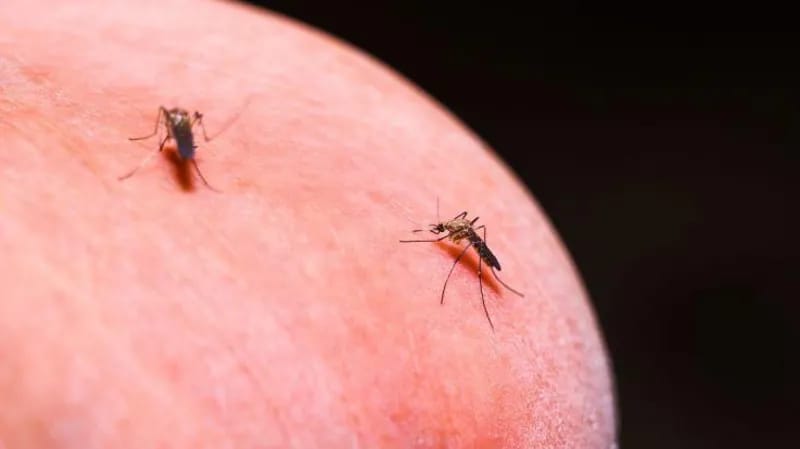
Mosquitoes should be given malaria drugs to eliminate their infection to prevent them from spreading the disease, say US researchers.
Malaria parasites, which kill almost 600,000 people every year, mostly kids, are spread by female mosquitoes when they bite and drink blood.
Currently most efforts try to kill mosquitoes with insecticides instead of curing them of the malaria parasites they carry.
A Harvard University team has discovered a combination of two drugs that can effectively cure mosquitoes of malaria when absorbed through their legs.
The long-term goal is to treat bed nets with this drug combination, potentially preventing mosquitoes from carrying the disease.
Sleeping under a bed net has been a highly effective way to prevent malaria, as the mosquitoes that spread the disease are most active at night.
Bed nets serve as a physical barrier and are also treated with insecticides that kill mosquitoes that come into contact with them.
However, in many countries, mosquitoes have developed resistance to these insecticides, reducing their effectiveness. Vaccines are also recommended for children living in high-risk areas to provide additional protection against malaria.
Dr. Alexandra Probst from Harvard stated that previously, the approach was to kill the mosquitoes rather than targeting the parasites within them but this method is no longer sufficient, hence the need for new strategies like treating mosquitoes with drugs to eliminate the malaria parasites.
The researchers studied malaria’s DNA to identify weak spot during its mosquito stage. They screened many potential drugs, narrowing it down to 22 promising ones.
These were then tested by feeding female mosquitoes a blood meal contaminated with malaria, allowing the researchers to see which drugs could effectively target the parasites within the mosquitoes.
The scientists found two very effective drugs that completely eliminated the parasites. They tested these drugs on materials similar to bed nets.
Dr. Probst explained that even if a mosquito survives contact with the treated net, the parasites inside it would be killed, preventing it from spreading malaria.
Dr. Probst notes that the malaria parasite is less likely to develop resistance to the drugs because there are billions of parasites in each infected person, but only a few in each mosquito.
The researchers claim that the drugs’ effect on treated nets can last up to a year, making it a potentially affordable and long-lasting alternative to insecticides.
Although the approach has shown promise in lab settings, further studies are planned in Ethiopia to test its effectiveness in real-world conditions which may take six years.
The ultimate goal is to create bed nets treated with both anti-malarial drugs and insecticides, providing a dual-layered defense against malaria.
This could ensure that if one method fails, the other can still protect people from the disease.