Connect with us

Abuja Reports

PCNGI Boss Inspects Explosion Scene, Calls for Stronger Safety Measures

Published

on

By Ade Iyamoye

The Chief Executive and Program Director of the Presidential CNG Initiative, Engineer Michael Oluwagbemi, has called for improved road safety measures following the tragic explosion at Karu Bridge in Abuja.

This he said just as an eyewitness gave an account, attributing the incident to the noncompliance of the truck driver with the rules of time allotted for plying the highway by heavy duty trucks.

During his inspection of the accident scene alongside officials from the Nigeria Midstream Downstream Regulatory Authority and the Standards Organization of Nigeria, Oluwagbemi extended his condolences to the victims and their families.

He stressed the need for stricter monitoring of heavy-duty vehicles, particularly their brake systems, to prevent similar incidents.

He also advocated for enhanced driver licensing regulations that include safety training and emergency response protocols.

“This is not a CNG problem but an accident, and this is the impact. The government must take urgent steps to improve traffic management and ensure designated routes for heavy-duty vehicles to enhance road safety,” he stated.

The visit underscores growing concerns about road safety and the need for stricter enforcement of vehicle maintenance and traffic regulations to prevent future tragedies.

It is worthy to note that the Federal Capital Territory Administration (FCTA) has implemented regulations restricting the movement of heavy-duty vehicles during peak hours in Abuja.

According to the FCT road traffic laws, articulated vehicles are prohibited from operating within the city from 5:00 AM to 10:00 AM and from 4:00 PM to 9:00 PM.

In 2010, the FCTA announced that the movement of heavy-duty trucks in the territory would be restricted to between 8:00 PM and 5:00 AM. This indicates that restrictions on heavy-duty vehicles during peak hours have been in place since at least 2010.

Additionally, recent legislative efforts at the federal level aim to further regulate the movement of heavy-duty vehicles.

In February 2025, the Nigerian Senate introduced a bill seeking to restrict the operations of heavy-duty vehicles to between 12:00 midnight and 6:00 AM, except in emergencies.

The proposed penalties for violations include fines of ₦500,000 for individuals, ₦5,000,000 for corporate offenders, and vehicle impoundment for up to 30 days.

On his part, an eyewitness, Bala Abubakar, alleged that the Dangote truck driver, aware that he was violating traffic restrictions by operating on the road at that time, attempted to evade arrest by the VIO.

In his desperate bid to escape, he lost control, crashing into several vehicles, which triggered the explosion.

“The explosion had nothing to do with Compressed Natural Gas (CNG). The driver was trying to avoid being arrested, but the VIO officers should have considered the potential loss of lives and property before pursuing him so aggressively,” Abubakar stated.

Another eyewitness, a security personnel who requested anonymity, also blamed the VIO for their handling of the situation, describing their approach as unprofessional.

“This was avoidable. The VIO officers caused this explosion. They need to be more responsible in carrying out their duties,” he said.

He further urged the VIO and the Federal Road Safety Corps (FRSC) to focus more on managing traffic along the Karu, Nyanya, and Mararaba roads to ensure free movement and prevent similar tragedies in the future.

The incident has sparked widespread debate over the enforcement of traffic regulations and the conduct of law enforcement officers in apprehending errant drivers, especially in high-traffic areas.

Continue Reading
Click to comment

Leave a Reply

Your email address will not be published. Required fields are marked *

Abuja Reports

Atoyebi Adewumi Wins 4th National Essay Competition, Beats 2,000 Contestants

Published

on

By

By Samson Adeyanju

Atoyebi Adewumi has emerged winner of the fourth edition of the National Essay Competition, beating more than 2,000 contestants in an intellectual contest aimed at promoting academic excellence, critical thinking and creative writing among young Nigerians.

The competition, which focused on the relevance of taxation to national development, challenged participants to examine the role of tax revenue in financing public services, stimulating economic growth and strengthening the relationship between government and citizens.

The initiative provided a platform for young Nigerians to demonstrate their writing skills, articulate informed perspectives on national issues and contribute ideas towards building a more responsible and progressive society.

Speaking after being declared winner, an elated Adewumi expressed gratitude to the convener, Foluso Sylvanus Ojo, and the organising team for providing young Nigerians with an opportunity to showcase their intellectual abilities.

“I am so glad, very, very glad, to have this privilege of emerging as the winner. I am grateful to the convener and the entire team, as well as everyone who supported this vision,” Adewumi said.

In his remarks, Ojo expressed concern over the tendency to criticise the attitudes and lifestyles of younger generations without providing adequate opportunities to nurture their talents and channel their energies towards productive pursuits.

He called on the government, corporate organisations and nongovernmental organisations to invest more in educational initiatives that promote intellectual excellence, creativity and responsible citizenship.

According to him, sustained investment in academic competitions and youth development programmes would encourage discipline, innovation and a stronger commitment to national development.

Drawing a comparison with the substantial cash prizes awarded in some reality television competitions in Nigeria, Ojo argued that students and intellectually gifted young Nigerians deserved greater recognition, financial support and encouragement.

“I believe the government should support initiatives like this because individuals need supportive hands, especially from the government. When they receive such support, they become more confident and motivated to continue their good work,” he said.

Ojo maintained that society could not continue to complain about the attitudes and lifestyles of young people without deliberately investing in programmes that encourage positive values and productive engagement.

The fourth edition of the competition also underscored the importance of tax awareness among young Nigerians, highlighting how effective taxation, transparency and accountable governance could contribute to improved infrastructure, education, healthcare and other essential public services.

Beyond celebrating the winner, the competition reinforced the need to identify, encourage and empower emerging intellectual talents capable of contributing meaningfully to Nigeria’s development.

Winner of the 5,000,000 naira

Winner of 3,000,000 naira

Winner of 2,000,000
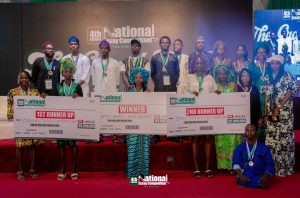
All the participants 

Continue Reading

Abuja Reports

20 Finalists Begin Final Stage of National Essay Competition

Published

on

By

By Samson Adeyanju

Twenty finalists from across Nigeria have begun the final stage of the fourth edition of the National Essay Competition in Abuja, following an orientation session designed to prepare them for the decisive examination.

The finalists arrived in the Federal Capital Territory for a four-day, all-expenses-paid programme featuring the essay examination, institutional tours and opportunities for learning and networking.

The competition, the brainchild of Mr Foluso Ojo, is sponsored by the Nigeria Revenue Service (NRS).

Ahead of the examination, the finalists participated in an orientation session led by Professor Omotosho Borisade of Ekiti State University, who serves as the competition’s umpire.

The session familiarised participants with the competition’s rules and regulations, examination guidelines and assessment criteria, helping them understand the requirements of the final stage.

The essay examination is scheduled to begin today at 9 a.m., after which the finalists are expected to embark on institutional tours around Abuja.

The programme is designed to extend beyond the contest itself, exposing the finalists to new learning opportunities, professional connections and experiences in the nation’s capital.

The competition brings together young Nigerians to demonstrate their writing ability, knowledge, creativity and critical-thinking skills as they compete for the top honours.

With the finalists prepared for the examination, attention now turns to their performance and the eventual emergence of the competition’s champion.


Continue Reading

Abuja Reports

Caritas Nigeria Urges Ecological Conversion, Climate Action

Published

on

By

By Samson Adeyanju

Caritas Nigeria has called on Nigerians to embrace what Pope Francis describes as “ecological conversion,” urging citizens, institutions and governments to move beyond environmental rhetoric and take concrete action against climate change and environmental degradation.

The call was made during the commemoration of World Environment Day 2026 at the Catholic Secretariat of Nigeria (CSN) Training Hall, Abuja, under the theme: “Inspired by Nature. For Climate. For Our Future.”

Delivering an address on behalf of the Catholic Secretariat of Nigeria, the Deputy Secretary, Rev. Fr. Augustine Okochi, described care for the environment as a moral, spiritual and ethical responsibility rooted in Christian faith.

“Our concern for the environment is not a passing trend. It is part of our moral duty, our Christian witness, and our responsibility to future generations,” he said.

Fr. Okochi noted that climate change is already affecting communities through flooding, land degradation, water pollution, rising temperatures and declining livelihoods, with the poor, women, children and displaced persons bearing the greatest burden.

He commended Caritas Nigeria’s efforts in environmental awareness, tree planting, climate-smart agriculture and support for vulnerable communities, while urging families, schools, parishes and institutions to cultivate a culture of environmental stewardship.

Speaking at the event, Caritas Nigeria’s Environmental Focus President, Dr. Pascal Onu, stressed the importance of educating young people on environmental protection through debate and quiz competitions.

“We believe it is important to catch them young. When we imbibe the right environmental culture in our children, it goes a long way in protecting the environment,” he said.

Dr. Onu identified inadequate infrastructure, poor waste management systems and limited funding as major obstacles to environmental sustainability despite increasing public awareness of climate issues.

Also speaking, Director of the Department of Climate Change at the Federal Ministry of Environment, Dr. Iniobong Abiola-Awe, reaffirmed Nigeria’s commitment to climate action through initiatives such as the National Adaptation Plan, Nationally Determined Contributions (NDCs), the Just Transition Action Plan and the National Clean Cooking Policy.

She emphasized the role of young people in advancing climate solutions through programmes such as the Eco-Schools Initiative and the Youth Climate Innovation Hub.

In a goodwill message, the Abuja Environmental Protection Board (AEPB), represented by Chief Environmental Health Officer Omenta Rachael Chinenye, urged Nigerians to draw inspiration from nature in addressing environmental challenges and commended the active participation of students in climate debates.

Students at the event said the programme deepened their understanding of environmental protection, forest conservation and sustainable living, pledging to promote environmental responsibility in their schools and communities.

The event brought together religious leaders, government officials, environmental experts, students and development partners who renewed their commitment to building a cleaner, greener and more climate-resilient Nigeria.

Continue Reading

Trending