Connect with us

Education

Nigeria At 64: Education In Ruins—ASUU, SSANU

Published

on

As Nigeria celebrates its 64th year of independence today, university employees have aired their thoughts on the health of the country’s education system.

Education has always been a cornerstone of Nigeria’s sociopolitical development. Schools and colleges were important breeding grounds for political leaders, activists, and intellectuals who advocated for the country’s self-government in the years leading up to independence in 1960.

However, throughout time, the education sector, particularly tertiary institutions, has been significantly underfunded. Workers in the industry have given an ultimatum to the Federal Government, threatening to go on indefinite strike as a result of this continuous negligence.

Prof. Emmanuel Osodeke, National President of the Academic Staff Union of Universities, voiced significant worry in an interview with our correspondent about the situation of education in Nigeria, characterizing it as “complete ruin.” He said that, given the existing status of the sector, there was little to rejoice on this Independence Day.

He said, “Nigeria remains at a dismal ranking of 64, which reflects the dire state of education in the country. It is evident to everyone that our education system is in ruins. Whether it’s in terms of infrastructure or providing a conducive learning environment, everything has deteriorated.

“In the 1960s and 1970s, Nigeria had a universal education system that attracted lecturers from all over the world. Today, the situation is drastically different. We now admit students who did not even meet the minimum standards in exams like JAMB, with some scoring as low as 35. There is truly nothing to celebrate in the current state of our education system.”

Also, the national president, Senior Staff Association of Nigerian Universities, Mr Mohammed Ibrahim added,  “We are seeing an increase in the number of universities and polytechnics being established, but is this growth matched by the quality of teaching, learning, and infrastructure? Do we have the required number of qualified staff to manage these institutions? We may boast of having many institutions, but the government is falling short in funding tertiary education and public schools.

“There is a lack of equipment, inadequate staffing, and insufficient training, which is unacceptable. Both students and staff are not receiving the quality education and support they deserve.

“No nation can develop under these conditions. Education is the bedrock of society. If we prioritize quality education, we will reduce spending in areas like healthcare and security. People will be more engaged, self-sufficient, and productive, especially if the education they receive is relevant to their needs. Quality education empowers individuals to contribute meaningfully to society rather than relying on the government for everything.”

Despite the hurdles, Dr Gever Celestine, a lecturer at the University of Nigeria’s Mass Communication Department, believes Nigeria is making progress but needs more government investment in infrastructure and greater teacher welfare to keep up the momentum.

He added, “The education sector in Nigeria has made significant strides, despite some challenges. It may seem ironic to claim that progress isn’t being made when Nigerian-trained doctors, engineers, IT experts, and other professionals are thriving in developed countries. The Nigerian educational system is successfully producing graduates who are highly valued in the global workforce. In fact, it is rare to visit any country without encountering Nigerian-trained professionals contributing to their economies.”

Gever, noted, “Back home, the Nigerian educational system has effectively trained individuals who have become either successful business owners or valuable employees in various organisations.”

“Therefore, I assess that we are indeed making progress, though there remain areas that require intervention. The government should increase its investment in infrastructure and enhance the welfare of teachers to ensure they can continue to deliver their best.”

Another lecturer from Adeleke University in Osun, Dr Oladipo Kolawole, advised that the Nigerian government prioritise education financing in order to satisfy UNESCO’s recommendation of allocating at least 26% of the national budget to education.

He regretted that financing was currently below 10%, resulting in insufficient resources, bad infrastructure, and low teacher wages.

Kolawole said, “As Nigeria approaches its 64th anniversary, there is an urgent need for improvement in the education sector. The government must prioritize education funding, aiming to meet UNESCO’s recommendation of at least 26 per cent of the national budget, as current funding is often below 10 per cent. This underfunding has resulted in inadequate resources, poor infrastructure, and low teacher salaries

“With over 140 million active mobile phone lines in Nigeria, leveraging technology can enhance educational delivery, especially in remote areas. The government should invest in e-learning platforms and teacher training in digital tools. Additionally, significant investments in teacher training programs are essential to equip educators with modern skills.”

He maintained that a comprehensive review of the education curriculum was needed to align it with job market demands and technological advancements, incorporating subjects like entrepreneurship and digital skills.

“Expanding vocational training centers is also crucial for equipping students with practical skills to reduce unemployment rates among graduates.

“Revitalising the education sector is essential for Nigeria’s national development and prosperity. By increasing funding, embracing technology, enhancing teacher quality, reforming curricula, and involving stakeholders in policy development, Nigeria can build a more robust education system that prepares future generations for success,” he said.

Continue Reading
Click to comment

Leave a Reply

Your email address will not be published. Required fields are marked *

Abuja Reports

Atoyebi Adewumi Wins 4th National Essay Competition, Beats 2,000 Contestants

Published

on

By

By Samson Adeyanju

Atoyebi Adewumi has emerged winner of the fourth edition of the National Essay Competition, beating more than 2,000 contestants in an intellectual contest aimed at promoting academic excellence, critical thinking and creative writing among young Nigerians.

The competition, which focused on the relevance of taxation to national development, challenged participants to examine the role of tax revenue in financing public services, stimulating economic growth and strengthening the relationship between government and citizens.

The initiative provided a platform for young Nigerians to demonstrate their writing skills, articulate informed perspectives on national issues and contribute ideas towards building a more responsible and progressive society.

Speaking after being declared winner, an elated Adewumi expressed gratitude to the convener, Foluso Sylvanus Ojo, and the organising team for providing young Nigerians with an opportunity to showcase their intellectual abilities.

“I am so glad, very, very glad, to have this privilege of emerging as the winner. I am grateful to the convener and the entire team, as well as everyone who supported this vision,” Adewumi said.

In his remarks, Ojo expressed concern over the tendency to criticise the attitudes and lifestyles of younger generations without providing adequate opportunities to nurture their talents and channel their energies towards productive pursuits.

He called on the government, corporate organisations and nongovernmental organisations to invest more in educational initiatives that promote intellectual excellence, creativity and responsible citizenship.

According to him, sustained investment in academic competitions and youth development programmes would encourage discipline, innovation and a stronger commitment to national development.

Drawing a comparison with the substantial cash prizes awarded in some reality television competitions in Nigeria, Ojo argued that students and intellectually gifted young Nigerians deserved greater recognition, financial support and encouragement.

“I believe the government should support initiatives like this because individuals need supportive hands, especially from the government. When they receive such support, they become more confident and motivated to continue their good work,” he said.

Ojo maintained that society could not continue to complain about the attitudes and lifestyles of young people without deliberately investing in programmes that encourage positive values and productive engagement.

The fourth edition of the competition also underscored the importance of tax awareness among young Nigerians, highlighting how effective taxation, transparency and accountable governance could contribute to improved infrastructure, education, healthcare and other essential public services.

Beyond celebrating the winner, the competition reinforced the need to identify, encourage and empower emerging intellectual talents capable of contributing meaningfully to Nigeria’s development.

Winner of the 5,000,000 naira

Winner of 3,000,000 naira

Winner of 2,000,000
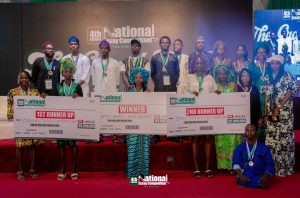
All the participants 

Continue Reading

Abuja Reports

20 Finalists Begin Final Stage of National Essay Competition

Published

on

By

By Samson Adeyanju

Twenty finalists from across Nigeria have begun the final stage of the fourth edition of the National Essay Competition in Abuja, following an orientation session designed to prepare them for the decisive examination.

The finalists arrived in the Federal Capital Territory for a four-day, all-expenses-paid programme featuring the essay examination, institutional tours and opportunities for learning and networking.

The competition, the brainchild of Mr Foluso Ojo, is sponsored by the Nigeria Revenue Service (NRS).

Ahead of the examination, the finalists participated in an orientation session led by Professor Omotosho Borisade of Ekiti State University, who serves as the competition’s umpire.

The session familiarised participants with the competition’s rules and regulations, examination guidelines and assessment criteria, helping them understand the requirements of the final stage.

The essay examination is scheduled to begin today at 9 a.m., after which the finalists are expected to embark on institutional tours around Abuja.

The programme is designed to extend beyond the contest itself, exposing the finalists to new learning opportunities, professional connections and experiences in the nation’s capital.

The competition brings together young Nigerians to demonstrate their writing ability, knowledge, creativity and critical-thinking skills as they compete for the top honours.

With the finalists prepared for the examination, attention now turns to their performance and the eventual emergence of the competition’s champion.


Continue Reading

Education

Oyelami Named Acting CEO of National Mathematical Centre

Published

on

By

By Omoniyi David

The Federal Government has appointed Professor Oyelami as Acting Chief Executive Officer of the National Mathematical Centre with immediate effect.

The appointment was announced in a statement by the centre’s Controller of Information and Public Relations, Onyekachi Njoku. He said the decision followed the elevation of the former CEO, Promise Mebine, as Vice-Chancellor of the Federal University Otuoke.

Njoku disclosed that the approval was conveyed in a letter signed by Rakiya Ilyasu, Director of University Education at the Federal Ministry of Education.

Professor Oyelami, a mathematician who joined the centre over two decades ago from Abubakar Tafawa Balewa University, previously served as Coordinator of the Mathematics and Theoretical Physics programmes and as Deputy Director/Academic Planning Coordinator.

An alumnus of the University of Jos and Abubakar Tafawa Balewa University, he holds a Second-Class Upper degree, MSc and PhD in Mathematics and has published widely in local and international journals.

The centre said his appointment would strengthen its mandate to promote research, innovation and capacity building in mathematical sciences.

Continue Reading

Trending