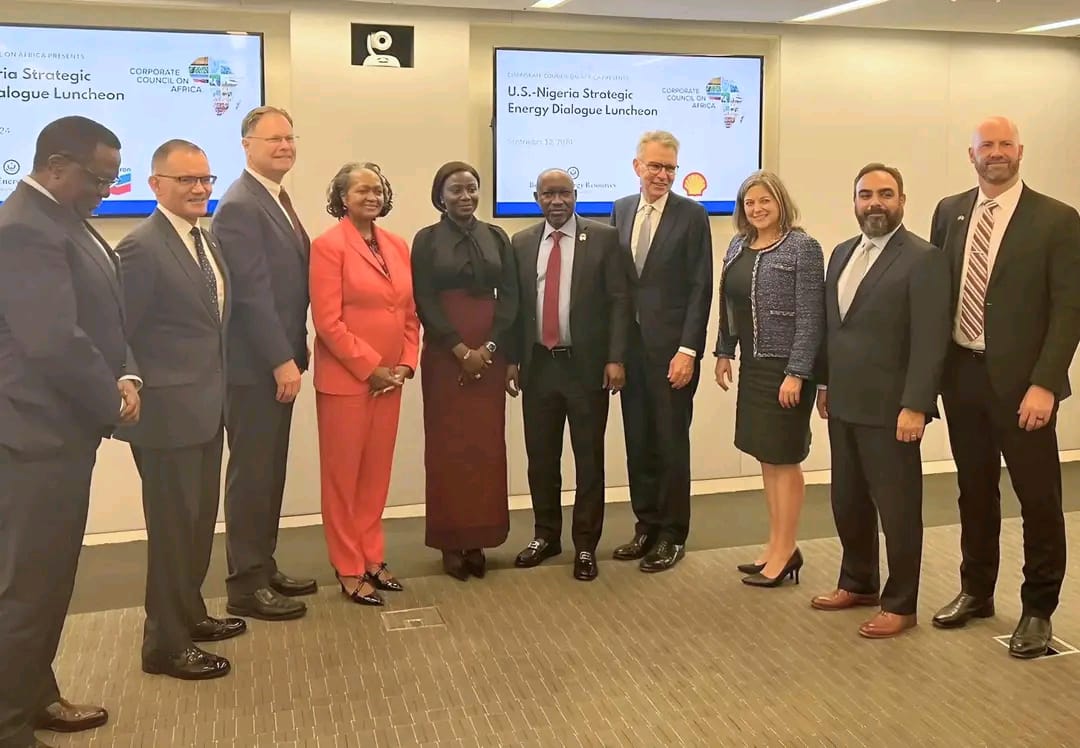
The $550 million upstream gas development project between NNPC Ltd. and TotalEnergies for the Ubeta field has officially commenced, according to an announcement made by the Presidency on Tuesday. This significant milestone in Nigeria’s energy sector was disclosed by the Special Adviser to the President on Energy, Olu Verheijen, during the inaugural US-Nigeria Strategic Energy Dialogue hosted by the U.S. State Department in Washington, D.C.
The Final Investment Decision (FID) for the Ubeta Field Development Project was signed in Abuja in June 2024, marking a major step forward in Nigeria’s quest to enhance its gas production capabilities. The Ubeta field, located northwest of Port Harcourt in Rivers State, was discovered in 1964 but has remained largely untapped until now. Once fully operational, the project is expected to produce 350 million standard cubic feet of gas per day (mmscfd), significantly bolstering Nigeria’s domestic gas supply.
During a luncheon organized as part of the energy dialogue, Verheijen emphasized the importance of the Ubeta project in the broader context of Nigeria’s energy reforms under President Bola Ahmed Tinubu. Since taking office in June 2023, Tinubu’s administration has introduced several transformative reforms aimed at improving energy security, attracting foreign investments, and fostering deeper collaboration with international partners, particularly the United States.
Verheijen noted that these reforms have already started to improve the viability of the gas-to-power value chain in Nigeria, helping to streamline operations and boost investor confidence. Among the key reforms are initiatives aimed at improving cash flows in electricity distribution through the introduction of smart metering systems, and clearing outstanding debts owed to investors in the power sector.
In addition, these reforms have focused on reducing carbon emissions from gas production, aligning Nigeria’s energy strategy with global sustainability goals. Verheijen highlighted that President Tinubu has issued five new executive orders designed to provide fiscal incentives for energy investments, reduce costs, and expedite the finalization of contracts related to gas infrastructure projects.
These directives are expected to unlock up to $2.5 billion in new oil and gas investments, further positioning Nigeria as a critical player in the global energy market. “The reforms are already unlocking significant opportunities for the country and sending a clear message to investors that Nigeria is ready for business,” Verheijen stated.
In response to Nigeria’s advancements, U.S. Assistant Secretary of the State Department’s Bureau of Energy Resources, Geoffrey Pyatt, commended the timing and significance of the US-Nigeria Strategic Energy Dialogue. “The inaugural U.S.-Nigeria Strategic Energy Dialogue has set the stage for strengthened energy collaboration between the United States and Nigeria. Together, we’re advancing shared energy security, decarbonisation, and economic growth goals,” Pyatt remarked.
The strategic dialogue underscores the deepening energy cooperation between both nations, especially in areas of energy security, clean energy transitions, and economic growth. Pyatt reiterated the United States’ commitment to supporting Nigeria in achieving its energy development and sustainability objectives through continued partnerships.
The Nigerian delegation to the event was led by the Minister of State for Petroleum Resources (Gas), Ekperikpe Ekpo. Other notable participants included representatives from the Ministry of Power, the Nigerian Upstream Petroleum Regulatory Commission (NUPRC), the Nigerian Midstream and Downstream Petroleum Regulatory Authority (NMDPRA), the Nigerian Content Development and Monitoring Board (NCDMB), and NNPC Ltd.
The U.S. delegation featured officials from the Bureau of African Affairs, the U.S. Agency for International Development (USAID), the U.S. Department of Energy, the U.S. Trade and Development Agency (USTDA), and the Export-Import Bank of the United States (EXIM).
The Ubeta field project represents a critical piece of Nigeria’s efforts to leverage its vast natural gas reserves for domestic and international markets. As the world shifts towards cleaner energy, natural gas is increasingly seen as a bridge fuel, and Nigeria, with one of the largest gas reserves in the world, stands to benefit significantly.