News
Nationwide Fuel Scarcity Deepens as PMS Prices Soar Beyond N1,000 per Litre
Published
2 years agoon
By
editor
The crippling scarcity of Premium Motor Spirit (PMS), commonly known as petrol, that has plagued the Federal Capital Territory (FCT) for over a month, intensified over the weekend, spreading across the country. This escalating fuel crisis has led to long queues at filling stations, with the product selling for over N1,000 per litre in some areas, marking a level of scarcity not witnessed in recent years.
The fuel shortage severely disrupted commercial and social activities over the weekend in Abuja, Lagos, Kaduna, Kano, Port Harcourt, Niger, Nasarawa, and many other states. Numerous filling stations were forced to shut down due to the severe undersupply of PMS, exacerbating the situation.
While the Nigerian National Petroleum Company Limited (NNPCL) attributed the shortages to “distribution” challenges, the company has not provided specific details about the root cause of the current crisis, which has persisted in Abuja and surrounding areas for over four weeks. NNPCL also denied allegations of owing international oil traders $6.8 billion and failing to remit revenues to the Federation Account since January.
In Abuja, black market prices for petrol reached as high as N12,000 for a 10-litre container, while private filling stations sold the product for between N700 and N1,050 per litre, depending on the location. NNPC mega stations in the capital continued to sell at the official price of N617 per litre, but with queues stretching several kilometers.
The fuel shortage led to a sharp increase in transport fares, with prices doubling on many routes within Abuja. From the NNPC mega station on the Gwarimpa axis of the Zuba-Kubwa Expressway to Conoil and Total filling stations near the national oil company’s headquarters in the city center, the situation remained the same: long queues, limited supply, and mounting frustration.
The NNPC mega station on Olusegun Obasanjo Way in Zone 1 was open, as was the station opposite GSM Village, though both were besieged by extremely long queues. Other stations in the area, including the Total filling station, remained dry. The NNPC filling station in Mabushi was closed when Abuja City Journal visited.
On Arise Television over the weekend, Abubakar Maigandi, president of the Independent Petroleum Marketers Association of Nigeria (IPMAN), attributed the situation to “panic buying.” He explained that a recent protest had caused most depots to halt loading for nearly a week, leading to the current shortage.
“There was a protest for almost seven days, and most of the depots were not loading. During the protest, we informed all our marketers to sell their products within 24 hours to avoid any adverse effects on petrol purchases,” Maigandi said. “Immediately after the protest was called off, we rushed to load the product, and some of the trucks are already on their way. However, we faced delays in moving the vessels due to rain, but that issue has been resolved.”
In a separate conversation with Abuja City Journal, Maigandi noted that the NNPCL had not provided clear information about the actual cause of the supply shortage, beyond citing logistics issues. He emphasized that petrol is the primary product keeping his members in business, and the current scarcity was taking a toll on them.
The fuel scarcity also hit Lagos hard, with most major filling stations remaining closed. The few that opened were overwhelmed with long human and vehicular queues that clogged major roads. Some marketers, speaking anonymously with Abuja City Journal, blamed the ongoing scarcity on the government’s handling of fuel subsidies, despite President Bola Tinubu’s claims that subsidies had been removed.
Marketers explained that they were forced to shut down their stations because the product was not available. They argued that only Tinubu had the power to resolve the scarcity, not the NNPCL, which remains the sole importer of petrol and the government’s risk bearer.
Abuja City Journal observed that in Lagos, on Awolowo Road in Ikoyi, only the two NNPC mega stations were operational, but they were inundated with desperate motorists and jerry-can-bearing buyers, causing severe traffic jams. The Total filling station on Mobolaji Bank Anthony Way in Ikeja was dry, while the Northwest station at Maryland Bus Stop was open but plagued by long queues that disrupted traffic on Ikorodu Road.
Elsewhere in Lagos, the situation was equally dire. At the Cele-Okota axis, only Pinnacle filling station was selling fuel on Sunday, while others, including Conoil, Rainoil, Emadeb, Total, and MRS, were shut. At Gbagada, near the foot of the Third Mainland Bridge, only Northwest Petroleum was selling, leading to heavy queues and traffic congestion.
The scarcity led to skyrocketing prices, with NNPC stations in Lagos selling fuel for between N650 and N700 per litre, while private marketers charged between N750 and N900. On the black market, prices soared to N1,500 to N2,500 per litre, depending on the location and the desperation of buyers.
Expressing their frustration, some marketers told Abuja City Journal that the root of the problem was the government’s approach to subsidies. One marketer, a member of the Depot and Petroleum Products Marketers Association of Nigeria (DAPPMAN), stated that the issue would persist as long as subsidies remained in place and the government refused to address the matter transparently.
“The problem is the subsidy,” he said. “Subsidy is heavy in the system, but the government keeps denying it. Have you checked the cost of petrol in other countries? No marketer will buy and sell below the cost price. Only NNPC can import and sell below its landing cost because it is the government, and it gets dollars at the official rate. No other marketer has that advantage.
“We’ve said it repeatedly: subsidy is not sustainable. It kills competition, erodes investor confidence, and breeds corruption. Once you genuinely remove the subsidy from petrol, scarcity will disappear. The market will operate on a willing buyer, willing seller basis.
“So, people should stop blaming NNPC. They are simply following government directives. The government made NNPC the sole importer of petrol and the risk bearer. No NNPC chief executive can defy the president’s orders.”
You may like
-
Nigeria Through Foreign Lens: Why We Must Stop Being Our Own Worst Critics
-
Church Leader at 50, Renews Commitment to Humanitarian Service, Family Values
-
34 Young Leaders Join PELF 2026 Cohort in Plateau
-
Caritas Nigeria Urges Ecological Conversion, Climate Action
-
Democracy Day: Foundation to engage youths through 21km marathon
-
Catholic Church Warns Against Fake Identities, Urges Responsible Journalism
News
Church Leader at 50, Renews Commitment to Humanitarian Service, Family Values
Published
1 week agoon
July 8, 2026By
Editor
By Samson Adeyanju
The President of the Laity Council of St. Luke’s Catholic Parish, Kubwa, Abuja, Mrs. Chizoba Okonkwo, has marked her 50th birthday with a renewed commitment to humanitarian service, particularly the welfare of vulnerable children, while urging Nigerian families to strengthen their faith in God and protect the sanctity of marriage.
The thanksgiving celebration, which began with a Holy Mass at St. Luke’s Catholic Parish, Kubwa, and culminated in a grand reception at the NYSC Orientation Camp, Kubwa, drew family members, church leaders, professional colleagues, community associations and well-wishers from across the country.
Speaking at the reception, her husband, Engr. Ikenna Okonkwo, a Fellow of the Nigerian Society of Engineers (FNSE), credited his wife’s unwavering support and selflessness as the foundation of his charitable engagements and professional accomplishments over their 21 years of marriage.
According to him, many beneficiaries of his philanthropic activities are unaware that his wife’s encouragement and sacrifices have sustained his commitment to serving others.
“There is something behind every good thing people see, and that is the woman we are celebrating today. Without a supportive wife, you cannot sustain this level of commitment to serving people,” he said.
He described Mrs. Okonkwo as a humble and contented woman whose passion for service outweighs material possessions, noting that despite travelling widely, including two visits to the Vatican, she remains modest and focused on impacting lives.
Recalling discussions ahead of her golden jubilee, Engr. Okonkwo said he offered to replace her 13-year-old vehicle or sponsor another overseas vacation, but she rejected both proposals.
“The only thing she requested was that we should feed people. That is why everyone here is sharing in this celebration. Her joy is in serving others,” he added.
In her remarks, Mrs. Okonkwo thanked God for preserving her life and appreciated her husband, family, friends and associates for their unwavering support.
“I thank the Almighty God for my life. I thank my lovely husband, my family and everyone who came to celebrate with me. May God bless you all, protect your families and grant your heart’s desires,” she prayed.
Speaking with journalists after the event, the celebrant described attaining the age of 50 as a testimony to God’s faithfulness and said her next phase of life would be devoted to expanding her humanitarian efforts.
“My greatest wish is to help small children. I keep praying that God will give me the strength and opportunity to do more for them,” she said.
She also advised Nigerian women to build their homes on faith, love and mutual understanding, warning against allowing third-party interference to undermine marriages.
“Always put God first in everything you do. Love your family, especially your husband. Every marriage has challenges, but don’t allow third parties to destroy your home. Pray together and trust God,” she advised.
Born on July 5, 1976, in Enugu State, Mrs. Okonkwo hails from Ubaha Umunze in Orumba South Local Government Area of Anambra State. She holds a National Certificate in Education in Mathematics/Economics and a degree in Economics from Nnamdi Azikiwe University, Awka.
Since joining the Daughters of Charity Hospital, Kubwa, Abuja, in 2006, she has risen through the ranks from receptionist to Head of the Front Desk Unit, reflecting two decades of dedicated service.
Beyond her professional career, Mrs. Okonkwo has distinguished herself in church and community leadership, serving in numerous capacities within the Catholic Church and socio-cultural organisations.
She is currently the President of the Laity Council of St. Luke’s Catholic Parish, Kubwa, having previously served as President of the Catholic Women Organisation (CWO), Treasurer of the Laity Council, two-time member of the Parish Pastoral Council and matron of several parish groups.
Her tenure as CWO President was marked by the empowerment of more than 30 women through vocational skills acquisition and trade support, earning her recognition as a champion of community development and women’s empowerment.
A devoted Catholic, Mrs. Okonkwo continues to play active roles in parish development, humanitarian initiatives and grassroots community service.
Tributes from church leaders, associates and family members described her as a compassionate leader, dedicated church worker and advocate of selfless service whose life of faith, humility and generosity continues to inspire many Nigerians.
News
34 Young Leaders Join PELF 2026 Cohort in Plateau
Published
3 weeks agoon
June 24, 2026By
Editor
By Samson Adeyanju
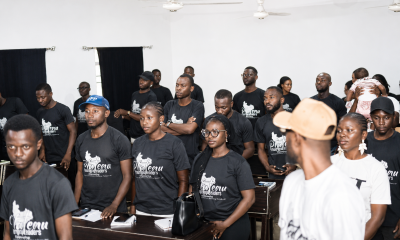
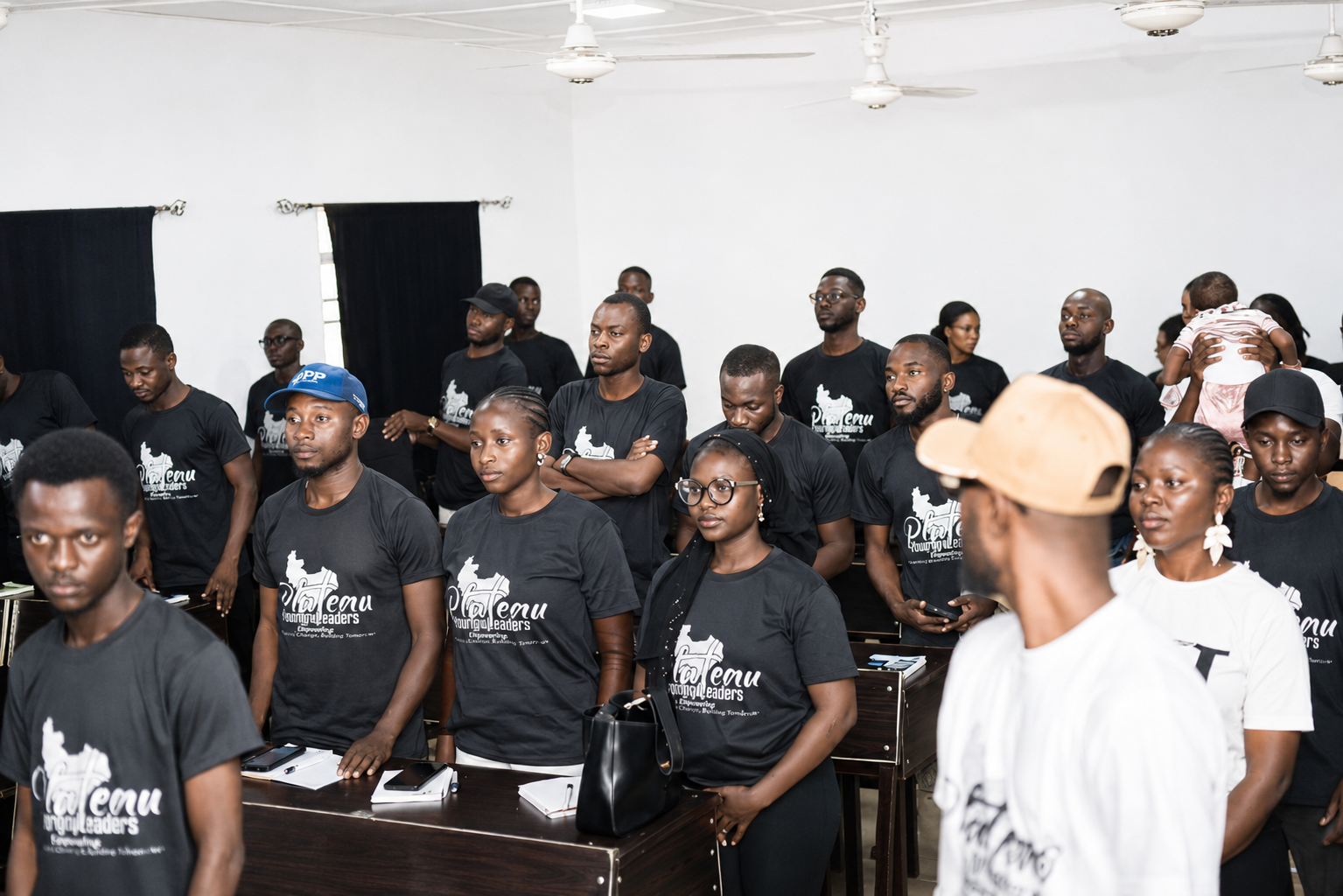
Thirty-four outstanding young leaders from across Plateau State have been inducted into the 2026 cohort of the Plateau Emerging Leaders Fellowship (PELF), following a highly competitive selection process that attracted more than 350 applications from the state’s 17 local government areas.
The onboarding ceremony, held at the EYN Technology Centre in Jos on Saturday, marked the official commencement of the fellowship’s second cohort and reinforced growing efforts to nurture a new generation of ethical, visionary, and solution-driven leaders capable of addressing the state’s development challenges.
Organised by the African Jewels Development Initiative (AJDI), the fellowship is designed to equip emerging leaders with practical skills in leadership, governance, public policy, advocacy, communication, and community development. The six-month programme combines physical and virtual learning sessions, mentorship, institutional visits, policy dialogues, and community-based projects.
Speaking during the event, Founder of the Plateau Emerging Leaders Fellowship and Executive Lead of AJDI, Ruth Ki Sunday, said the initiative was born out of her personal experience as a beneficiary of leadership development programmes.
She explained that participation in platforms such as the Legislative Mentorship Initiative and the Emerging Political Leaders Fellowship exposed her to the transformative value of mentorship and structured leadership training, inspiring her to create a similar opportunity for young people in Plateau State.
According to her, the fellowship was established to bridge the gap between young people already making meaningful contributions in their communities and the mentorship, exposure, and networks needed to amplify their impact.
“We have young people who are doing amazing things within their communities, but they need opportunities to learn from experienced leaders and strengthen their capacity to drive sustainable change,” she said.
Ruth disclosed that more than 350 applications were received for the 2026 cohort, with only 34 applicants making it through a rigorous selection process.
She urged the newly admitted fellows to see their selection as both an opportunity and a responsibility.
“For the fact that you are here, it means that you are worth being here. We saw the work you are already doing and believe this fellowship will amplify your voice and help you become a better leader,” she said.
She further noted that every fellow would be required to design and execute a community impact project before graduation, stressing that the programme’s objective extends beyond leadership training to producing practical problem-solvers.
“Our goal is not just to train people. We want young leaders who can identify challenges in their communities and implement practical solutions,” she added.
Delivering the keynote address titled “Leading Beyond Titles: The Responsibility of the New Generation,” physician, business developer, and leadership advocate, Mr. Majority Hassan Haruna, challenged participants to redefine leadership beyond positions and official designations.
According to him, true leadership begins with the willingness to accept responsibility and create solutions.
“Leadership begins the moment you decide to take responsibility. You do not have to wait for an appointment, election, or title before you start leading,” he said.
Haruna encouraged the fellows to cultivate competence, character, compassion, and courage, which he described as the four pillars of effective leadership.
He also called on government institutions and development partners to support and institutionalise leadership development initiatives, noting that programmes such as PELF provide a critical pipeline for nurturing future leaders and changemakers.
“Leadership development should not happen by accident. It should be intentional,” he said.
Earlier, Fellowship Coordinator Mr. Burnan Zitta reminded participants that their selection marked only the beginning of a demanding journey.
He stressed that successful completion of the fellowship would depend on discipline, commitment, punctuality, active participation, and successful implementation of community projects.
“This stage is not a guarantee that after your training you will graduate as fellows. It depends on your commitment and willingness to learn,” he said.
Zitta challenged the participants to move from passive citizenship to active leadership and influence.
“We need young people who will sit at decision-making tables, influence policies, and contribute to solving the leadership challenges facing Plateau State,” he said.
Representing the pioneer cohort, President of the PELF Class of 2025 and Acting President of the Fellowship Alumni Network, Paul Cletus Bello, described the fellowship as one of the most impactful youth leadership platforms currently available in Plateau State.
Reflecting on the experiences of the inaugural cohort, Bello said the fellowship had exposed participants to renowned leadership coaches, policy experts, development practitioners, and changemakers whose contributions had significantly shaped their growth.
“It has been an amazing journey of learning, leadership, and service. We have gained the skills, perspectives, and confidence required to contribute meaningfully to our communities,” he said.
He called on government agencies, donor organisations, development partners, private sector actors, and international institutions to support the growth of the initiative.
According to him, the fellowship has already begun yielding measurable results, with several alumni securing employment opportunities, leadership appointments, and development engagements following their participation in the programme.
Beyond the speeches, newly inducted fellows expressed optimism about the opportunities ahead.
For Azurfa Adi Ali, a learning facilitator, the fellowship offers a platform to acquire policy and leadership skills necessary for creating sustainable impact.
“I believe this fellowship will equip me with the knowledge and skills needed to create meaningful change, not only in Plateau State but across Nigeria,” she said.
Pamela Bentu Zungkat described the experience as inspiring and transformational, while Dorcas Ritmun Denshime emphasized that leadership is fundamentally about responsible citizenship and taking initiative wherever opportunities arise.
For Seljul Shallom Kamven, the fellowship provides a bridge between passion and action.
“I have always wanted to solve problems in my community, but I lacked the platform to implement solutions. I believe this fellowship is the opportunity I have been waiting for,” he said.
Similarly, Fittoka Pangshak Benue described his selection into the fellowship as a dream come true.
“It is more than a leadership programme. It is an opportunity to grow, learn, and become the kind of leader capable of making a difference,” he said.
As the second cohort embarks on its six-month leadership journey, fellows will engage with governance experts, policy advocates, communication professionals, and development practitioners while implementing projects aimed at addressing real challenges within their communities.
At a time when Plateau State continues to grapple with issues of youth unemployment, insecurity, governance deficits, and social cohesion, stakeholders believe the fellowship offers a strategic investment in the future by preparing young people to become effective leaders, problem-solvers, and agents of change.
The message that resonated throughout the onboarding ceremony is that leadership is not a title to be acquired but a responsibility to be embraced.
Abuja Reports
Caritas Nigeria Urges Ecological Conversion, Climate Action
Published
1 month agoon
June 11, 2026By
Editor
By Samson Adeyanju
Caritas Nigeria has called on Nigerians to embrace what Pope Francis describes as “ecological conversion,” urging citizens, institutions and governments to move beyond environmental rhetoric and take concrete action against climate change and environmental degradation.
The call was made during the commemoration of World Environment Day 2026 at the Catholic Secretariat of Nigeria (CSN) Training Hall, Abuja, under the theme: “Inspired by Nature. For Climate. For Our Future.”
Delivering an address on behalf of the Catholic Secretariat of Nigeria, the Deputy Secretary, Rev. Fr. Augustine Okochi, described care for the environment as a moral, spiritual and ethical responsibility rooted in Christian faith.
“Our concern for the environment is not a passing trend. It is part of our moral duty, our Christian witness, and our responsibility to future generations,” he said.
Fr. Okochi noted that climate change is already affecting communities through flooding, land degradation, water pollution, rising temperatures and declining livelihoods, with the poor, women, children and displaced persons bearing the greatest burden.
He commended Caritas Nigeria’s efforts in environmental awareness, tree planting, climate-smart agriculture and support for vulnerable communities, while urging families, schools, parishes and institutions to cultivate a culture of environmental stewardship.
Speaking at the event, Caritas Nigeria’s Environmental Focus President, Dr. Pascal Onu, stressed the importance of educating young people on environmental protection through debate and quiz competitions.
“We believe it is important to catch them young. When we imbibe the right environmental culture in our children, it goes a long way in protecting the environment,” he said.
Dr. Onu identified inadequate infrastructure, poor waste management systems and limited funding as major obstacles to environmental sustainability despite increasing public awareness of climate issues.
Also speaking, Director of the Department of Climate Change at the Federal Ministry of Environment, Dr. Iniobong Abiola-Awe, reaffirmed Nigeria’s commitment to climate action through initiatives such as the National Adaptation Plan, Nationally Determined Contributions (NDCs), the Just Transition Action Plan and the National Clean Cooking Policy.
She emphasized the role of young people in advancing climate solutions through programmes such as the Eco-Schools Initiative and the Youth Climate Innovation Hub.
In a goodwill message, the Abuja Environmental Protection Board (AEPB), represented by Chief Environmental Health Officer Omenta Rachael Chinenye, urged Nigerians to draw inspiration from nature in addressing environmental challenges and commended the active participation of students in climate debates.
Students at the event said the programme deepened their understanding of environmental protection, forest conservation and sustainable living, pledging to promote environmental responsibility in their schools and communities.
The event brought together religious leaders, government officials, environmental experts, students and development partners who renewed their commitment to building a cleaner, greener and more climate-resilient Nigeria.
Nigeria Through Foreign Lens: Why We Must Stop Being Our Own Worst Critics
Church Leader at 50, Renews Commitment to Humanitarian Service, Family Values