Connect with us

Business

GE Vernova Drives Sustainable Energy Transition in Nigeria

Published

on

GE Vernova, a purpose-driven company championing electrification and decarbonization, has reaffirmed its commitment to accelerating Nigeria’s journey towards sustainable energy.

With a strong focus on key operating segments such as power (gas, nuclear, hydro, steam), wind (onshore, offshore), and electrification (transmission, distribution, storage, and orchestration), GE Vernova aims to drive Nigeria’s transition to sustainable energy sources.

With over a century of presence in Nigeria, GE Vernova plays a crucial role in powering more than half of the nation’s electricity supply. Its services extend to utilities, independent power plants, the oil and gas sector, cement industry, and various other segments across the country.

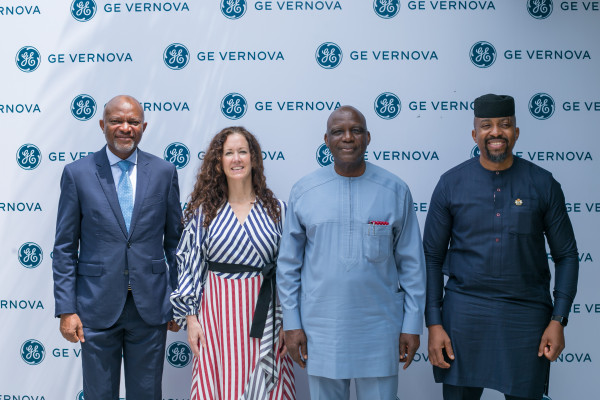
Amid Nigeria’s dynamic energy landscape characterized by population growth, industrialization, and increasing electricity demand, GE Vernova hosted the “Nigeria Energy Dialogue” event to discuss key aspects of the energy transition, including generation, transmission, distribution, and consumption.

The dialogue brought together government officials, financiers, stakeholders, and thought leaders to explore policy initiatives, technological advancements, and collaborations aimed at addressing challenges and fostering a sustainable energy ecosystem.

Kenneth Oyakhire, Managing Director of Services at GE Vernova’s Gas Power, emphasized the company’s commitment to supporting Nigeria’s power infrastructure through localized solutions and collaborative efforts with the government and industry stakeholders.

Highlighting GE Vernova’s global expertise and leading installed base of 2,200 gigawatts, Oyakhire expressed confidence in making Nigeria’s energy transition a reality by delivering reliable, affordable, and sustainable power.

Julie LeBlanc, the United States Mission Commercial Counsellor, commended American companies like GE Vernova for their significant contributions to renewable energy and adherence to high standards of transparency, quality, and social responsibility.

GE Vernova’s recent projects in Nigeria include the groundbreaking of the 1,350-megawatt Gwagwalada Independent Power Plant, the commissioning of hydropower turbines for the Zungeru hydropower project, and the provision of gas turbines for the Aba Integrated Power Project.

These initiatives underscore GE Vernova’s commitment to advancing Nigeria’s power sector development and contributing to the nation’s sustainable energy future.

Continue Reading
Click to comment

Leave a Reply

Your email address will not be published. Required fields are marked *

Business

Nigerian Banks Expand Lending as Loan Demand Surges

Published

on

By Ifunanya Stephanie

Nigerian banks increased credit supply to households and businesses in the third quarter of 2026, following stronger demand for secured, unsecured and corporate loans, according to the Central Bank of Nigeria (CBN).

The development was accompanied by improved loan approval rates and declining default rates across major lending categories, although borrowing costs remained relatively high in some segments.

The findings are contained in the CBN’s Q3 2026 Credit Conditions Survey, which assessed lending trends, loan demand, approval rates and repayment performance across the banking sector.

In the secured lending segment, the loan demand index stood at 25.6, with consumer lending to households recording the strongest demand at 42.9, followed by credit for house purchases at 28.0. Mortgage and remortgage lending recorded 12.0, while lending to small businesses by households declined to -19.7.

Demand for unsecured credit also strengthened, with an overall index of 7.2. Overdrafts and personal loans to households recorded 24.7, while credit card lending contracted to -20.0.

Corporate lending recorded a demand index of 18.9, reflecting increased borrowing interest among small businesses, medium-sized private non-financial corporations and large companies, which posted indices of 22.6, 18.3 and 20.7, respectively. However, demand from other financial corporations weakened, recording -16.2.

According to the survey, banks attributed the increased demand for corporate credit largely to inventory financing, balance sheet restructuring and capital investments, which recorded indices of 18.6, 2.5 and 0.7, respectively.

The CBN also identified changing economic outlook, liquidity positions and market share objectives as major factors influencing banks’ decisions to expand secured lending. For unsecured credit, market share objectives, economic outlook and the cost and availability of funds were among the key considerations.

Meanwhile, the proportion of loan applications approved increased across secured, unsecured and corporate lending categories compared with the preceding quarter.

Despite the improved access to credit, borrowing costs remained a concern, as the spread between lending rates and the Monetary Policy Rate widened across several lending categories.

The spread for secured lending widened to -14.5 index points, while corporate lending spreads stood at -13.6 index points for medium-sized private non-financial corporations, -12.2 for other financial corporations, -11.0 for small businesses and -10.3 for large private non-financial corporations.


The latest findings suggest an improvement in credit availability across Nigeria’s banking sector, although the widening interest rate spreads indicate that stronger loan supply and approval rates have yet to translate into proportionately cheaper borrowing for businesses and households.

Continue Reading

Business

CBN Restores BDC Access to FX Market, Caps Weekly Purchases at $150,000

Published

on

By Huldah Shado

The Central Bank of Nigeria (CBN), has approved the participation of licensed Bureau De Change (BDC), operators in the Nigerian Foreign Exchange Market (NFEM), allowing each BDC to purchase up to $150,000 weekly.

The approval was contained in a circular dated February 10, 2026, signed by the Director of the Trade and Exchange Department, Dr. Musa Nakorji, and addressed to authorised dealer banks and the general public.

The CBN said the move is aimed at improving foreign exchange liquidity in the retail segment of the market and meeting the legitimate needs of end users, amid a widening gap between the official and parallel market exchange rates.

Under the new arrangement, licensed BDCs can access foreign exchange from the NFEM through any authorised dealer bank of their choice at the prevailing exchange rate.

The apex bank directed banks to carry out full Know-Your-Customer (KYC), and due diligence checks on BDC clients before selling foreign exchange to them.

It also imposed reporting and transparency requirements, mandating BDCs to submit returns electronically to the CBN.

In addition, the bank prohibited third-party transactions and limited cash settlement to a maximum of 25 per cent of each transaction.

Continue Reading

Abuja Reports

Ultraviolet MFB MD Visits Equity Circle, Eyes Strategic Partnership

Published

on

By Samson Adeyanju 

The Managing Director and Chief Executive Officer of Ultraviolet Microfinance Bank, Bayonle Omoyele, has paid a working visit to Equity Circle, one of Abuja’s fast-growing real estate companies, as part of efforts to strengthen strategic partnerships within Nigeria’s real estate sector.

During the visit, Equity Circle’s Co-Founder and Chief Marketing Officer, Fabian George, conducted Omoyele on a tour of the company’s facilities and outlined its growth trajectory.

He disclosed that the firm recorded significant milestones over the past four years, culminating in an ₦8 billion revenue in the 2025 financial year.

Discussions between both parties focused on establishing a strategic credit relationship, with proposed areas of collaboration including invoice discounting, structured credit solutions, and cash-flow management support to help Equity Circle sustain and scale its operations.

Addressing Equity Circle staff during an interactive session, Omoyele emphasised the importance of strong marketing fundamentals, highlighting the 4Ps of marketing-Product, Price, Place, and Promotion, as key drivers of long-term competitiveness and brand leadership.

He also urged the team to adopt a long-term growth mindset, remain focused, and ensure that every unit contributes meaningfully to the organisation’s strategic goals, noting that disciplined execution is critical in Nigeria’s evolving real estate market.

The visit underscores Ultraviolet Microfinance Bank’s commitment to supporting high-growth enterprises through tailored financial solutions and partnerships that promote sustainable economic development.

Continue Reading

Trending

taraftarium24Maslak EscortMaslak Escortmarsbahistaraftarium24deneme bonusudeneme bonusudizipaldizipaljustin tvjustin tvjustin tvjustin tvtaraftarium24justin tvdeneme bonusu veren sitelerdizipaljustin tvmarsbahisggrandpashabettGrandpashabet GirişGrandpashabet Girişmarsbahisjustin tvtrlisans pinterestgiftcardmall/mygiftdinamobetgrandpashabet girişgrandpashabetdinamobetGrandpashabettaraftarium24dizipalgiftcardmall/mygiftjustin tvGrandpashabetGrandpashabetGrandpashabetGrandpashabetCasibommarsbahispadişahbettaraftarium24taraftarium24rojadirectajustin tvbahiscasinocasibomcasibomcasibomholiganbetholiganbet girişholiganbetholiganbetjojobetibizabet1winmercurecasinocasibomdeneme bonusu veren sitelergüvenilir bahis sitelerijojobet güncel girişjojobetjojobet girişjojobetamgbahismercurecasinobetplaycasinomilyoncasinoroyalpalacebetamgbahiscasibomjojobetjojobetcasinolevantcasinolevantcasinolevantmatbetsekabetpusulabetvdcasinomarsbahisholiganbetmatbetimajbetholiganbetmarsbahisteosbetjojobetholiganbetjojobetcasinolevantbetciosuperbetinsahabetgrandpashabet