Connect with us

News

7 Months After, Police Yet To Effect Rent Payment To Displaced Officers

Published

on

Seven months after handing quit notice to 22,500 police officers living in the 25 barracks marked for demolition by the Lagos State government, the Nigeria Police Force (NPF) is yet to effect payment of rent to the displaced officers seven months after the promise was made.

The barracks had been recommended for demolition for not meeting up with the structural integrity test and for vacating the barracks between May 1st and 30th to give access for rebuilding activities, affected officers were promised a particular amount of money to rent temporary accommodation for two years, which the rehabilitation project is expected to last.

Under the 2024 proposed budget, the Ministry of Police Affairs has a budget of N938.7 billion, with N806.7 billion allocated as personnel cost, N62.4 billion for overhead and N69.6 billion to be spent on capital projects.
Specifically, ongoing assessment of police barracks nationwide is expected to cost N100,513,975, construction/provision of police stations/barracks will cost N5.77 billion while N1 billion is expected to be expended on rehabilitation/repairs of police stations/barracks.

Former Inspector General of Police (IGP), Usman Alkali Baba, had on May 3, announced the demolition, redevelopment and reconstruction of 25 barracks and facilities in full compliance with the Lagos State government’s recommendations.

The affected barracks are: Ijeh Police Barracks, Obalende; Highway Police Barracks, Ikeja; K9 Police Barracks, Keffi Street, Ikoyi; Falomo Police Barracks (A and B), Ikoyi; Bar Beach Police Barracks, Victoria Island; MOPOL 20 Barracks, Ikeja; Women Police Barracks, Obalende; MOPOL 2 Police Barracks, Keffi Street, Ikoyi; Mounted Troop, Ribadu Road, Ikoyi and Queen Barracks, Apapa.

Others are: FPRO Annex Office and Barracks, Ijora Olopa; Iponrin Police Barracks, Surulere; Adekunle Police Barracks, Yaba; Federal Highway Patrol Office, Yaba; Alausa Police Barracks, Ikeja; Mounted Troop, Ikeja; Okesuna Police Barracks, Obalende; Mccarthy Barracks, Obalende; Force Headquarters Annex, Obalende; Obalende Police Barracks, Obalende; Bourdillon Police Barracks, Ikoyi; New Staff Quarters, Ikeja; Elere Police Barracks, Agege; Onikan Officers Mess, Ikoyi and Police Special Fraud Unit (PSFU), Milverton Street, Ikoyi.

The Force spokesperson, Olumuyiwa Adejobi, an Assistant Commissioner of Police (ACP), who refuted claims at the time that officers were sent packing without enough notice and provisions for alternative accommodation, had said: “We have not forced anyone out of the barracks. They are expected to move out between May 1 and 30. However, they will not be asked to move until their money is paid for a new accommodation.”

But alas, seven months after the May deadline, NPF has not started payment of rent to the estimated 22,500 police officers living in the affected barracks.
It was revealed that the majority of the officers living in the barracks are unaware of the relocation plan. Also, none of the affected police officers has been debriefed by barracks officials on the quit notice.
With police authorities’ lackadaisical approach towards the project, many of the officers and their dependents living in the derelict structures are confused on the next line of action.

Some officers queried the motive behind the plan, stressing that police authorities have not been able to complete the redevelopment of the barracks at Government Reserved Area (GRA), Ikeja, which started during the Goodluck Jonathan administration.

They alleged that they are doing their best to take care of the buildings but the police hierarchy is doing less to improve the living conditions of the officers. The officers argued that it would be difficult to carry out the exercise because each of the marked barracks had no fewer than 1,000 inhabitants, coupled with relatives and friends.

An officer who pleaded for anonymity said: “I am not against relocation of officers but before the relocation, they should provide a conducive place for us to stay. The buildings are long overdue for renovation.
It has never been conducive living here, but when you don’t get what you need, you have to manage what is provided. We come back from work to live in a place that is not conducive and it affects our work and delivery. This is Ikoyi and if they are talking about relocation, they should consider that Ikoyi is not Iyana Ipaja, Ikorodu or Oshodi.

Another officer said: “We have been living in this condition and the police authorities have been shying away from their responsibilities. I buy my own uniform; we take care of the buildings within the barracks. I am still studying and it’s not as if they care about my certificate, but I’m doing my best to upgrade myself.”

When asked on the number of officers to be affected by the plan, the Force spokesman said he needed an audit to determine the staff strength in the barracks.
According to him, there are people staying in the barracks, who are not police personnel and that is one of the reasons the facilities are overstretched. He said the Force was working on identifying bonafide personnel before taking any action.

Asked about the estimated amount for the cost of construction, he could not confirm the amount earmarked for the project.
He said: “Billions of Naira. I can’t be specific now, but definitely, it runs into billions based on projections. We have a relocation plan for them. It will be done in phases. Money will be given to them to rent any accommodation of their choice around their barracks (locations) for two years before any relocation is commenced. It’s not eviction, but relocation. Note, please.”

When asked why the project didn’t take off on the proposed date and why officers were yet to get their notices, Adejobi said: “It doesn’t matter the time we start. It is better for us to start late than to rush into it and subject them to unnecessary hardship. We will start. It is capital intensive, we are making arrangements and we will do this in phases.

“Their buildings have been marked, but marking does not mean they are going to demolish them, they only mark to show that the buildings are affected and distressed. So, when it’s time for us to commence, those who are going to be affected will not be evicted, they will be relocated. We did it in Abuja and it worked out, so, it will work in Lagos.

“I read in the news that some officers said they are not sure the police hierarchy will give them back the apartment after the redevelopment. We did it in Kano, which is as big as Lagos in terms of population and they were relocated, and given back the keys when it was completed.”

Appalled by the sorry situations of the barracks, lawmakers in the House of Representatives had recently demanded that the Federal Government auction the barracks across the country, because they have turned to ‘squalor quarters’ despite the billions spent on renovating them.

This is even as the House noted that between 2019 – 2022, over N5 billion was spent by the Federal Government on Police barracks renovations in Nigeria, saying despite all efforts, barracks continue to fail to meet basic needs in their current state of disrepair and lack of maintenance.
This was sequel to the adoption of a motion on the “Urgent Public Importance on the Need to Address the Deplorable Living Conditions of Officers of Nigeria Police Force” moved by Murphy Osaro Omoruyi.

Presenting the motion, Omoruyi informed that in September 2020, the National Assembly passed the Police Reform Bill 2020, which was signed into law by the former President, Muhammadu Buhari, on September 16, 2020, which has as one of its core issues to address the living conditions of the nation’s gallant police officers.
The lawmaker noted that the problem of adequate and dignified accommodation for police officers persists and has so far outlived all previous measures.

He expressed worry that police officers and their families live in squalor quarters characterised by large cracks on the wall, bat-infested houses, leaking roofs and dilapidated structures for barracks across the country.
He argued that the deplorable living condition of the Police officers has dampened their morale and productivity, stressing that if this issue is not urgently addressed, the welfare of officers will continue to deteriorate.

When asked if the IGP, Kayode Egbetokun, is keying into the barracks project, the Force spokesman said: “He’s looking into some of the policies he met on the ground, particularly policies that affect the welfare of police personnel across board but let it be on record that welfare of police personnel is paramount to him. One of the agendas he has for the Nigeria Police Force is to reform, standardise and sanitise the police; we can’t ask somebody to stop corruption without giving him what he needs.”

Asked where the money for the project will be gotten from, he said: “It will come from the budget. We are compiling the budget for 2024 and the IGP has given directives to departments to make their proposals. I have submitted everything and mine is being considered. We will still need intervention funds but most of our projects will be budgeted for.

Continue Reading
Click to comment

Leave a Reply

Your email address will not be published. Required fields are marked *

Abuja Reports

Atoyebi Adewumi Wins 4th National Essay Competition, Beats 2,000 Contestants

Published

on

By

By Samson Adeyanju

Atoyebi Adewumi has emerged winner of the fourth edition of the National Essay Competition, beating more than 2,000 contestants in an intellectual contest aimed at promoting academic excellence, critical thinking and creative writing among young Nigerians.

The competition, which focused on the relevance of taxation to national development, challenged participants to examine the role of tax revenue in financing public services, stimulating economic growth and strengthening the relationship between government and citizens.

The initiative provided a platform for young Nigerians to demonstrate their writing skills, articulate informed perspectives on national issues and contribute ideas towards building a more responsible and progressive society.

Speaking after being declared winner, an elated Adewumi expressed gratitude to the convener, Foluso Sylvanus Ojo, and the organising team for providing young Nigerians with an opportunity to showcase their intellectual abilities.

“I am so glad, very, very glad, to have this privilege of emerging as the winner. I am grateful to the convener and the entire team, as well as everyone who supported this vision,” Adewumi said.

In his remarks, Ojo expressed concern over the tendency to criticise the attitudes and lifestyles of younger generations without providing adequate opportunities to nurture their talents and channel their energies towards productive pursuits.

He called on the government, corporate organisations and nongovernmental organisations to invest more in educational initiatives that promote intellectual excellence, creativity and responsible citizenship.

According to him, sustained investment in academic competitions and youth development programmes would encourage discipline, innovation and a stronger commitment to national development.

Drawing a comparison with the substantial cash prizes awarded in some reality television competitions in Nigeria, Ojo argued that students and intellectually gifted young Nigerians deserved greater recognition, financial support and encouragement.

“I believe the government should support initiatives like this because individuals need supportive hands, especially from the government. When they receive such support, they become more confident and motivated to continue their good work,” he said.

Ojo maintained that society could not continue to complain about the attitudes and lifestyles of young people without deliberately investing in programmes that encourage positive values and productive engagement.

The fourth edition of the competition also underscored the importance of tax awareness among young Nigerians, highlighting how effective taxation, transparency and accountable governance could contribute to improved infrastructure, education, healthcare and other essential public services.

Beyond celebrating the winner, the competition reinforced the need to identify, encourage and empower emerging intellectual talents capable of contributing meaningfully to Nigeria’s development.

Winner of the 5,000,000 naira

Winner of 3,000,000 naira

Winner of 2,000,000

All the participants 

Continue Reading

Abuja Reports

20 Finalists Begin Final Stage of National Essay Competition

Published

on

By

By Samson Adeyanju

Twenty finalists from across Nigeria have begun the final stage of the fourth edition of the National Essay Competition in Abuja, following an orientation session designed to prepare them for the decisive examination.

The finalists arrived in the Federal Capital Territory for a four-day, all-expenses-paid programme featuring the essay examination, institutional tours and opportunities for learning and networking.

The competition, the brainchild of Mr Foluso Ojo, is sponsored by the Nigeria Revenue Service (NRS).

Ahead of the examination, the finalists participated in an orientation session led by Professor Omotosho Borisade of Ekiti State University, who serves as the competition’s umpire.

The session familiarised participants with the competition’s rules and regulations, examination guidelines and assessment criteria, helping them understand the requirements of the final stage.

The essay examination is scheduled to begin today at 9 a.m., after which the finalists are expected to embark on institutional tours around Abuja.

The programme is designed to extend beyond the contest itself, exposing the finalists to new learning opportunities, professional connections and experiences in the nation’s capital.

The competition brings together young Nigerians to demonstrate their writing ability, knowledge, creativity and critical-thinking skills as they compete for the top honours.

With the finalists prepared for the examination, attention now turns to their performance and the eventual emergence of the competition’s champion.


Continue Reading

News

Pastor Ogundipe Decries Lack of Integrity Among Educated Nigerians

Published

on

By

By Samson Adeyanju

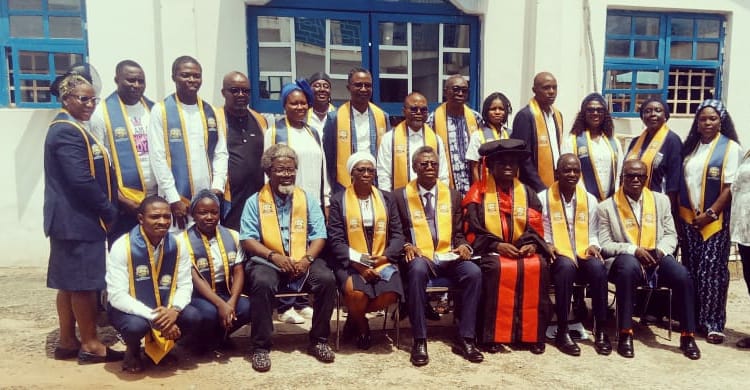
Pastor Alex Ogundipe, Chairman of the Governing Board of Christian Heritage International Bible College, Kubwa, Abuja, has expressed concern over the growing number of educated Nigerians who lack the character and integrity required to make meaningful contributions to society.

Ogundipe raised the concern during the matriculation ceremony of the institution’s 60 pioneer students, stressing that academic qualifications without moral discipline and upright character could undermine national development.

According to him, Nigeria has many knowledgeable and academically accomplished individuals whose inability to demonstrate integrity has negatively affected their contributions to their families, workplaces and communities.

“We have too many people in this country who are knowledgeable and wise in their own ways, but they do not have character and integrity. That affects their ability to impact their communities,” he said.

The cleric emphasised that education must go beyond the acquisition of certificates to the development of individuals who demonstrate honesty, accountability, faithfulness and commitment to serving humanity.

He explained that true integrity required consistency in personal conduct, whether at home, in the church, at work or within the larger society.

Ogundipe said the college was established not merely to impart biblical knowledge but to raise men and women whose lifestyles reflect Christian values and whose contributions would positively influence society.

He urged Christian leaders to demonstrate their faith through practical actions rather than mere religious declarations.

Speaking on Nigeria’s future, the cleric encouraged citizens to remain hopeful, pray for the country and contribute meaningfully to national peace, unity and development.

Earlier, the Rector of the institution, Pastor Samson Olukayode Aliyu, challenged the matriculating students to prioritise spiritual maturity and moral discipline alongside academic excellence.

Aliyu warned against examination malpractice, plagiarism, dishonesty and other forms of misconduct, stressing that academic certificates could demonstrate knowledge but could not substitute for good character.

“The Church does not only need gifted people; it needs godly people. We need leaders who will choose integrity over compromise, humility over pride, faithfulness over convenience and service over self-interest,” he declared.

He explained that the college offers six-month certificate programmes in theology and one-year diploma programmes in theology, leadership and prophetic studies.

One of the matriculating students, Akeem Omobolanle, who enrolled in the Diploma in Leadership programme, commended the institution’s approach to biblical education and expressed optimism that the training would strengthen his understanding of the Scriptures and prepare him for greater service in Christian ministry.

The ceremony marked the formal admission of the college’s pioneer students into its academic community.

Continue Reading

Trending