News
Inside Obi’s Alleged Plans to Delegitimize Supreme Court, INEC, Others via Social Media
Published
2 years agoon
Nigeria’s political landscape grew understandably lively and volatile during the 2023 elections. Peter Obi of the Labour Party is one contender who has garnered attention not only for his policies but also for his purported campaign techniques. In the months preceding and following the elections, there were mounting fears about Obi and his followers using social media to delegitimize institutions, which proved to be true.
The Supreme Court’s decision on the presidential election outcome on October 27 sparked a flurry of discussion and debate regarding the potential influence on the country’s institutions. The decision, which was taken on a highly sensitive issue, has aroused concern over whether some Obi supporters seek to delegitimize these institutions.
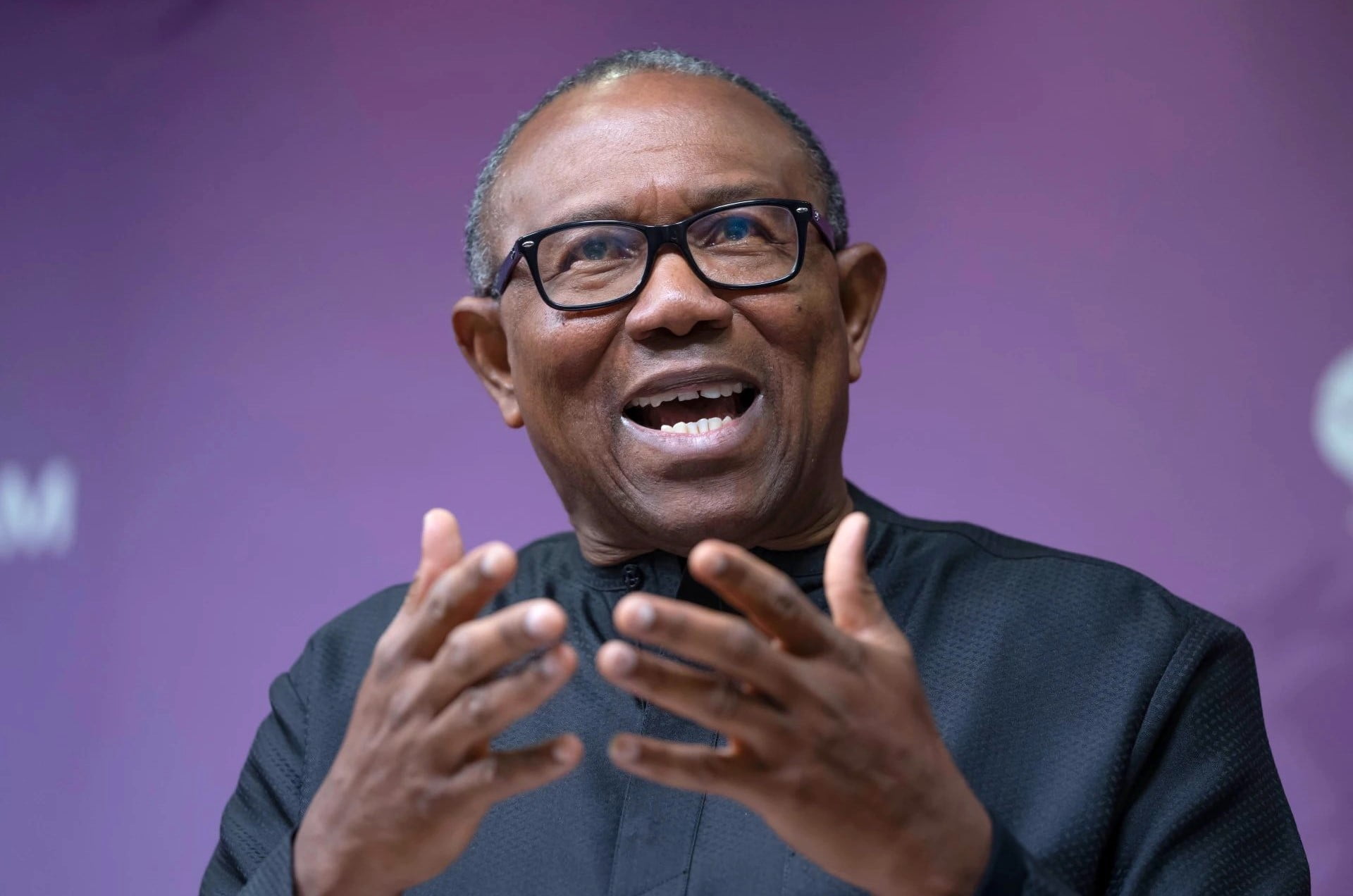
Obi held a press conference on November 6, 2023, to respond to the Supreme Court’s decision.
In the said press conference, Obi accused the Supreme Court of setting “legal issues aside” and “exhibited a disturbing aversion to public opinion just as it abandoned its responsibility as a court of law and policy.”
Obi went further to say the nation’s highest court’s decision “contradicts the overwhelming evidence of election rigging, false claim of a technical glitch, substantial non-compliance with rules set by INEC itself as well as matters of perjury, identity theft, and forgery that have been brought to light in the course of this election matter.”
Also, the former Anambra state Governor further alleged that the Supreme Court judgment “willfully condoned breaches of the Constitution relative to established qualifications and parameters for candidates in presidential elections. With this counter-intuitive judgment, the Supreme Court has transferred a heavy moral burden from the courtrooms to our national conscience. Our young democracy is ultimately the main victim and casualty of the courtroom drama.”
The 2023 Political Landscape:
Nigeria’s political atmosphere is notably competitive, characterized by distinct beliefs and techniques adopted by numerous political parties and their candidates. In this tense context, attention has shifted to Obi and the Labour Party amid reports that they are exploring unusual approaches that could undermine the legitimacy of critical institutions.
Obi broke away from his former party, the People’s Democratic Party (PDP), in the run-up to the 2023 presidential election. The succeeding campaigns quickly became the most controversial and politicized along ethno-religious lines in the nation’s electoral history. Obi and his supporters, the majority of whom were supporters of the separatist group Indigenous People of Biafra (IPOB), designed the most divisive campaign in recent memory, employing all known strategies in the books.
In the days leading up to the February 25, 2023 presidential election, Obi reportedly made a desperate call to David Oyedepo, a Nigerian Christian preacher, asking him to “help me ask his people [congregation] to vote” for him. He allegedly dubbed the election a “religious war.”
Strategies of Delegitimization:
A variety of tactics are used in the purported scheme to undermine institutions, with social media being a key component. Obi’s supporters used the power of online platforms to promote narratives that called into question the fairness of the electoral process, the impartiality of the judiciary, and the legitimacy of regulatory agencies overseeing the polls.
Obi’s campaign approach revolved around tropes such as “powerful elites control who wins the election,” “the electoral system is rigged,” “the judiciary is corrupt and won’t give ‘justice,’” and so on. Obi ran on the promise of being a “anti-establishment candidate,” despite leaving the former ruling PDP mere months before the election.
Obi’s supporters, particularly Charles Oputa (aka Charlie Boy), have been witnessed engaging in activities that may be regarded damaging to the outcome of the Presidential Election Petition Tribunal. Some Obi supporters have even called for violent protests in Nigeria. On July 1, Charlie Boy tweeted, “This isn’t Syria, Iraq, or Afghanistan. This is France, where 9% of the population has brought entire towns down!” he remarked, referring to the raging arson in areas of Paris, which he uploaded a video of. Other Obi supporters on social media used the hashtag #AllEyesOnJudiciary to launch a cyberbullying campaign against judges, and were heard making outlandish accusations that a former Minister of Works, Babatunde Fashola, had “written” the PEPT verdict for the court.
In the said Obi’s press conference, he also spared nothing in his attempt to delegitimize the Independent National Electoral Commission (INEC). He said, “INEC has displayed incompetence in the conduct of its statutory duty. The judiciary has largely acted in defiance of constitutional tenets, precedents, and established ground rules. Political expediency has preceded judicial responsibility. A mechanical application of technicalities has superseded the pursuit of justice and fairness. Both INEC and the Supreme Court as the referees, respectively shifted the goalposts in the middle of the game.”
While the Supreme Court’s verdicts are not immune to criticism and scrutiny, the manner in which Obi and his followers have responded to this specific verdict demonstrates their eagerness to delegitimize the nation’s highest court and other institutions. Attempts have been made to delegitimize the court, with some fearing that these efforts may erode public trust in the country’s legal system.
Creating Doubt in the Electoral Process:
One purported strategy involves casting doubt on the integrity of the electoral process itself. Claims of potential rigging, bias, or corruption were disseminated through social media channels to create a narrative that the electoral system is compromised, thereby sowing seeds of mistrust among voters.
A tweet by one Onyeka Nwelue, a rabid Obi supporter on 9 November 2023 that he “suggested to the Labour Party to rig the Presidential election” further demonstrates the extent they went to compromise the electoral process. Nwelue who still claimed to be an Academic had been previously stripped of his Academic Visitor status at Oxford University after misusing University logos and premises for commercial purposes in 2021. An investigation by Cherwell, a weekly newspaper at Oxford University, found out that he could not provide “evidence of an academic PhD”.
Like Nwelue, numerous Obi supporters were tracked on Twitter Space and conversations openly called for violent disruptions before and after the Supreme Court’s decision. On many occasions, people were seen posting personal information on judges and their families on social media in preparation for mob violence if they did not receive favorable rulings in their courts.
The Abuja City Journal spoke with a senior member of the Obi/Datti Presidential Campaign Council, who agreed to speak on the condition of anonymity. “The highest level of the Labour Party is aware that Obi did not win the election,” he said. “However, the party had to accept such measures [judicial delegitimization] in order to keep these young, uninformed, but ardent Obidients occupied – many of whom are voting for the first time. As you know, no political party in Nigeria believes it has lost an election. What else could we have done to keep these ardent supporters and donors occupied if not to keep reassuring them that we ‘won’ the election we clearly lost?” he continued.
We probed deeper to find out whether the party’s presidential candidate attempted to halt the delegitimization efforts. “Do you think Datti Baba-Ahmed [the party’s vice presidential candidate] will say on live television [on March 22, 2023] that if [the 2023 presidential election winner] Bola Tinubu is sworn in, it will ‘signal the end of democracy’ on his own? I’m not going to say anything else“, he said.
The National Broadcasting Commission (NBC) fined Channels Television [the channel which broadcast Datti’s interview] N5 million, although the Abuja City Journal discovered no record of the Labour Party or its presidential campaign council denying Datti’s assertions.
FG Reacts
The Abuja City Journal‘s findings demonstrate that the Federal Government is well aware of Obi’s unconventional political tactics. This newspaper was informed by a highly placed Federal Government source that the Department of State Services (DSS) has been given instructions regarding the political techniques of Obi’s followers, and the DSS is currently evaluating its options.
The Abuja City Journal contacted Dr Peter Afunanya, the DSS Director of Public Relations and Strategic Communications, about the situation at hand. The comment implied that the Service was aware but would not give any specifics. He referred us to a statement he issued on 9 November 2023 where he warned that individuals or groups that decide to “engage in illegitimate acts or inimical conducts to public order will be decisively dealt with as dictated by the law. Forewarned is forearmed.”
You may like
-
Alia Gets APC Nod for Second Term in Benue
-
CSN Calls for Inclusive, Just Energy Transition in Nigeria
-
Alia, Akume, Suswam Meet as Benue APC Moves to Rebuild Unity
-
Ekiti Attack, an Assault on Church, Human Dignity -CAN
-
CTV Clocks 15 Years, Targets National Media Space
-
Okoh, Akume Lead Charge as CAN Flags Off N25bn Airport Chapel in Abuja
By Samson Adeyanju
The Governor of Benue State, Hyacinth Alia, has successfully passed the screening exercise of the All Progressives Congress (APC), ahead of the 2027 governorship election and has been officially certified to contest the party’s primaries.
This was contained in the statement issued by his Chief Press Secretary, Sir Tersoo Kula.
The screening exercise was conducted on Sunday at the Plateau State Governor’s Lodge, venue designated for the screening of incumbent governors seeking the party’s ticket for the forthcoming elections.
The screening committee was chaired by the National Chairman of the All Progressives Congress, Nentawe Goshwe, who led the process to assess aspirants seeking to fly the party’s flag in the 2027 gubernatorial elections.
Governor Alia’s Expression of Interest and Nomination forms were procured by the Benue State chapter of the Nigeria Union of Pensioners and the Benue State Motorcycle Association.
Leaders of the two groups attributed their support for the governor to what they described as the remarkable transformation witnessed in the state under his administration, as well as his people-oriented style of governance. They said the governor deserved another term to consolidate ongoing developmental efforts across the state.
Political observers and stakeholders have described the certification as a major boost to Governor Alia’s political standing within the APC, particularly amid ongoing consultations and strategic alignments ahead of the 2027 general elections.
Governor Alia, who was elected in 2023 on the platform of the APC, has consistently highlighted infrastructural development, security improvement, civil service reforms and social welfare programmes as key priorities of his administration.
His successful clearance by the screening committee is also expected to trigger increased political activities within the APC as preparations intensify for the next electoral cycle.
News
CSN Calls for Inclusive, Just Energy Transition in Nigeria
Published
4 days agoon
May 10, 2026By
Editor
By Tony Abah
The Secretary General of the Catholic Secretariat of Nigeria, Rev. Fr. Michael ‘Leke Banjo, has called for a people-centred and morally guided energy transition in Nigeria, warning that development must not continue to benefit a privileged few while leaving vulnerable communities behind.
Speaking at the GreenFaith Nigeria Multifaith and Multisectoral Forum on Nigeria’s Just Energy Transition Plan held on May 7, Fr. Banjo said energy should not be seen merely as an economic issue but as a matter tied to “life, health, education, work, food security, industrial growth, national stability and human dignity.”
Addressing participants at the forum themed, “Faith, Justice, and Power: Advancing an Inclusive Just Energy Transition in Nigeria,” the Catholic priest welcomed members of GreenFaith Africa and other stakeholders, describing the gathering as a shared effort to defend creation and promote justice.
“We gather today not merely as advocates, policy actors or religious leaders, but as stewards,” he said. “We gather to ask a deeper question: what kind of future do we want to leave behind, and who will be allowed to share in it?”
Fr. Banjo stressed that true development should not be measured only by “megawatts, investment figures or economic indicators,” but also by how society treats “those on the margins of energy poverty” and communities already suffering the effects of climate change.
Drawing from Scripture and the 2015 encyclical Laudato Si’, he described creation as “God’s gift entrusted to our responsible care,” insisting that environmental stewardship must go hand in hand with development and innovation.
The cleric lamented the environmental degradation affecting different parts of Nigeria, citing oil pollution and gas flaring in the Niger Delta, desertification in the North, gully erosion in the South-East, and flooding in parts of Kogi State and Benue State.
“In our cities, plastic waste and poor sanitation have turned public spaces into sources of disease and avoidable hardship,” he said. “When we fail to keep the earth, the earth becomes wounded; and when the earth is wounded, human dignity is also wounded.”
Fr. Banjo called on governments at all levels to develop “clear, consistent and just policies” that would protect affected communities, expand access to affordable clean energy, support small businesses and create decent jobs.
He also urged investors and development partners to ensure that renewable energy investments are guided by conscience and accountability.
“The new energy economy must not reproduce old injustices in cleaner language,” he warned, adding that policies should encourage local capacity, community ownership, skill development and transparency.
Beyond government and institutions, Fr. Banjo challenged ordinary citizens to embrace environmentally responsible habits, including proper waste disposal, water conservation, tree planting and keeping public spaces clean.
“We must stop throwing refuse into gutters, streams and open spaces,” he said. “In these simple daily choices, we show whether we truly understand that creation is God’s gift and our common home.”
He commended GreenFaith Nigeria, GreenFaith Africa and The Kukah Centre for promoting climate justice and interfaith collaboration, assuring them of the continued support of the Catholic Secretariat of Nigeria.
“The Catholic Secretariat of Nigeria stands ready to walk with you in this effort to protect creation, uplift the poor, and advance a truly just energy transition for our nation,” he said.
News
Alia, Akume, Suswam Meet as Benue APC Moves to Rebuild Unity
Published
6 days agoon
May 7, 2026By
Editor
By Samson Adeyanju
Governor Hyacinth Alia has commended stakeholders of the All Progressives Congress in Benue State for their commitment to reconciliation and party unity following a high level meeting held at the New Banquet Hall of Government House, Makurdi.
In a statement issued on Monday by his Chief Press Secretary, Sir Tersoo Kula, the governor expressed appreciation to party leaders and stakeholders who attended the reconciliation meeting convened to strengthen cohesion within the party.
Among those present at the meeting were the Secretary to the Government of the Federation, George Akume, former Benue State Governor, Gabriel Suswam, former Deputy Governor Chief Stephen Lawani, past and serving members of the National Assembly, members of the Benue State House of Assembly, federal government appointees, and other party stakeholders.
Governor Alia said the large turnout of influential party figures reflected a shared resolve to promote unity, stability, and progress within the APC in Benue State.
He particularly praised the peaceful atmosphere of the meeting and the spirit of reconciliation displayed by participants, describing the outcome as a significant step toward rebuilding trust, confidence, and togetherness among party members.
According to the governor, the resolutions reached at the meeting would usher in a new phase of peace, harmony, and cooperation within the party.
He urged stakeholders and their supporters to sustain the reconciliation process through dialogue, mutual respect, and collective responsibility in advancing the interests of the APC and the development of Benue State.
Governor Alia also wished all stakeholders success in their political aspirations and called for continued collaboration in the pursuit of peace, development, and good governance in the state.
Alia Gets APC Nod for Second Term in Benue
CSN Calls for Inclusive, Just Energy Transition in Nigeria