Connect with us

News

Morocco Earthquake Tragedy: 2,497 Dead, 2,476 Injured So Far

Published

on

Bobola Richard


A devastating earthquake has struck Morocco, leaving a trail of destruction and immense human suffering in its wake. The latest reports indicate that 2,497 lives as at Monday afternoon, have been tragically lost, and 2,476 individuals have sustained injuries in this catastrophic event.


Soldiers and aid workers are now racing to reach remote areas in the Atlas Mountains which may be almost entirely destroyed.


Meanwhile, locals dig the rubble – often with only shovels and their bare hands – in a desperate hunt for survivors.


Morocco’s Interior Ministry updated its death toll on Monday afternoon, detailing 2,497 dead and 2,476 injured. The United Nations estimated that 300,000 people were affected by Friday night’s magnitude 6.8 quake, with some Moroccans complaining on social media that the government wasn’t allowing more outside help.
The Moroccan government says it has accepted assistance from four countries so far – Britain, Spain, Qatar and the UAE, with France announcing it would send 5 million euros Monday morning.


“Morocco is a sovereign country and it is up to it to organize relief,” said French Minister for Foreign Affairs Catherine Colonna, detailing that Rabat had not refused any aid.


She warned against creating “false controversy” at a time when “people need help”. Aftershocks on Sunday, measuring 3.9 on the Richter scale, were enough to rattle nerves in areas with damaged, unstable buildings, though it is unclear if they caused more casualties.


The Earthquake’s Impact

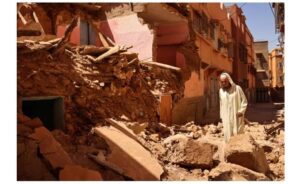
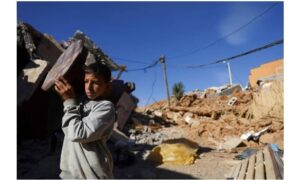
The earthquake, with its epicenter in a densely populated area, has caused extensive damage to homes, infrastructure, and public buildings. Entire neighborhoods lie in ruins, and essential services such as electricity, water supply, and transportation have been severely disrupted.

As rescue operations continue, authorities are grappling with the enormity of the task at hand. The priority remains on saving lives, tending to the injured, and providing relief to affected communities.


International Aid and Support

In the face of this unprecedented disaster, Morocco has received an outpouring of support from the international community. Countries from around the world have offered condolences and assistance, sending rescue teams, medical supplies, and humanitarian aid to help alleviate the suffering caused by the earthquake.

The global response underscores the solidarity and compassion of nations in times of crisis, as they come together to provide the resources and expertise needed to cope with a disaster of this magnitude.


Lessons for Preparedness

Natural disasters like earthquakes serve as stark reminders of the importance of disaster preparedness and resilience. Morocco’s experience highlights the need for continued investments in building structures that can withstand seismic activity, as well as educating communities about safety measures during earthquakes.


Additionally, this tragedy underscores the critical role of early warning systems and disaster response mechanisms to minimize the impact of such events. Countries worldwide can learn from Morocco’s experience and work toward enhancing their own disaster preparedness efforts.


A Long Road to Recovery

As Morocco mourns its losses and extends gratitude to the international community for its support, the nation faces a long and challenging road to recovery. Rebuilding homes, restoring infrastructure, and providing ongoing care and support to the injured and affected communities will be a formidable task.

The resilience and unity of the Moroccan people will undoubtedly play a crucial role in the recovery process. As the nation comes together to heal and rebuild, the memory of those lost in this tragic earthquake will serve as a reminder of the strength and resilience of the human spirit in the face of adversity.
In this moment of profound sorrow and recovery, Morocco and the international community stand together, united in their commitment to providing solace and support to those affected by this devastating earthquake.


Continue Reading
Click to comment

Leave a Reply

Your email address will not be published. Required fields are marked *

News

34 Young Leaders Join PELF 2026 Cohort in Plateau

Published

on

By

By Samson Adeyanju

Thirty-four outstanding young leaders from across Plateau State have been inducted into the 2026 cohort of the Plateau Emerging Leaders Fellowship (PELF), following a highly competitive selection process that attracted more than 350 applications from the state’s 17 local government areas.

The onboarding ceremony, held at the EYN Technology Centre in Jos on Saturday, marked the official commencement of the fellowship’s second cohort and reinforced growing efforts to nurture a new generation of ethical, visionary, and solution-driven leaders capable of addressing the state’s development challenges.

Organised by the African Jewels Development Initiative (AJDI), the fellowship is designed to equip emerging leaders with practical skills in leadership, governance, public policy, advocacy, communication, and community development. The six-month programme combines physical and virtual learning sessions, mentorship, institutional visits, policy dialogues, and community-based projects.

Speaking during the event, Founder of the Plateau Emerging Leaders Fellowship and Executive Lead of AJDI, Ruth Ki Sunday, said the initiative was born out of her personal experience as a beneficiary of leadership development programmes.

She explained that participation in platforms such as the Legislative Mentorship Initiative and the Emerging Political Leaders Fellowship exposed her to the transformative value of mentorship and structured leadership training, inspiring her to create a similar opportunity for young people in Plateau State.

According to her, the fellowship was established to bridge the gap between young people already making meaningful contributions in their communities and the mentorship, exposure, and networks needed to amplify their impact.

“We have young people who are doing amazing things within their communities, but they need opportunities to learn from experienced leaders and strengthen their capacity to drive sustainable change,” she said.

Ruth disclosed that more than 350 applications were received for the 2026 cohort, with only 34 applicants making it through a rigorous selection process.

She urged the newly admitted fellows to see their selection as both an opportunity and a responsibility.

“For the fact that you are here, it means that you are worth being here. We saw the work you are already doing and believe this fellowship will amplify your voice and help you become a better leader,” she said.

She further noted that every fellow would be required to design and execute a community impact project before graduation, stressing that the programme’s objective extends beyond leadership training to producing practical problem-solvers.

“Our goal is not just to train people. We want young leaders who can identify challenges in their communities and implement practical solutions,” she added.

Delivering the keynote address titled “Leading Beyond Titles: The Responsibility of the New Generation,” physician, business developer, and leadership advocate, Mr. Majority Hassan Haruna, challenged participants to redefine leadership beyond positions and official designations.

According to him, true leadership begins with the willingness to accept responsibility and create solutions.

“Leadership begins the moment you decide to take responsibility. You do not have to wait for an appointment, election, or title before you start leading,” he said.

Haruna encouraged the fellows to cultivate competence, character, compassion, and courage, which he described as the four pillars of effective leadership.

He also called on government institutions and development partners to support and institutionalise leadership development initiatives, noting that programmes such as PELF provide a critical pipeline for nurturing future leaders and changemakers.

“Leadership development should not happen by accident. It should be intentional,” he said.

Earlier, Fellowship Coordinator Mr. Burnan Zitta reminded participants that their selection marked only the beginning of a demanding journey.

He stressed that successful completion of the fellowship would depend on discipline, commitment, punctuality, active participation, and successful implementation of community projects.

“This stage is not a guarantee that after your training you will graduate as fellows. It depends on your commitment and willingness to learn,” he said.

Zitta challenged the participants to move from passive citizenship to active leadership and influence.

“We need young people who will sit at decision-making tables, influence policies, and contribute to solving the leadership challenges facing Plateau State,” he said.

Representing the pioneer cohort, President of the PELF Class of 2025 and Acting President of the Fellowship Alumni Network, Paul Cletus Bello, described the fellowship as one of the most impactful youth leadership platforms currently available in Plateau State.

Reflecting on the experiences of the inaugural cohort, Bello said the fellowship had exposed participants to renowned leadership coaches, policy experts, development practitioners, and changemakers whose contributions had significantly shaped their growth.

“It has been an amazing journey of learning, leadership, and service. We have gained the skills, perspectives, and confidence required to contribute meaningfully to our communities,” he said.

He called on government agencies, donor organisations, development partners, private sector actors, and international institutions to support the growth of the initiative.

According to him, the fellowship has already begun yielding measurable results, with several alumni securing employment opportunities, leadership appointments, and development engagements following their participation in the programme.

Beyond the speeches, newly inducted fellows expressed optimism about the opportunities ahead.

For Azurfa Adi Ali, a learning facilitator, the fellowship offers a platform to acquire policy and leadership skills necessary for creating sustainable impact.

“I believe this fellowship will equip me with the knowledge and skills needed to create meaningful change, not only in Plateau State but across Nigeria,” she said.

Pamela Bentu Zungkat described the experience as inspiring and transformational, while Dorcas Ritmun Denshime emphasized that leadership is fundamentally about responsible citizenship and taking initiative wherever opportunities arise.

For Seljul Shallom Kamven, the fellowship provides a bridge between passion and action.

“I have always wanted to solve problems in my community, but I lacked the platform to implement solutions. I believe this fellowship is the opportunity I have been waiting for,” he said.

Similarly, Fittoka Pangshak Benue described his selection into the fellowship as a dream come true.

“It is more than a leadership programme. It is an opportunity to grow, learn, and become the kind of leader capable of making a difference,” he said.

As the second cohort embarks on its six-month leadership journey, fellows will engage with governance experts, policy advocates, communication professionals, and development practitioners while implementing projects aimed at addressing real challenges within their communities.

At a time when Plateau State continues to grapple with issues of youth unemployment, insecurity, governance deficits, and social cohesion, stakeholders believe the fellowship offers a strategic investment in the future by preparing young people to become effective leaders, problem-solvers, and agents of change.

The message that resonated throughout the onboarding ceremony is that leadership is not a title to be acquired but a responsibility to be embraced.

Continue Reading

Abuja Reports

Caritas Nigeria Urges Ecological Conversion, Climate Action

Published

on

By

By Samson Adeyanju

Caritas Nigeria has called on Nigerians to embrace what Pope Francis describes as “ecological conversion,” urging citizens, institutions and governments to move beyond environmental rhetoric and take concrete action against climate change and environmental degradation.

The call was made during the commemoration of World Environment Day 2026 at the Catholic Secretariat of Nigeria (CSN) Training Hall, Abuja, under the theme: “Inspired by Nature. For Climate. For Our Future.”

Delivering an address on behalf of the Catholic Secretariat of Nigeria, the Deputy Secretary, Rev. Fr. Augustine Okochi, described care for the environment as a moral, spiritual and ethical responsibility rooted in Christian faith.

“Our concern for the environment is not a passing trend. It is part of our moral duty, our Christian witness, and our responsibility to future generations,” he said.

Fr. Okochi noted that climate change is already affecting communities through flooding, land degradation, water pollution, rising temperatures and declining livelihoods, with the poor, women, children and displaced persons bearing the greatest burden.

He commended Caritas Nigeria’s efforts in environmental awareness, tree planting, climate-smart agriculture and support for vulnerable communities, while urging families, schools, parishes and institutions to cultivate a culture of environmental stewardship.

Speaking at the event, Caritas Nigeria’s Environmental Focus President, Dr. Pascal Onu, stressed the importance of educating young people on environmental protection through debate and quiz competitions.

“We believe it is important to catch them young. When we imbibe the right environmental culture in our children, it goes a long way in protecting the environment,” he said.

Dr. Onu identified inadequate infrastructure, poor waste management systems and limited funding as major obstacles to environmental sustainability despite increasing public awareness of climate issues.

Also speaking, Director of the Department of Climate Change at the Federal Ministry of Environment, Dr. Iniobong Abiola-Awe, reaffirmed Nigeria’s commitment to climate action through initiatives such as the National Adaptation Plan, Nationally Determined Contributions (NDCs), the Just Transition Action Plan and the National Clean Cooking Policy.

She emphasized the role of young people in advancing climate solutions through programmes such as the Eco-Schools Initiative and the Youth Climate Innovation Hub.

In a goodwill message, the Abuja Environmental Protection Board (AEPB), represented by Chief Environmental Health Officer Omenta Rachael Chinenye, urged Nigerians to draw inspiration from nature in addressing environmental challenges and commended the active participation of students in climate debates.

Students at the event said the programme deepened their understanding of environmental protection, forest conservation and sustainable living, pledging to promote environmental responsibility in their schools and communities.

The event brought together religious leaders, government officials, environmental experts, students and development partners who renewed their commitment to building a cleaner, greener and more climate-resilient Nigeria.

Continue Reading

2027 General Elections

Catholic Church Warns Against Fake Identities, Urges Responsible Journalism

Published

on

By

By Samson Adeyanju

The Catholic Church in Nigeria has warned against the growing spread of fake identities, misinformation and digital disconnection in the media space, calling on journalists and social media users to embrace truth, responsibility and respect for human dignity in communication.

The warning was issued by the Chairman of the Department of Communications of the Catholic Bishops’ Conference of Nigeria and Bishop of the Catholic Diocese of Katsina, Most Rev. Gerald Mamman Musa, during his homily and press conference at the 2026 World Communications Day celebration held at the Catholic Secretariat of Nigeria, Abuja.

Bishop Musa, who reflected on the theme “Preserving Human Voices and Faces,” said modern society is increasingly “digitally connected but personally and spiritually disconnected,” despite advances in communication technology.

He stressed that communication remains central to human existence, noting that “to live is to communicate,” whether through speech, writing, or digital platforms.

According to him, the Church sets aside World Communications Day annually to reflect on the responsibility that comes with communication, especially in an era dominated by social media and digital interactions.

Prayer and spiritual grounding in communication

Drawing from the liturgical readings, Bishop Musa emphasised the importance of prayer, describing it as the “master key” to perseverance, strength and spiritual revival.

He recalled the apostles who, after the ascension of Jesus Christ, gathered in the upper room in fear but turned their anxiety into prayer while awaiting the Holy Spirit.

“The upper room is a place of communion with God, revival and spiritual renewal,” he said, urging Christians to remain rooted in prayer amid modern-day pressures.

He added that prayer does not remove suffering but gives believers the strength to endure challenges with hope and joy.

Warning against fake identities and online abuse

Bishop Musa warned that social media platforms have become spaces where individuals hide behind fake names, anonymous accounts and false identities to spread hatred, lies, blackmail and cybercrime.

“When we come with unreal names and masks on social media, we are acknowledging that we are doing something wrong,” he said.

He compared such behaviour to criminals who conceal their identities while committing evil acts, adding that truth thrives in openness while wrongdoing hides in anonymity.

He also cautioned against treating people as statistics or objects, drawing from the philosophy of Martin Buber, which emphasises human dignity and mutual respect.

The bishop further highlighted how Jesus Christ consistently gave voice to the marginalised, including the Samaritan woman, the woman caught in adultery and the blind Bartimaeus, stressing that society must not silence vulnerable voices.

According to him, preserving human voices means allowing people to speak from their lived experiences rather than speaking over them.

Bishop Musa urged media practitioners and social media users to use communication tools responsibly in promoting truth, evangelisation and human dignity.

“Speaking the truth in love is not only about projecting our voices, but doing so with charity and responsibility,” he said.

CSN Scribe urges responsible journalism ahead of elections

The Secretary-General of the Catholic Secretariat of Nigeria, Fr. Michael Banjo, also called on journalists to uphold responsible journalism and defend truth as Nigeria approaches another election cycle.

Fr. Banjo warned that communication must not become “a weapon of injury” in a country already facing insecurity, economic hardship and political tension.

He stressed that preserving human voices and faces requires verifying information before publication to prevent misinformation from damaging reputations or destabilising communities.

According to him, journalists must avoid hate speech, sensationalism and divisive narratives that reduce citizens to ethnic, religious or political labels.

“The answer to misinformation is responsible journalism; the answer to propaganda is truth,” he said.

Fr. Banjo also called for transparency in the electoral process, especially in the electronic transmission of results, insisting that every vote must count and reflect the true will of the people.

He urged journalists not only to highlight challenges but also to report positive developments that strengthen national unity and hope.

The CSN scribe thanked the media for their continued partnership with the Church in promoting justice, peace and accountability.

He concluded by urging Nigerians to “speak truth without hatred, listen without prejudice, and use every platform in service of the common good.”

Fr Umoh celebrates birthday, reflects on six-year tenure

The National Director of Social Communications of the Catholic Secretariat of Nigeria, Rev. Fr. Michael Nsikak Umoh, also used the occasion to reflect on his six-year tenure as he addressed journalists at the same event, which marked the 2026 World Communications Day and the closing of the 5th Nigeria Catholic Communications Week (ComWEEK).

Fr. Umoh described the event as a “double celebration,” noting both the global communications observance and the conclusion of a nationwide media literacy programme carried out across Catholic parishes and chaplaincies.

He expressed gratitude to the media for their collaboration with the Church, describing journalists as key partners in amplifying the Church’s voice and strengthening public discourse.

According to him, the media and the Church share a “sacred duty to be the conscience of the nation,” especially in challenging socio-economic times.

He also paid tribute to the immediate past Chairman of the CSN Communications Department, Most Rev. David Ajang of the Catholic Diocese of Lafia, commending his leadership in establishing key reforms, including the Nigeria Catholic Network (NCN) and the institutionalisation of ComWEEK.

Fr. Umoh introduced the new Chairman of the CSN Department of Social Communications, Most Rev. Gerald Mamman Musa, describing him as a “communications scholar and seasoned shepherd,” and expressed confidence in his leadership.

Reflecting on his tenure since 2020, he said his administration worked to strengthen the Church’s digital presence and unify communication structures, while acknowledging that further work remains.

He thanked the Catholic Bishops’ Conference of Nigeria (CBCN), his Archbishop Most Rev. Alfred Adewale Martins, and the media for their support throughout his service.

In a personal note, Fr. Umoh revealed that the celebration coincided with his 58th birthday, calling it a “providential coincidence” and a meaningful milestone in his ministry.

The event ended with prayers for the media, the Church and Nigeria, and the formal closure of ComWEEK 2026.

Continue Reading

Trending

Deneme Bonusu Veren Sitelergrandpashabet girişgrandpashabetJojobetgrandpashabetpusulabet girişCasibomdeneme bonusu veren sitelercasibompusulabetromabetbetpuanligobettipobetcasino sitelericasibomjojobetgrandpashabetteosbetgrandpashabethttps://saraydesign.co.uk/casibomhititbetgrandpashabetjojobetcasibombettiltjojobetjojobetjojobet girişMarsbahisMarsbahisJojobetjojobetdeneme bonusugrandpashabetjojobet güncel girişBetofficegrandpashabet linkdeneme bonusuromabetdeneme bonusu veren sitelermatadorbetroyalbetjojobetjojobetjojobet girişbetgitcratosroyalbet girişpusulabetmatbetmatbetsekabetholiganbetpusulabetmarsbahisholiganbetpusulabetcratosroyalbetgrandpashabetmeritkinggrandpashabetcratosroyalbetcasibomgrandpashabetbetgit giriştambetibizabetcashwingameofbetgrandpashabet girişgrandpashabet girişbahiscompusulabetjojobetromabetcratosroyalbettambet girişibizabet girişcashwinromabetgameofbet girişgrandpashabetesbetcasibomskorbet girişskorbetbetgitgrandpashabetjojobetcasibomromabetgalabetimajbetperabetganobetjojobetjojobet girişjojobet girişJojobetJojobetjojobetgrandpashabetjojobetjojobet