Connect with us

Abuja Reports

FG Clears 200,000 Passports, ₦28bn Debt Without Extra Budget

Published

on

By Adenike Lawal

Nigeria’s Minister of Interior, Olubunmi Tunji-Ojo, has disclosed that the Federal Government has successfully cleared over 200,000 pending passport applications and paid off ₦28 billion in inherited debts-all achieved without any additional financial support from the national budget.

Tunji-Ojo made this revelation during a keynote address at the Access Bank Guest Lecture Series in Lagos, where he spoke on the theme, “Dare to Dream, Dare to Innovate.”

According to the Minister, the sweeping reforms were made possible through a deliberate embrace of technology, strategic planning, and leadership driven by foresight rather than reaction.

“Real leadership is about anticipating problems and designing solutions before they become crises,” he told the audience of policymakers, business leaders, and technocrats, adding that “Every leader must constantly ask: What is the purpose? What’s the strategy? And when is the right time to act?”

Tunji-Ojo outlined several technological initiatives introduced under his tenure, including the deployment of an e-visa system, contactless passport renewal services for Nigerians in the diaspora, and upgraded passenger surveillance protocols.

These innovations, he said, have not only improved efficiency but also restored public confidence in the passport issuance process.

Addressing challenges within Nigeria’s correctional system, Tunji-Ojo described the current state of the nation’s prisons as “deeply troubling.”

He emphasized that over 4,000 inmates are languishing in detention simply because they cannot afford fines as low as ₦50,000.

“This is more than a legal issue it’s a moral indictment. A society that criminalizes poverty more harshly than actual crime has lost its ethical direction,” he stated.

To address the injustice, the ministry is collaborating with private donors to secure the release of these non-violent offenders and is pushing forward reforms centered on rehabilitation over punishment.

Among the reforms are plans for digital case tracking systems, vocational training within prisons, and public-private partnerships aimed at improving living conditions for inmates.

“A correctional facility should serve to correct, not to condemn,” Tunji-Ojo added. “There can be no justice without dignity-otherwise, what we call justice is merely oppression in disguise.”

The event also saw praise from Access Holdings Chairman, Aigboje Aig-Imoukhuede, who commended the Minister for redefining what public service can look like.

“Innovation isn’t about having more money it’s about thinking bigger,” he said.

The lecture was part of Access Bank’s broader effort to inspire systemic change in Nigeria through dialogue on leadership, service, and national development.

Closing his remarks, Tunji-Ojo urged Nigerians to strive for purposeful living and collective progress.

“Let Access Bank symbolize more than finance let it stand for a philosophy. And let Nigeria move beyond being a country of untapped potential to a nation known for measurable performance. It’s time we refined our genius instead of simply exporting it,” he said.

Continue Reading
Click to comment

Leave a Reply

Your email address will not be published. Required fields are marked *

Abuja Reports

Atoyebi Adewumi Wins 4th National Essay Competition, Beats 2,000 Contestants

Published

on

By

By Samson Adeyanju

Atoyebi Adewumi has emerged winner of the fourth edition of the National Essay Competition, beating more than 2,000 contestants in an intellectual contest aimed at promoting academic excellence, critical thinking and creative writing among young Nigerians.

The competition, which focused on the relevance of taxation to national development, challenged participants to examine the role of tax revenue in financing public services, stimulating economic growth and strengthening the relationship between government and citizens.

The initiative provided a platform for young Nigerians to demonstrate their writing skills, articulate informed perspectives on national issues and contribute ideas towards building a more responsible and progressive society.

Speaking after being declared winner, an elated Adewumi expressed gratitude to the convener, Foluso Sylvanus Ojo, and the organising team for providing young Nigerians with an opportunity to showcase their intellectual abilities.

“I am so glad, very, very glad, to have this privilege of emerging as the winner. I am grateful to the convener and the entire team, as well as everyone who supported this vision,” Adewumi said.

In his remarks, Ojo expressed concern over the tendency to criticise the attitudes and lifestyles of younger generations without providing adequate opportunities to nurture their talents and channel their energies towards productive pursuits.

He called on the government, corporate organisations and nongovernmental organisations to invest more in educational initiatives that promote intellectual excellence, creativity and responsible citizenship.

According to him, sustained investment in academic competitions and youth development programmes would encourage discipline, innovation and a stronger commitment to national development.

Drawing a comparison with the substantial cash prizes awarded in some reality television competitions in Nigeria, Ojo argued that students and intellectually gifted young Nigerians deserved greater recognition, financial support and encouragement.

“I believe the government should support initiatives like this because individuals need supportive hands, especially from the government. When they receive such support, they become more confident and motivated to continue their good work,” he said.

Ojo maintained that society could not continue to complain about the attitudes and lifestyles of young people without deliberately investing in programmes that encourage positive values and productive engagement.

The fourth edition of the competition also underscored the importance of tax awareness among young Nigerians, highlighting how effective taxation, transparency and accountable governance could contribute to improved infrastructure, education, healthcare and other essential public services.

Beyond celebrating the winner, the competition reinforced the need to identify, encourage and empower emerging intellectual talents capable of contributing meaningfully to Nigeria’s development.

Winner of the 5,000,000 naira

Winner of 3,000,000 naira

Winner of 2,000,000
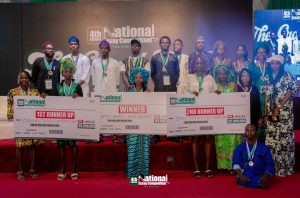
All the participants 

Continue Reading

Abuja Reports

20 Finalists Begin Final Stage of National Essay Competition

Published

on

By

By Samson Adeyanju

Twenty finalists from across Nigeria have begun the final stage of the fourth edition of the National Essay Competition in Abuja, following an orientation session designed to prepare them for the decisive examination.

The finalists arrived in the Federal Capital Territory for a four-day, all-expenses-paid programme featuring the essay examination, institutional tours and opportunities for learning and networking.

The competition, the brainchild of Mr Foluso Ojo, is sponsored by the Nigeria Revenue Service (NRS).

Ahead of the examination, the finalists participated in an orientation session led by Professor Omotosho Borisade of Ekiti State University, who serves as the competition’s umpire.

The session familiarised participants with the competition’s rules and regulations, examination guidelines and assessment criteria, helping them understand the requirements of the final stage.

The essay examination is scheduled to begin today at 9 a.m., after which the finalists are expected to embark on institutional tours around Abuja.

The programme is designed to extend beyond the contest itself, exposing the finalists to new learning opportunities, professional connections and experiences in the nation’s capital.

The competition brings together young Nigerians to demonstrate their writing ability, knowledge, creativity and critical-thinking skills as they compete for the top honours.

With the finalists prepared for the examination, attention now turns to their performance and the eventual emergence of the competition’s champion.


Continue Reading

Abuja Reports

Caritas Nigeria Urges Ecological Conversion, Climate Action

Published

on

By

By Samson Adeyanju

Caritas Nigeria has called on Nigerians to embrace what Pope Francis describes as “ecological conversion,” urging citizens, institutions and governments to move beyond environmental rhetoric and take concrete action against climate change and environmental degradation.

The call was made during the commemoration of World Environment Day 2026 at the Catholic Secretariat of Nigeria (CSN) Training Hall, Abuja, under the theme: “Inspired by Nature. For Climate. For Our Future.”

Delivering an address on behalf of the Catholic Secretariat of Nigeria, the Deputy Secretary, Rev. Fr. Augustine Okochi, described care for the environment as a moral, spiritual and ethical responsibility rooted in Christian faith.

“Our concern for the environment is not a passing trend. It is part of our moral duty, our Christian witness, and our responsibility to future generations,” he said.

Fr. Okochi noted that climate change is already affecting communities through flooding, land degradation, water pollution, rising temperatures and declining livelihoods, with the poor, women, children and displaced persons bearing the greatest burden.

He commended Caritas Nigeria’s efforts in environmental awareness, tree planting, climate-smart agriculture and support for vulnerable communities, while urging families, schools, parishes and institutions to cultivate a culture of environmental stewardship.

Speaking at the event, Caritas Nigeria’s Environmental Focus President, Dr. Pascal Onu, stressed the importance of educating young people on environmental protection through debate and quiz competitions.

“We believe it is important to catch them young. When we imbibe the right environmental culture in our children, it goes a long way in protecting the environment,” he said.

Dr. Onu identified inadequate infrastructure, poor waste management systems and limited funding as major obstacles to environmental sustainability despite increasing public awareness of climate issues.

Also speaking, Director of the Department of Climate Change at the Federal Ministry of Environment, Dr. Iniobong Abiola-Awe, reaffirmed Nigeria’s commitment to climate action through initiatives such as the National Adaptation Plan, Nationally Determined Contributions (NDCs), the Just Transition Action Plan and the National Clean Cooking Policy.

She emphasized the role of young people in advancing climate solutions through programmes such as the Eco-Schools Initiative and the Youth Climate Innovation Hub.

In a goodwill message, the Abuja Environmental Protection Board (AEPB), represented by Chief Environmental Health Officer Omenta Rachael Chinenye, urged Nigerians to draw inspiration from nature in addressing environmental challenges and commended the active participation of students in climate debates.

Students at the event said the programme deepened their understanding of environmental protection, forest conservation and sustainable living, pledging to promote environmental responsibility in their schools and communities.

The event brought together religious leaders, government officials, environmental experts, students and development partners who renewed their commitment to building a cleaner, greener and more climate-resilient Nigeria.

Continue Reading

Trending