Connect with us

News

CAPPA Lobbies NASS to Grant N300m for Tobacco Control in Nigeria

Published

on

Bode Oluwafemi

By Our Correspondent

Environmental group, Corporate Accountability and Public Participation Africa (CAPPA,) has advocated that the Senate and House of Representatives should raise the budgetary allocation for Tobacco Control in the 2025 National Budget from the current N10 million to N300 million.

This is coming as the National Assembly is reviewing the N49.7 trillion 2025 Appropriation Bill presented by President Bola Ahmed Tinubu on December 18, 2024, CAPPA, in separate petitions on Monday, January 20, 2025, to Senate President Godswill Akpabio and Speaker Dr. Tajudeen Abbas, reasoned that allocating a minimum of N300 million is essential to address the multifaceted challenges posed by tobacco use and support the effective implementation of the National Tobacco Control Act (NTCA) 2015.

Highlighting the danger of tobacco consumption and the stakes at hand, Akinbode Oluwafemi, CAPPA’s Executive Director, noted that tobacco use remains the leading preventable cause of death worldwide, including in Nigeria.

“Tobacco use remains the leading preventable cause of death worldwide, and Nigeria is no exception. Annually, tobacco-related illnesses claim 26,800 Nigerian lives and inflict debilitating conditions and non-communicable diseases like cancer, heart disease, and chronic respiratory diseases on thousands more. The economic toll is immense, costing billions in healthcare expenses and lost productivity. Additionally, tobacco cultivation exacerbates deforestation and soil degradation, while cigarette waste pollutes the environment,” Oluwafemi said.

The challenge, he noted, is further compounded by the emergence of unregulated tobacco and nicotine products that target younger demographics and exploit gaps in the regulatory framework.

Oluwafemi added: “These products, including electronic cigarettes and novel smokeless tobacco, are marketed as trendy despite their health risks. Moreover, tobacco companies in Nigeria continue to exploit weak monitoring systems to market their offerings aggressively on social media, as well as utilise corporate social responsibility (CSR) initiatives to gain favour with public health authorities, thereby undermining tobacco control laws and enticing more users into tobacco consumption.

“To counteract these threats, it is imperative that the Nigerian government intensify its efforts in regulation and control, recognising the grave public health and economic impacts of tobacco use. To be clear, the Federal Government must respond with proportional investment in the TCF for the effective regulation of tobacco consumption.”

CAPPA observed that while the 2024 budget commendably increased allocation to the TCF to N10 million from N4.7 million directed to it in 2023, it remains insufficient for several critical reasons.

Oluwafemi said: “Firstly, operational costs consume a large portion of the funds. The National Tobacco Control Committee (NATOCC) require substantial finance running in millions for the coordination of its meetings, which should occur at least four times annually as stipulated by the National Tobacco Control Act (NTCA). The current allocation to the TCF, which provides support for these meetings, remains poor and, therefore, leaves virtually no financial room for this activity or other essential responsibilities of the NATOCC.

“Secondly, effective sensitisation campaigns need robust media outreach, deep community engagement, and active coordination with various stakeholders across the country. These activities require substantial funding to reach a wide audience and create impactful messages.

“Thirdly, there is a pressing need for alternative cropping initiatives to support tobacco farmers transitioning to sustainable crops. This shift involves continuous investment in training programs, provision of quality seedlings, and adequate financial support to ensure that these farmers can move to more sustainable and health-friendly agricultural practices.

“Furthermore, enforcement and monitoring activities are crucial to combat industry interference and ensure compliance with tobacco control regulations. This includes prosecuting violations, safeguarding smoke-free spaces and ensuring a ban on tobacco advertising, promotion and sponsorship, amongst other efforts. Adequate funding is also essential to equip and train enforcement teams on the front lines of this battle, ensuring that regulations are not only in place but actively upheld.”

To this end, CAPPA made two requests of the upper and lower chambers. The first is to “increase the tobacco control allocation to a minimum of n300m in the 2025 budget and ensure subsequent increments in future budgets.”

The CSO reasoned that this would allow the National Tobacco Control Committee (NATOCC) and Tobacco Control Unit (TCU) domiciled within the Federal Ministry of Health and Social Welfare to convene mandated meetings and implement robust public health campaigns to educate citizens about the dangers of tobacco use, fund research initiatives to monitor trends in tobacco consumption and evaluate policy impacts, enhance enforcement efforts, including monitoring compliance with existing laws and prosecuting violations and support alternative livelihood programs for tobacco farmers, ensuring that they transition sustainably to other crops.

Secondly, CAPPA called for the full operationalisation of the National Tobacco Control Fund.

The Tobacco Control Fund (TCF) was established under Section 8 of the Nigeria Tobacco Control Act (NTCA), 2015, as part of a comprehensive framework to combat the harmful effects of tobacco consumption. The fund is drawn from various sources, including appropriations from the national budget, proceeds of fines for violations of tobacco laws, and contributions from relevant development bodies for tobacco control.

Explaining the TCF’s importance, Oluwafemi added: “By establishing the TCF, the federal government recognised the enormous public health risks posed by tobacco and the role of adequate financial resources to combat them. In fact, the TCF is intended to support vital activities such as public health campaigns, regulatory enforcement of the NTCA, research on tobacco trends, and alternative livelihood programs for tobacco farmers.

“However, since its creation, the Fund has yet to achieve full operationalisation, leaving Nigerians vulnerable to the unchecked dangers of tobacco consumption and marketing.

“By fully operationalising the TCF, ensuring transparent and accountable fund management, and bolstering the institutional capacity of relevant public health authorities to exercise their mandate, the National Assembly will be leading the charge in safeguarding public health, reducing economic burdens, and protecting the environment from the devastating impacts of tobacco.”

Continue Reading
Click to comment

Leave a Reply

Your email address will not be published. Required fields are marked *

Abuja Reports

Atoyebi Adewumi Wins 4th National Essay Competition, Beats 2,000 Contestants

Published

on

By

By Samson Adeyanju

Atoyebi Adewumi has emerged winner of the fourth edition of the National Essay Competition, beating more than 2,000 contestants in an intellectual contest aimed at promoting academic excellence, critical thinking and creative writing among young Nigerians.

The competition, which focused on the relevance of taxation to national development, challenged participants to examine the role of tax revenue in financing public services, stimulating economic growth and strengthening the relationship between government and citizens.

The initiative provided a platform for young Nigerians to demonstrate their writing skills, articulate informed perspectives on national issues and contribute ideas towards building a more responsible and progressive society.

Speaking after being declared winner, an elated Adewumi expressed gratitude to the convener, Foluso Sylvanus Ojo, and the organising team for providing young Nigerians with an opportunity to showcase their intellectual abilities.

“I am so glad, very, very glad, to have this privilege of emerging as the winner. I am grateful to the convener and the entire team, as well as everyone who supported this vision,” Adewumi said.

In his remarks, Ojo expressed concern over the tendency to criticise the attitudes and lifestyles of younger generations without providing adequate opportunities to nurture their talents and channel their energies towards productive pursuits.

He called on the government, corporate organisations and nongovernmental organisations to invest more in educational initiatives that promote intellectual excellence, creativity and responsible citizenship.

According to him, sustained investment in academic competitions and youth development programmes would encourage discipline, innovation and a stronger commitment to national development.

Drawing a comparison with the substantial cash prizes awarded in some reality television competitions in Nigeria, Ojo argued that students and intellectually gifted young Nigerians deserved greater recognition, financial support and encouragement.

“I believe the government should support initiatives like this because individuals need supportive hands, especially from the government. When they receive such support, they become more confident and motivated to continue their good work,” he said.

Ojo maintained that society could not continue to complain about the attitudes and lifestyles of young people without deliberately investing in programmes that encourage positive values and productive engagement.

The fourth edition of the competition also underscored the importance of tax awareness among young Nigerians, highlighting how effective taxation, transparency and accountable governance could contribute to improved infrastructure, education, healthcare and other essential public services.

Beyond celebrating the winner, the competition reinforced the need to identify, encourage and empower emerging intellectual talents capable of contributing meaningfully to Nigeria’s development.

Winner of the 5,000,000 naira

Winner of 3,000,000 naira

Winner of 2,000,000

All the participants 

Continue Reading

Abuja Reports

20 Finalists Begin Final Stage of National Essay Competition

Published

on

By

By Samson Adeyanju

Twenty finalists from across Nigeria have begun the final stage of the fourth edition of the National Essay Competition in Abuja, following an orientation session designed to prepare them for the decisive examination.

The finalists arrived in the Federal Capital Territory for a four-day, all-expenses-paid programme featuring the essay examination, institutional tours and opportunities for learning and networking.

The competition, the brainchild of Mr Foluso Ojo, is sponsored by the Nigeria Revenue Service (NRS).

Ahead of the examination, the finalists participated in an orientation session led by Professor Omotosho Borisade of Ekiti State University, who serves as the competition’s umpire.

The session familiarised participants with the competition’s rules and regulations, examination guidelines and assessment criteria, helping them understand the requirements of the final stage.

The essay examination is scheduled to begin today at 9 a.m., after which the finalists are expected to embark on institutional tours around Abuja.

The programme is designed to extend beyond the contest itself, exposing the finalists to new learning opportunities, professional connections and experiences in the nation’s capital.

The competition brings together young Nigerians to demonstrate their writing ability, knowledge, creativity and critical-thinking skills as they compete for the top honours.

With the finalists prepared for the examination, attention now turns to their performance and the eventual emergence of the competition’s champion.


Continue Reading

News

Pastor Ogundipe Decries Lack of Integrity Among Educated Nigerians

Published

on

By

By Samson Adeyanju

Pastor Alex Ogundipe, Chairman of the Governing Board of Christian Heritage International Bible College, Kubwa, Abuja, has expressed concern over the growing number of educated Nigerians who lack the character and integrity required to make meaningful contributions to society.

Ogundipe raised the concern during the matriculation ceremony of the institution’s 60 pioneer students, stressing that academic qualifications without moral discipline and upright character could undermine national development.

According to him, Nigeria has many knowledgeable and academically accomplished individuals whose inability to demonstrate integrity has negatively affected their contributions to their families, workplaces and communities.

“We have too many people in this country who are knowledgeable and wise in their own ways, but they do not have character and integrity. That affects their ability to impact their communities,” he said.

The cleric emphasised that education must go beyond the acquisition of certificates to the development of individuals who demonstrate honesty, accountability, faithfulness and commitment to serving humanity.

He explained that true integrity required consistency in personal conduct, whether at home, in the church, at work or within the larger society.

Ogundipe said the college was established not merely to impart biblical knowledge but to raise men and women whose lifestyles reflect Christian values and whose contributions would positively influence society.

He urged Christian leaders to demonstrate their faith through practical actions rather than mere religious declarations.

Speaking on Nigeria’s future, the cleric encouraged citizens to remain hopeful, pray for the country and contribute meaningfully to national peace, unity and development.

Earlier, the Rector of the institution, Pastor Samson Olukayode Aliyu, challenged the matriculating students to prioritise spiritual maturity and moral discipline alongside academic excellence.

Aliyu warned against examination malpractice, plagiarism, dishonesty and other forms of misconduct, stressing that academic certificates could demonstrate knowledge but could not substitute for good character.

“The Church does not only need gifted people; it needs godly people. We need leaders who will choose integrity over compromise, humility over pride, faithfulness over convenience and service over self-interest,” he declared.

He explained that the college offers six-month certificate programmes in theology and one-year diploma programmes in theology, leadership and prophetic studies.

One of the matriculating students, Akeem Omobolanle, who enrolled in the Diploma in Leadership programme, commended the institution’s approach to biblical education and expressed optimism that the training would strengthen his understanding of the Scriptures and prepare him for greater service in Christian ministry.

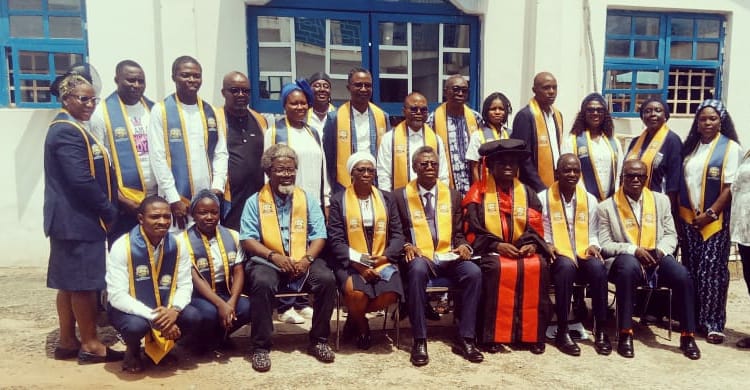
The ceremony marked the formal admission of the college’s pioneer students into its academic community.

Continue Reading

Trending