Connect with us

Education

Economic Hardship: Nigerian Universities at Risk of Closing Down – ASUU President

Published

on

Professor Emmanuel Osodeke, President of the Academic Staff Union of Universities (ASUU), has raised an alert, claiming that most Nigerian universities are on the edge of closure due to exorbitant administrative costs.

He chastised the Federal Government for continually questioning the deployment of Internally Generated Revenue (IGR) from public universities, claiming that such amounts are insufficient in comparison to the enormous costs incurred for electricity supply, security, and accommodation, among other administrative expenses.

Prof. Osodeke made the troubling remarks on Thursday in Abuja while answering reporters’ queries at the ASUU State of the Nation Conference, with the topic “Nigeria in a State of General Crisis: The Search for a New Path to Development”.

He claimed that most public institutions receive only N15 million per month in government overhead but must pay electrical bills of N300 million or more.

Lamenting the deplorable circumstances of some academics in the country, the ASUU President stated that farming has become even more attractive for academicians, especially when a professor is forced to earn less than N300,000 per month while also supporting his family and publishing journals.

Osodeke also criticized the country’s proliferation of universities, warning that they were only staffed with skeletons because the majority of the lecturing staff had left the country in pursuit of greener pastures.

He described the situation within the university system as very disturbing, stressing that most of their members are dropping dead.

His words, “We are so challenged. But let me give you a quick example, University of Lagos, University of Ibadan Amadu Bello University, and University Nigeria, Nsuka, what they get from the government account for overhead running of the university in a month is N15million. Meanwhile, the University of Lagos needs about N200 million naira to pay electricity bill. It is this IGR that you talk about that is used to pay for the electricity.

“One of the universities today is closing down because they have been given electricity bill of N300 million naira.

“What government gives you to run the system is N15 million, and you get a bill for electricity alone of 300 million naira. Where is that money coming from? You have to run the laboratories. You have to run the diesel. You have to run the fuel for vehicles.

“That is where the IGR is going into today. Not being able to run the system, to buy books in the library, to run your library, to earn those things. They are all part of their so called IGR, and that is what they talk about it.

“But you know what? A government that will give just N15 million for UNILAG to run, will in turn, give one Senator N21 million a month. The government gives a system N15million, but an individual gets N21million. That’s where our priority is.

“For whatever reason, they have refused to fund the university systems as it was in the earlier part of our history.

“From the way we are going, if nothing is done, many universities will close up because they can not afford the so called band A and Band B”.

ASUU also disclosed how rigging is perpetuated by the political class, prompting their members to boycott voting procedures following the 2015 general elections.

According to Osodeke, academicians who still preside over elections do so in their private capacity rather than as ASUU members.

He claimed that politicians bring figures from voting stations to the presiding officer, who announces them.

He stated that rigging will be abolished if ASUU members are involved in all stages of the electoral process, from ward levels to local governments to national.

His words, “ASUU was asked to help conduct the election. That first election went well, though they were still issues. When the elections were over, we called for a meeting, put up a committee together to study what happened.

“By time they finished, they came with a report that even though our colleagues are involved in the election, rigging are done at the polling booths and local government collation centres.

“What our colleagues do is just collating what they have been given. They gave you a report, and you just write it down. So we found out that rigging is done there, and given to our members to collate.

“We went to INEC and asked that we participate from the polling unit up to the final stage and they refused. We wrote to them that ASUU, as a body, will not participate in any election.

“If you recall, before any election in this country, we will come out with a statement that we are not part of the election, but our members are Nigerians. They have their freedom, and they can go and do anything”.

Continue Reading
Click to comment

Leave a Reply

Your email address will not be published. Required fields are marked *

Abuja Reports

Atoyebi Adewumi Wins 4th National Essay Competition, Beats 2,000 Contestants

Published

on

By

By Samson Adeyanju

Atoyebi Adewumi has emerged winner of the fourth edition of the National Essay Competition, beating more than 2,000 contestants in an intellectual contest aimed at promoting academic excellence, critical thinking and creative writing among young Nigerians.

The competition, which focused on the relevance of taxation to national development, challenged participants to examine the role of tax revenue in financing public services, stimulating economic growth and strengthening the relationship between government and citizens.

The initiative provided a platform for young Nigerians to demonstrate their writing skills, articulate informed perspectives on national issues and contribute ideas towards building a more responsible and progressive society.

Speaking after being declared winner, an elated Adewumi expressed gratitude to the convener, Foluso Sylvanus Ojo, and the organising team for providing young Nigerians with an opportunity to showcase their intellectual abilities.

“I am so glad, very, very glad, to have this privilege of emerging as the winner. I am grateful to the convener and the entire team, as well as everyone who supported this vision,” Adewumi said.

In his remarks, Ojo expressed concern over the tendency to criticise the attitudes and lifestyles of younger generations without providing adequate opportunities to nurture their talents and channel their energies towards productive pursuits.

He called on the government, corporate organisations and nongovernmental organisations to invest more in educational initiatives that promote intellectual excellence, creativity and responsible citizenship.

According to him, sustained investment in academic competitions and youth development programmes would encourage discipline, innovation and a stronger commitment to national development.

Drawing a comparison with the substantial cash prizes awarded in some reality television competitions in Nigeria, Ojo argued that students and intellectually gifted young Nigerians deserved greater recognition, financial support and encouragement.

“I believe the government should support initiatives like this because individuals need supportive hands, especially from the government. When they receive such support, they become more confident and motivated to continue their good work,” he said.

Ojo maintained that society could not continue to complain about the attitudes and lifestyles of young people without deliberately investing in programmes that encourage positive values and productive engagement.

The fourth edition of the competition also underscored the importance of tax awareness among young Nigerians, highlighting how effective taxation, transparency and accountable governance could contribute to improved infrastructure, education, healthcare and other essential public services.

Beyond celebrating the winner, the competition reinforced the need to identify, encourage and empower emerging intellectual talents capable of contributing meaningfully to Nigeria’s development.

Winner of the 5,000,000 naira

Winner of 3,000,000 naira

Winner of 2,000,000
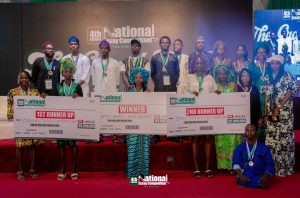
All the participants 

Continue Reading

Abuja Reports

20 Finalists Begin Final Stage of National Essay Competition

Published

on

By

By Samson Adeyanju

Twenty finalists from across Nigeria have begun the final stage of the fourth edition of the National Essay Competition in Abuja, following an orientation session designed to prepare them for the decisive examination.

The finalists arrived in the Federal Capital Territory for a four-day, all-expenses-paid programme featuring the essay examination, institutional tours and opportunities for learning and networking.

The competition, the brainchild of Mr Foluso Ojo, is sponsored by the Nigeria Revenue Service (NRS).

Ahead of the examination, the finalists participated in an orientation session led by Professor Omotosho Borisade of Ekiti State University, who serves as the competition’s umpire.

The session familiarised participants with the competition’s rules and regulations, examination guidelines and assessment criteria, helping them understand the requirements of the final stage.

The essay examination is scheduled to begin today at 9 a.m., after which the finalists are expected to embark on institutional tours around Abuja.

The programme is designed to extend beyond the contest itself, exposing the finalists to new learning opportunities, professional connections and experiences in the nation’s capital.

The competition brings together young Nigerians to demonstrate their writing ability, knowledge, creativity and critical-thinking skills as they compete for the top honours.

With the finalists prepared for the examination, attention now turns to their performance and the eventual emergence of the competition’s champion.


Continue Reading

Education

Oyelami Named Acting CEO of National Mathematical Centre

Published

on

By

By Omoniyi David

The Federal Government has appointed Professor Oyelami as Acting Chief Executive Officer of the National Mathematical Centre with immediate effect.

The appointment was announced in a statement by the centre’s Controller of Information and Public Relations, Onyekachi Njoku. He said the decision followed the elevation of the former CEO, Promise Mebine, as Vice-Chancellor of the Federal University Otuoke.

Njoku disclosed that the approval was conveyed in a letter signed by Rakiya Ilyasu, Director of University Education at the Federal Ministry of Education.

Professor Oyelami, a mathematician who joined the centre over two decades ago from Abubakar Tafawa Balewa University, previously served as Coordinator of the Mathematics and Theoretical Physics programmes and as Deputy Director/Academic Planning Coordinator.

An alumnus of the University of Jos and Abubakar Tafawa Balewa University, he holds a Second-Class Upper degree, MSc and PhD in Mathematics and has published widely in local and international journals.

The centre said his appointment would strengthen its mandate to promote research, innovation and capacity building in mathematical sciences.

Continue Reading

Trending