News
Cabinet Reshuffle: Bring in Transformative Minds, ex-Osinbajo’s Spokesman Tells Tinubu
Published
2 years agoon
By
editor
Former presidential aide Laolu Akande has called on President Bola Tinubu to use the impending cabinet reshuffle as a strategic opportunity to bring in transformative leaders capable of tackling Nigeria’s mounting challenges. Speaking during the “My Take” segment of the popular Channels TV program Inside Sources with Laolu Akande on Sunday, Akande emphasized that Tinubu must assemble a team of innovative minds, much like the one he formed during his tenure as Lagos State Governor from 1999 to 2007.
Akande’s remarks followed a recent announcement by presidential spokesman Bayo Onanuga, who confirmed that President Tinubu plans to reshuffle his cabinet soon. Akande sees this as a critical moment for Tinubu to emulate his successful governance strategies from Lagos on a national scale.
Akande urged the president to reflect on the bold reforms he implemented as Lagos State Governor, which transformed key sectors and set the state on a path of sustainable development. “The cabinet reshuffle is an opportunity,” Akande stated. “President Bola Ahmed Tinubu should see this as a chance to appoint competent, transformative leaders who can steer the nation through its current difficulties.”
One of the standout achievements of Tinubu’s time as governor was his reform of the judiciary in Lagos, which Akande highlighted as a model for the rest of the country. Tinubu’s administration significantly improved the welfare of judges, which helped curb corruption and restore public confidence in the judicial system. The establishment of the Office of the Public Defender, a key initiative aimed at providing free legal services to those in need, has since been adopted by several other states in Nigeria.
“Based on his records in Lagos, there are at least three transformative imprints the president left when he was governor, which we believe he should replicate at the federal level,” Akande said. “A reformed judiciary with better welfare for judges, the fight against corruption within the judiciary, and the creation of the Public Defender’s Office — all of these were groundbreaking reforms that made a lasting impact.”
Akande also pointed to Tinubu’s success in expanding local governance in Lagos, noting that the establishment of additional local governments allowed governance to reach the grassroots level. This decentralized approach helped deliver essential services more efficiently and created new opportunities for local development. “He established a local government system that took the government directly to the people,” Akande said, underscoring the importance of replicating such reforms at the national level to address governance gaps across Nigeria.
Another key achievement of Tinubu’s administration in Lagos was his innovative approach to boosting Internally Generated Revenue (IGR). By implementing far-reaching fiscal policies, Tinubu’s administration increased the state’s financial capacity and made Lagos less dependent on federal allocations. This financial autonomy enabled the state to pursue an aggressive development agenda.
Akande believes that this model of fiscal self-reliance is exactly what Nigeria needs at the national level. “How did then-Governor Tinubu manage to achieve these reforms? He assembled a top-notch team of competent individuals who had the public interest at heart,” Akande explained. He added that many of those in Tinubu’s administration were not only experts in their fields but also key contributors to the master plans developed for various sectors of governance.
However, Akande expressed concern that the current federal cabinet is too large and filled with individuals who may lack the expertise or dedication necessary to lead the country through its challenges. He urged the president to prioritize competence over political patronage, warning that the country cannot afford to have ministers who are “learning on the job.”
“This is no time for ministers to be learning on the job! Right now, there are too many ‘deadbeats’ in the cabinet, and it’s also too large and unwieldy,” Akande said. He stressed that Nigeria’s economic woes, including inflation, unemployment, and insecurity, demand urgent and effective leadership.
Akande argued that the president must surround himself with trusted advisors and cabinet members who can challenge him when necessary, just as he did during his time as governor. “When President Tinubu was governor, he had a Chief of Staff who got things done, trusted aides who could challenge him for his own good and the good of Lagos State. Where are such individuals in this current presidency?” Akande asked pointedly.
As Nigeria grapples with economic and security challenges, Akande urged President Tinubu to seize this cabinet reshuffle as an opportunity to appoint visionary leaders who can implement bold and effective policies. According to Akande, the president needs to build a team that understands the gravity of the nation’s challenges and is committed to transformative change.
“We need a president at this time who will appoint transformative-minded people in key sectors, and this cabinet reshuffling is the perfect opportunity to make that happen,” Akande concluded. “The president’s ability to assemble a competent, dedicated team will determine the success of his administration in navigating the country’s current difficulties.”
You may like
Abuja Reports
Caritas Nigeria Urges Ecological Conversion, Climate Action
Published
2 days agoon
June 11, 2026By
Editor
By Samson Adeyanju
Caritas Nigeria has called on Nigerians to embrace what Pope Francis describes as “ecological conversion,” urging citizens, institutions and governments to move beyond environmental rhetoric and take concrete action against climate change and environmental degradation.
The call was made during the commemoration of World Environment Day 2026 at the Catholic Secretariat of Nigeria (CSN) Training Hall, Abuja, under the theme: “Inspired by Nature. For Climate. For Our Future.”
Delivering an address on behalf of the Catholic Secretariat of Nigeria, the Deputy Secretary, Rev. Fr. Augustine Okochi, described care for the environment as a moral, spiritual and ethical responsibility rooted in Christian faith.
“Our concern for the environment is not a passing trend. It is part of our moral duty, our Christian witness, and our responsibility to future generations,” he said.
Fr. Okochi noted that climate change is already affecting communities through flooding, land degradation, water pollution, rising temperatures and declining livelihoods, with the poor, women, children and displaced persons bearing the greatest burden.
He commended Caritas Nigeria’s efforts in environmental awareness, tree planting, climate-smart agriculture and support for vulnerable communities, while urging families, schools, parishes and institutions to cultivate a culture of environmental stewardship.
Speaking at the event, Caritas Nigeria’s Environmental Focus President, Dr. Pascal Onu, stressed the importance of educating young people on environmental protection through debate and quiz competitions.
“We believe it is important to catch them young. When we imbibe the right environmental culture in our children, it goes a long way in protecting the environment,” he said.
Dr. Onu identified inadequate infrastructure, poor waste management systems and limited funding as major obstacles to environmental sustainability despite increasing public awareness of climate issues.
Also speaking, Director of the Department of Climate Change at the Federal Ministry of Environment, Dr. Iniobong Abiola-Awe, reaffirmed Nigeria’s commitment to climate action through initiatives such as the National Adaptation Plan, Nationally Determined Contributions (NDCs), the Just Transition Action Plan and the National Clean Cooking Policy.
She emphasized the role of young people in advancing climate solutions through programmes such as the Eco-Schools Initiative and the Youth Climate Innovation Hub.
In a goodwill message, the Abuja Environmental Protection Board (AEPB), represented by Chief Environmental Health Officer Omenta Rachael Chinenye, urged Nigerians to draw inspiration from nature in addressing environmental challenges and commended the active participation of students in climate debates.
Students at the event said the programme deepened their understanding of environmental protection, forest conservation and sustainable living, pledging to promote environmental responsibility in their schools and communities.
The event brought together religious leaders, government officials, environmental experts, students and development partners who renewed their commitment to building a cleaner, greener and more climate-resilient Nigeria.
2027 General Elections
Catholic Church Warns Against Fake Identities, Urges Responsible Journalism
Published
4 weeks agoon
May 17, 2026By
Editor
By Samson Adeyanju
The Catholic Church in Nigeria has warned against the growing spread of fake identities, misinformation and digital disconnection in the media space, calling on journalists and social media users to embrace truth, responsibility and respect for human dignity in communication.
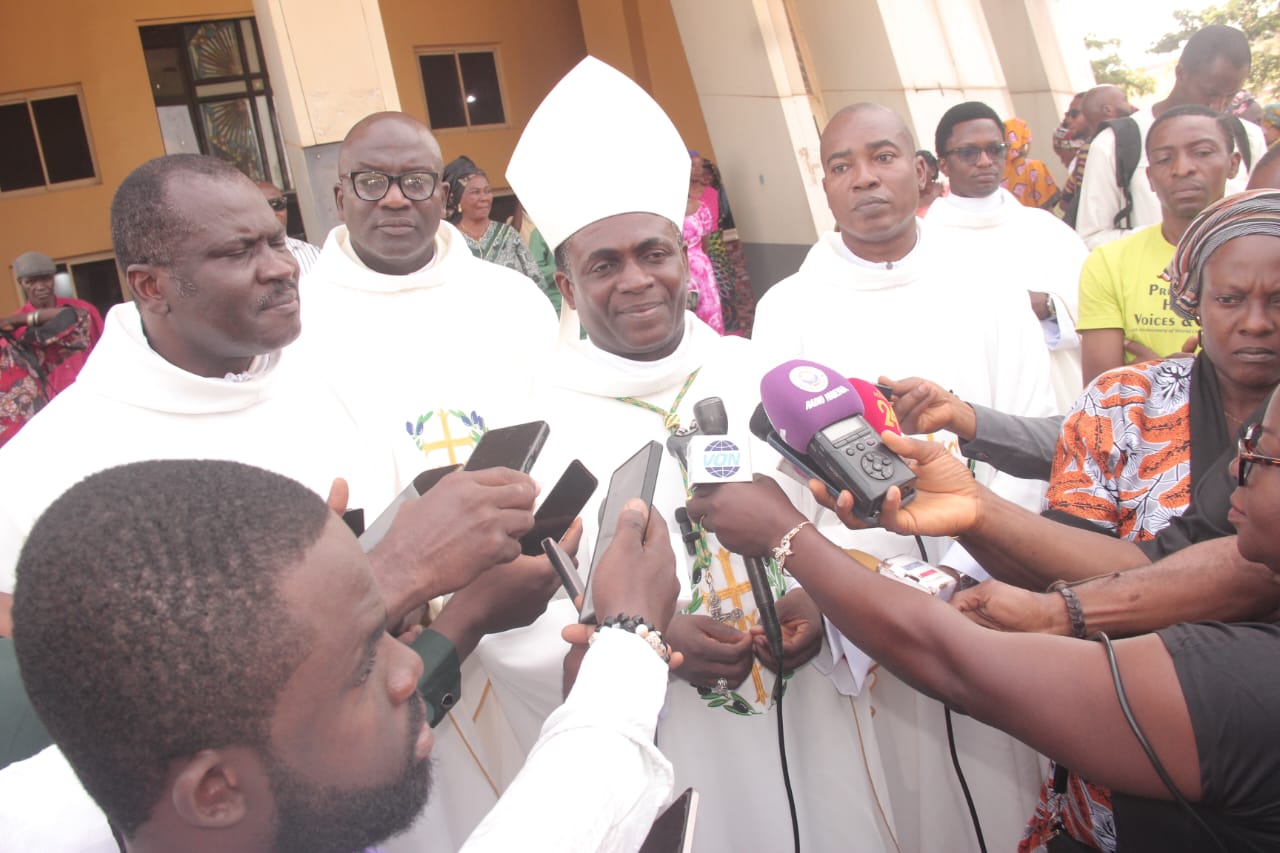
The warning was issued by the Chairman of the Department of Communications of the Catholic Bishops’ Conference of Nigeria and Bishop of the Catholic Diocese of Katsina, Most Rev. Gerald Mamman Musa, during his homily and press conference at the 2026 World Communications Day celebration held at the Catholic Secretariat of Nigeria, Abuja.
Bishop Musa, who reflected on the theme “Preserving Human Voices and Faces,” said modern society is increasingly “digitally connected but personally and spiritually disconnected,” despite advances in communication technology.
He stressed that communication remains central to human existence, noting that “to live is to communicate,” whether through speech, writing, or digital platforms.
According to him, the Church sets aside World Communications Day annually to reflect on the responsibility that comes with communication, especially in an era dominated by social media and digital interactions.
Prayer and spiritual grounding in communication
Drawing from the liturgical readings, Bishop Musa emphasised the importance of prayer, describing it as the “master key” to perseverance, strength and spiritual revival.
He recalled the apostles who, after the ascension of Jesus Christ, gathered in the upper room in fear but turned their anxiety into prayer while awaiting the Holy Spirit.
“The upper room is a place of communion with God, revival and spiritual renewal,” he said, urging Christians to remain rooted in prayer amid modern-day pressures.
He added that prayer does not remove suffering but gives believers the strength to endure challenges with hope and joy.
Warning against fake identities and online abuse
Bishop Musa warned that social media platforms have become spaces where individuals hide behind fake names, anonymous accounts and false identities to spread hatred, lies, blackmail and cybercrime.
“When we come with unreal names and masks on social media, we are acknowledging that we are doing something wrong,” he said.
He compared such behaviour to criminals who conceal their identities while committing evil acts, adding that truth thrives in openness while wrongdoing hides in anonymity.
He also cautioned against treating people as statistics or objects, drawing from the philosophy of Martin Buber, which emphasises human dignity and mutual respect.
The bishop further highlighted how Jesus Christ consistently gave voice to the marginalised, including the Samaritan woman, the woman caught in adultery and the blind Bartimaeus, stressing that society must not silence vulnerable voices.
According to him, preserving human voices means allowing people to speak from their lived experiences rather than speaking over them.
Bishop Musa urged media practitioners and social media users to use communication tools responsibly in promoting truth, evangelisation and human dignity.
“Speaking the truth in love is not only about projecting our voices, but doing so with charity and responsibility,” he said.
CSN Scribe urges responsible journalism ahead of elections
The Secretary-General of the Catholic Secretariat of Nigeria, Fr. Michael Banjo, also called on journalists to uphold responsible journalism and defend truth as Nigeria approaches another election cycle.
Fr. Banjo warned that communication must not become “a weapon of injury” in a country already facing insecurity, economic hardship and political tension.
He stressed that preserving human voices and faces requires verifying information before publication to prevent misinformation from damaging reputations or destabilising communities.
According to him, journalists must avoid hate speech, sensationalism and divisive narratives that reduce citizens to ethnic, religious or political labels.
“The answer to misinformation is responsible journalism; the answer to propaganda is truth,” he said.
Fr. Banjo also called for transparency in the electoral process, especially in the electronic transmission of results, insisting that every vote must count and reflect the true will of the people.
He urged journalists not only to highlight challenges but also to report positive developments that strengthen national unity and hope.
The CSN scribe thanked the media for their continued partnership with the Church in promoting justice, peace and accountability.
He concluded by urging Nigerians to “speak truth without hatred, listen without prejudice, and use every platform in service of the common good.”
Fr Umoh celebrates birthday, reflects on six-year tenure
The National Director of Social Communications of the Catholic Secretariat of Nigeria, Rev. Fr. Michael Nsikak Umoh, also used the occasion to reflect on his six-year tenure as he addressed journalists at the same event, which marked the 2026 World Communications Day and the closing of the 5th Nigeria Catholic Communications Week (ComWEEK).
Fr. Umoh described the event as a “double celebration,” noting both the global communications observance and the conclusion of a nationwide media literacy programme carried out across Catholic parishes and chaplaincies.
He expressed gratitude to the media for their collaboration with the Church, describing journalists as key partners in amplifying the Church’s voice and strengthening public discourse.
According to him, the media and the Church share a “sacred duty to be the conscience of the nation,” especially in challenging socio-economic times.
He also paid tribute to the immediate past Chairman of the CSN Communications Department, Most Rev. David Ajang of the Catholic Diocese of Lafia, commending his leadership in establishing key reforms, including the Nigeria Catholic Network (NCN) and the institutionalisation of ComWEEK.
Fr. Umoh introduced the new Chairman of the CSN Department of Social Communications, Most Rev. Gerald Mamman Musa, describing him as a “communications scholar and seasoned shepherd,” and expressed confidence in his leadership.
Reflecting on his tenure since 2020, he said his administration worked to strengthen the Church’s digital presence and unify communication structures, while acknowledging that further work remains.
He thanked the Catholic Bishops’ Conference of Nigeria (CBCN), his Archbishop Most Rev. Alfred Adewale Martins, and the media for their support throughout his service.
In a personal note, Fr. Umoh revealed that the celebration coincided with his 58th birthday, calling it a “providential coincidence” and a meaningful milestone in his ministry.
The event ended with prayers for the media, the Church and Nigeria, and the formal closure of ComWEEK 2026.
By Samson Adeyanju
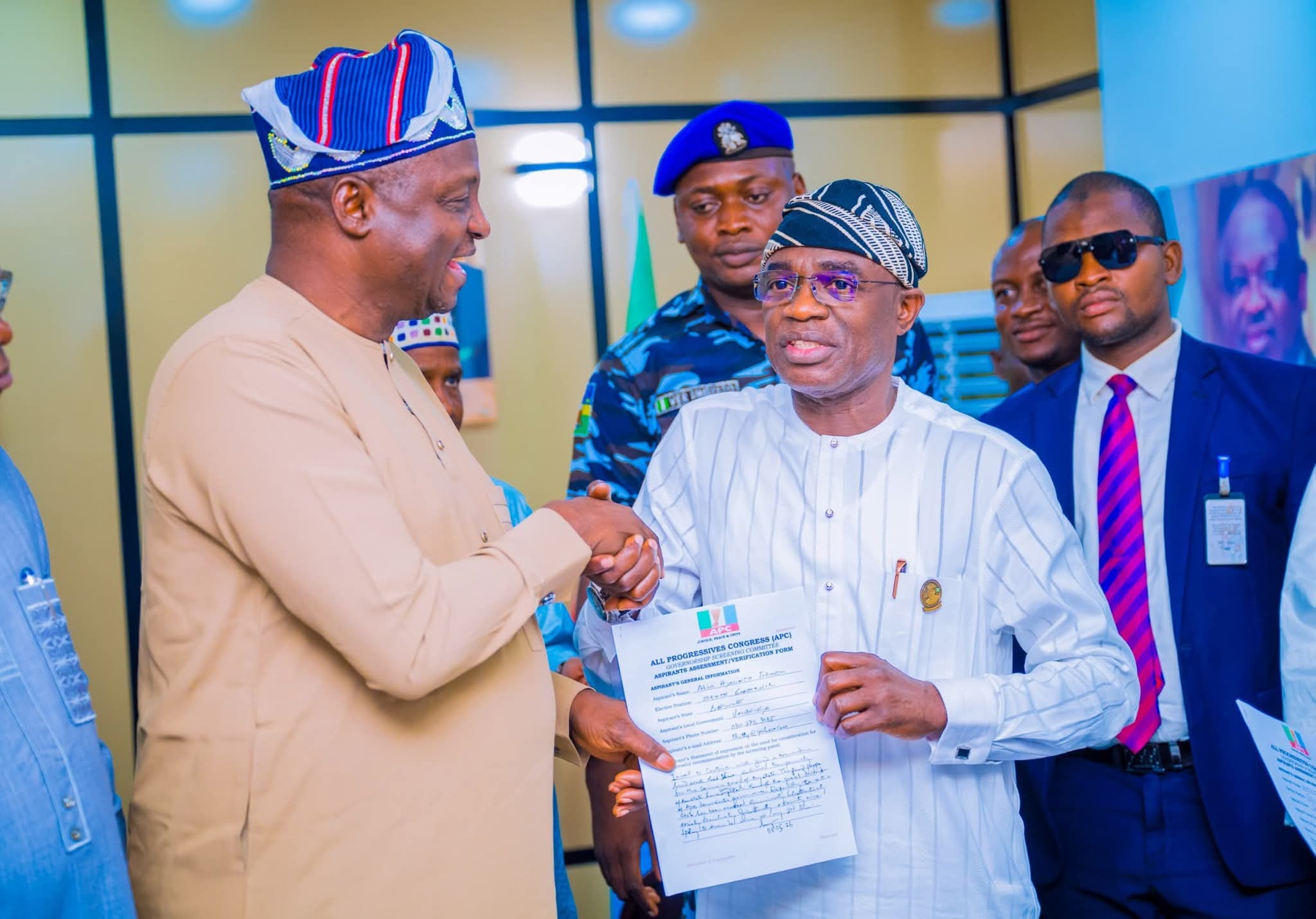
The Governor of Benue State, Hyacinth Alia, has successfully passed the screening exercise of the All Progressives Congress (APC), ahead of the 2027 governorship election and has been officially certified to contest the party’s primaries.
This was contained in the statement issued by his Chief Press Secretary, Sir Tersoo Kula.
The screening exercise was conducted on Sunday at the Plateau State Governor’s Lodge, venue designated for the screening of incumbent governors seeking the party’s ticket for the forthcoming elections.
The screening committee was chaired by the National Chairman of the All Progressives Congress, Nentawe Goshwe, who led the process to assess aspirants seeking to fly the party’s flag in the 2027 gubernatorial elections.
Governor Alia’s Expression of Interest and Nomination forms were procured by the Benue State chapter of the Nigeria Union of Pensioners and the Benue State Motorcycle Association.
Leaders of the two groups attributed their support for the governor to what they described as the remarkable transformation witnessed in the state under his administration, as well as his people-oriented style of governance. They said the governor deserved another term to consolidate ongoing developmental efforts across the state.
Political observers and stakeholders have described the certification as a major boost to Governor Alia’s political standing within the APC, particularly amid ongoing consultations and strategic alignments ahead of the 2027 general elections.
Governor Alia, who was elected in 2023 on the platform of the APC, has consistently highlighted infrastructural development, security improvement, civil service reforms and social welfare programmes as key priorities of his administration.
His successful clearance by the screening committee is also expected to trigger increased political activities within the APC as preparations intensify for the next electoral cycle.
Caritas Nigeria Urges Ecological Conversion, Climate Action
Democracy Day: Foundation to engage youths through 21km marathon