Connect with us

2027 General Elections

ADC Accuses N’Assembly of Stalling 2025 Electoral Bill

Published

on

By Olokuta Rofiat

The African Democratic Congress (ADC) has accused the National Assembly of deliberately delaying the passage of the Electoral Act (Amendment) Bill, 2025, warning that the delay could undermine preparations for the 2027 general elections.

In a statement issued in Abuja, the party expressed concern that while the House of Representatives has concluded work on the bill, the Senate is yet to complete its consideration and forward it for presidential assent.

The ADC said key proposed reforms, such as enhanced electronic voter accreditation and electronic transmission of results are crucial to improving transparency and credibility in future elections. It cautioned that continued delays could leave the Independent National Electoral Commission (INEC) with insufficient time to implement the changes.

The party warned that failure to pass the bill promptly could erode public confidence in the electoral process and urged lawmakers to prioritise its passage in the interest of democracy.

Continue Reading
Click to comment

Leave a Reply

Your email address will not be published. Required fields are marked *

2027 General Elections

Jonathan Warns of Post-2027 Crisis Amid Rising Campaign Violence

Published

on

By Edisemi Andrew

Former President Goodluck Jonathan has warned that Nigeria could face a serious post-election crisis after the 2027 general elections if rising political intolerance, thuggery, ethnic rivalry and declining public confidence in democratic institutions are not urgently addressed.

Jonathan gave the warning on Tuesday at the 2026 Goodluck Jonathan Foundation Peace Conference in Abuja, where he expressed concern that political parties and campaign organisations were increasingly being run like rival cult groups, with opponents treated as enemies rather than competitors.

He said he had received calls from Nigerians at home and friends of the country abroad expressing concern about the direction of the nation and the possibility of unrest after the elections.

The former President also raised concerns about the judiciary, citing conflicting court decisions on similar matters and growing perceptions that litigants could seek favourable judgments from different courts.

He warned that declining public confidence in the courts could encourage citizens to resort to self-help, with potentially dangerous consequences. He also cautioned politicians against exploiting ethnic divisions for electoral advantage.

Drawing an analogy with football, Jonathan described the Independent National Electoral Commission (INEC) as the referee, the judiciary as the Video Assistant Referee (VAR), and the electorate as the fans, stressing that every stakeholder had a responsibility to protect the integrity of the democratic process.

He urged religious leaders, traditional rulers and other influential figures to promote tolerance and discourage political violence.

Jonathan’s warning comes amid a series of reported attacks, protests and confrontations involving political parties and their supporters ahead of the 2027 elections.

INEC Chairman, Prof. Joash Amupitan, acknowledged that the 2023 general elections left a significant trust deficit, while condemning attacks on campaign convoys and party supporters.

He warned that individuals who sponsor or participate in political violence would face the law, adding that the Commission would work with security agencies to prevent further incidents.

In his keynote address, former President of the ECOWAS Commission, Dr Omar Alieu Touray, identified public trust, consensus on democratic principles, responsible political competition, early-warning systems, inclusive development and responses to misinformation as essential elements of peaceful elections.

Touray also cited Jonathan’s decision to concede defeat in the 2015 presidential election as an example of leadership that placed national stability above personal ambition.

The conference, now in its third edition, followed earlier editions in 2019 and 2022.


APC, ADC Trade Accusations

Meanwhile, the ruling All Progressives Congress (APC) and opposition African Democratic Congress (ADC) have exchanged accusations over alleged attempts to sponsor violence and disrupt political activities.

In a statement issued on Tuesday, APC Presidential Campaign Council spokesperson Dele Alake accused the ADC and the Nigeria Democratic Congress (NDC) of recruiting young people to disrupt its campaign activities, spread misinformation and create tension ahead of the 2027 elections.

Alake alleged that opposition elements were deploying deepfakes, artificial intelligence-generated images, fake news and sponsored protests to manipulate public opinion against President Bola Tinubu and the APC.

He cited the November 13 incident near the Shehu Shagari Central Mosque in Abuja, where protesters reportedly confronted the President’s motorcade after Friday prayers, alleging that individuals mobilised by the opposition threw stones at the convoy.

The APC spokesperson also alleged that some of the party’s members in the South-East had been threatened and labelled saboteurs for refusing to support Peter Obi, the NDC presidential candidate.

However, the campaign council did not publicly provide evidence establishing the ADC’s or NDC’s involvement in the alleged sponsorship of the Abuja incident.

The ADC Presidential Campaign Council rejected the allegations in a statement by its Director of Strategic Communication, Phrank Shaibu, challenging the APC to produce evidence or withdraw its claims.

The opposition council argued that public dissatisfaction with the Tinubu administration should not be dismissed as an opposition-sponsored campaign, pointing to the rising cost of food, fuel and other essential commodities.

It also questioned what it described as conflicting accounts from the Presidency and the APC over the Abuja incident, asking why those reportedly arrested were released if authorities had evidence linking them to opposition-sponsored violence.

The ADC denied sponsoring attacks or recruiting young people to confront political opponents, while calling for impartial investigations into all reported incidents.


ADC Challenges Kaduna Government Over Rally Venue

Separately, the ADC condemned the Kaduna State Government’s refusal to grant it access to Ranchers Bees Stadium for its scheduled campaign activities on November 17 and 18.

The party said its application to use the facility was rejected in a letter dated November 12 by the state Ministry of Local Government, which reportedly cited ongoing renovation work.

ADC National Publicity Secretary, Bolaji Abdullahi, questioned the explanation, noting that the APC had used the same stadium for its presidential campaign flag-off on October 24.

The party described the decision as an attempt to restrict its political activities and threatened to take its rally to the streets if access to the facility remained denied.

The Kaduna State Government’s explanation for refusing the request has not been independently established beyond the reason cited in the letter.

Senate Condemns Political Violence, Orders Investigation

In a related development, the Senate on Tuesday expressed concern over growing political violence and attacks on political leaders, candidates and supporters ahead of the 2027 elections.

The debate followed a motion sponsored by Senator Abdul Ningi, representing Bauchi Central, who cited the disruption of an NDC procession in Sapele, Delta State, on November 7, which reportedly left one person dead and five others injured.

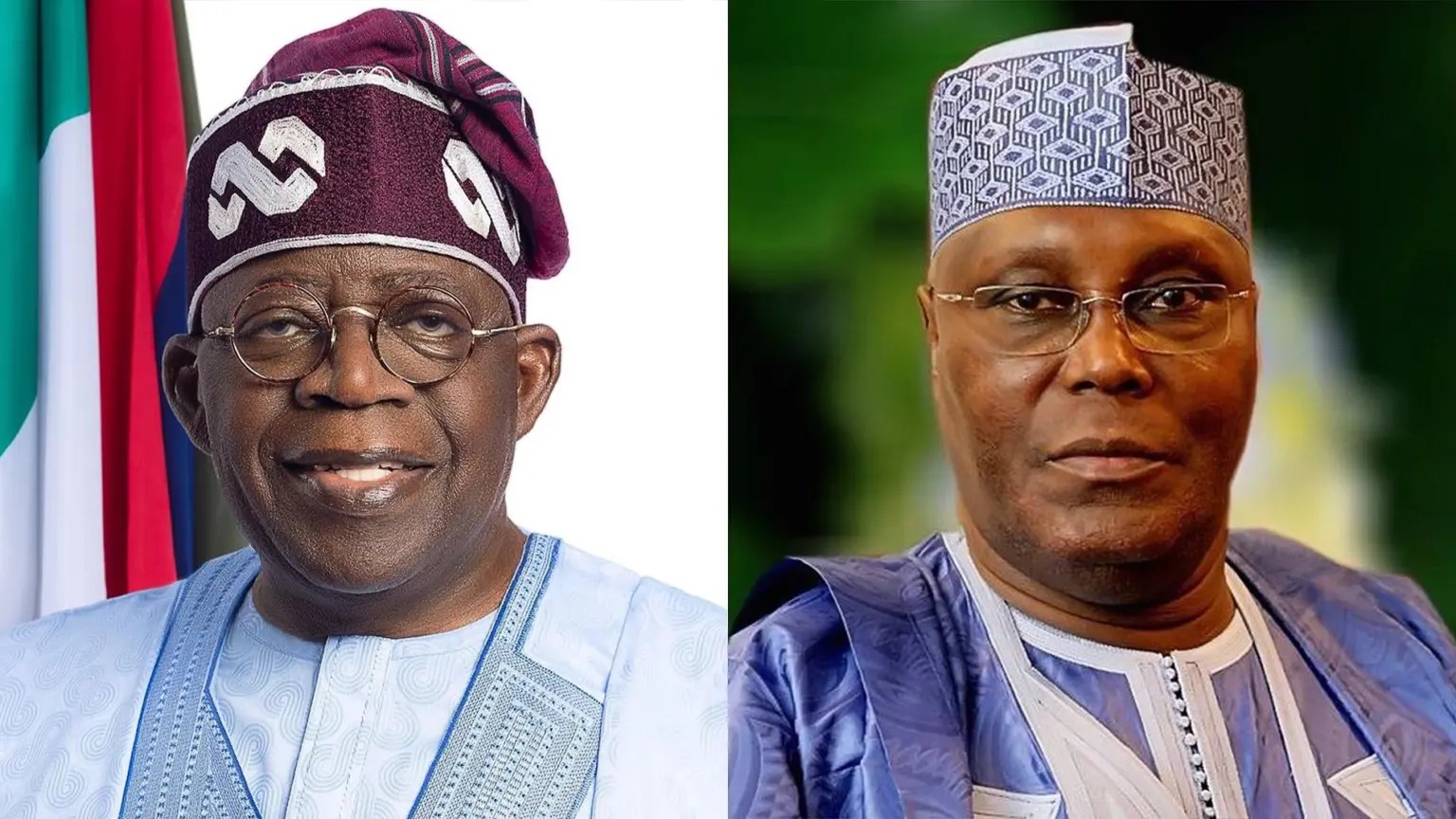
He also referenced the reported attack on the convoy of former Vice-President and ADC presidential candidate Atiku Abubakar in Sokoto, alongside other incidents in Benue and Edo states.

During the debate, Senator Babangida Husaini accused the National Assembly of complicity in the persistence of electoral violence, arguing that successive governments had failed to implement important recommendations of the 2008 Justice Muhammadu Uwais Electoral Reform Committee.

He recalled that the committee had recommended the establishment of a two-tier framework involving a commission and a tribunal to address electoral offences and violence.

Husaini also referenced a proposal to remove the President’s power to appoint the INEC chairman and commissioners, transferring the responsibility to the National Judicial Council.

He argued that the failure to implement such reforms had weakened the country’s ability to prevent and prosecute electoral offences.

Other lawmakers called for stronger action against political violence, including the prosecution of sponsors and the establishment of specialised courts to handle electoral offences.

Senator Ali Ndume condemned the reported confrontation involving Tinubu’s convoy in Abuja, while Minority Leader Abba Moro urged politicians to reconsider a political culture increasingly characterised by verbal and physical attacks.

Senate President Godswill Akpabio, however, pointed to provisions of the Electoral Act 2026 prescribing sanctions for electoral offences, including intimidation and attacks involving dangerous weapons.

He called on INEC to enforce the law, noting that candidates could face disqualification where the applicable legal conditions, including established court convictions, are met.

The Senate subsequently called on security agencies to investigate reported incidents in Abuja, Edo, Delta and Sokoto states, identify the perpetrators and sponsors, and prosecute those found culpable.

It also mandated its committees on National Security and Intelligence, Police Affairs, and INEC to engage relevant institutions and report back within four weeks on measures to prevent political violence and safeguard the 2027 elections.

The lawmakers further urged the government to strengthen security around political gatherings and establish early-warning and rapid-response mechanisms to prevent further attacks.

As political activities gather momentum, Jonathan’s warning, the exchanges between the ruling party and opposition, and the Senate’s intervention have renewed attention on the need to protect political participation and ensure that the 2027 elections are conducted without intimidation or violence.

Continue Reading

2027 General Elections

Catholic Church Warns Against Fake Identities, Urges Responsible Journalism

Published

on

By Samson Adeyanju

The Catholic Church in Nigeria has warned against the growing spread of fake identities, misinformation and digital disconnection in the media space, calling on journalists and social media users to embrace truth, responsibility and respect for human dignity in communication.

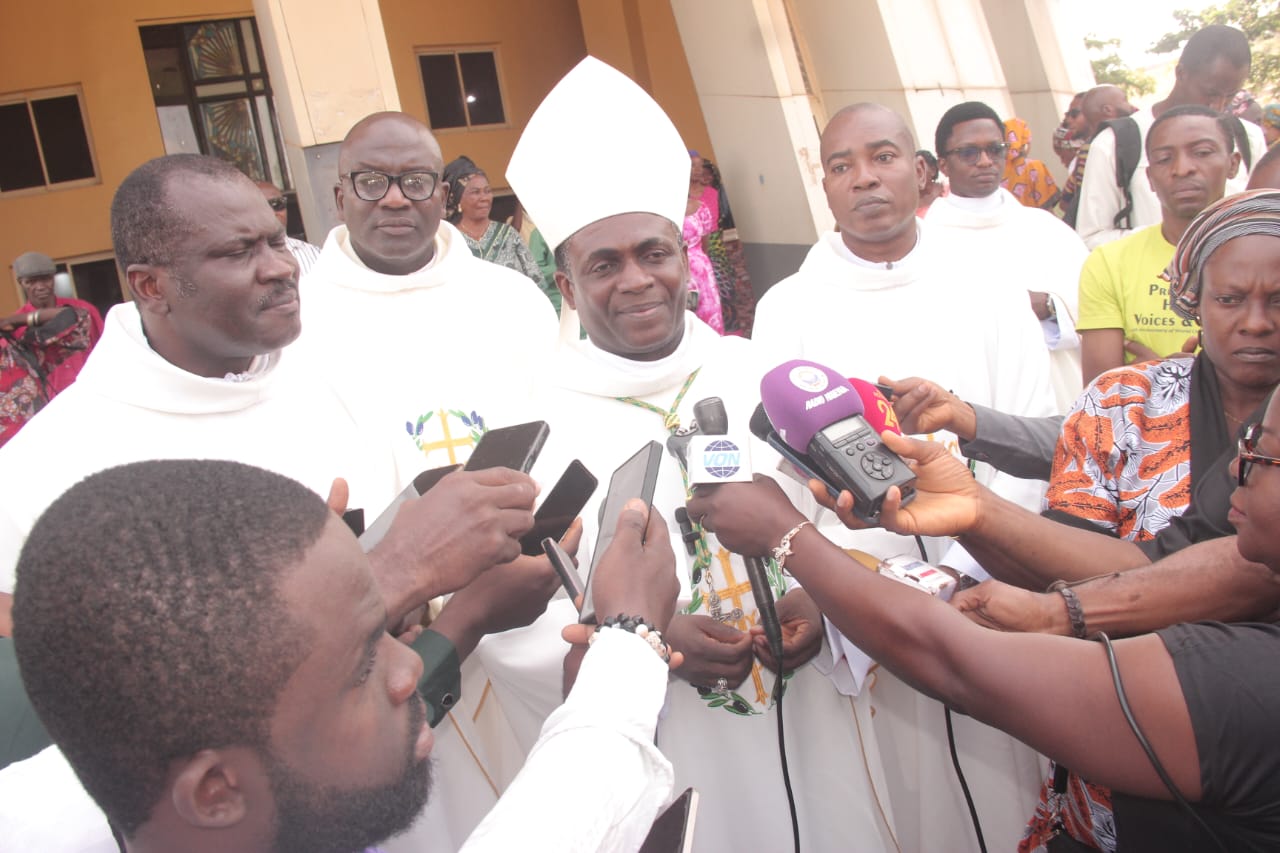
The warning was issued by the Chairman of the Department of Communications of the Catholic Bishops’ Conference of Nigeria and Bishop of the Catholic Diocese of Katsina, Most Rev. Gerald Mamman Musa, during his homily and press conference at the 2026 World Communications Day celebration held at the Catholic Secretariat of Nigeria, Abuja.

Bishop Musa, who reflected on the theme “Preserving Human Voices and Faces,” said modern society is increasingly “digitally connected but personally and spiritually disconnected,” despite advances in communication technology.

He stressed that communication remains central to human existence, noting that “to live is to communicate,” whether through speech, writing, or digital platforms.

According to him, the Church sets aside World Communications Day annually to reflect on the responsibility that comes with communication, especially in an era dominated by social media and digital interactions.

Prayer and spiritual grounding in communication

Drawing from the liturgical readings, Bishop Musa emphasised the importance of prayer, describing it as the “master key” to perseverance, strength and spiritual revival.

He recalled the apostles who, after the ascension of Jesus Christ, gathered in the upper room in fear but turned their anxiety into prayer while awaiting the Holy Spirit.

“The upper room is a place of communion with God, revival and spiritual renewal,” he said, urging Christians to remain rooted in prayer amid modern-day pressures.

He added that prayer does not remove suffering but gives believers the strength to endure challenges with hope and joy.

Warning against fake identities and online abuse

Bishop Musa warned that social media platforms have become spaces where individuals hide behind fake names, anonymous accounts and false identities to spread hatred, lies, blackmail and cybercrime.

“When we come with unreal names and masks on social media, we are acknowledging that we are doing something wrong,” he said.

He compared such behaviour to criminals who conceal their identities while committing evil acts, adding that truth thrives in openness while wrongdoing hides in anonymity.

He also cautioned against treating people as statistics or objects, drawing from the philosophy of Martin Buber, which emphasises human dignity and mutual respect.

The bishop further highlighted how Jesus Christ consistently gave voice to the marginalised, including the Samaritan woman, the woman caught in adultery and the blind Bartimaeus, stressing that society must not silence vulnerable voices.

According to him, preserving human voices means allowing people to speak from their lived experiences rather than speaking over them.

Bishop Musa urged media practitioners and social media users to use communication tools responsibly in promoting truth, evangelisation and human dignity.

“Speaking the truth in love is not only about projecting our voices, but doing so with charity and responsibility,” he said.

CSN Scribe urges responsible journalism ahead of elections

The Secretary-General of the Catholic Secretariat of Nigeria, Fr. Michael Banjo, also called on journalists to uphold responsible journalism and defend truth as Nigeria approaches another election cycle.

Fr. Banjo warned that communication must not become “a weapon of injury” in a country already facing insecurity, economic hardship and political tension.

He stressed that preserving human voices and faces requires verifying information before publication to prevent misinformation from damaging reputations or destabilising communities.

According to him, journalists must avoid hate speech, sensationalism and divisive narratives that reduce citizens to ethnic, religious or political labels.

“The answer to misinformation is responsible journalism; the answer to propaganda is truth,” he said.

Fr. Banjo also called for transparency in the electoral process, especially in the electronic transmission of results, insisting that every vote must count and reflect the true will of the people.

He urged journalists not only to highlight challenges but also to report positive developments that strengthen national unity and hope.

The CSN scribe thanked the media for their continued partnership with the Church in promoting justice, peace and accountability.

He concluded by urging Nigerians to “speak truth without hatred, listen without prejudice, and use every platform in service of the common good.”

Fr Umoh celebrates birthday, reflects on six-year tenure

The National Director of Social Communications of the Catholic Secretariat of Nigeria, Rev. Fr. Michael Nsikak Umoh, also used the occasion to reflect on his six-year tenure as he addressed journalists at the same event, which marked the 2026 World Communications Day and the closing of the 5th Nigeria Catholic Communications Week (ComWEEK).

Fr. Umoh described the event as a “double celebration,” noting both the global communications observance and the conclusion of a nationwide media literacy programme carried out across Catholic parishes and chaplaincies.

He expressed gratitude to the media for their collaboration with the Church, describing journalists as key partners in amplifying the Church’s voice and strengthening public discourse.

According to him, the media and the Church share a “sacred duty to be the conscience of the nation,” especially in challenging socio-economic times.

He also paid tribute to the immediate past Chairman of the CSN Communications Department, Most Rev. David Ajang of the Catholic Diocese of Lafia, commending his leadership in establishing key reforms, including the Nigeria Catholic Network (NCN) and the institutionalisation of ComWEEK.

Fr. Umoh introduced the new Chairman of the CSN Department of Social Communications, Most Rev. Gerald Mamman Musa, describing him as a “communications scholar and seasoned shepherd,” and expressed confidence in his leadership.

Reflecting on his tenure since 2020, he said his administration worked to strengthen the Church’s digital presence and unify communication structures, while acknowledging that further work remains.

He thanked the Catholic Bishops’ Conference of Nigeria (CBCN), his Archbishop Most Rev. Alfred Adewale Martins, and the media for their support throughout his service.

In a personal note, Fr. Umoh revealed that the celebration coincided with his 58th birthday, calling it a “providential coincidence” and a meaningful milestone in his ministry.

The event ended with prayers for the media, the Church and Nigeria, and the formal closure of ComWEEK 2026.

Continue Reading

2027 General Elections

Tinubu Defends Electoral Act 2026 Amendment

Published

on

By Onyeanya Ebere Immaculata

President Bola Tinubu on Wednesday defended signing the Electoral Act 2026 (Amendment), saying credible elections rely more on proper management and human oversight than real-time electronic transmission of results.

Speaking at the Presidential Villa in Abuja, Tinubu emphasized that elections are ultimately conducted by people, not computers, and stressed that final results are announced by electoral officials, not machines.

He raised concerns about Nigeria’s technical readiness for mandatory real-time result transmission, citing broadband limitations and the risk of glitches or interference. “Voting remains fundamentally manual from ballot issuance to counting. Electronic transmission reflects only the arithmetic record,” he said.

The amendment, which sparked debate in the National Assembly, allows electronic transmission after Form EC8A is signed and stamped. Where technology fails, manually signed forms will serve as the official record.

Tinubu expressed confidence that the law will support free, fair, and credible elections while safeguarding democracy.

Continue Reading

Trending

taraftarium24Maslak EscortMaslak Escortdeneme bonusudizipaldizipaljustin tvjustin tvjustin tvjustin tvtaraftarium24justin tvdeneme bonusu veren sitelerdizipaljustin tvmarsbahisggrandpashabettGrandpashabet Girişgiftcardmall/mygiftmarsbahisjustin tvtrlisans pinterestgiftcardmall/mygiftdinamobetgrandpashabet girişgrandpashabetdinamobetGrandpashabettaraftarium24dizipalgiftcardmall/mygiftjustin tvGrandpashabetGrandpashabetGrandpashabetGrandpashabetCasibompasharoyalgrandpashabettaraftarium24taraftarium24rojadirectajustin tvjojobetjojobetjojobetjojobetcasibomcasibomcasibomcasibomcasinolevantcasinolevantcasinolevantcasinolevantgrandpashabetcratosroyalbetcasibommatadorbetonwinsahabetsuperbetinnatobetbetgitromabetgameofbetgrandpashabet girişgrandpashabetcasinolevantgrandpashabetgrandpashabetgrandpashabetsekabetbetgaranticasinolevantcasibomjojobetsahabetonwincasibomcasibomgrandpashabetmarsbahisgrandpashabetcasinolevantcasibomcasibomjojobetcasinolevanttambetesbetjojobetgrandpashabet