Connect with us

Energy

Petrol Still Sells at ₦865 per Litre Despite Dangote’s Free Delivery Initiative

Published

on

By Olokuta Rofiat


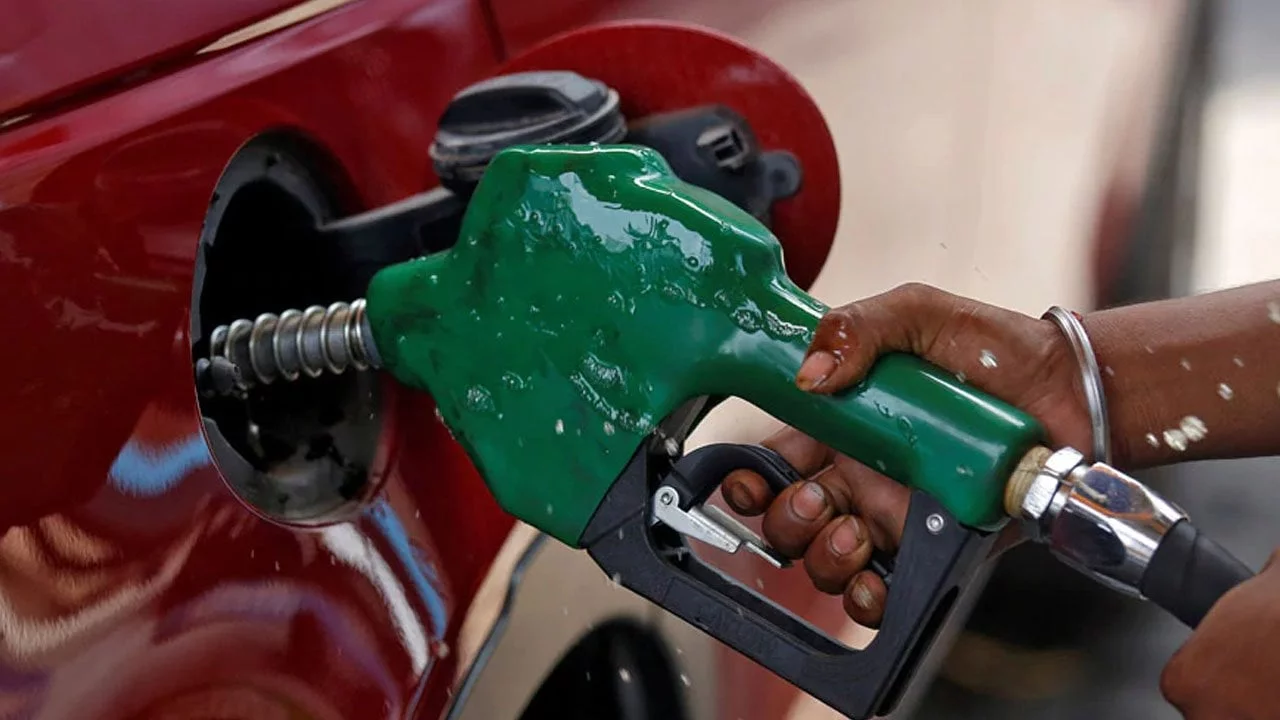
Petrol continues to retail at ₦865 per litre across major Nigerian cities despite the commencement of Dangote Refinery’s free delivery of fuel to marketers, a move initially expected to reduce pump prices nationwide.

The initiative, which began recently, was designed to cut distribution costs and lower retail prices. According to the Independent Petroleum Marketers Association of Nigeria (IPMAN), the refinery has started supplying products at no transportation cost to selected marketers in Lagos, Ogun, Ondo, and nearby states.

IPMAN President, Abubakar Shettima, had projected that the free-delivery arrangement would push petrol prices down from ₦865 to about ₦841 per litre as distribution expanded nationwide.

However, a market survey conducted in Lagos, Abeokuta, Ilorin, Benin, Osogbo, and Ibadan revealed that most filling stations still sell at ₦865 per litre, with some outlets dispensing as high as ₦895.

Industry stakeholders attributed the stagnant prices to limited access to Dangote’s distribution network, high logistics costs in areas outside the free-delivery zones, and depot prices that remain largely unchanged.

Some independent marketers expressed disappointment over the slow price adjustment. “We were expecting the price to drop to ₦841 by now, but we’re still buying from depots at high rates,” one marketer lamented.

Dangote Refinery’s management has assured that additional trucks, particularly those powered by compressed natural gas (CNG), will soon expand delivery coverage to more regions.

Until then, motorists and consumers are expected to keep paying between ₦865 and ₦895 per litre, as the full impact of the refinery’s free-delivery initiative is yet to reflect at retail outlets.

Continue Reading
Click to comment

Leave a Reply

Your email address will not be published. Required fields are marked *

Energy

Interior Ministry, Pi-CNG Plan Working Group to Drive CNG Adoption

Published

on

By

By Omoniyi David

The Federal Ministry of Interior and the Presidential Initiative on Compressed Natural Gas (Pi-CNG) have proposed a high-level working group to accelerate adoption of Compressed Natural Gas across agencies under the ministry.

The decision followed a meeting in Abuja between Interior Minister, Olubunmi Tunji-Ojo, and Pi-CNG Executive Chairman, Barr. Ismaeel Ahmed.

Tunji-Ojo said the initiative aligns with the ministry’s mandate, which covers 264 correctional centres, the Nigeria Immigration Service, Civil Defence formations and over 4,000 kilometres of national borders.

He noted that CNG adoption would promote cleaner energy, improve operational efficiency and reduce costs.

He directed the immediate constitution of a working group, led by the ministry’s Director of Joint Services, with representatives from relevant agencies to focus on fleet conversion, credit facilities and capacity building.

Ahmed commended the minister’s commitment and expressed optimism about advancing sustainable energy use across the ministry’s operations.

Continue Reading

Abuja Reports

Aso Rock Solar Project Signals No Confidence in National Grid -Fr Umoh

Published

on

By

By Samson Adeyanju 

The National Communications Director, Catholic Secretariat of Nigeria and public affairs commentator, Rev. Fr Michael Nsikak Umoh, has described the Federal Government’s plan to power the Aso Rock Presidential Villa with a N17 billion solar mini-grid as a “vote of no confidence” in Nigeria’s national electricity grid.

In a write-up titled “A Vote of No Confidence: The Villa’s Exit as Nigeria’s Power Sector’s Ultimate Indictment,” Fr Umoh argued that the decision of the seat of power to disconnect from the national grid by March 2026 carries deeper political meaning beyond the official explanation of cost savings and energy transition.

He likened the development to a landlord abandoning a crumbling estate to retreat into a privately fortified penthouse, while tenants remain under a leaking roof, insisting that the move symbolises a government retreat from reform in a sector it regulates and supervises.

Fr Umoh recalled President Bola Ahmed Tinubu’s campaign promise of December 22, 2022, in which he pledged to deliver constant electricity within four years and urged Nigerians not to vote for him again if he failed to do so.

According to him, the plan to “exit” the national grid three years into a four-year mandate weakens public confidence in the administration’s ability to deliver the promised expansion of electricity generation capacity to 15,000 megawatts.

He noted that Nigeria’s grid supply still fluctuates between 3,000 and 5,000 megawatts, describing it as a familiar range that has long represented the country’s energy stagnation.

Fr Umoh said the financial implications of the project also raise questions, especially as citizens continue to face increased tariffs under the Band A regime approved by the Nigerian Electricity Regulatory Commission.

He argued that it would be difficult to persuade Nigerians to accept market-reflective pricing in the name of reform, while the Presidency prepares to withdraw from the same system it expects citizens to fund and endure.

The commentator further linked the development to the electricity sector’s liquidity crisis, recalling that in February 2024, Abuja Electricity Distribution Company issued a disconnection notice over unpaid obligations attributed to the Presidential Villa.

He said the shift to independent solar power appears less like environmental leadership and more like “structural secession,” warning that it risks reinforcing the long-standing “generator mentality” where elites self-provide electricity while the wider public remains trapped in unreliable supply.

While acknowledging that decentralised renewable energy systems are vital to Nigeria’s future, Umoh maintained that such models gain legitimacy when scaled inclusively, not when reserved for the political elite.

He cited the embedded generation model in Aba, driven by Geometric Power, as an example of how localised initiatives can improve electricity stability when backed by targeted reforms and proper management.

Fr Umoh also referenced estimates that Nigeria loses about $28 billion annually due to unreliable power supply, arguing that the scale of the problem requires systemic reform rather than insulation by government leaders.

“As 2027 approaches, memory will matter,” he warned, adding that disconnecting Aso Rock from the national grid before the administration’s electricity promise matures could become a lasting symbol of failure.

He said the solarisation of the Presidential Villa could still be reframed as a pilot for nationwide decentralisation if accompanied by transparent and accelerated reforms that improve supply for ordinary Nigerians, manufacturers and businesses.

However, he stressed that without such reforms, the project may be remembered as a moment the state appeared to “vote against its own promise.”

Continue Reading

Energy

FG Unveils National Gas Command Hub to Boost Power Supply, Industrial Growth

Published

on

By

By Omoniyi David

The Federal Government has announced plans to establish a National Gas Command Hub to strengthen coordination across Nigeria’s gas infrastructure, improve electricity generation and accelerate industrial growth.

The proposed command centre was unveiled at the 9th Nigeria International Energy Summit (NIES 2026), in Abuja as part of efforts to optimise gas pipeline and processing operations nationwide.

Officials said the hub would serve as a central system for monitoring, managing and optimising gas pipelines and processing facilities across the country, describing it as a major step toward unlocking Nigeria’s vast gas potential.

Minister of State for Petroleum Resources (Gas), Rt. Hon. Ekperikpe Ekpo, said the initiative would address bottlenecks in the gas-to-power value chain and ensure more reliable supply to power plants and industries.

“With over 210 trillion cubic feet of proven gas reserves, Nigeria has the resources to transform its economy,” Ekpo said. “What we must now guarantee is efficient delivery.”

Nigeria relies on gas for over 70 per cent of its grid electricity, but supply constraints, infrastructure gaps and legacy debts have continued to hinder stable power output.

Continue Reading

Trending

Deneme Bonusu Veren Sitelergrandpashabet girişgrandpashabetJojobetCasibomdeneme bonusu veren sitelerligobettipobettipobetholiganbetjojobet girişvdcasinograndpashabet linkdeneme bonusupiabellacasinojojobettipobetbetasusdoedacasibomcasinowongameofbetgrandpashabetmatbetradissonbetbahiscasinoromabetgrandpashabetteosbetteosbetgrandpashabetmarsbahisimajbetbetgitamgbahiscashwinbetgitjojobetbetgitmercurecasinopusulabetjojobetvdcasinourfa konteynerşanlıurfa konteynervdcasinobetciopusulabetsuperbetinPusulabet güncel girişPusulabet girişbetvolejojobetCasibomCasibomgrandpashabetjojobetbets10 girişpusulabet girişcasibomgrandpashabet girişmatbet girişVDCasinoonwinbetcio girişsekabet girişbetgitromabetromabetgameofbetradissonbetcratosroyalbetjojobetholiganbetjojobetjojobetDeneme Bonusu Veren Sitelergrandpashabetgrandpashabetcasibomjojobet girişgrandpashabetbahiscasinocasibomjojobetgrandpashabetholiganbetpusulabetvdcasinobetciosekabetjojobetmarsbahissekabetmatbetimajbetholiganbetgrandpashabetdeneme bonusu veren sitelercasibomGrandpashabetgrandpashabetpusulabet giriş