Connect with us

News

Nigeria Faces Soaring Rice Import Costs in 2024, Surpassing Anchor Borrowers’ Funding

Published

on

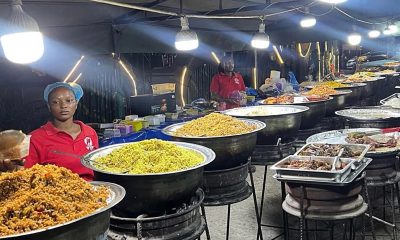
Nigeria is on the brink of witnessing a staggering surge in the cost of rice imports for the 2023/24 marketing year, potentially surpassing the cumulative N1.08 trillion spent over eight years under the Anchor Borrowers (ABP) scheme. The ABP initiative has been a critical source of funds and inputs aimed at bolstering local production.

According to the 2023 grain report on Nigeria from the United States Department of Agriculture (USDA), the country is projected to import 2.3 million metric tons (MMT) of parboiled rice in 2024, marking a substantial 10 percent increase from the 2.1 million tons projected for the current year.

International Grain Council data reveals that a metric ton of parboiled rice currently sells for $568. Consequently, if this projection holds true, Nigeria could find itself expending a staggering $1.31 billion on rice imports in 2024 (calculated as 2.3MMT multiplied by $568 per ton).

Given an exchange rate of N900/$, this expenditure translates to a whopping N1.2 trillion ($1.31 billion), surpassing the total funding allocated to ABP by N100 billion. The USDA report highlights factors such as insecurity in farming areas, elevated input prices, and inadequate mechanization as contributors favoring rice imports over stimulating local production.

The report points out, “In addition, increasing demand for foreign rice coupled with high production costs has made local rice uncompetitive, especially in terms of quality.”

A significant development in October saw the Central Bank of Nigeria (CBN) lifting the ban on 43 items, including rice, from access to foreign exchange (FX) after an eight-year prohibition. Analysts speculate that this move may further escalate rice imports in 2024 due to Nigerians’ strong preference for local parboiled rice and concerns regarding the quality of local varieties.

Despite improvements in productivity per cultivated land unit and the expansion of mills over the last four years, the perpetual poor quality of most local rice varieties continues to drive consumers toward imported options from Thailand, Vietnam, and India.

The USDA report indicates that Nigerian rice millers, both integrated and small-scale, are reducing production due to high operating costs, primarily attributed to soaring diesel and paddy costs. Additional challenges include a weakening Naira and the growing menace of smuggling foreign brands through land borders, making domestic production less profitable.

While local rice is comparatively cheaper than imported varieties, the report notes that the price difference is not significant enough to offset the disparities in quality. Furthermore, the USDA forecasts a decline in Nigeria’s rice production to 8.1MMT in 2024 from 8.5MMT in 2023, citing higher fertilizer prices, reduced access to conflict-prone farmlands, and an increase in unrecorded rice imports of cheaper paddy as contributing factors.

Continue Reading
Click to comment

Leave a Reply

Your email address will not be published. Required fields are marked *

Economy

Tinubu Woos World’s Largest Busmaker to Nigeria, Targets 40% Cut in Transport Fares

Published

on

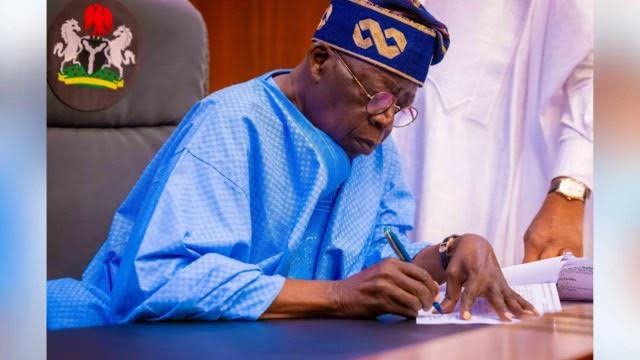
President Bola Tinubu has welcomed plans by Chinese automotive manufacturer Yutong to establish a Compressed Natural Gas (CNG) bus assembly plant in Nigeria as part of efforts to reduce transportation costs and expand affordable mass transit across the country.

The proposed investment follows an invitation by the President to the company, described as the world’s largest bus manufacturer, to support the expansion of affordable transportation in Nigeria.

Under an agreement with the Presidential Initiative on Compressed Natural Gas and Electric Vehicles (Pi-CNG & EV), Yutong is expected to supply an initial 300 CNG-powered buses, with the first 100 scheduled to arrive in Lagos by the end of December 2026.

The remaining buses will be assembled locally through YP Automobiles Bus Assembly at the former Leyland Automotive plant in Ibadan, Oyo State.

According to a statement issued on Thursday by the President’s Special Adviser on Information and Strategy, Bayo Onanuga, the investment is expected to revive local industrial capacity, reduce dependence on imported vehicles and create employment opportunities for Nigerian engineers, technicians and other workers.

The initiative is part of the National Affordable CNG Transit Programme (NACTP), which is targeting a reduction of approximately 40 per cent in transport fares on participating routes in collaboration with state governments.

The programme aligns with the transportation component of the Tinubu administration’s Renewed Hope Agenda 2.0 for 2027–2031.

Onanuga said the President maintained that the primary objective of the investment was to reduce the daily transportation expenses of Nigerians, particularly workers, traders and families who depend on commercial vehicles.

Tinubu stressed that the lower operating costs of CNG-powered vehicles should translate into reduced fares for passengers, enabling households to save more of their income for essential needs.

The statement added that the expansion of CNG transportation would be supported by investments in refuelling infrastructure through Pi-CNG & EV, the Midstream and Downstream Gas Infrastructure Fund (MDGIF) and private sector operators.

These efforts include the deployment of Mobile Refuelling Units and a presidential directive for the provision of 2,000 additional CNG refuelling infrastructure units nationwide.

Yutong, which reportedly sold 49,518 buses globally in 2025, has experience in mass transit manufacturing and local assembly operations across several international markets.

The President also welcomed the company’s decision to establish local assembly capacity, describing it as an opportunity to promote technology transfer, develop skilled manpower and strengthen Nigeria’s automotive industry.

He reiterated that the success of the CNG programme would ultimately be measured by the savings it delivers to Nigerians through reduced transportation costs.

The agreement between Yutong and the Pi-CNG & EV initiative is scheduled to be signed in Lagos on Thursday, November 19, 2026.

Continue Reading

Abuja Reports

Long Queues, Big Savings: Why Abuja Drivers Won’t Abandon CNG

Published

on

By Patrick Idowu


Some commercial drivers operating between Niger State and the Federal Capital Territory (FCT) have said they prefer Compressed Natural Gas (CNG) to petrol despite spending hours in queues to refuel.

The drivers, who spoke with an Abuja City Journal correspondent on Thursday in Wuse, said the significant savings on fuel costs outweighed the inconvenience of long waiting times.

One of them, Mr Musa Bello, said CNG reduced his fuel expenses by between 50 and 60 per cent per kilometre.

“Despite the long queues and hours spent waiting to get the product, I still prefer CNG to petrol because of the massive cost savings,” he said.

CNG adoption has grown in Nigeria since the removal of the petrol subsidy in May 2023, with the Federal Government promoting its use through the Presidential Initiative on Compressed Natural Gas and Electric Vehicles (Pi-CNG & EV).

Another driver, Mr Adamu, said CNG burns more cleanly than petrol and helps reduce vehicle maintenance costs.

“People are still complaining about the long queues before getting CNG, but I still prefer using it to going back to Premium Motor Spirit (PMS),” he said.

On why commuters were yet to benefit from lower transport fares, another driver, Suleiman Abubakar, blamed the high cost of converting vehicles to run on CNG.

He said many operators were still trying to recover their conversion expenses.

“The changes in transportation costs will reflect soon. Some of us only want to recover the money we spent on the conversion,” he said.

Meanwhile, a technician, Mr Sunday Christopher, said CNG was less likely to ignite than petrol under certain conditions because of its narrower flammability range.

He explained that CNG requires a concentration of between five and 15 per cent in air to ignite, adding that proper maintenance and compliance with safety standards were essential to preventing accidents.

“Petrol has a much wider flammability range, making it easier to ignite,” he said.

Continue Reading

News

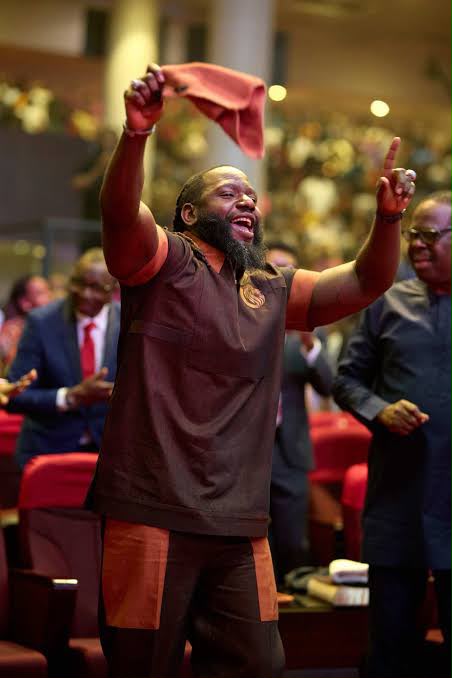
Jimmy Odukoya Admits Defying Father Over Succession Video

Published

on

By Patrick Idowu


Pastor Jimmy Odukoya has admitted retaining a video in which his late father, Pastor Taiwo Odukoya, named Pastor Kunle Areogun as his preferred successor at The Fountain of Life Church, despite being instructed to delete the recording after his father’s successful surgery.

Jimmy made the disclosure on Wednesday, November 18, while addressing about 300 church workers amid the ongoing leadership dispute at the Lagos-based church.

He said the video was recorded around 2021, before his father travelled to the United States for surgery. According to him, the late founder, uncertain about the outcome of the medical procedure, wanted to document his thoughts on the church’s future leadership.

Jimmy explained that he personally recorded the video, with his father’s elder brother, Pastor John Odukoya, also aware of the exercise.

However, after the surgery was successful, Taiwo reportedly asked him to delete the recording, explaining that the circumstances that prompted its creation had changed.

Jimmy admitted that he did not comply with the instruction and instead kept the video, describing his decision as a grave mistake.

“Following my father’s successful surgery, he instructed me to delete the recording because the circumstances that prompted its creation had changed, but I chose to retain the video against my father’s instruction and this I admit as a grave mistake,” he said.

He added that only a few people, including his sisters, knew the recording existed.

The video has become a central issue in the church’s succession dispute. In the recording, Taiwo reportedly named Areogun as the person who should lead the church if he died or became unable to communicate, while assigning Jimmy the roles of administrative assistant and head of the youth church.

A faction of the church’s Board of Trustees cited the recording in its decision to withdraw recognition of Jimmy as Senior Pastor. The faction also appointed Pastor Rotimi Okpaise as interim spiritual and administrative leader pending further consultations.

However, Jimmy has rejected the decision, maintaining that his appointment in September 2023 was valid and that he remains the church’s duly appointed Senior Pastor and Chairman of the Board of Trustees.

The dispute has raised questions about the late founder’s succession wishes, the authority of the Board of Trustees and the procedures governing leadership appointments at the church.

The leadership disagreement remains unresolved, with the opposing sides maintaining different positions on who has the authority to lead the ministry.

Continue Reading

Trending

taraftarium24Maslak EscortMaslak EscortGrandpashabet Girişgiftcardmall/mygiftcasibomjustin tvtrlisans pinterestgiftcardmall/mygiftdinamobetgrandpashabet girişgrandpashabetdinamobetGrandpashabettaraftarium24dizipalgiftcardmall/mygiftjustin tvGrandpashabetGrandpashabetGrandpashabetGrandpashabetCasibomjojobettaraftarium24taraftarium24rojadirectajustin tvesbetbetpuanamgbahismercurecasinobetplaycasinoroyalcasinolevantcasinolevantpalacebetteosbetgameofbetbetgitholiganbetcasibommarsbahisgrandpashabetJojobet GirişJojobetJojobetnatobetbetgitromabetgameofbetgrandpashabet girişgrandpashabetradissonbetpalacebetpalacebetcratosroyalbetgrandpashabetbetgarantitambetmarsbahismatbetimajbetpusulabet girişmarsbahisholiganbet girişholiganbetholiganbetcasinolevantmarsbahis girişcasibomcasinolevantgrandpashabetbetbeytambetesbetjojobetgrandpashabet