Connect with us

Abuja Reports

Can FCT Minister Wike Restore Abuja Master Plan?

Published

on

By Olalekan Adigun 

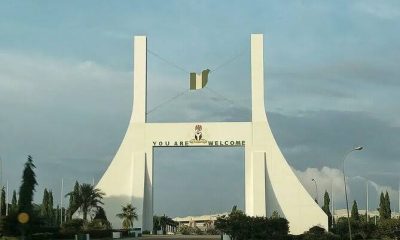
Nyesom Wike, the recently appointed Minister of the Federal Capital Territory (FCT), confronts various obstacles in his new position, the most pressing of which is the reinstatement of the Abuja Master Plan. The paper is a detailed urban development strategy that has encountered several problems and modifications throughout the years. For the capital of the country to develop sustainably and become more modern, the master plan needs to be restored.

Over the years, the capital city has experienced several issues, including unrestrained urban growth, inadequate infrastructure, and environmental degradation. As Minister, Wike’s performance will be keenly scrutinised to determine whether he can revive and maintain the city’s original intended layout.

The Abuja Master Plan: A Blueprint for Growth

The Abuja Master Plan was created as a bold urban development strategy for Nigeria’s capital, with the goal of establishing a well-structured, organised, and efficient city in the 1980s. The long-term development, infrastructure, and sustainability of the city were the primary goals of the plan, which was created by international urban planners.

The master plan’s key components included the creation of well-planned districts, efficient transit networks, green spaces, and a distinct separation of residential, commercial, and administrative sections. Over time, the plan has encountered a number of difficulties, including a swiftly growing population, urban sprawl, and uneven execution.

Challenges to the Master Plan

The encroachment of unauthorised developments into designated green spaces, as well as violations of land use restrictions, has been one of the major problems to the Abuja Master Plan. The initial idea of a well-organized and green metropolis has been compromised by these unpermitted developments.

Furthermore, infrastructure deficiencies, traffic congestion, and insufficient public transportation have become recurrent problems in Abuja. The city’s rapid growth has put a tremendous amount of strain on its infrastructure and services, leading to issues with housing, trash management, and water supply.

Infrastructure Gaps

Another major issue is the inadequacy of infrastructure to support the rising population. Traffic congestion, subpar public transport, and restricted access to essential amenities like electricity and water have all become major problems. These difficulties not only interfere with citizens’ daily lives but also make it difficult for the city to carry out its role as the capital of the country.

Minister Wike’s Commitment

Wike, known for his aggressive leadership style, has stated his intention to restore the Abuja Master Plan. He understands how crucial it is to stick to the original plan if Abuja is to continue serving as an example of an African capital.

Wike’s administration has begun steps to solve some of Abuja’s most pressing issues, such as unauthorised development and encroachment on green spaces. Additionally, the city’s infrastructure and transportation have been a priority for his administration.

Community Engagement and Regulatory Enforcement

To properly rebuild the master plan, it will be necessary to interact with local communities and stakeholders in order to assure their cooperation in conforming to zoning restrictions and land use plans. Additionally, preventing unauthorised developments and maintaining green spaces will depend heavily on regulatory enforcement.

To reduce traffic and improve the quality of life for Abuja inhabitants, it will be important to make investments in public transport, road systems, and other infrastructure.


*Adigun is a political analyst and editor at Abuja City Journal.


Abuja Reports

UniAbuja Protest Enters Third Day as Land Dispute Deepens

Published

on

By Erica May

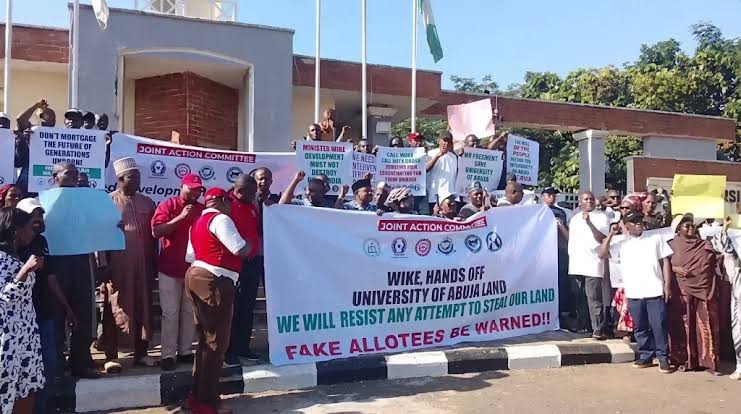
Students, lecturers, non-academic staff and alumni of the University of Abuja have sustained their protest over the disputed reduction and alleged reallocation of portions of the institution’s land, with the demonstration entering its third day on Wednesday, November 18.

The protest, which began on Monday at the university’s main campus in Gwagwalada, has disrupted academic activities, as demonstrators continue to block the institution’s main entrance and call on President Bola Tinubu to intervene in the dispute involving the Federal Capital Territory Administration (FCTA).

The action is being coordinated by the university community, including the Academic Staff Union of Universities (ASUU), Senior Staff Association of Nigerian Universities (SSANU), Non-Academic Staff Union (NASU), National Association of Academic Technologists (NAAT) and the Students’ Union Government (SUG).

The protesters are demanding that the FCTA halt further dealings involving the disputed land and reverse allocations they allege were made to private individuals and companies. They argue that the land is essential to the university’s long-term development, including the provision of hostels, research facilities, classrooms and other infrastructure.

The SUG President, Eyamu Oghenenyerovwo Peculiar, has highlighted the institution’s growing student population, said to be above 55,000, arguing that the university needs more land and facilities to accommodate its expanding academic community.

The protesters have also asked Tinubu, who is the university’s visitor, to prevail on FCT Minister Nyesom Wike to halt further action on the disputed property.

At the centre of the disagreement is the university’s land allocation, which the FCTA says is being reduced from approximately 11,824 hectares to 4,685 hectares.

The administration has defended the decision, maintaining that Wike implemented recommendations from a joint committee established by the FCTA and the university in 2016 and approved by his predecessor, former FCT Minister Mohammed Musa Bello.

The FCTA has described the protest as misplaced, arguing that the university does not require the entire land area originally associated with the institution. It has also maintained that the current administration acted on an earlier approval rather than independently initiating the reduction.

However, the university’s labour unions have rejected the administration’s account, saying the institution was neither adequately involved in the committee’s deliberations nor consulted on the contents of the report being relied upon.

The unions have consequently demanded that the FCTA make available the committee’s meeting minutes, members’ signatures and official documents authorising the disputed land decision.

On Wednesday, ASUU’s UniAbuja chapter chairman, Professor Sylvanus Ugoh, warned that the unions could escalate their action if the administration failed to halt the disputed allocations and address their concerns.

With the university entrance still blocked and academic activities affected, the dispute has developed into a major standoff between the institution’s community and the FCTA, with both sides maintaining opposing positions on the land reduction.

The protesters say they will sustain their action until the matter is addressed, while the administration continues to defend the decision as the implementation of an earlier recommendation.

Continue Reading

Abuja Reports

FCCPC Seals Abuja Developer Over ₦140m Property Dispute

Published

on

By Queensly Felix

The Federal Competition and Consumer Protection Commission (FCCPC) has sealed the offices of Peachville Platinum Estate Limited in Abuja following the company’s failure to comply with a regulatory notice issued over a disputed ₦140 million property transaction.

The enforcement action, carried out on Thursday, November 12, followed a complaint by a buyer who said the developer failed to deliver a four-bedroom detached duplex with boys’ quarters at Peach Ville Estate, Phase II, Kukwaba District, despite receiving full payment in August 2025.

In a statement issued on Friday, November 13, the FCCPC said its enforcement team, led by Marvin Nadah, sealed the company’s headquarters along Airport Road and its management office at Peachville Gardens, opposite the Games Village.

According to the Commission, the buyer had paid the full purchase price after being assured that the property would be handed over upon completion of payment. However, the complainant told the regulator that the building remained unfinished and had not been delivered.

The FCCPC said it investigated the complaint and gave both parties an opportunity to present their accounts.

During the proceedings, the company reportedly claimed that an agreement had been reached at a meeting with the Federal Capital Territory Administration (FCTA) to deliver the property by August 2026. The Commission, however, said the developer failed to provide documents substantiating the alleged agreement.

The regulator further stated that the company’s subsequent responses did not satisfactorily address the issues raised, while its representatives declined to sign witness statements required to conclude the proceedings.

The Commission issued a Compliance Notice to the company on August 17, 2026, under Section 150 of the Federal Competition and Consumer Protection Act, 2018. The notice was received on August 19, but the FCCPC said the company failed to comply within the stipulated period, prompting the enforcement action.

Reacting to the development, the company’s lawyer, S. I. Abdulaziz, attributed the delay to rising construction costs and increased prices of building materials.

In comments to Leadership, Abdulaziz maintained that the property was substantially completed, with only finishing work outstanding. He acknowledged that the buyer was entitled to demand possession after making full payment.

The lawyer said the company was working towards completing the property and handing it over by February 28, 2027. He also claimed that an understanding had been reached with the buyer to extend the delivery deadline to April 2027, although the two timelines were not reconciled in his account.

He further expressed concern that the FCCPC proceeded with enforcement despite the alleged understanding, adding that the company had sought additional time to comply with the Commission’s directive.

The FCCPC’s action has brought renewed attention to consumer protection in Nigeria’s real estate sector, particularly concerns surrounding delayed delivery of properties purchased off-plan or before construction is completed.

For the buyer, who reportedly paid ₦140 million more than a year ago, the central question remains when the property will be completed and handed over. The developer’s stated delivery target is February 28, 2027, while the alleged April 2027 extension remains disputed and unverified.

Continue Reading

Abuja Reports

Abuja Communities Report Month-Long Water Supply Disruption

Published

on

By Queensly Felix

Residents of Idu-Koro, New Karmo, Old Karmo and neighbouring communities in the Federal Capital Territory (FCT) have appealed to the FCT Administration to restore public water supply following a disruption that has reportedly lasted for about a month.

The residents, represented by the Village Head of Idu-Koro, Chief Mohammed Makama, and the Village Head of Karmo Sabo, Umar Gani Sarkin Karmo, said the prolonged interruption had forced households to rely on boreholes for drinking water and other domestic needs.

According to a report published by The Authority on November 15, the traditional leaders expressed concern that some borehole water available in the communities had unpleasant tastes and odours, raising questions about its suitability for consumption.

The shortage has also increased the burden on women and children, who reportedly spend considerable time sourcing water for cooking, bathing, washing and other household activities.

The community leaders warned that prolonged dependence on water sources whose quality has not been established could expose residents to health risks, including waterborne diseases. However, no confirmed outbreak was reported.

They urged the FCT Water Board to investigate the disruption, establish its cause and take urgent steps to restore reliable supply.

The latest complaint adds to wider concerns about recurring water shortages in parts of the FCT. Earlier reports in 2026 documented similar difficulties in communities including Idu, Karmo, Gwagwa and Jiwa, where residents had also resorted to boreholes, water vendors and other alternatives.

The residents are calling for a lasting intervention, stressing that access to safe water is essential for household hygiene, public health and everyday living.

Continue Reading

Trending

taraftarium24Maslak EscortMaslak Escortdeneme bonusudizipaldizipaljustin tvjustin tvjustin tvjustin tvtaraftarium24justin tvdeneme bonusu veren sitelerdizipaljustin tvmarsbahisggrandpashabettGrandpashabet Girişgiftcardmall/mygiftmarsbahisjustin tvtrlisans pinterestgiftcardmall/mygiftdinamobetgrandpashabet girişgrandpashabetdinamobetGrandpashabettaraftarium24dizipalgiftcardmall/mygiftjustin tvGrandpashabetGrandpashabetGrandpashabetGrandpashabetCasibompasharoyalgrandpashabettaraftarium24taraftarium24rojadirectajustin tvjojobetjojobetjojobetjojobetcasibomcasibomcasibomcasibomcasinolevantcasinolevantcasinolevantcasinolevantgrandpashabetcratosroyalbetcasibommatadorbetonwinsahabetsuperbetinnatobetbetgitromabetgameofbetgrandpashabet girişgrandpashabetcasinolevantgrandpashabetgrandpashabetgrandpashabetsekabetbetgaranticasinolevantcasibomjojobetsahabetonwincasibomcasibomgrandpashabetmarsbahisgrandpashabetcasinolevantcasibomcasibomjojobetcasinolevanttambetesbetjojobetgrandpashabet