Connect with us

Economy

NRS Seeks Simpler Tax Rules to Attract Creative Investment

Published

on

By Ifunanya Stephanie


The Nigeria Revenue Service (NRS) has called for simpler, clearer and business-friendly tax rules to attract investment and unlock the potential of Nigeria’s creative economy.

The Service said the growth of digital business models, intellectual property-driven enterprises and cross-border transactions required a tax system that creators, entrepreneurs and investors could easily understand and navigate.

The Executive Chairman of the NRS, Dr Zacch Adedeji, made the call during a high-level dialogue on taxation and investment in the creative economy at the 2026 Creative Africa Nexus Weekend (CANEX WKND) in Lagos. The event held from November 5 to 8, with Adedeji represented at the dialogue by the Executive Director, People, Stakeholders and Communication, Obinna Ihedioha.

Adedeji described Nigeria’s creative economy as one of the country’s promising economic assets, saying it had evolved beyond entertainment into a significant economic sector with the capacity to generate employment, earn foreign exchange and attract investment.

He said the expansion of digital platforms and emerging business models required corresponding changes in tax administration to ensure fiscal policies did not discourage innovation, investment or business growth.

“Government needs sustainable revenue to invest in education, security, technology and infrastructure. But how we tax matters as much as what we collect. It shapes whether businesses start, whether investors come, and whether enterprises grow or stay small,” he said.

He said the new tax laws offered an opportunity to establish clearer rules, reduce compliance burdens for small businesses and build a tax administration system focused on service, understanding and support.

Adedeji identified clarity, understanding and value as critical pillars of an effective tax system for the creative economy, adding that formalising businesses should provide access to finance, contracts, investment opportunities and larger markets.

The Minister of Art, Culture, Tourism and the Creative Economy, Hannatu Musawa, also highlighted the sector’s role in economic diversification, describing it as an avenue for job creation, wealth generation and youth empowerment.

She identified intellectual property protection, digital infrastructure and access to funding as key priorities, noting that Nigeria could draw lessons from countries such as South Korea, which had developed its creative industries into significant drivers of economic growth.

The Executive Director, Finance and Corporate Services, Muhammed L. Abubakar, said tax residency status and double taxation agreements between Nigeria and other countries were important considerations in determining the tax treatment of income earned abroad.

Similarly, the Executive Director, Policy and Compliance, Shettima Tamadi, said understanding the practical challenges businesses faced under existing tax rules was necessary to make tax administration more efficient and responsive.

During a panel discussion, tax policy expert Simeon Onyegbula highlighted provisions in the tax framework that could support creative enterprises, including the zero per cent Companies Income Tax rate for qualifying small companies, changes to minimum tax provisions and the recovery of input Value Added Tax on qualifying business purchases.

Mustapha Akaje also explained provisions relating to the tax relief available to qualifying small companies, while Kazeem Lawal said business registration and proper corporate structures gave creative enterprises a distinct legal identity, improved record-keeping and strengthened their capacity to attract investors and access local and international markets.

The NRS said its participation at CANEX included a high-level dialogue, an Investment and Tax Advisory Hub for creators and investors, and the Creative Economy Tax and Investment Initiative, which is intended to sustain engagement with the sector beyond the event.

In his closing remarks, Ihedioha identified uncertainty as a major concern among creative entrepreneurs, stressing the need for clear, predictable and accessible tax rules.

“Uncertainty is a tax nobody collects but everybody pays,” he said, adding that creators and investors would be more willing to formalise, invest and expand their businesses when their tax obligations were clear.

He said the Creative Economy Tax and Investment Initiative would provide a continuing framework for collaboration on tax education, business formalisation, investment facilitation and policy dialogue.

Continue Reading
Click to comment

Leave a Reply

Your email address will not be published. Required fields are marked *

Agriculture

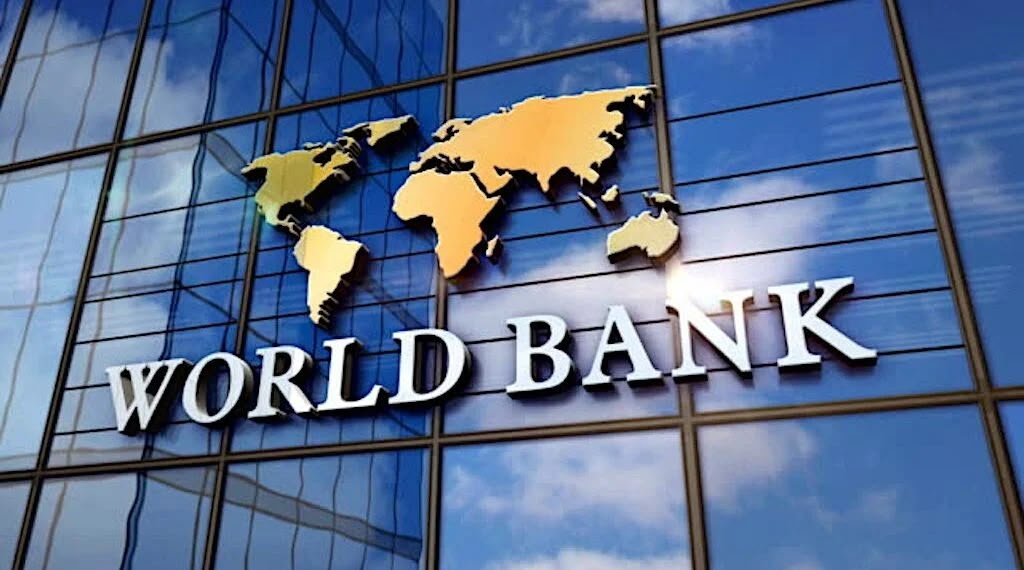
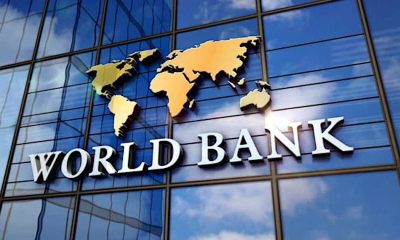
Nigeria to Repay $500m World Bank Agriculture Credit by 2050

Published

on

By Ifunanya Stephanie


The Federal Government will repay a $500m World Bank agricultural credit over 20 years, with principal repayments scheduled to begin in May 2031 and end in November 2050, under a financing agreement with the International Development Association (IDA).

The agreement provides for 40 semi-annual principal repayments of 2.5 per cent each, equivalent to $12.5m per instalment if the full credit is disbursed.

According to Schedule 3 of the agreement, Nigeria is required to make repayments on May 15 and November 15 every year, beginning May 15, 2031, and ending November 15, 2050.

This means repayment obligations will continue for more than 18 years after the agricultural project’s scheduled closing date of July 30, 2032.

The financing is for the Nigeria Sustainable Agricultural Value-Chains for Growth project, also known as AGROW, which aims to improve smallholder farmers’ productivity, strengthen agricultural value chains, expand market access and create jobs.

The World Bank approved the $500m IDA credit in March 2026 to support the project, which is expected to improve agricultural production and food and nutrition security across participating states.

The financing agreement, disclosed on the World Bank’s website on October 29, 2026, provides for the credit to be made available as concessional financing.

It also stipulates a maximum annual commitment charge of 0.5 per cent on the undisbursed balance, while the interest charge is determined using a reference rate and variable spread, subject to specified adjustments, ceilings and floors.

Under the agreement, $230m, representing 46 per cent of the financing, is allocated to performance-based matching grants for agribusiness investments.

Another $229.5m is earmarked for goods, works, consultancy services, operating costs and training, while $40.5m is reserved for expenditure linked to performance-based conditions.

The matching grants are expected to support investments in agricultural aggregation, storage, processing, logistics, post-harvest handling and market connections between farmers and buyers.

The project will also support agricultural research, improved seeds, extension services, digital farmer registration and artificial intelligence-powered weather forecasting.

Other interventions include strengthening seed certification, improving fertiliser quality regulation and promoting responsible land-based agricultural investments.

However, participating states must meet specific conditions before accessing the project financing.

Under Annex 2 of the agreement, states are required to adopt a responsible land investment framework through an executive order and establish regulations supporting a common digital farmer registry.

They must also publish a consolidated schedule of fees and levies imposed on the inter-state movement of goods, alongside reports detailing traders’ complaints and remedial actions.

Participating states are further required to publish policies linking support for agricultural cooperatives to verified commercial relationships with buyers.

The agreement provides that funds cannot be released to participating states until the Federal Government submits satisfactory evidence of compliance and executes the required subsidiary agreements.

The World Bank may also withhold, reallocate or cancel financing tied to performance targets that are not achieved.

Among the targets is the registration of farmers in a national digital registry, with basic and enhanced coverage targets of 40 per cent and 70 per cent respectively.

The agreement allocates $16m to this condition, with payments capped at $1m per participating state.

Other performance-linked allocations include $5m each for improved seed availability and private investment in seed production, $2.5m for fertiliser quality compliance and $12m for responsible land investments.

The Federal Government is also required to establish a national steering committee and a project coordination unit within three months of the project becoming effective.

The agreement further mandates independent verification of performance targets, compliance with environmental and social safeguards and periodic implementation reports.

For artificial intelligence applications, it requires risk assessments before deployment and prohibits uses involving mass surveillance, social scoring and discriminatory practices.

The financing agreement sets an effectiveness deadline of 90 days after October 29, 2026, subject to the fulfilment of the required implementation arrangements.

Meanwhile, figures published by the Debt Management Office show that Nigeria’s outstanding debt to the World Bank Group stood at $20.73bn as of June 30, 2026, comprising $19.12bn owed to the International Development Association and $1.61bn to the International Bank for Reconstruction and Development.

The figure represented an increase of approximately $1.34bn, or 6.93 per cent, from the $19.39bn recorded in June 2025.

Compared with March 2023, when Nigeria’s World Bank debt stood at $14.34bn, the June 2026 figure represented an increase of $6.39bn, or about 44.6 per cent.

The World Bank’s combined exposure accounted for approximately 38.02 per cent of Nigeria’s total external debt stock of $54.52bn as of June 2026, making it the country’s largest multilateral creditor.

The DMO also reported that Nigeria’s external debt increased from $43.16bn in June 2023 to $54.52bn in June 2026.

In naira terms, external debt rose from N33.25tn to N75.20tn over the period, an increase of N41.95tn, or approximately 126.17 per cent.

The figures reflect both additional external borrowing and the impact of exchange rate movements on the naira value of foreign-currency obligations.

L

External debt accounted for 45.09 per cent of Nigeria’s total public debt of N166.79tn as of June 30, 2026, while domestic debt represented the remaining 54.91 per cent.

The World Bank’s International Debt Report 2026 has also raised concerns about rising borrowing costs and debt-servicing obligations among developing economies.

The report said external debt across low- and middle-income countries rose by 5.5 per cent to a record $9.4tn in 2025, while warning that rising debt-service payments could reduce resources available for essential development investments.

“Low- and middle-income countries are borrowing more, paying more, and, in many cases, leaving less for long-term development,” the World Bank said.

It added that growing debt obligations were putting pressure on public resources needed for infrastructure, education, healthcare and employment.

Continue Reading

Business

Food Inflation Tops 20% in 19 States Despite National Slowdown

Published

on

By Ifunanya Stephanie

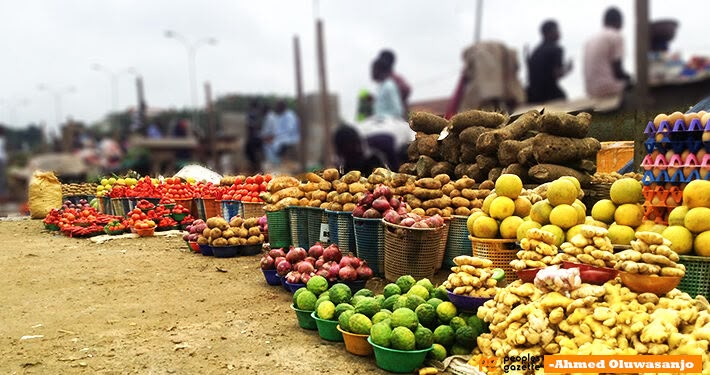
Food inflation exceeded 20 per cent in 19 Nigerian states in October 2026, despite a decline in the national annual rate, highlighting persistent price pressures across more than half of the country.

The affected states represent 52.8 per cent of Nigeria’s 36 states, according to an analysis of the latest Consumer Price Index data by The PUNCH.

The National Bureau of Statistics reported that national food inflation eased to 19.13 per cent in October from 19.59 per cent in September. However, the state-level figures showed that food price increases remained above 20 per cent in 19 states.

Ondo recorded the highest annual food inflation at 31.74 per cent, rising slightly from 31.49 per cent in September. Lagos followed at 31.43 per cent, although this represented a decline from 34.40 per cent, while Imo recorded 29.75 per cent, down from 33.79 per cent.

Oyo recorded 28.81 per cent, compared with 24.50 per cent in September, while Ebonyi’s rate rose from approximately 22 per cent to 27.96 per cent. Rivers recorded 25.33 per cent, compared with about 28 per cent previously.

Other states with annual food inflation above 20 per cent were Abia at 24.22 per cent, Delta at 23.91 per cent, Enugu at 23.48 per cent, Zamfara at 22.88 per cent, Ogun at 22.47 per cent, Yobe at 22.26 per cent, Anambra at 22.23 per cent and Kebbi at 22.21 per cent.

Akwa Ibom recorded 21.56 per cent, Edo 21.52 per cent, Sokoto 21.40 per cent, Ekiti 20.61 per cent and Kaduna 20.32 per cent.

The NBS confirmed that Ondo, Lagos and Imo recorded the highest year-on-year food inflation rates in October.

However, the monthly figures presented a different picture, showing that food prices declined nationally for the second consecutive month, although the pace of reduction slowed.

National food inflation stood at -0.75 per cent month-on-month in October, compared with -1.55 per cent in September. This represented an increase of 0.80 percentage points in the monthly inflation rate, indicating that average food prices were still falling but at a slower pace.

The NBS attributed the movement to changes in the prices of commodities including vegetable oil, sardines, green peas, frozen fish, locally produced rice, fresh catfish, beef tripe, palm oil and millet flour.

At the state level, Yobe recorded the highest monthly food inflation at 18.41 per cent in October, reversing a decline of 7.0 per cent in September. Kebbi followed with 16.45 per cent, compared with -4.9 per cent previously, while Sokoto recorded 13.0 per cent against -1.7 per cent.

Zamfara’s monthly rate rose to 8.7 per cent from 6.0 per cent, while Anambra recorded 4.3 per cent, compared with -0.3 per cent in September.

Enugu’s rate stood at 4.9 per cent, down from 14.5 per cent, while Abia rose to 2.6 per cent from 0.4 per cent. Ebonyi recorded 2.4 per cent against -2.1 per cent, Ogun 1.5 per cent against -0.4 per cent, and Edo 0.9 per cent compared with -2.8 per cent.

Imo and Ondo each recorded monthly food inflation of 0.6 per cent, although their rates moderated from 5.2 per cent and 2.6 per cent respectively. Kaduna, by contrast, recorded a monthly decline of 4.7 per cent, reversing the 3.2 per cent increase recorded in September.

Lagos recorded a 5.93 per cent monthly decline, compared with a 0.4 per cent increase in September. Rivers recorded -4.3 per cent against -2.0 per cent, while Delta posted -3.8 per cent compared with a 2.2 per cent increase.

Oyo recorded -2.6 per cent against 3.8 per cent, Akwa Ibom -1.5 per cent against -0.4 per cent, and Ekiti -0.4 per cent compared with -1.5 per cent previously.

Overall, 12 of the 19 states recorded positive monthly food inflation in October, while seven experienced declines, underscoring the uneven movement of food prices across the country.

The NBS cautioned against making direct comparisons between states without considering differences in consumption patterns and the weights assigned to individual food items in calculating their respective inflation rates.

Continue Reading

Abuja Reports

FG Breaks Ground on $70m Passport Factory in Abuja

Published

on

By Ifunanya Stephanie


The Federal Government has commenced construction of a $70 million passport manufacturing facility in Abuja, with plans to produce six million passport booklets annually by May 2027 and eventually expand capacity to 10 million.

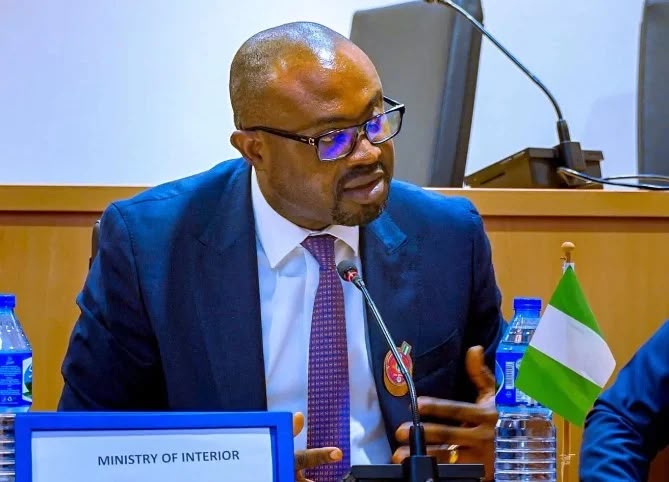
The Minister of Interior, Dr Olubunmi Tunji-Ojo, disclosed this on Friday during the groundbreaking ceremony for the National Passport Booklet Production Centre at the Nigeria Immigration Service headquarters in Abuja.

He said Nigeria currently requires between 1.8 million and two million passport booklets annually, adding that the proposed facility would not only meet domestic demand but also position the country to supply other African nations.

According to him, the project is being developed in partnership with Iris Smart Technologies and designed to produce electronic passports that meet the travel document standards of the Economic Community of West African States.

Tunji-Ojo said the facility would occupy 1.1 hectares, operate off-grid using solar power and be commissioned by President Bola Tinubu in May 2027.

“This project is about $70m without a dime from government,” the minister said, describing the investment as part of efforts to domesticate Nigeria’s passport production value chain and reduce dependence on foreign suppliers.

He said the initiative followed reforms introduced since 2023, including the automation of passport applications and approvals, the establishment of a data centre and the completion of a centralised passport personalisation centre at the NIS headquarters in September 2025.

Tunji-Ojo added that the government had made local manufacturing a condition for the continuation of its existing arrangement with the technology partner, describing the move as a backward-integration strategy.

He said the excess production capacity could enable Nigeria to serve the ECOWAS market and other African countries that currently source their passport booklets from Europe and the Americas.

Senator representing Edo North, Adams Oshiomhole, who performed the groundbreaking, described the project as a shift from importing passport booklets to domestic production.

The former Edo State governor said the development reflected a change in the country’s approach to industrialisation, arguing that Nigeria should manufacture products it had the capacity to produce rather than depend on foreign suppliers.

He also commended Tunji-Ojo for reforms in passport administration, citing improvements in the renewal process and recounting how members of his family had obtained Nigerian passports without the difficulties previously experienced.

The Comptroller-General of the Nigeria Immigration Service, Kemi Nandap, said the project represented an important step towards strengthening Nigeria’s control over the supply chain for its travel documents.

She recalled that passport booklet shortages had affected students, parents and other Nigerians, sometimes disrupting travel and admission plans.

Nandap said domestic manufacturing would strengthen document security, improve supply chain resilience, develop local expertise and enhance service delivery.

“History will not judge us by the promises we make at this groundbreaking ceremony, but by the institutions we build, the standards we uphold and the results we deliver,” she said.

Also speaking, Acting Assistant Comptroller-General of Customs, Doris Okonkwo, who represented the Comptroller-General of Customs, Bashir Adeniyi, said the project aligned with the government’s institutional modernisation agenda.

She said local production could help conserve foreign exchange, strengthen document security and reduce dependence on external suppliers.

The Director-General of the Infrastructure Concession Regulatory Commission, Dr Jobson Ewanife, said the commission would monitor compliance with contractual obligations to ensure the project was delivered according to agreed specifications.

He described the facility as part of the administration’s broader infrastructure development and reform efforts.

Continue Reading

Trending

extrabetseo ajansıseo ajansıcasino siteleritrlisans pinterestgiftcardmall/mygiftdinamobetgrandpashabet güncel girişgrandpashabetdinamobetGrandpashabettaraftarium24dizipalgiftcardmall/mygiftjustin tvGrandpashabetGrandpashabetGrandpashabetDeneme Bonusu Veren SitelerCasibomcasino siteleriultrabettaraftarium24taraftarium24rojadirectajustin tvcasinolevantjojobetgrandpashabetcasinolevantgrandpashabetgrandpashabet girişgrandpashabetgrandpashabetgrandpashabetjojobetcasinolevantonwingrandpashabet güncel girişjojobetjojobetjojobetjojobetjojobetjojobetgrandpashabetgrandpashabetgrandpashabetgrandpashabetgrandpashabetgrandpashabetgrandpashabetgrandpashabetgrandpashabetgrandpashabet güncel girişcasibombetgaranticasibomgrandpashabetgrandpashabetgrandpashabetgrandpashabetgrandpashabetgrandpashabetholiganbetholiganbet girişholiganbetmarsbahisjojobetgrandpashabetgrandpashabet girişcasibomnesinecasino xwbahis xbetgaranti xgrandpashabetGrandpashabet