Connect with us

Economy

NRS Seeks Simpler Tax Rules to Attract Creative Investment

Published

on

By Ifunanya Stephanie


The Nigeria Revenue Service (NRS) has called for simpler, clearer and business-friendly tax rules to attract investment and unlock the potential of Nigeria’s creative economy.

The Service said the growth of digital business models, intellectual property-driven enterprises and cross-border transactions required a tax system that creators, entrepreneurs and investors could easily understand and navigate.

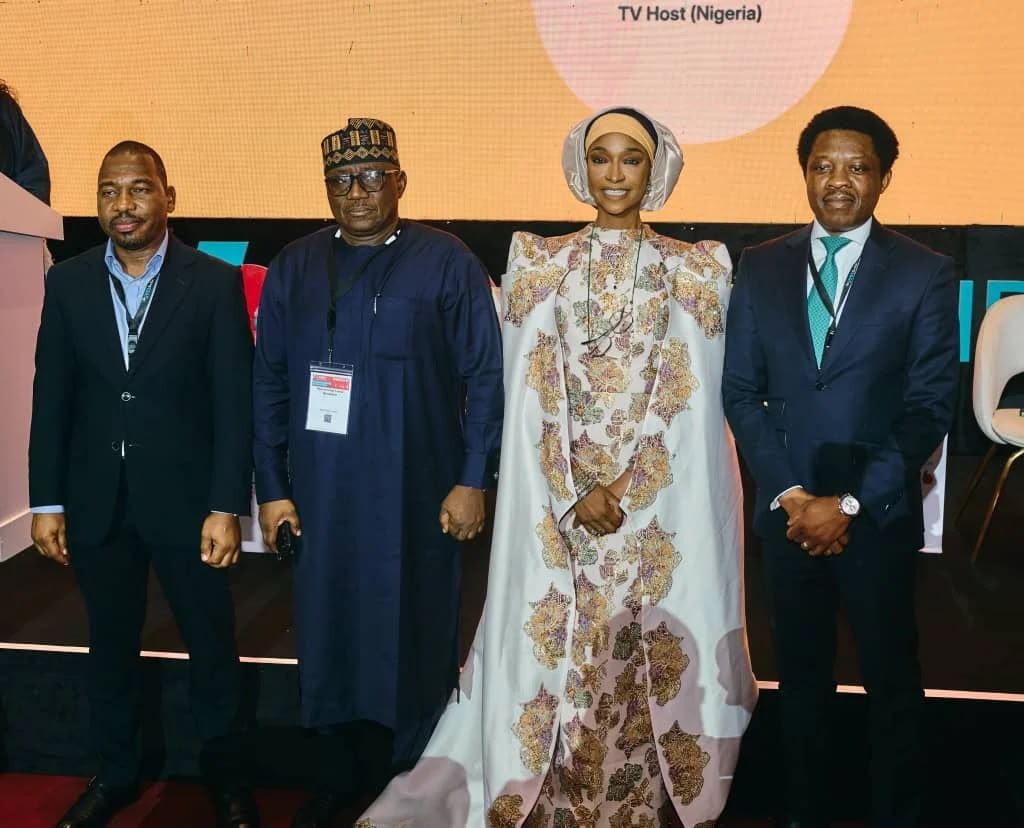
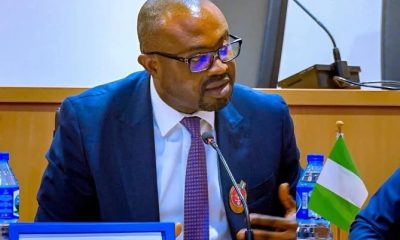
The Executive Chairman of the NRS, Dr Zacch Adedeji, made the call during a high-level dialogue on taxation and investment in the creative economy at the 2026 Creative Africa Nexus Weekend (CANEX WKND) in Lagos. The event held from November 5 to 8, with Adedeji represented at the dialogue by the Executive Director, People, Stakeholders and Communication, Obinna Ihedioha.

Adedeji described Nigeria’s creative economy as one of the country’s promising economic assets, saying it had evolved beyond entertainment into a significant economic sector with the capacity to generate employment, earn foreign exchange and attract investment.

He said the expansion of digital platforms and emerging business models required corresponding changes in tax administration to ensure fiscal policies did not discourage innovation, investment or business growth.

“Government needs sustainable revenue to invest in education, security, technology and infrastructure. But how we tax matters as much as what we collect. It shapes whether businesses start, whether investors come, and whether enterprises grow or stay small,” he said.

He said the new tax laws offered an opportunity to establish clearer rules, reduce compliance burdens for small businesses and build a tax administration system focused on service, understanding and support.

Adedeji identified clarity, understanding and value as critical pillars of an effective tax system for the creative economy, adding that formalising businesses should provide access to finance, contracts, investment opportunities and larger markets.

The Minister of Art, Culture, Tourism and the Creative Economy, Hannatu Musawa, also highlighted the sector’s role in economic diversification, describing it as an avenue for job creation, wealth generation and youth empowerment.

She identified intellectual property protection, digital infrastructure and access to funding as key priorities, noting that Nigeria could draw lessons from countries such as South Korea, which had developed its creative industries into significant drivers of economic growth.

The Executive Director, Finance and Corporate Services, Muhammed L. Abubakar, said tax residency status and double taxation agreements between Nigeria and other countries were important considerations in determining the tax treatment of income earned abroad.

Similarly, the Executive Director, Policy and Compliance, Shettima Tamadi, said understanding the practical challenges businesses faced under existing tax rules was necessary to make tax administration more efficient and responsive.

During a panel discussion, tax policy expert Simeon Onyegbula highlighted provisions in the tax framework that could support creative enterprises, including the zero per cent Companies Income Tax rate for qualifying small companies, changes to minimum tax provisions and the recovery of input Value Added Tax on qualifying business purchases.

Mustapha Akaje also explained provisions relating to the tax relief available to qualifying small companies, while Kazeem Lawal said business registration and proper corporate structures gave creative enterprises a distinct legal identity, improved record-keeping and strengthened their capacity to attract investors and access local and international markets.

The NRS said its participation at CANEX included a high-level dialogue, an Investment and Tax Advisory Hub for creators and investors, and the Creative Economy Tax and Investment Initiative, which is intended to sustain engagement with the sector beyond the event.

In his closing remarks, Ihedioha identified uncertainty as a major concern among creative entrepreneurs, stressing the need for clear, predictable and accessible tax rules.

“Uncertainty is a tax nobody collects but everybody pays,” he said, adding that creators and investors would be more willing to formalise, invest and expand their businesses when their tax obligations were clear.

He said the Creative Economy Tax and Investment Initiative would provide a continuing framework for collaboration on tax education, business formalisation, investment facilitation and policy dialogue.

Continue Reading
Click to comment

Leave a Reply

Your email address will not be published. Required fields are marked *

Abuja Reports

FG Breaks Ground on $70m Passport Factory in Abuja

Published

on

By Ifunanya Stephanie


The Federal Government has commenced construction of a $70 million passport manufacturing facility in Abuja, with plans to produce six million passport booklets annually by May 2027 and eventually expand capacity to 10 million.

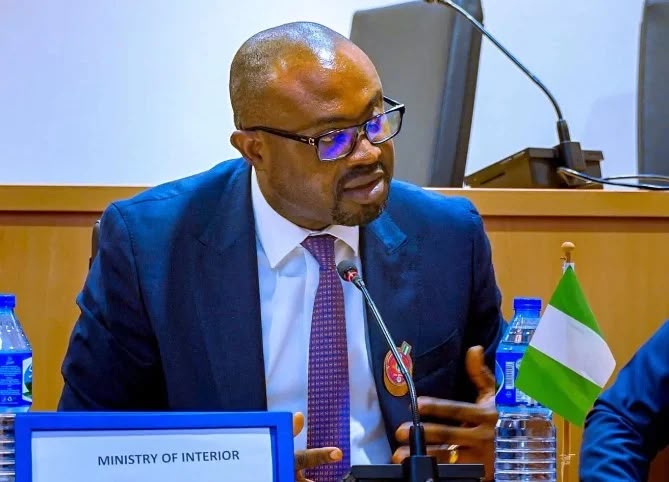
The Minister of Interior, Dr Olubunmi Tunji-Ojo, disclosed this on Friday during the groundbreaking ceremony for the National Passport Booklet Production Centre at the Nigeria Immigration Service headquarters in Abuja.

He said Nigeria currently requires between 1.8 million and two million passport booklets annually, adding that the proposed facility would not only meet domestic demand but also position the country to supply other African nations.

According to him, the project is being developed in partnership with Iris Smart Technologies and designed to produce electronic passports that meet the travel document standards of the Economic Community of West African States.

Tunji-Ojo said the facility would occupy 1.1 hectares, operate off-grid using solar power and be commissioned by President Bola Tinubu in May 2027.

“This project is about $70m without a dime from government,” the minister said, describing the investment as part of efforts to domesticate Nigeria’s passport production value chain and reduce dependence on foreign suppliers.

He said the initiative followed reforms introduced since 2023, including the automation of passport applications and approvals, the establishment of a data centre and the completion of a centralised passport personalisation centre at the NIS headquarters in September 2025.

Tunji-Ojo added that the government had made local manufacturing a condition for the continuation of its existing arrangement with the technology partner, describing the move as a backward-integration strategy.

He said the excess production capacity could enable Nigeria to serve the ECOWAS market and other African countries that currently source their passport booklets from Europe and the Americas.

Senator representing Edo North, Adams Oshiomhole, who performed the groundbreaking, described the project as a shift from importing passport booklets to domestic production.

The former Edo State governor said the development reflected a change in the country’s approach to industrialisation, arguing that Nigeria should manufacture products it had the capacity to produce rather than depend on foreign suppliers.

He also commended Tunji-Ojo for reforms in passport administration, citing improvements in the renewal process and recounting how members of his family had obtained Nigerian passports without the difficulties previously experienced.

The Comptroller-General of the Nigeria Immigration Service, Kemi Nandap, said the project represented an important step towards strengthening Nigeria’s control over the supply chain for its travel documents.

She recalled that passport booklet shortages had affected students, parents and other Nigerians, sometimes disrupting travel and admission plans.

Nandap said domestic manufacturing would strengthen document security, improve supply chain resilience, develop local expertise and enhance service delivery.

“History will not judge us by the promises we make at this groundbreaking ceremony, but by the institutions we build, the standards we uphold and the results we deliver,” she said.

Also speaking, Acting Assistant Comptroller-General of Customs, Doris Okonkwo, who represented the Comptroller-General of Customs, Bashir Adeniyi, said the project aligned with the government’s institutional modernisation agenda.

She said local production could help conserve foreign exchange, strengthen document security and reduce dependence on external suppliers.

The Director-General of the Infrastructure Concession Regulatory Commission, Dr Jobson Ewanife, said the commission would monitor compliance with contractual obligations to ensure the project was delivered according to agreed specifications.

He described the facility as part of the administration’s broader infrastructure development and reform efforts.

Continue Reading

Economy

FG’s ₦100,000 Family Grant: What Applicants Should Verify

Published

on

By Ifunanya Stephanie


An online registration portal advertising a ₦100,000 cash grant under the Nigeria Family Strengthening and Development Programme (NFSP) has attracted attention from Nigerians seeking financial support, but questions remain about the programme’s official authorisation and application arrangements.

The programme’s website identifies the Hope for Indigenous Family Support Initiative’s Coordinating Office as its coordinating body under the Federal Ministry of Youth Development and says the intervention is designed to support vulnerable households facing economic hardship.

A statement attributed to the programme’s management board, reported by PUNCH Online on Friday, November 20, says the initiative was announced by the ministry on September 10, 2026, with selected beneficiaries expected to receive ₦100,000.

However, the programme’s authorisation and the status of its advertised registration portal could not be independently confirmed through the ministry’s official website at the time of reporting.

The distinction is important because applicants are being asked to provide sensitive personal information, including their National Identification Number (NIN), family details and other supporting information.


Who Does the Programme Say Is Eligible?

According to the NFSP website and the statement attributed to its management board, prospective applicants must:/

– Be Nigerian citizens by birth.

– Be between 18 and 65 years old at the time of registration.

– Have a valid National Identification Number.

– Meet the programme’s poverty and vulnerability assessment criteria.

The website also lists a commitment to contributing to Nigeria’s socio-economic development among its registration requirements.

The programme says applicants’ NIN details will be verified through the National Identity Management Commission (NIMC).

It further states that meeting the basic requirements does not automatically guarantee selection, as beneficiaries are expected to be assessed based on household circumstances and vulnerability.


How Does the Advertised Registration Work?

The NFSP website directs interested individuals to its registration portal: nfsp.ng/signup

Its published guidelines indicate that applicants are expected to create an account, provide personal details, enter their NIN, complete family and employment information, upload supporting documents and submit their applications.

The website also instructs applicants to retain their registration numbers and download their acknowledgement slips.

However, the existence of an online registration page does not, by itself, establish that the portal has been officially authorised by the Federal Government.

Prospective applicants should therefore confirm the programme and its registration arrangements through recognised government channels before submitting sensitive information.


How Will Beneficiaries Be Selected and Paid?

According to the programme’s management board, selection will take place in phases across Nigeria’s six geopolitical zones.

The stated process involves identifying eligible households through social safety-net systems, verifying national identity records and assessing applicants based on poverty and vulnerability criteria.

The programme says selected beneficiaries will receive SMS notifications from designated payment providers, with payments made into their submitted bank accounts after the required consent procedures.

It also says beneficiaries will not necessarily receive payments at the same time because each phase will cover a limited number of households.

These arrangements are claims published by the programme and have not been independently confirmed by the ministry.


Fraud Warning: What Nigerians Should Know

The programme’s management board has warned applicants against paying individuals who promise to secure their inclusion on the beneficiary list or facilitate the release of the grant.

It specifically advises Nigerians not to pay anyone to add their names to the list or process the ₦100,000 payment.

Separately, the National Cash Transfer Office (NCTO) has issued a public warning about fraudulent cash-transfer registration websites, misleading links and individuals impersonating government officials.

The NCTO says beneficiaries under its existing cash-transfer programme are selected from the National Social Register of Poor and Vulnerable Households and that there is no public website for applying to that programme.

The NCTO warning concerns its own cash-transfer arrangements and does not, on its own, establish whether the separately advertised NFSP initiative is genuine or fraudulent.

Nigerians are advised not to share banking passwords, one-time passwords or sensitive identity information with unverified individuals and to avoid paying agents who promise guaranteed access to government assistance.


What Should Applicants Do?

Before proceeding with the advertised registration, interested Nigerians should seek confirmation from the Federal Ministry of Youth Development through its recognised communication channels.

The ministry lists info@fmyd.gov.ng among its official contact addresses.

Applicants should also verify that the registration portal is officially authorised and understand how their personal information will be collected, stored and used.

While financial assistance can provide important relief to vulnerable households, the protection of applicants’ identities and personal information must remain a priority.

Until the programme’s authorisation and registration arrangements are independently established, Nigerians should treat the advertised application process with caution.

Continue Reading

Economy

Tinubu Woos World’s Largest Busmaker to Nigeria, Targets 40% Cut in Transport Fares

Published

on

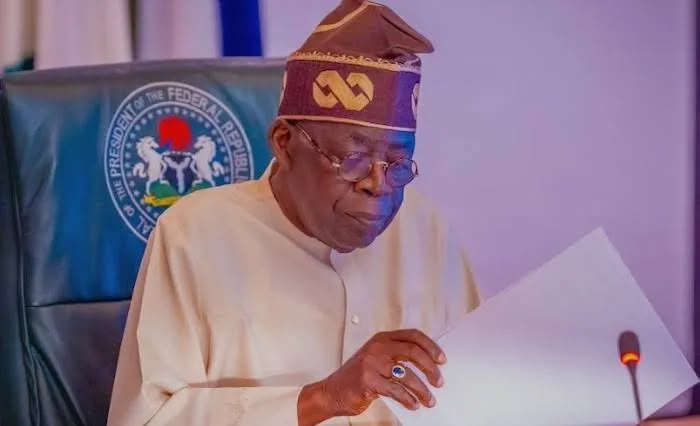
President Bola Tinubu has welcomed plans by Chinese automotive manufacturer Yutong to establish a Compressed Natural Gas (CNG) bus assembly plant in Nigeria as part of efforts to reduce transportation costs and expand affordable mass transit across the country.

The proposed investment follows an invitation by the President to the company, described as the world’s largest bus manufacturer, to support the expansion of affordable transportation in Nigeria.

Under an agreement with the Presidential Initiative on Compressed Natural Gas and Electric Vehicles (Pi-CNG & EV), Yutong is expected to supply an initial 300 CNG-powered buses, with the first 100 scheduled to arrive in Lagos by the end of December 2026.

The remaining buses will be assembled locally through YP Automobiles Bus Assembly at the former Leyland Automotive plant in Ibadan, Oyo State.

According to a statement issued on Thursday by the President’s Special Adviser on Information and Strategy, Bayo Onanuga, the investment is expected to revive local industrial capacity, reduce dependence on imported vehicles and create employment opportunities for Nigerian engineers, technicians and other workers.

The initiative is part of the National Affordable CNG Transit Programme (NACTP), which is targeting a reduction of approximately 40 per cent in transport fares on participating routes in collaboration with state governments.

The programme aligns with the transportation component of the Tinubu administration’s Renewed Hope Agenda 2.0 for 2027–2031.

Onanuga said the President maintained that the primary objective of the investment was to reduce the daily transportation expenses of Nigerians, particularly workers, traders and families who depend on commercial vehicles.

Tinubu stressed that the lower operating costs of CNG-powered vehicles should translate into reduced fares for passengers, enabling households to save more of their income for essential needs.

The statement added that the expansion of CNG transportation would be supported by investments in refuelling infrastructure through Pi-CNG & EV, the Midstream and Downstream Gas Infrastructure Fund (MDGIF) and private sector operators.

These efforts include the deployment of Mobile Refuelling Units and a presidential directive for the provision of 2,000 additional CNG refuelling infrastructure units nationwide.

Yutong, which reportedly sold 49,518 buses globally in 2025, has experience in mass transit manufacturing and local assembly operations across several international markets.

The President also welcomed the company’s decision to establish local assembly capacity, describing it as an opportunity to promote technology transfer, develop skilled manpower and strengthen Nigeria’s automotive industry.

He reiterated that the success of the CNG programme would ultimately be measured by the savings it delivers to Nigerians through reduced transportation costs.

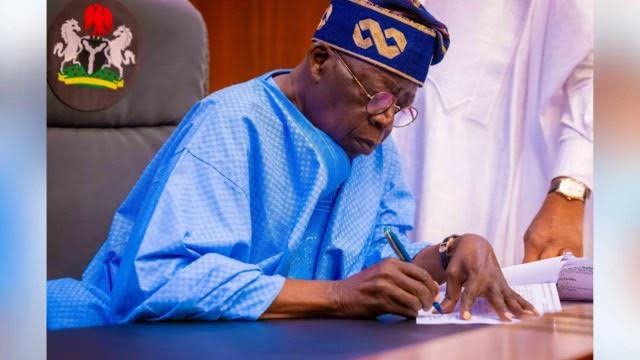
The agreement between Yutong and the Pi-CNG & EV initiative is scheduled to be signed in Lagos on Thursday, November 19, 2026.

Continue Reading

Trending

taraftarium24seo ajansıseo ajansıpasharoyaltrlisans pinterestgiftcardmall/mygiftdinamobetgrandpashabet girişgrandpashabetdinamobetGrandpashabettaraftarium24dizipalgiftcardmall/mygiftjustin tvcasino sitelericasino siteleriGrandpashabetDeneme Bonusu Veren SitelerCasibompasharoyalkavbettaraftarium24taraftarium24rojadirectajustin tvbetsalvador xteosbetbahiscasino x1win xbetgitcasinolevantcasinolevantcasinolevantmatadorbetonwinsahabetsuperbetinmarsbahismarsbahis girişcasibomjojobetmarsbahiscasibomjojobetholiganbetholiganbetholiganbetholiganbetjojobetjojobetholiganbetmatadorbetmatadorbetfixbetbetbey xesbet xcashwin ximajbetvdcasinoonwin girişpusulabet girişcasibomholiganbetholiganbetcasibomholiganbet girişcasibomibizabet xcasinolevantfixbetbetpuan xnesinecasino xwbahis xbetgaranti xgrandpashabetjojobetjojobet