Connect with us

News

Atiku Support Groups Back Obi, but Opposition Alliance Remains Unsettled

Published

on

By Edisemi Andrew


A coalition of support groups previously aligned with former Vice-President Atiku Abubakar has endorsed Peter Obi and former Kano State governor Rabiu Kwankwaso for the 2027 presidential election, adding a new dimension to ongoing efforts to unite Nigeria’s opposition.

The Coalition of Atiku Support Groups Initiative (CASGI) announced its decision at a gathering in Abuja on Saturday, November 21, declaring support for the proposed Obi-Kwankwaso ticket under the Nigeria Democratic Congress (NDC).

The group said its position followed an assessment of the country’s political situation, the principle of regional power rotation and the need for opposition forces to work together ahead of the 2027 election.

However, the endorsement has not secured Atiku’s withdrawal from the presidential race or established an agreement between the two opposition figures.

Atiku, the African Democratic Congress (ADC) presidential candidate, on Sunday dismissed reports that he had stepped aside in favour of Obi, insisting that he remained in the contest.

In a statement issued through his Director of Strategic Communication, Phrank Shaibu, the former Vice-President said no group claiming to represent his supporters had the authority to announce his withdrawal.

“I have not made such decision. I am in this race to win,” Atiku said.

His response underscores the difference between the political choices of support groups and the decisions of the candidates they previously backed. CASGI’s endorsement may signal a shift among some grassroots political networks, but it does not amount to a decision by Atiku or the ADC to support Obi.

The development comes amid wider consultations involving opposition parties and political figures seeking a common approach ahead of the 2027 election. The Coalition for Democracy, which brings together the ADC, NDC, Allied Peoples Movement (APM), Peoples Democratic Party (PDP), Peoples Redemption Party (PRP) and Social Democratic Party (SDP), is pursuing a broader cooperation framework.

The coalition has rescheduled its second summit from November 23 to November 30, 2026, to allow presidential candidates, party leaders and campaign teams to participate. It says the meeting will focus on finalising and signing a common agreement to guide cooperation among the participating parties.

But the proposed agreement should not be confused with a settled decision on a single presidential candidate. The participating parties have yet to publicly announce a common ticket, while their candidates and political structures continue to navigate competing ambitions.

Obi has previously argued that any genuine opposition alliance must be negotiated by political parties rather than through personal arrangements between individual candidates. In an interview with Arise News in September, he said decisions on a possible consensus must involve the parties and their respective structures.

That position raises wider questions about how any proposed alliance would be structured, including the choice of presidential candidate, running mate, political platform and the interests of the parties involved.

For now, the endorsement by Atiku-aligned groups represents a political development, not a formal agreement between Atiku and Obi. Neither man has announced a joint arrangement, while Atiku has expressly maintained that he intends to contest the election.

The November 30 summit will provide another opportunity for opposition parties to clarify the terms of their cooperation. Whether those discussions produce a common presidential candidate or a broader agreement to work together remains unresolved.

The central challenge for the opposition is therefore not merely securing endorsements or bringing political leaders to the same table, but reaching an arrangement that the parties, candidates and their respective structures are willing to accept.

Continue Reading
Click to comment

Leave a Reply

Your email address will not be published. Required fields are marked *

Abuja Reports

‘Even in Aso Rock, Water No Dey’: Tinubu Recalls Villa Outage

Published

on

By Patrick Idowu

President Bola Tinubu has recounted how water supply stopped at the Presidential Villa in Abuja while he was shaving, using the experience to highlight Nigeria’s persistent infrastructure challenges.

The President disclosed the incident on Sunday during a special prayer organised by members of his family for his 2027 re-election bid at the Yoruba Tennis Club in Onikan, Lagos.

Tinubu said the disruption occurred last Wednesday, November 18, and left him experiencing the inconvenience associated with unreliable public utilities.

“Last Wednesday, I was shaving when the water supply went off in the Villa. You won’t know punishment dey there too,” he said.

Speaking partly in Pidgin English, the President acknowledged the challenges of inadequate electricity and water supply, insisting that his administration would work to address the problems.

“We will correct all these no light, no water, no electricity, no development. We have only just started. We can do it, and we will do it for Nigeria,” he said.

His remarks came amid continued concerns over access to reliable electricity, clean water and other essential services across the country.

The family prayer session was held a day after Tinubu attended an All Progressives Congress campaign rally in Ibadan, Oyo State. <Cite refs={[“turn488960search0″,”turn488960search3″,”turn488960search10”]}/>

Continue Reading

News

Outrage As Foreign Tourist Accuses Daura Emir Of Sexual Assault Inside Palace

Published

on

Patrick Idowu


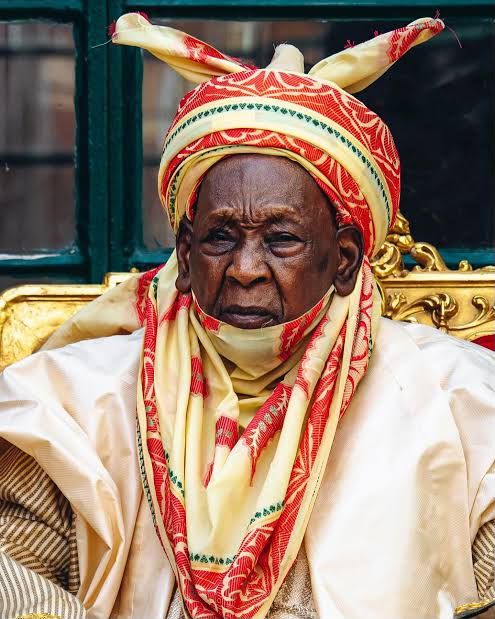
The Emir of Daura in Katsina State, His Royal Highness, Alhaji Faruq Umar-Faruk, has come under intense public scrutiny following allegations of sexual assault by a foreign tourist who claimed the traditional ruler touched her inappropriately during a visit to his palace.


The allegation, which has sparked widespread outrage on social media, emerged after the tourist, who identifies herself on Instagram as @beduinqa, released a video purportedly showing her encounter with the 92-year-old monarch.


The incident has attracted condemnation and calls for an independent investigation, with Amnesty International Nigeria and prominent northern voices reportedly demanding that the allegation be thoroughly investigated.


In the footage, the Emir is seen smiling and holding the woman’s hand during their conversation. At one point, the tourist is heard objecting to his physical contact, telling him: “No, no, you can’t be touching me.”


The tourist subsequently took to Instagram to narrate what she described as a disturbing experience at the palace during her 30-day tour of Nigeria.


According to her, the encounter happened on November 14, when she was received at the palace and taken into an elegantly furnished room where they sat together and exchanged pleasantries.


She alleged that what began as a friendly conversation took an uncomfortable turn when the monarch allegedly started fondling her hand before touching other parts of her body.


She further claimed that the Emir hugged and kissed her on the cheek before allegedly touching her breasts, despite her repeated objections.


Describing the experience as disgusting and shocking, she said she never imagined that such an incident would happen inside a royal palace.


“I wasn’t sexually assaulted at any moment when walking through the streets of Nigeria, even in busy crowded places, but to my shock, I was assaulted in a palace by a traditional leader who should be behaving in an exemplary and dignified way,” she wrote.


The tourist explained that although the incident occurred on November 14, she deliberately delayed making it public until she had completed her Nigerian tour and left the country.


She also suggested that she might not have been the first female visitor to experience similar treatment from the monarch, alleging that she had recorded the encounter using Meta smart glasses.


“I suspect I wasn’t the first woman he assaulted but probably the first one with proof recorded,” she added.


The controversy has intensified following the emergence of the video, which captures portions of the interaction between the Emir and the tourist, including their discussion about her travel plans, Nigerian food and the history of Daura.


During the conversation, the woman informed the monarch that her Nigerian visa was about to expire, explaining that she would be leaving the country on Monday or Tuesday.


When asked whether she would return to Daura, she indicated that she might visit again for the traditional Durbar festival.


She also praised the food served at the palace and expressed interest in learning about Daura’s history, particularly its account as a kingdom once ruled by a woman.


However, the atmosphere appeared to change when the Emir allegedly touched her, prompting her immediate objection.


Emirate acknowledges viral video


Reacting to the controversy, the Daura Emirate Council spokesperson, Ibrahim Murtala, popularly known as Sarkin Labarai, confirmed that the palace had seen the viral footage.


He said the Emirate was currently examining its contents and would make an official response after completing the necessary processes.


Meanwhile, the Katsina State Government had yet to issue an official statement on the allegation as of the time of filing this report.


Efforts to obtain comments from the Commissioner for Local Government and Chieftaincy Affairs, Alhaji Bashir Tanimu, were unsuccessful, as calls to his telephone went unanswered. He also did not respond to a text message sent to him.


The Katsina State Police Command equally said it was unaware of the video and had not received any formal complaint concerning the incident.


The Police Public Relations Officer, Abubakar Sadiq Aliyu, said the command had no official information on the matter.


Who is the foreign tourist?


A review of the woman’s Instagram account shows that she uses the name Mirka C. and the username @beduinqa.


Her profile indicates that she has visited 185 of the world’s 197 countries, documenting extensive travels across Africa, the Middle East, Asia and other regions.


Her travel records include destinations considered difficult to access, such as Yemen, Chad, Comoros and remote islands.


Her posts also feature humanitarian activities, scuba diving and expeditions to less-explored destinations.


On Couchsurfing, a travel community platform, she reportedly indicated that she sometimes uses the name Amira when visiting Arabic-speaking countries, reflecting her interest in interacting with local communities.


Her social media activities suggest a Polish connection, although her nationality has not been independently established.


The allegation has continued to generate heated debate, particularly over the conduct expected of traditional rulers and the responsibility of public institutions to investigate claims of sexual misconduct.


For now, the Emirate’s promised response, alongside possible action by the state government and police, is being closely awaited

Continue Reading

Business

Abuja Entrepreneurs Battle Rising Costs, Weak Consumer Spending

Published

on

By Ifunanya Stephanie

Entrepreneurs in Abuja say rising operating costs, weaker consumer spending and irregular cash flow are putting increasing pressure on their businesses, with some struggling to remain profitable despite years of investment and hard work.

From bakers contending with expensive ingredients and unreliable electricity to fabric sellers battling unpaid credit purchases and fashion designers waiting months for payments, business owners across different sectors say the current economic climate is making it increasingly difficult to sustain their enterprises.

They said the pressure has reduced profit margins, disrupted daily operations and, in some cases, pushed them to consider shutting down businesses they had spent years building.

Aisha Dikko, a baker and food vendor, said her journey into entrepreneurship had been shaped by sacrifices and challenges she did not anticipate when she started.

Inspired by her mother, who was also a baker, Dikko said what began as a passion gradually developed into a business. However, she admitted that she initially underestimated what it would take to turn her baking skills into a sustainable enterprise.

“I thought it would be relatively easy. People loved my cakes and small chops whenever I made them at home, so I assumed turning that into a business would be straightforward,” she said.

She explained that running the business required more than baking skills, as she had to learn pricing, marketing, customer relations, production and financial management.

Although the business has recorded some growth, Dikko said fluctuating prices of ingredients and supplies had remained a major challenge, with restocking costs changing frequently.

She said customers’ declining purchasing power had compounded the problem, as some prospective buyers made offers that fell far below the actual cost of production.

Dikko recalled an instance in which a customer offered ₦70,000 for desserts for 300 guests, despite her estimated cost of providing desserts for just 100 guests being about ₦300,000.

Electricity, she added, had also become one of her biggest operational challenges, at a point making her consider abandoning the business.

She said the installation of solar power by her husband provided some relief, allowing her to continue operating from home, although she still relies on gas and an inverter for some activities.

Dikko called for more practical government support for small businesses, arguing that access to loans alone would not resolve the difficulties confronting entrepreneurs.

For Aisha Kabir, a fabric seller with more than a decade of experience, the struggle is largely about maintaining cash flow, particularly as more customers find it difficult to pay for goods purchased on credit.

Kabir said credit sales had made it increasingly difficult to maintain a steady flow of money into the business.

She explained that there were months when customers continued to collect goods but little or no money came in because of outstanding payments, leaving her unable to meet financial obligations or restock adequately.

Rising purchase and transportation costs have also affected patronage, she said, as higher operating expenses eventually force sellers to increase prices.

“This automatically cuts off some potential buyers,” she said.


Kabir called for interest-free financial assistance with less cumbersome requirements to help small business owners sustain and expand their enterprises.

Aliyu Halliru, a tailor and fabric seller who specialises in men’s clothing, said his nine-year journey in business had involved considerable determination but was now being tested by mounting expenses.

Halliru said he started with virtually nothing but had a clear ambition to build a recognisable brand that customers could trust.


He identified the rising cost of goods, transportation, electricity and other operational expenses as major challenges, explaining that they had reduced his profit margins and made it difficult to keep prices affordable without compromising quality.

The financial pressure, he said, had sometimes become overwhelming, prompting thoughts of shutting down the business.

However, support from his parents, who provided capital, and friends, who patronised his services, helped keep the enterprise afloat.

“The trust our customers have in the brand, their support and positive feedback also mean a lot to me,” he said, adding that his original vision continued to motivate him despite the difficulties.

For Halliru, the progress recorded over the years remains a reminder of his investment in the business and the possibilities he hopes to achieve.

Similarly, Fatima Ata, a fashion designer who has spent about five years in the industry, said delayed payments from customers had become a major obstacle to the growth of her business.

Ata, who developed an interest in fashion design as a child, said she ventured into the trade after completing her training, hoping to turn her passion and skills into a sustainable source of income.

She said collecting payments, particularly from friends and family members, had become a recurring challenge because enforcing strict payment terms was often difficult when personal relationships were involved.

“Unfortunately, these delays have affected my cash flow, and I am still struggling to recover financially from some of the outstanding payments,” she said.

Ata added that higher prices of fabrics, transportation, electricity and other necessities had forced her to increase service charges, sometimes causing her to lose customers who could no longer afford her services.

Despite the difficulties, she said she had not considered closing the business because fashion design remained her primary source of livelihood.

She hopes to build a globally recognised fashion brand, drawing inspiration from established Nigerian and international labels.

Ata called for improved infrastructure, reliable electricity, grants and affordable loans, saying entrepreneurs should not have to bear the additional cost of providing basic amenities needed to operate their businesses.

The experiences of the four entrepreneurs reflect a broader challenge confronting businesses in Abuja, where rising operating expenses and constrained household spending are affecting sales, cash flow and profit margins.

A Nigerian Economic Summit Group business survey for October 2026 also reported slower business expansion, with its Current Business Performance Index falling to 115.4 points from 117.8 points in September. The group identified weak demand conditions, electricity supply problems, high operating costs and limited access to finance among the constraints facing businesses.

While the challenges vary across sectors, the entrepreneurs described similar survival strategies, including adjusting prices, cutting expenses, extending credit, relying on family support and operating from home.

For some, the possibility of shutting down has become difficult to ignore. For others, the passion that inspired them to start, the support of loved ones and the hope of building something lasting remain reasons to keep going.

Continue Reading

Trending

extrabetseo ajansıseo ajansıcasino siteleritrlisans pinterestgiftcardmall/mygiftgrandpashabet girişgrandpashabet güncel girişgrandpashabetgrandpashabet girişgrandpashabettaraftarium24dizipalgiftcardmall/mygiftjustin tvGrandpashabetGrandpashabetGrandpashabetcasino siteleriRadissonbetsweet bonanzacasino siteleripadişahbettaraftarium24taraftarium24rojadirectajustin tvcasinolevantjojobetjojobetjojobetcasibomholiganbet xcasinolevantcasinolevantjojobetjojobetholiganbetholiganbetholiganbetholiganbetmarsbahismarsbahismarsbahisjojobetjojobetholiganbetholiganbetjojobetjojobet girişjojobet güncel girişjojobet güncel girişgrandpashabetjojobetjojobetgrandpashabetjojobetcasibomcasibommatbetimajbetpusulabetvdcasinosahabetmarsbahismarsbahis girişholiganbetholiganbet girişcasibomcasinolevantcasinolevantgrandpashabetcasibomnesinecasino xwbahis xbetgaranti xgrandpashabet girişGrandpashabetjojobet