By Ifunanya Stephanie
The Federal Government will repay a $500m World Bank agricultural credit over 20 years, with principal repayments scheduled to begin in May 2031 and end in November 2050, under a financing agreement with the International Development Association (IDA).
The agreement provides for 40 semi-annual principal repayments of 2.5 per cent each, equivalent to $12.5m per instalment if the full credit is disbursed.
According to Schedule 3 of the agreement, Nigeria is required to make repayments on May 15 and November 15 every year, beginning May 15, 2031, and ending November 15, 2050.
This means repayment obligations will continue for more than 18 years after the agricultural project’s scheduled closing date of July 30, 2032.
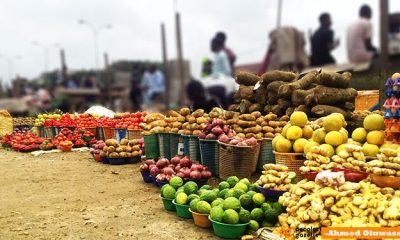
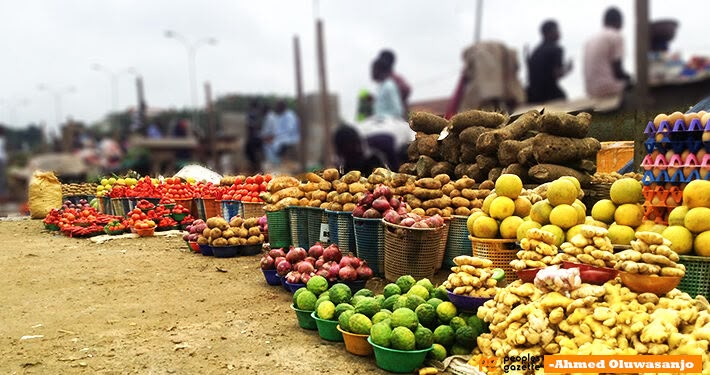
The financing is for the Nigeria Sustainable Agricultural Value-Chains for Growth project, also known as AGROW, which aims to improve smallholder farmers’ productivity, strengthen agricultural value chains, expand market access and create jobs.
The World Bank approved the $500m IDA credit in March 2026 to support the project, which is expected to improve agricultural production and food and nutrition security across participating states.
The financing agreement, disclosed on the World Bank’s website on October 29, 2026, provides for the credit to be made available as concessional financing.
It also stipulates a maximum annual commitment charge of 0.5 per cent on the undisbursed balance, while the interest charge is determined using a reference rate and variable spread, subject to specified adjustments, ceilings and floors.
Under the agreement, $230m, representing 46 per cent of the financing, is allocated to performance-based matching grants for agribusiness investments.
Another $229.5m is earmarked for goods, works, consultancy services, operating costs and training, while $40.5m is reserved for expenditure linked to performance-based conditions.
The matching grants are expected to support investments in agricultural aggregation, storage, processing, logistics, post-harvest handling and market connections between farmers and buyers.
The project will also support agricultural research, improved seeds, extension services, digital farmer registration and artificial intelligence-powered weather forecasting.
Other interventions include strengthening seed certification, improving fertiliser quality regulation and promoting responsible land-based agricultural investments.
However, participating states must meet specific conditions before accessing the project financing.
Under Annex 2 of the agreement, states are required to adopt a responsible land investment framework through an executive order and establish regulations supporting a common digital farmer registry.
They must also publish a consolidated schedule of fees and levies imposed on the inter-state movement of goods, alongside reports detailing traders’ complaints and remedial actions.
Participating states are further required to publish policies linking support for agricultural cooperatives to verified commercial relationships with buyers.
The agreement provides that funds cannot be released to participating states until the Federal Government submits satisfactory evidence of compliance and executes the required subsidiary agreements.
The World Bank may also withhold, reallocate or cancel financing tied to performance targets that are not achieved.
Among the targets is the registration of farmers in a national digital registry, with basic and enhanced coverage targets of 40 per cent and 70 per cent respectively.
The agreement allocates $16m to this condition, with payments capped at $1m per participating state.
Other performance-linked allocations include $5m each for improved seed availability and private investment in seed production, $2.5m for fertiliser quality compliance and $12m for responsible land investments.
The Federal Government is also required to establish a national steering committee and a project coordination unit within three months of the project becoming effective.
The agreement further mandates independent verification of performance targets, compliance with environmental and social safeguards and periodic implementation reports.
For artificial intelligence applications, it requires risk assessments before deployment and prohibits uses involving mass surveillance, social scoring and discriminatory practices.
The financing agreement sets an effectiveness deadline of 90 days after October 29, 2026, subject to the fulfilment of the required implementation arrangements.
Meanwhile, figures published by the Debt Management Office show that Nigeria’s outstanding debt to the World Bank Group stood at $20.73bn as of June 30, 2026, comprising $19.12bn owed to the International Development Association and $1.61bn to the International Bank for Reconstruction and Development.
The figure represented an increase of approximately $1.34bn, or 6.93 per cent, from the $19.39bn recorded in June 2025.
Compared with March 2023, when Nigeria’s World Bank debt stood at $14.34bn, the June 2026 figure represented an increase of $6.39bn, or about 44.6 per cent.
The World Bank’s combined exposure accounted for approximately 38.02 per cent of Nigeria’s total external debt stock of $54.52bn as of June 2026, making it the country’s largest multilateral creditor.
The DMO also reported that Nigeria’s external debt increased from $43.16bn in June 2023 to $54.52bn in June 2026.
In naira terms, external debt rose from N33.25tn to N75.20tn over the period, an increase of N41.95tn, or approximately 126.17 per cent.
The figures reflect both additional external borrowing and the impact of exchange rate movements on the naira value of foreign-currency obligations.
L
External debt accounted for 45.09 per cent of Nigeria’s total public debt of N166.79tn as of June 30, 2026, while domestic debt represented the remaining 54.91 per cent.
The World Bank’s International Debt Report 2026 has also raised concerns about rising borrowing costs and debt-servicing obligations among developing economies.
The report said external debt across low- and middle-income countries rose by 5.5 per cent to a record $9.4tn in 2025, while warning that rising debt-service payments could reduce resources available for essential development investments.
“Low- and middle-income countries are borrowing more, paying more, and, in many cases, leaving less for long-term development,” the World Bank said.
It added that growing debt obligations were putting pressure on public resources needed for infrastructure, education, healthcare and employment.






 Defence and Security11 hours ago

 News9 hours ago

 Abuja Reports10 hours ago