Connect with us

News

Senegal Edges Morocco, Wins AFCON Final

Published

on

By Samuel Adeola

Senegal clinched the Africa Cup of Nations title on Sunday night after edging hosts Morocco 1-0 in a dramatic final at the Stade Prince Moulay Abdellah, Rabat.

The tense encounter ended goalless after 90 minutes, with Morocco dominating possession while Senegal stayed compact and disciplined.

The match took a controversial turn in stoppage time when Morocco were awarded a penalty following a VAR review, sparking protests from Senegalese players.

Goalkeeper Édouard Mendy emerged the hero, saving Brahim Díaz’s spot kick to force extra time. Just four minutes into the added period, Pape Gueye fired home from outside the box to give Senegal the decisive lead.

Morocco pressed for an equaliser, but Senegal held firm to seal their second AFCON crown.

Celebrations erupted in Dakar, while Morocco were left to rue another missed opportunity on home soil.

Economy

NRS Seeks Simpler Tax Rules to Attract Creative Investment

Published

on

By Ifunanya Stephanie


The Nigeria Revenue Service (NRS) has called for simpler, clearer and business-friendly tax rules to attract investment and unlock the potential of Nigeria’s creative economy.

The Service said the growth of digital business models, intellectual property-driven enterprises and cross-border transactions required a tax system that creators, entrepreneurs and investors could easily understand and navigate.

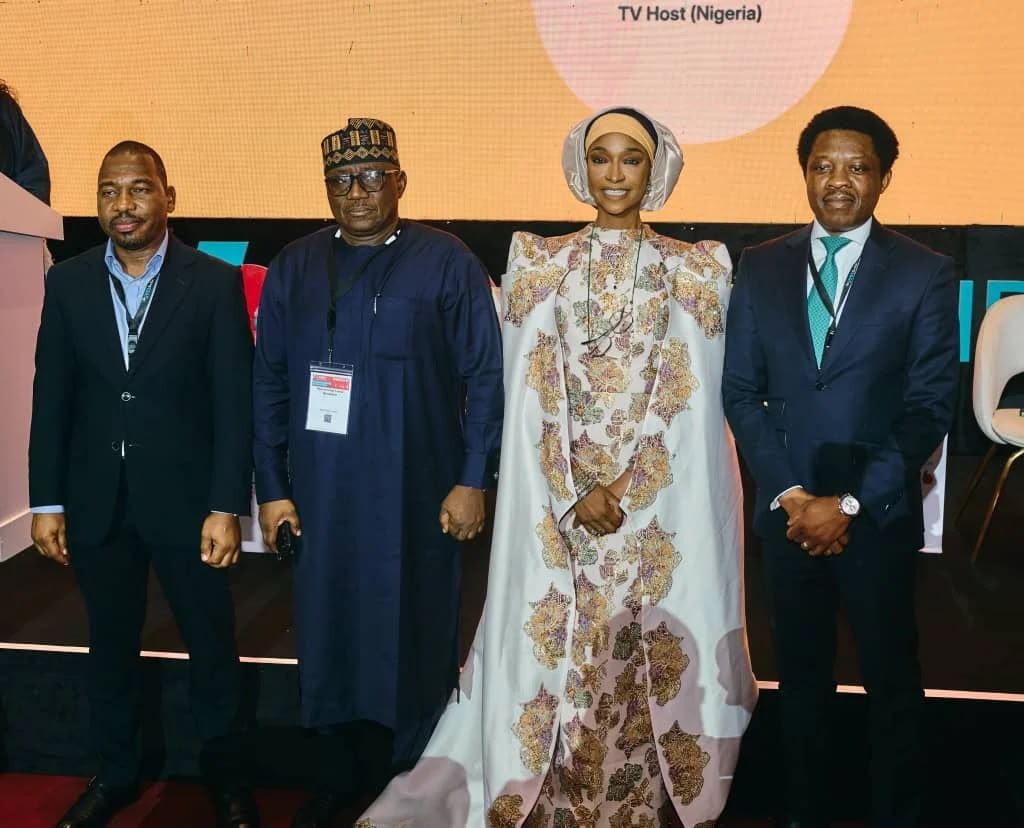
The Executive Chairman of the NRS, Dr Zacch Adedeji, made the call during a high-level dialogue on taxation and investment in the creative economy at the 2026 Creative Africa Nexus Weekend (CANEX WKND) in Lagos. The event held from November 5 to 8, with Adedeji represented at the dialogue by the Executive Director, People, Stakeholders and Communication, Obinna Ihedioha.

Adedeji described Nigeria’s creative economy as one of the country’s promising economic assets, saying it had evolved beyond entertainment into a significant economic sector with the capacity to generate employment, earn foreign exchange and attract investment.

He said the expansion of digital platforms and emerging business models required corresponding changes in tax administration to ensure fiscal policies did not discourage innovation, investment or business growth.

“Government needs sustainable revenue to invest in education, security, technology and infrastructure. But how we tax matters as much as what we collect. It shapes whether businesses start, whether investors come, and whether enterprises grow or stay small,” he said.

He said the new tax laws offered an opportunity to establish clearer rules, reduce compliance burdens for small businesses and build a tax administration system focused on service, understanding and support.

Adedeji identified clarity, understanding and value as critical pillars of an effective tax system for the creative economy, adding that formalising businesses should provide access to finance, contracts, investment opportunities and larger markets.

The Minister of Art, Culture, Tourism and the Creative Economy, Hannatu Musawa, also highlighted the sector’s role in economic diversification, describing it as an avenue for job creation, wealth generation and youth empowerment.

She identified intellectual property protection, digital infrastructure and access to funding as key priorities, noting that Nigeria could draw lessons from countries such as South Korea, which had developed its creative industries into significant drivers of economic growth.

The Executive Director, Finance and Corporate Services, Muhammed L. Abubakar, said tax residency status and double taxation agreements between Nigeria and other countries were important considerations in determining the tax treatment of income earned abroad.

Similarly, the Executive Director, Policy and Compliance, Shettima Tamadi, said understanding the practical challenges businesses faced under existing tax rules was necessary to make tax administration more efficient and responsive.

During a panel discussion, tax policy expert Simeon Onyegbula highlighted provisions in the tax framework that could support creative enterprises, including the zero per cent Companies Income Tax rate for qualifying small companies, changes to minimum tax provisions and the recovery of input Value Added Tax on qualifying business purchases.

Mustapha Akaje also explained provisions relating to the tax relief available to qualifying small companies, while Kazeem Lawal said business registration and proper corporate structures gave creative enterprises a distinct legal identity, improved record-keeping and strengthened their capacity to attract investors and access local and international markets.

The NRS said its participation at CANEX included a high-level dialogue, an Investment and Tax Advisory Hub for creators and investors, and the Creative Economy Tax and Investment Initiative, which is intended to sustain engagement with the sector beyond the event.

In his closing remarks, Ihedioha identified uncertainty as a major concern among creative entrepreneurs, stressing the need for clear, predictable and accessible tax rules.

“Uncertainty is a tax nobody collects but everybody pays,” he said, adding that creators and investors would be more willing to formalise, invest and expand their businesses when their tax obligations were clear.

He said the Creative Economy Tax and Investment Initiative would provide a continuing framework for collaboration on tax education, business formalisation, investment facilitation and policy dialogue.

Continue Reading

Abuja Reports

FG Breaks Ground on $70m Passport Factory in Abuja

Published

on

By Ifunanya Stephanie


The Federal Government has commenced construction of a $70 million passport manufacturing facility in Abuja, with plans to produce six million passport booklets annually by May 2027 and eventually expand capacity to 10 million.

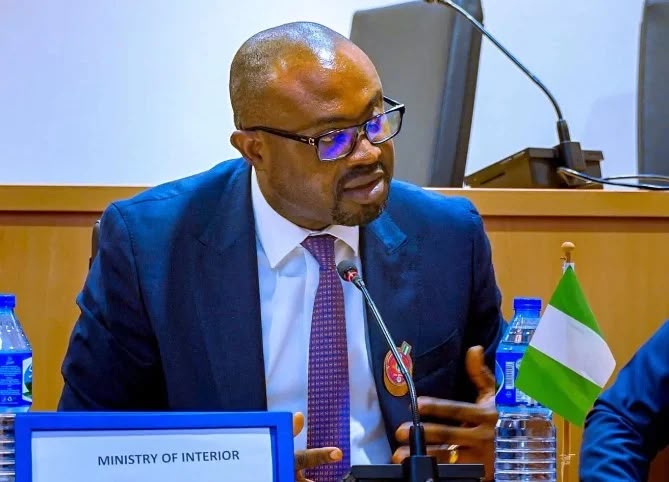
The Minister of Interior, Dr Olubunmi Tunji-Ojo, disclosed this on Friday during the groundbreaking ceremony for the National Passport Booklet Production Centre at the Nigeria Immigration Service headquarters in Abuja.

He said Nigeria currently requires between 1.8 million and two million passport booklets annually, adding that the proposed facility would not only meet domestic demand but also position the country to supply other African nations.

According to him, the project is being developed in partnership with Iris Smart Technologies and designed to produce electronic passports that meet the travel document standards of the Economic Community of West African States.

Tunji-Ojo said the facility would occupy 1.1 hectares, operate off-grid using solar power and be commissioned by President Bola Tinubu in May 2027.

“This project is about $70m without a dime from government,” the minister said, describing the investment as part of efforts to domesticate Nigeria’s passport production value chain and reduce dependence on foreign suppliers.

He said the initiative followed reforms introduced since 2023, including the automation of passport applications and approvals, the establishment of a data centre and the completion of a centralised passport personalisation centre at the NIS headquarters in September 2025.

Tunji-Ojo added that the government had made local manufacturing a condition for the continuation of its existing arrangement with the technology partner, describing the move as a backward-integration strategy.

He said the excess production capacity could enable Nigeria to serve the ECOWAS market and other African countries that currently source their passport booklets from Europe and the Americas.

Senator representing Edo North, Adams Oshiomhole, who performed the groundbreaking, described the project as a shift from importing passport booklets to domestic production.

The former Edo State governor said the development reflected a change in the country’s approach to industrialisation, arguing that Nigeria should manufacture products it had the capacity to produce rather than depend on foreign suppliers.

He also commended Tunji-Ojo for reforms in passport administration, citing improvements in the renewal process and recounting how members of his family had obtained Nigerian passports without the difficulties previously experienced.

The Comptroller-General of the Nigeria Immigration Service, Kemi Nandap, said the project represented an important step towards strengthening Nigeria’s control over the supply chain for its travel documents.

She recalled that passport booklet shortages had affected students, parents and other Nigerians, sometimes disrupting travel and admission plans.

Nandap said domestic manufacturing would strengthen document security, improve supply chain resilience, develop local expertise and enhance service delivery.

“History will not judge us by the promises we make at this groundbreaking ceremony, but by the institutions we build, the standards we uphold and the results we deliver,” she said.

Also speaking, Acting Assistant Comptroller-General of Customs, Doris Okonkwo, who represented the Comptroller-General of Customs, Bashir Adeniyi, said the project aligned with the government’s institutional modernisation agenda.

She said local production could help conserve foreign exchange, strengthen document security and reduce dependence on external suppliers.

The Director-General of the Infrastructure Concession Regulatory Commission, Dr Jobson Ewanife, said the commission would monitor compliance with contractual obligations to ensure the project was delivered according to agreed specifications.

He described the facility as part of the administration’s broader infrastructure development and reform efforts.

Continue Reading

Business

Wale Tinubu Urges SMEs to Build Systems for Sustainable Growth

Published

on

By Ifunanya Stephanie

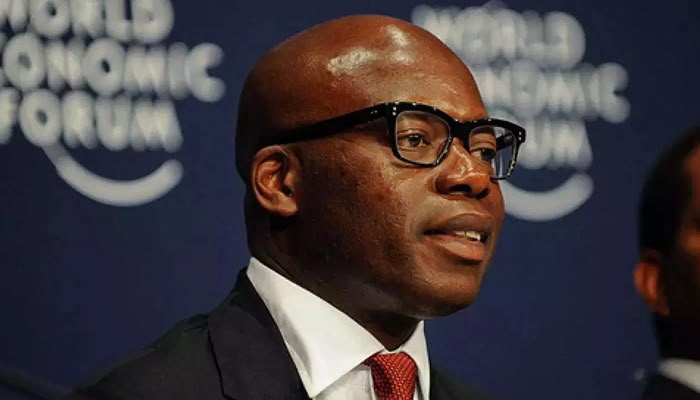
Oando Plc Group Chief Executive, Wale Tinubu, has urged Nigerian entrepreneurs to prioritise strong business systems, financial discipline and sound governance, saying these are essential to building sustainable enterprises capable of competing globally.

Tinubu said ambition alone was insufficient to sustain business growth, stressing the need for structured operations, proper financial records, long-term planning and disciplined execution.

He made the call while delivering the keynote address at GROW Nigerian 2026, the National MSME Conference organised by the Small and Medium Enterprises Development Agency of Nigeria (SMEDAN), held from November 8 to 10 at the Ecobank Pan African Centre, Victoria Island, Lagos.

The conference was attended by Lagos State Governor Babajide Sanwo-Olu, SMEDAN Director-General Charles Odii, German Deputy Consul-General Katharina Ziegler and other business leaders, policymakers and development partners.

Highlighting the contribution of small and medium-sized enterprises to the economy, Tinubu cited figures indicating that they account for 96.9 per cent of businesses, 88 per cent of employment and 46 per cent of Nigeria’s Gross Domestic Product.

He said the priority should be to strengthen their capacity to grow beyond small-scale operations into medium-sized enterprises, large corporations and globally competitive businesses.

“Nigerian giants are not built overnight. They are built through a series of bold decisions, executed with long-term commitment and persistence,” he said.

Drawing on Oando’s three-decade history, Tinubu recounted how the company started with modest family contributions in a converted garage before venturing into diesel trading and expanding into petroleum marketing, gas distribution and upstream oil and gas operations.

He attributed the company’s growth to calculated risk-taking, reinvestment, reliability and quality, noting that business opportunities must be supported by deliberate decisions and consistent execution.

Tinubu identified proper financial records, documented processes and audited accounts as important foundations for businesses seeking investment and preparing to scale.

“One of the most important steps for an SME is to begin documenting its operations and processes, and to maintain audited financial statements. These are essential foundations for building a structured business and preparing it for growth,” he said.

He also stressed the importance of working capital management, urging entrepreneurs to monitor cash positions, receivables, liabilities and inventory.

On access to finance, he advised business owners to explore different funding options, including commercial banks, development finance institutions, fintech companies, suppliers and joint venture partnerships.

“There is no single source of capital that is more important than another. Every source of financing, wherever it comes from, has a role to play in supporting business growth,” he said.

The Oando chief executive also identified ambition, capability, competitiveness and endurance as important attributes for building lasting businesses.

He urged entrepreneurs to invest in their employees, transfer institutional knowledge and establish processes that can be replicated as their organisations expand.

“The principles required to build a successful SME remain the same as those required to run a large enterprise. As you scale, the critical difference is your ability to replicate your systems, processes, and organisational DNA,” he added.

Addressing the challenges facing businesses, Tinubu acknowledged government efforts to improve infrastructure but said entrepreneurs must also develop the capacity to navigate policy changes, delayed approvals and other operational constraints.

He called for improvements in electricity supply, logistics, port operations and the ease of doing business, describing them as important conditions for helping small enterprises transition into larger organisations.

“These are areas that require commitment rather than significant financial resources. SMEs depend on improvements in logistics, port operations, and the ease of doing business to scale from small to medium-sized and ultimately large enterprises,” he said.

Reflecting on Oando’s evolution from a small trading operation into an integrated energy group, Tinubu said the company continued to rely on the entrepreneurial principles that shaped its beginnings.

“Even though we are a large conglomerate today, we still think like an SME. The principles that shaped our beginnings continue to inform how we build and grow the business,” he said.

Continue Reading

Trending

extrabetseo ajansıseo ajansıcasino siteleritrlisans pinterestgiftcardmall/mygiftdinamobetgrandpashabet girişgrandpashabetdinamobetGrandpashabettaraftarium24dizipalgiftcardmall/mygiftjustin tvGrandpashabetGrandpashabetGrandpashabetDeneme Bonusu Veren SitelerCasibomcasino siteleriultrabettaraftarium24taraftarium24rojadirectajustin tvgrandpashabetgrandpashabetgrandpashabetgrandpashabet girişgrandpashabetgrandpashabetgrandpashabetgrandpashabetgrandpashabetgrandpashabetjojobetjojobetjojobetholiganbetcasibomjojobetholiganbetholiganbetgrandpashabetholiganbetholiganbetholiganbettipobettipobettipobetcasibomgrandpashabetgrandpashabetcasibomcasinolevantbetgarantipusulabetmarsbahis girişmarsbahismarsbahis girişpusulabet girişcasibomholiganbetholiganbetholiganbet girişholiganbetmarsbahiscasinolevantgrandpashabetcasibomsekabetnesinecasino xwbahis xbetgaranti xgrandpashabetjojobetjojobetGrandpashabet